


Dutch Rococo Writing Desk
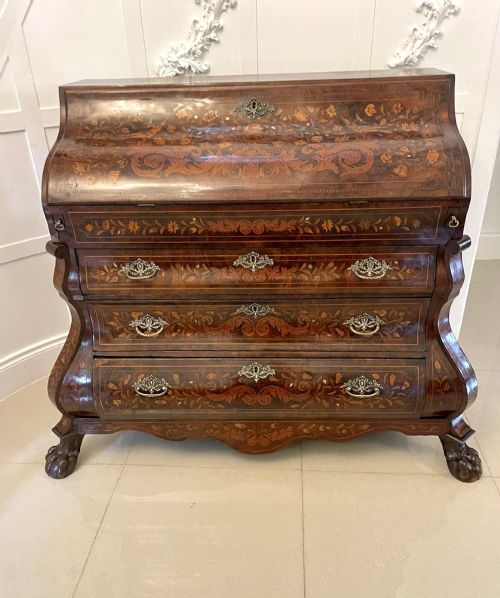
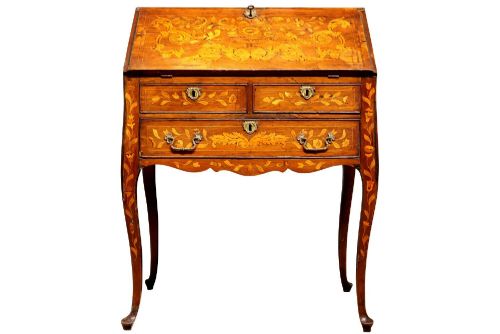
These dutch rococo writing desk examples are elaborate burr walnut and marquetry secretaires built for serious correspondence and display.
Dutch Rococo Writing Desk
When you search for a dutch rococo writing desk, you find robust bureau bookcases, bureau cabinets, and fall-front bureaux originating mainly in the eighteenth century. The form typically combines a slanted writing flap with extensive interior compartments, resting above drawers or standing as a towering bookcase combination.
The dominant material signature across these pieces is burr walnut enriched with complex fruitwood inlay and floral marquetry. Makers of the period utilised these rich timbers to create swelling bombe profiles that define the style.
How they were made
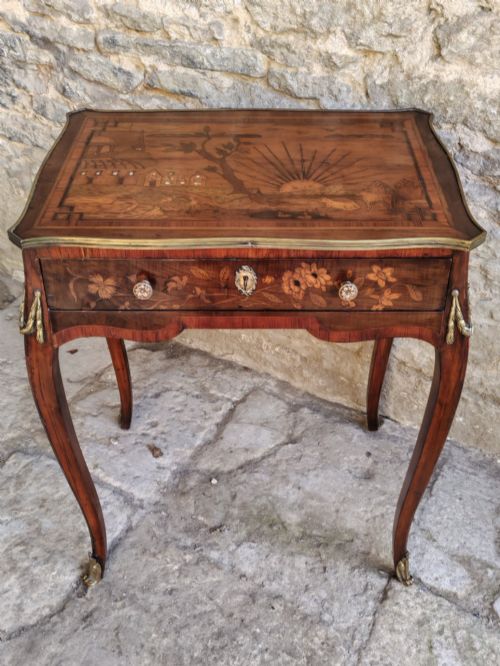
Cabinetmakers constructed carcases from walnut and fruitwood, applying intricate floral marquetry and fruitwood inlay across the exterior surfaces. Brass hardware such as escutcheons and handles completed the structural assembly.
The bombe shaping required skilled timber bending and shaping techniques to achieve the characteristic outward-swelling drawer fronts seen on eighteenth-century examples.
Current listings span the eighteenth century, the year 1800, the nineteenth century, and nineteen twenty, featuring walnut, fruitwood, brass, and glass.
What varies in quality
The intricacy and preservation of the floral marquetry dictate the upper tier of quality, alongside the depth of figure in the burr walnut veneers. Pieces displaying crisp fruitwood inlay across both exterior and interior surfaces command stronger visual presence.
Proportion and structural harmony set finer examples apart, particularly how cleanly the bombe curve is executed and how well the fitted interior compartments align with the primary exterior design.
The Dutch Rococo Writing Desk Glossary
- Bombe
- An outward-swelling convex shape characteristic of eighteenth-century case furniture. This undulating profile requires advanced cabinetmaking skill to veneer accurately.
- Marquetry
- Decorative veneer work forming pictorial or floral patterns using various tinted woods. Craftsmen cut thin pieces of fruitwood and walnut to fit precisely into a background ground.
- Bureau bookcase
- A writing desk fitted with a shelved cabinet superstructure for books and display. These tall combination pieces unite a drop-front desk base with upper shelving doors.
- Burr walnut
- Timber taken from a walnut tree growth featuring swirling, knotty grain patterns. This highly figured wood provides rich decorative surfaces for high-status furniture.
- Fruitwood inlay
- Contrasting light and dark wood insertions used to outline panels and create botanical details. This technique highlights structural drawers and fall fronts.
Dutch Rococo Writing Desk: Frequently Asked Questions
How do I date a bureau?
Dating relies on examining the secondary timbers, construction methods, and the style of the floral marquetry. Eighteenth-century pieces typically show hand-cut dovetails and distinct walnut framing beneath the veneers.
Later nineteenth-century revival pieces often display harder internal woods and machine-processed components that differ from eighteenth-century workshop practices.
Where should I place a bureau cabinet?
These tall pieces require a stable wall with sufficient vertical clearance and minimal exposure to direct sunlight. Placing them away from heat sources protects the walnut veneers and fruitwood marquetry from drying out.
Because bureau bookcases are heavy and deep, they need adequate floor space to let the drop-front flap open fully without obstruction.
How do I maintain the walnut surface?
Maintenance involves applying appropriate wax polish sparingly and buffing gently with a soft cloth to nourish the wood. Avoid modern liquid cleaners or silicone sprays that can damage historic polish.
Keep the room humidity stable to prevent the walnut and fruitwood marquetry veneers from lifting or cracking over time.