

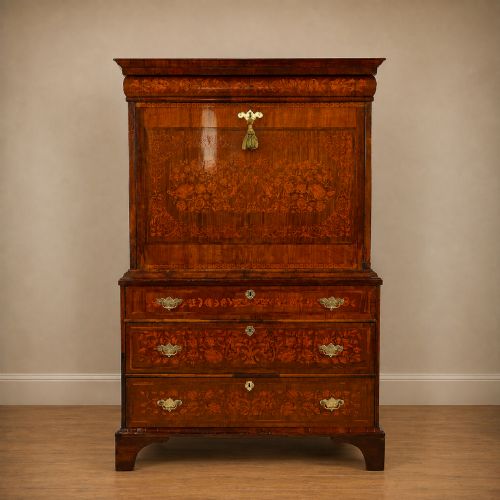
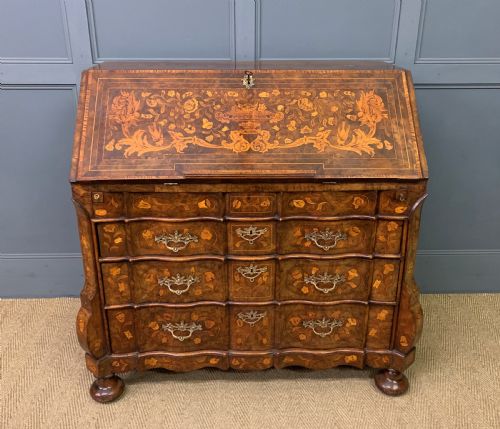
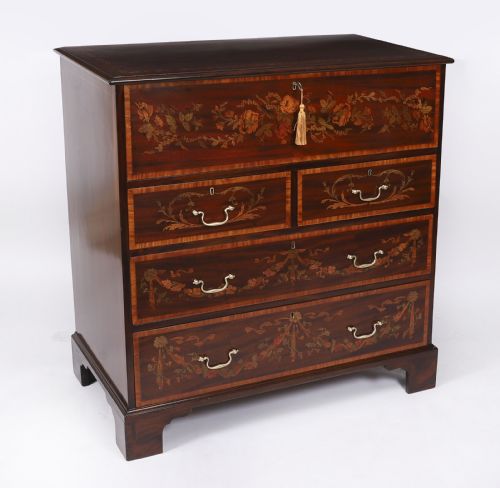
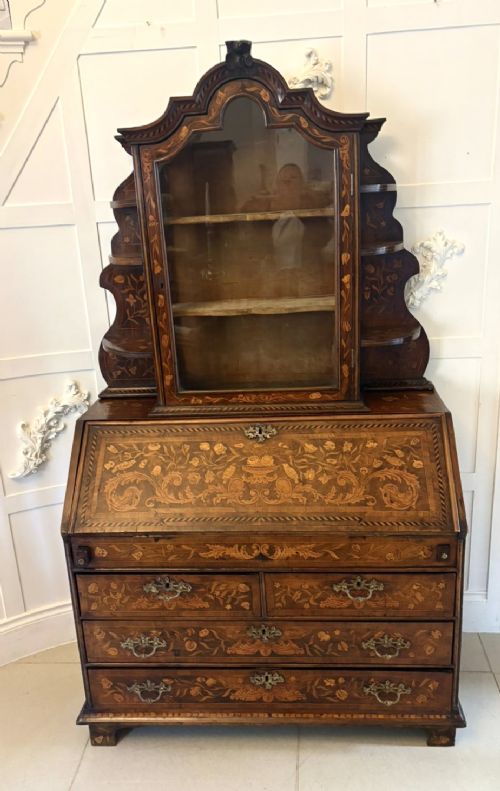


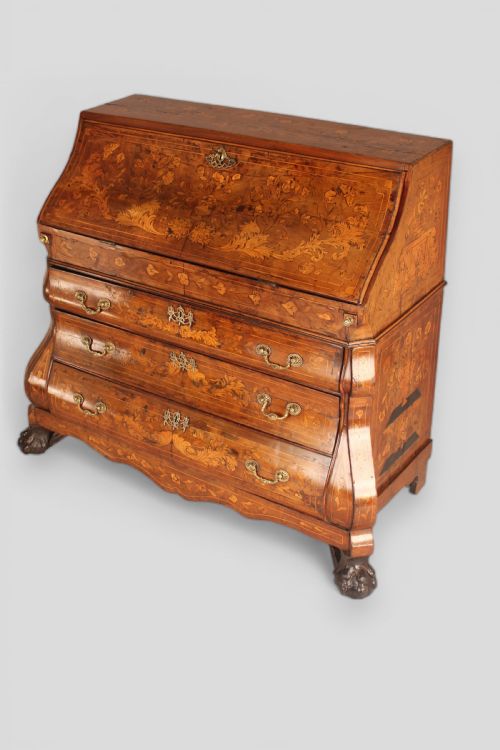


Marquetry Writing Chest
A marquetry writing chest brings together intricate wood veneers and practical desk space, offering both a decorative focal point and a functional place to write.
Marquetry Writing Chest
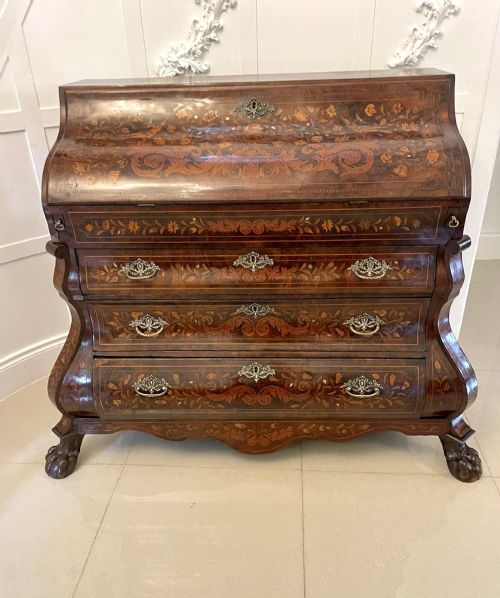
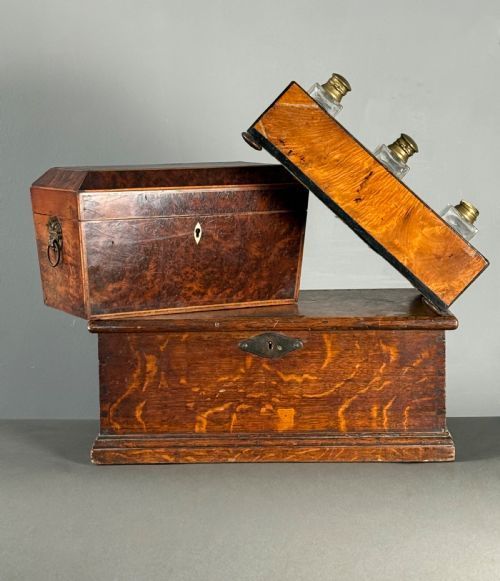
A marquetry writing chest encompasses various forms designed for correspondence and storage, prominently featuring bureaux, bureau bookcases, and decorative boxes.
The pieces appearing here span multiple eras, notably the 17th, 18th, and 19th centuries, alongside Georgian, Victorian, and later periods.
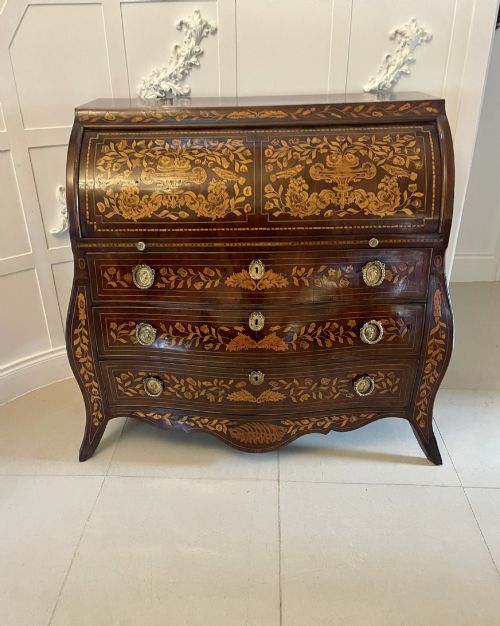
Dutch examples, particularly bombe-shaped bureaux with floral marquetry, emerge frequently among the selections alongside English and French variants.
Materials and construction methods
Carcasses are constructed from foundational timbers such as oak, mahogany, walnut, and burr walnut, providing sturdy support for the decorative layers.
Surfaces receive intricate ornamentation through marquetry inlay, utilising contrasting woods like fruitwood and satinwood, occasionally supplemented by brass, mother-of-pearl, and bone details.
Factors of distinction
The precision and complexity of the floral or figural marquetry inlay separate standard items from exceptional ones, reflecting the skill of the artisan who cut and fitted the veneers.
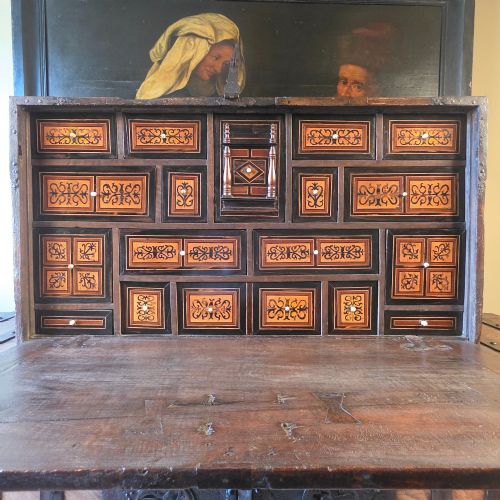
Structural complexity, such as the achievement of a bombe curved front or the integration of a fully fitted bureau interior with secret compartments, dictates the standing of the piece.
Maison Krieger·Edwards & Roberts
The Marquetry Writing Chest Glossary
- Marquetry
- The art of applying decorative pieces of veneer to a structure to form intricate designs or pictures. It differs from inlay by covering the entire surface rather than being set into recesses.
- Bombe
- A swollen or bulging convex contour typical of furniture fronts and sides, common in continental pieces. This curved form requires considerable woodworking proficiency.
- Bureaux
- Sloping-front desks that open to reveal fitted compartments, pigeonholes, and small drawers for writing materials. They often sit atop chests of drawers or stands.
- Escritoire
- A writing cabinet or desk, usually fitted with a drop-front writing surface and internal drawers. The term often describes refined French and English examples.
- Secretaire
- A piece of furniture containing a writing drawer or fold-down writing flap disguised as a standard drawer or cabinet door. It combines utility with domestic elegance.
Marquetry Writing Chest: Frequently Asked Questions
What is a marquetry writing chest?
A marquetry writing chest is a fitted piece of furniture designed for correspondence, featuring a surface decorated with inlaid wood veneers. These items range from small portable boxes to large bureaux and secretaire cabinets.
Craftsmen used contrasting timbers to create floral or geometric patterns across the exterior. The primary function remained writing and document storage, often incorporating internal compartments.
How do I tell Dutch and English styles apart?
Dutch examples frequently display pronounced bombe contours and exuberant floral marquetry covering the entire exterior. English pieces tend to favour straighter architectural lines and more restrained inlay patterns.
Regional preferences also influenced timber selection, with Dutch makers frequently employing burr walnut and contrasting fruitwoods. English makers leaned towards mahogany and oak foundations.
Where were these chests used?
These pieces belonged in the private rooms, libraries, and parlours of wealthy households. They provided a secure, dedicated space for writing letters and managing household accounts.
Smaller boxes and slope desks sat atop tables or travelled with owners, while large bureaux remained stationary in studies. Their decorative veneered surfaces suited formal reception rooms.
How should I care for antique veneer?
Protect antique marquetry by placing it away from direct sunlight and sudden temperature changes, which can cause wood to dry and veneers to lift. Maintain stable indoor humidity levels to preserve the timber.
Apply specialised wax polish sparingly to nourish the wood surface without building up residue. Avoid placing hot or damp items directly onto the polished timber.