




Dutch Marquetry Fall Front
A dutch marquetry fall front offers a sloping writing surface that conceals fitted drawers, wrapped in elaborate floral timber work.
Dutch Marquetry Fall Front
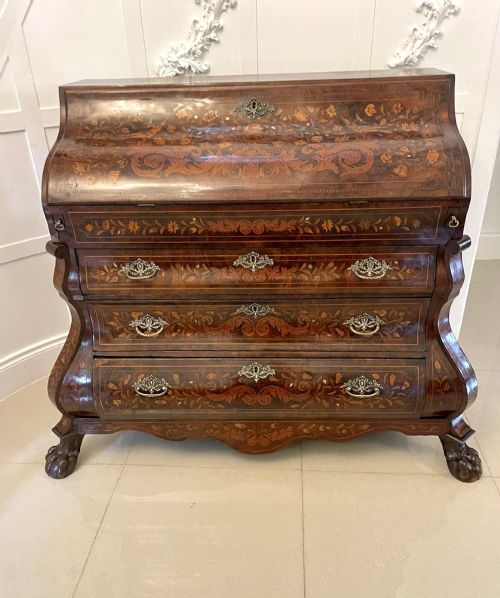
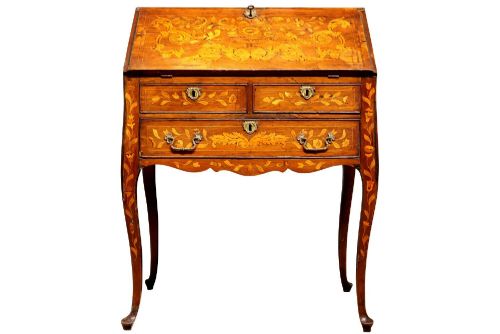
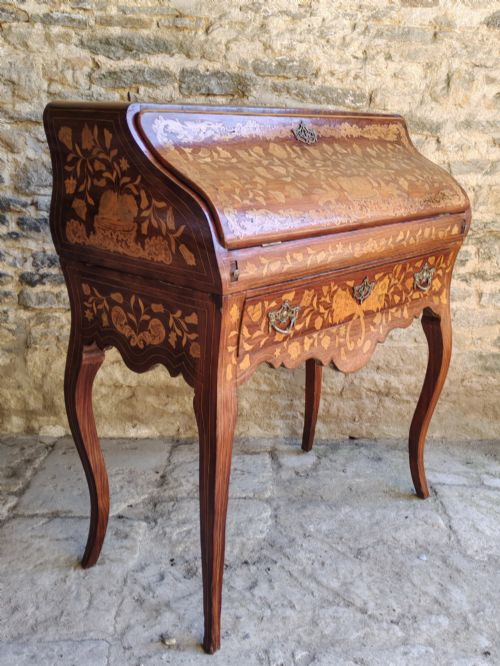
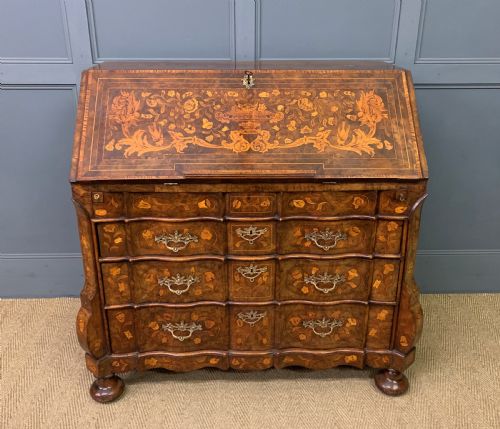
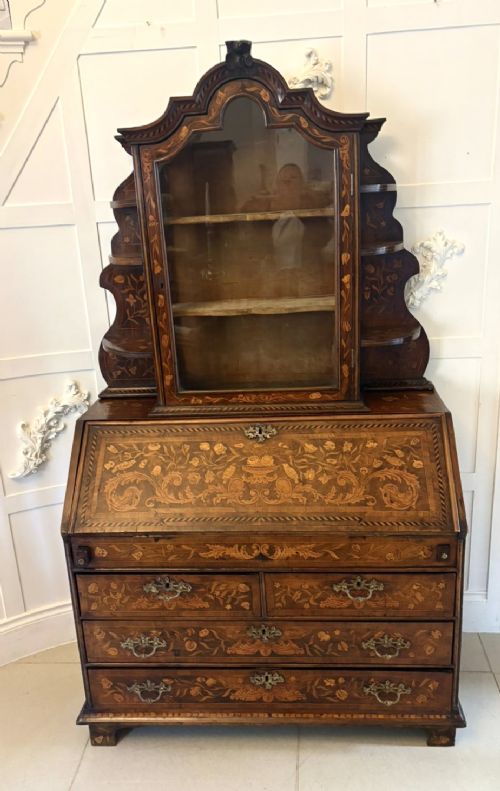
A dutch marquetry fall front represents a distinct form of writing furniture, appearing here primarily as bureaus, bureau bookcases, and secretaires. These pieces combine a practical writing desk with enclosed shelving or internal compartments beneath a hinged writing flap.
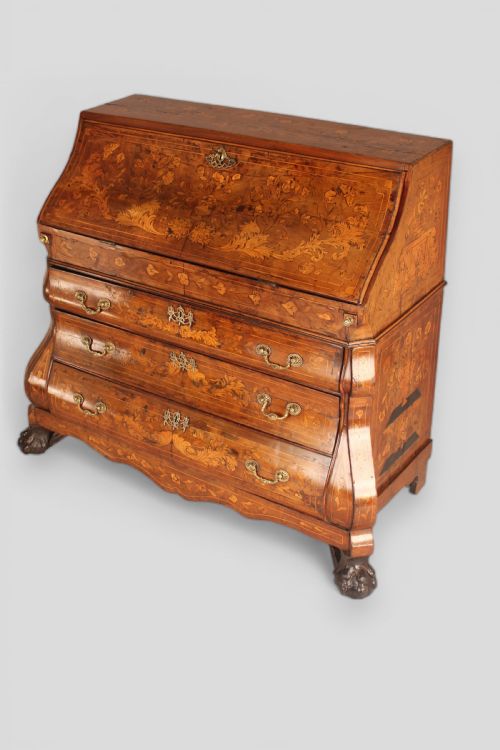
The selection ranges from compact bureau desks to tall bureau bookcases spanning the eighteenth and nineteenth centuries. Alongside standard sloping desks, the evidence includes bombe shaped and block fronted carcases that alter the silhouette.
Origins stretch across the eighteenth century, Georgian period, and nineteenth century, with occasional later interpretations from nineteen twenty. Walnut, burr walnut, and mahogany form the primary structural foundations for these writing pieces.
How they were made
Cabinet makers constructed the carcases using walnut, burr walnut, and mahogany, often applying fruitwood veneers across the exterior surfaces. Brass hardware provided functional hinges and handles for internal and external drawers.
Floral marquetry and fruitwood inlay formed the decorative skin of the furniture, meticulously cut and fitted into the primary timber. Glass appeared within the upper doors of taller bureau bookcases to display contents safely.
Hidden interior compartments inside the fall front often conceal tiny secret drawers designed for private correspondence.
What varies in quality
The density and complexity of the floral marquetry dictate much of the visual distinction across examples. Pieces featuring intricate fruitwood inlay across both the fall front and the sides demand greater skill from the cabinet maker.
Structural variations such as bombe shaped fronts and block fronting require advanced timber shaping techniques compared to straight-sided carcases. The choice between standard bureau desks and towering bureau bookcases also changes the scale and architectural presence of the item.
Morison of Edinburgh
The Dutch Marquetry Fall Front Glossary
- Marquetry
- Decorative veneer work arranged in pictorial or floral patterns across a furniture surface. This technique uses various coloured woods to create detailed imagery.
- Fall front
- A hinged writing flap that pulls down to form a horizontal desk surface. It conceals pigeonholes and small drawers when closed.
- Bombe
- A swelling, outward-curved contour found on the front and sides of furniture carcases. This rounded profile requires specialist woodworking skill.
- Bureau bookcase
- A writing desk combined with an upper shelving cabinet enclosed by doors. It provides both workspace and storage in a single tall unit.
- Fruitwood
- Timber sourced from fruit-bearing trees such as pear or apple, used extensively for contrasting inlay work. Its fine grain accepts delicate cutting.
Dutch Marquetry Fall Front: Frequently Asked Questions
What is a bureau bookcase?
A bureau bookcase combines a sloping fall front desk with an upper shelving cabinet enclosed by doors.
This form provides both a practical writing space and vertical display storage within a single tall piece of furniture.
How do I use a fall front desk?
The hinged writing flap pulls down into a horizontal position to reveal internal drawers and pigeonholes.
When writing is finished, the flap lifts back up and secures shut to hide the papers and small compartments inside.
What timber was used for these desks?
Cabinet makers built the primary carcases using walnut, burr walnut, and mahogany.
Fruitwood veneers were then applied and cut into intricate floral marquetry patterns across the exterior surfaces.