





Brown Floral Marquetry Bureau
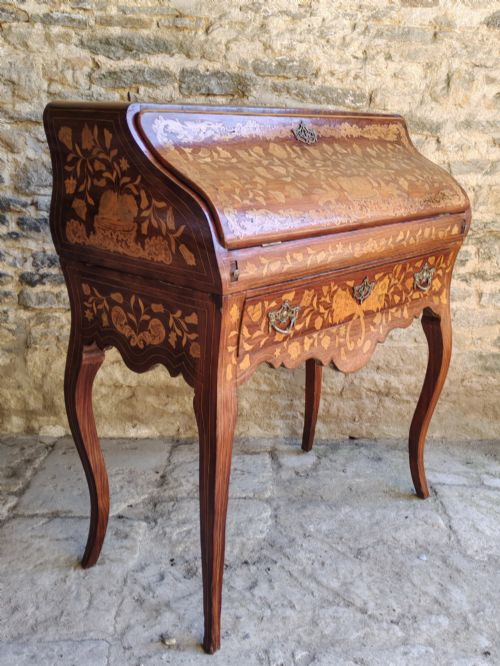
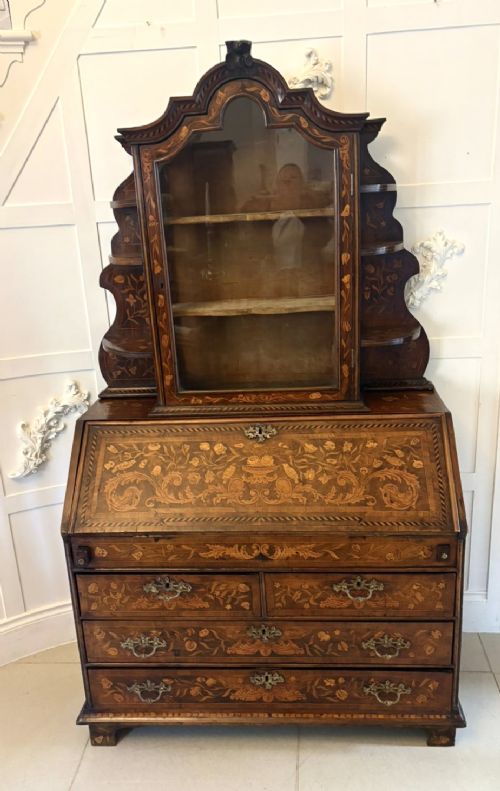
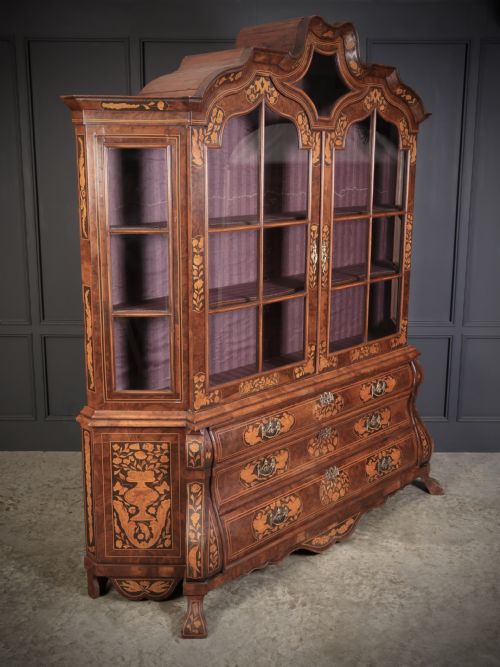
A brown floral marquetry bureau brings together intricate floral wood-inlay and a fall-front writing surface for a classic writing desk.
Brown Floral Marquetry Bureau
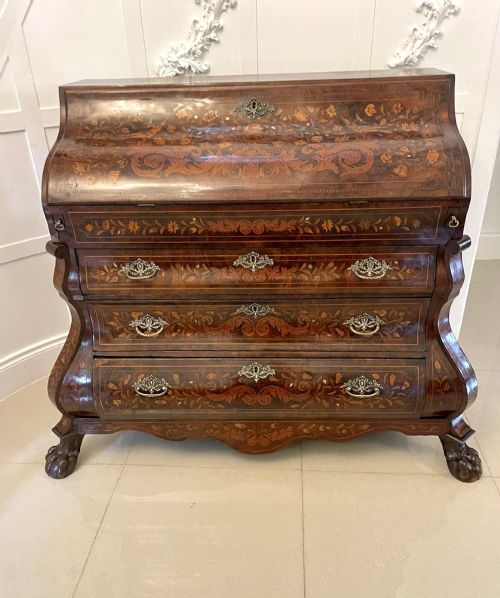
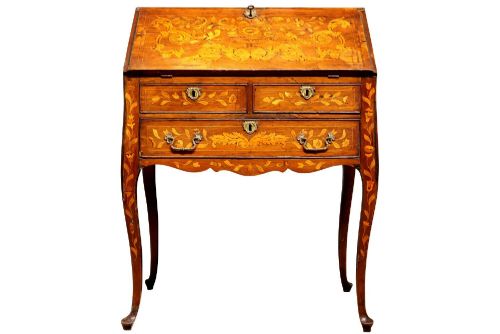
A brown floral marquetry bureau provides a dedicated writing space with a sloping fall front that conceals internal compartments and drawers. These pieces are most frequently encountered in Dutch and English forms, drawing on centuries of cabinet-making traditions from the eighteenth and nineteenth centuries.
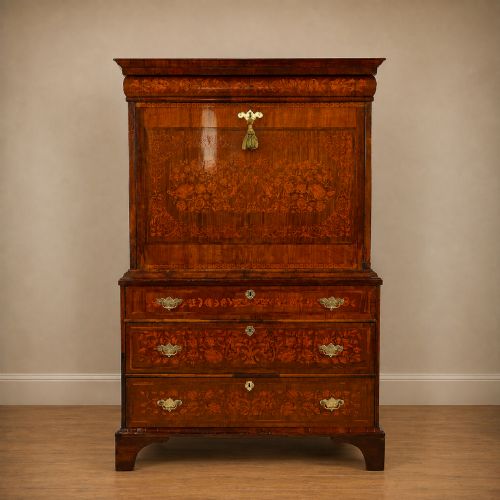
The primary forms found here include standard slope-front desks, grand bureau bookcases, and compact secretaire cabinets. Walnut and rosewood serve as the main carcase woods, providing a dark brown ground for the lighter wood inlays.
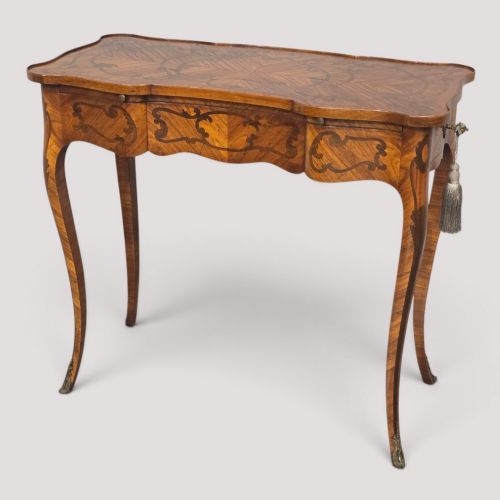
Makers integrated floral patterns across the fall fronts, drawer fronts, and sides, often combining naturalistic blooms with scrolling foliage. These desks served functional roles in period libraries and parlours before becoming decorative centrepieces in modern homes.
What varies in quality
The precision and complexity of the floral inlay determine the baseline quality of the marquetry work. Finer examples display meticulous shading within individual leaves and petals, whereas lesser pieces rely on repetitive, simplified botanical motifs.
The choice of underlying timber and veneer selection sets the finer pieces apart from standard workshop output. Heavily figured burr walnut and rich fruitwoods provide greater depth to the brown ground than plain or uniform veneers.
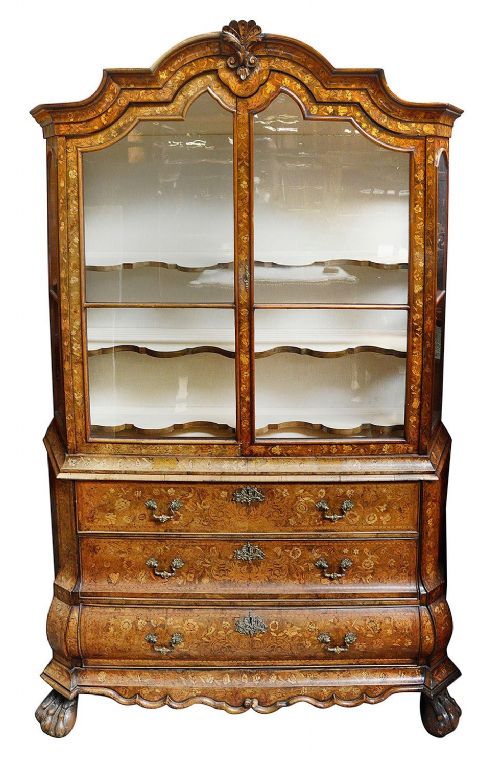
The architectural integration of the bureau dictates its standing within the range. Pieces featuring bombe shaping or complex bookcase superstructures require advanced carpentry to maintain structural integrity alongside ornate surface decoration.
Current listings feature walnut, fruitwood, and rosewood timbers decorated with Dutch and French marquetry floral designs.
Morison of Edinburgh
The Brown Floral Marquetry Bureau Glossary
- Marquetry
- The decorative technique of applying fine wood veneers to a carcase to form pictorial patterns, such as floral sprays. Artisans cut various timber species to fit flush within a prepared ground.
- Bureau
- A writing desk featuring a sloping fall-front flap that opens to reveal pigeonholes and small drawers. The form evolved during the seventeenth and eighteenth centuries.
- Bombe
- A swollen or bulging profile characteristic of eighteenth-century Dutch and French furniture design. This shaped contour demands high skill from the cabinet-maker.
- Escritoire
- A writing cabinet or desk, often fitted with a drop-front writing surface and internal compartments. The term derives from the French word for writing.
- Secretaire abattant
- A tall vertical cabinet with a hinged front panel that folds down to serve as a writing desk. It conceals a fitted interior of small drawers and pigeonholes.
Brown Floral Marquetry Bureau: Frequently Asked Questions
How do I maintain the wood surface?
Keep the timber away from direct sunlight and heat sources to prevent the marquetry veneers from drying out or lifting. Regular dusting with a dry cloth preserves the finish.
Apply high-quality beeswax occasionally to nourish the walnut and fruitwood surfaces without building up heavy residue.
Where were these bureaus made?
The majority of these desks originate from Dutch and French workshops, alongside examples from British makers. Regional preferences influenced the choice of floral patterns and carcase shapes.
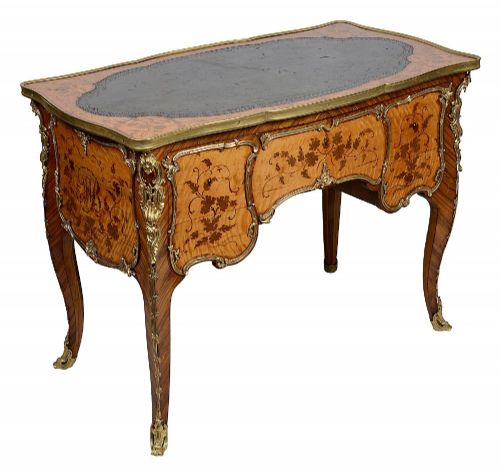
Dutch makers favoured expressive floral sprays on walnut, while French pieces often incorporated Louis-style mounts and lighter fruitwood veneers.
How do I tell different periods apart?
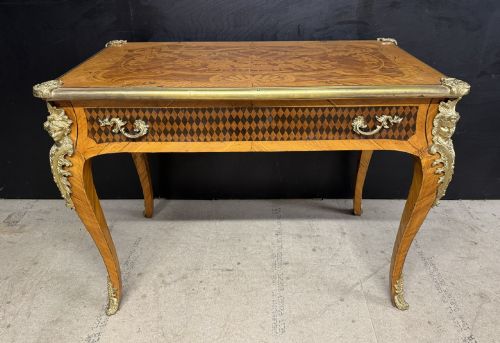
Eighteenth-century examples often feature robust walnut carcases with naturalistic floral inlays and simple brass hardware. Nineteenth-century revivals frequently lean towards French styling with Ormolu mounts and rosewood veneers.
Examining the internal construction and secondary woods helps confirm the likely decade of manufacture.