
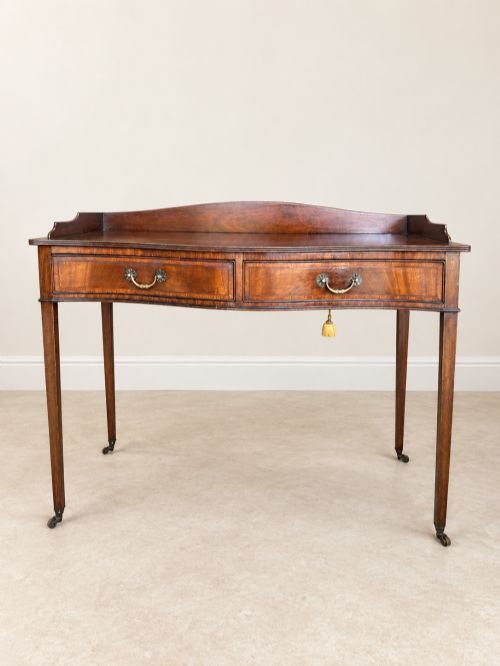
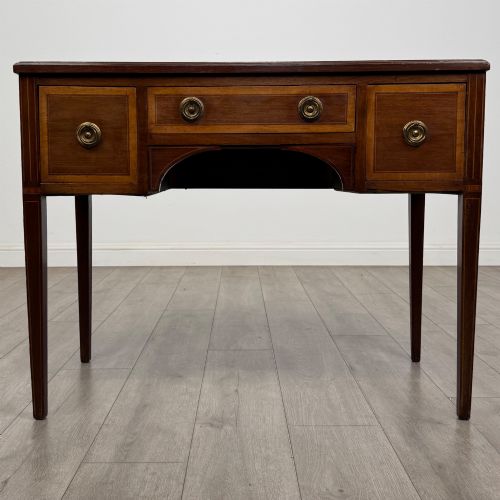
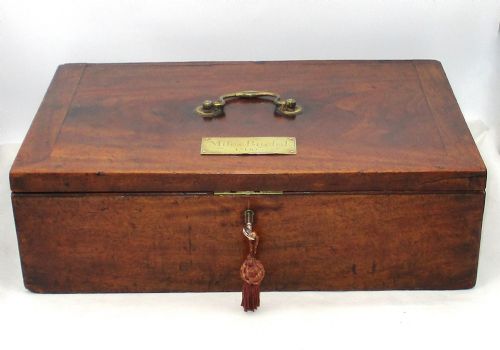
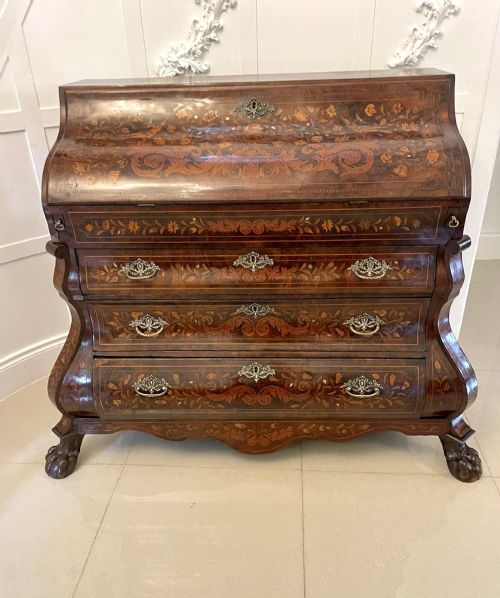


Brown Inlay Writing Desk
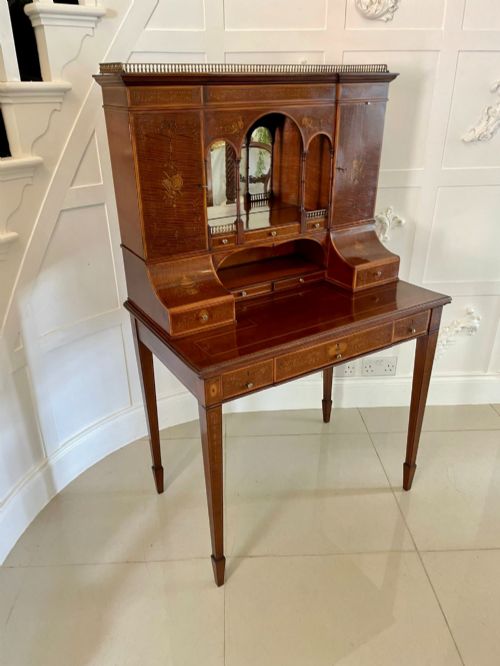
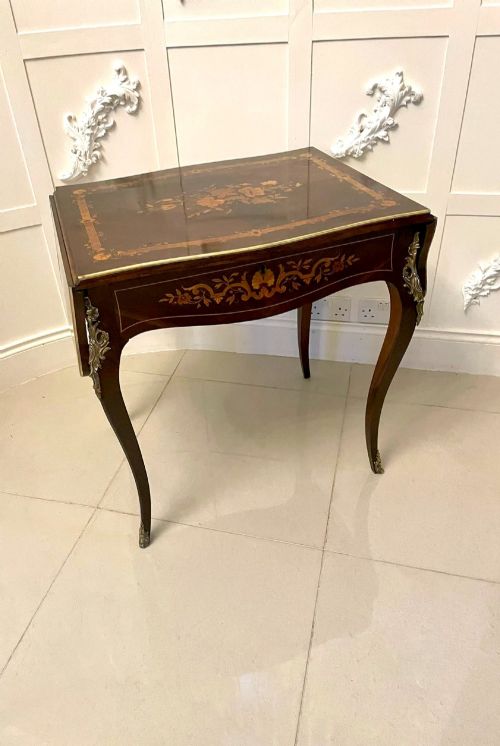
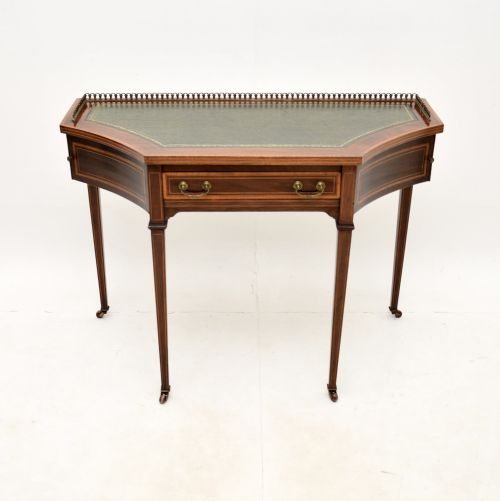
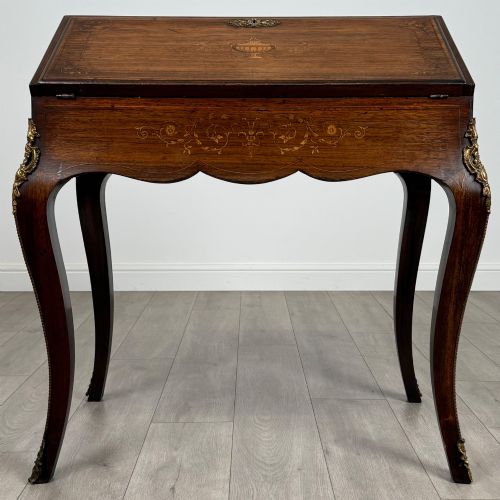
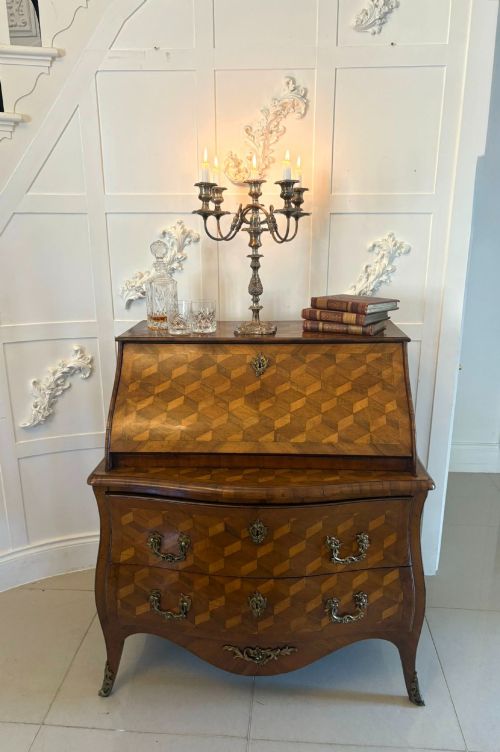
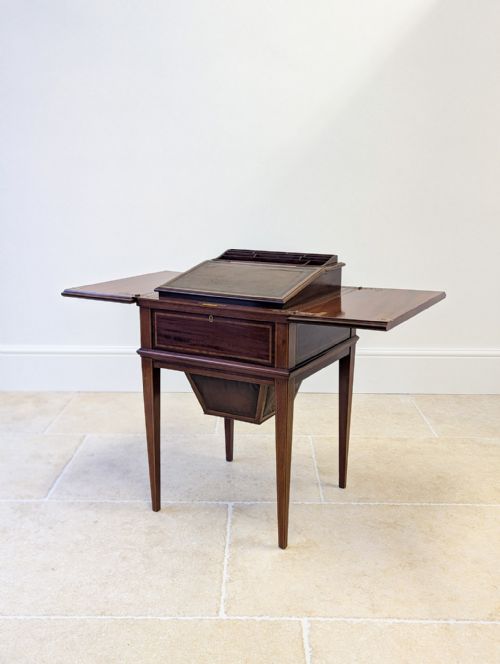
A brown inlay writing desk brings functional workspace and intricate decorative craftsmanship into a room.
Brown Inlay Writing Desk
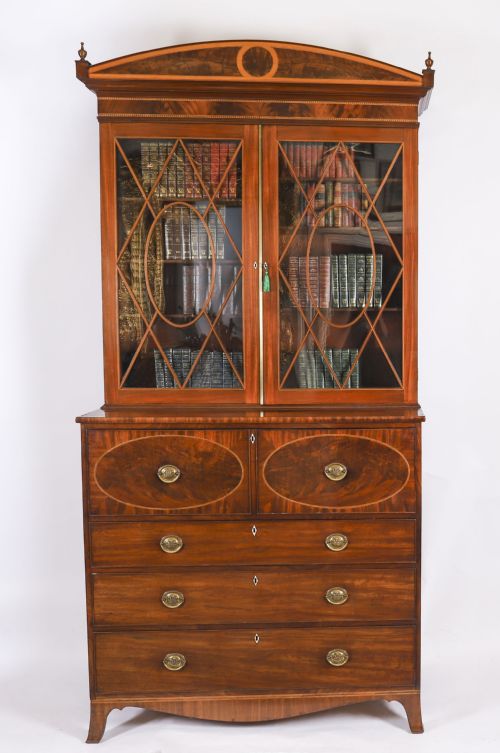
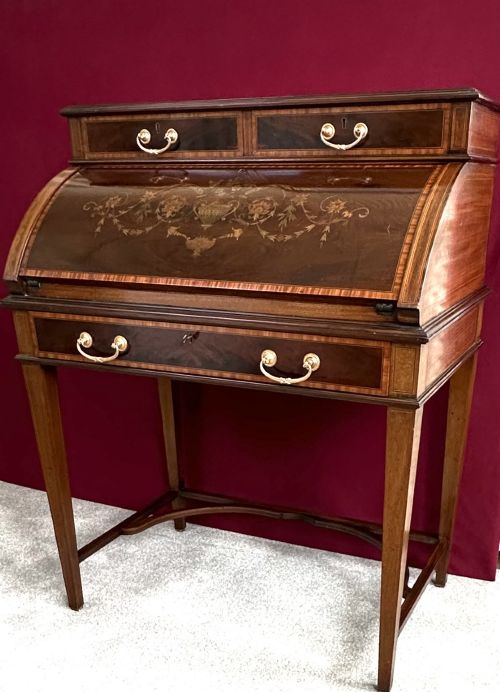
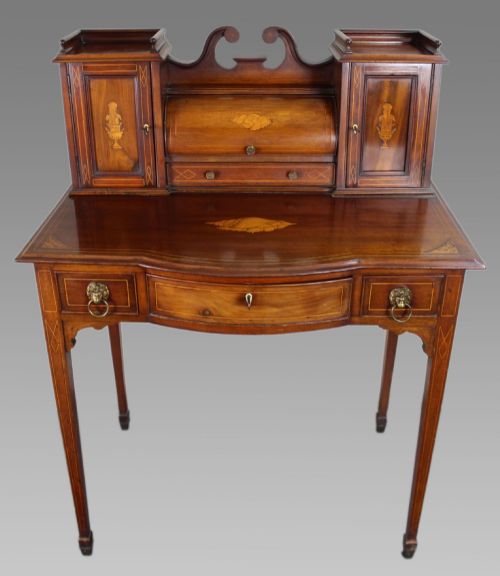
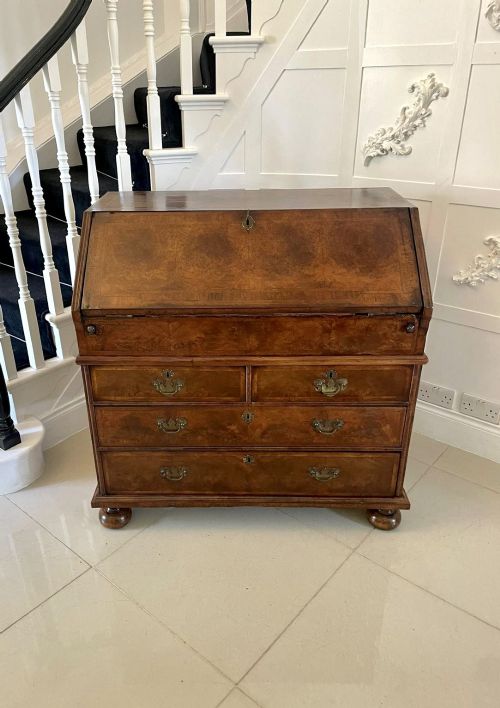
When searching for a brown inlay writing desk, buyers encounter forms ranging from compact writing tables and fall-front bureaux to grand bureau bookcases and freestanding centre tables. These pieces originate across multiple periods, including the Georgian, Victorian, and Edwardian eras, reflecting changing domestic requirements for correspondence and record keeping over centuries.
The versions most frequently met on this page are mahogany and walnut writing desks embellished with contrasting wood inlay or floral marquetry. Makers of these pieces utilised decorative banding, stringing, and pictorial motifs to elevate standard writing furniture into sophisticated decorative objects for the home.
Materials and construction methods
Cabinet makers constructed these desks using solid timbers and decorative veneers such as mahogany, walnut, satinwood, and rosewood over secondary woods. Surfaces received detailed inlay and marquetry work, contrasting lighter woods like satinwood or fruitwood against darker brown primary timbers to create geometric or floral patterns.
Structural elements frequently incorporated brass hardware, leather writing inserts, and specialised mechanisms such as fall fronts, tambour shutters, or sliding writing surfaces. Joinery techniques varied from traditional dovetailing in drawer construction to precise veneer sawing and hand-fitting of internal stationery compartments.
The listings show pieces spanning from the 17th century through the 1930s, utilising mahogany, walnut, satinwood, and rosewood.
Factors determining the quality of these desks
Quality in a brown inlay writing desk rests primarily on the precision of the cabinet work and the crispness of the inlay. Superior examples display tightly fitted marquetry with minimal filler, where contrasting woods align seamlessly within the primary timber surface without lifting or gaps.
Depth of design and integrity of materials further distinguish the range. Pieces featuring secondary timbers of high grade, original brass hardware, well-figured burl veneers, and intact fitted internal compartments demonstrate superior workshop standards compared to plainer, utility-grade alternatives.
Edwards & Roberts·Maple & Co·Jackson & Graham
The Brown Inlay Writing Desk Glossary
- Marquetry
- Decorative veneer work forming pictorial or scroll patterns by fitting together small pieces of various coloured woods.
- Bureau
- A desk featuring a sloping lid that opens to reveal a writing surface and small pigeonholes or drawers.
- Secretaire
- A piece of furniture containing a concealed writing drawer or drop-front writing flap.
- Parquetry
- Geometric mosaic woodwork used for ornamenting floors, furniture tops, and panels.
- Satinwood
- A durable, hard yellowish timber frequently utilised for contrasting inlay and banding on darker woods.
Brown Inlay Writing Desk: Frequently Asked Questions
How do I use a bureau desk?
A bureau desk provides a private writing space through its hinged fall-front or slope, which lowers to create a horizontal surface for correspondence. Inside, small drawers and pigeonholes organise stationery, inkwells, and documents.
When writing is finished, the flap closes to conceal papers and maintain a tidy room appearance.
Where should I place a freestanding desk?
Freestanding desks possess finished backs and polished timber all around, allowing them to sit away from walls in the centre of a study or library. This positioning highlights decorative marquetry and inlay work visible on all sides.
Ensure adequate natural light falls across the writing surface from the side for daily use.
How do I identify a Georgian desk?
Georgian desks display architectural proportions, substantial timber construction, and conservative use of mahogany or walnut veneers. Detail work often includes restrained stringing, brass swan-neck handles, and bracket feet.
Interior compartments tend to feature secret drawers and well-figured secondary woods.