
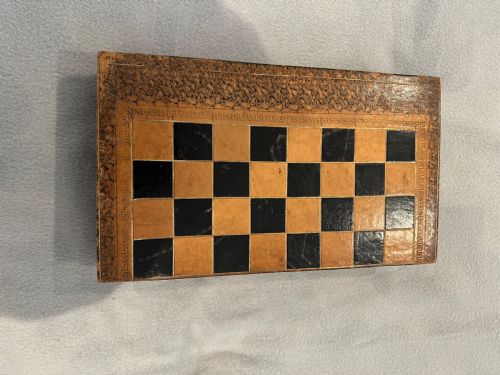
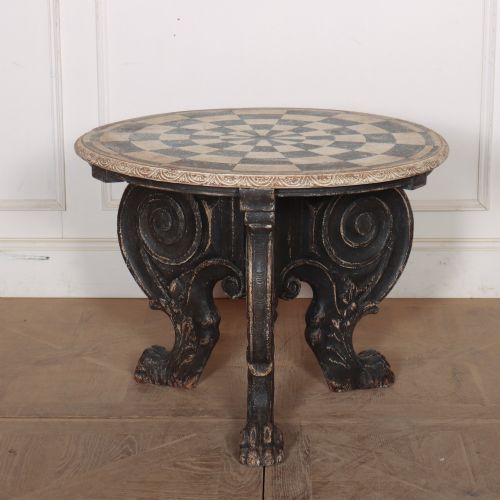
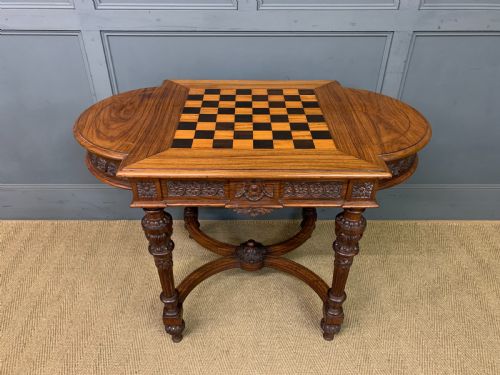


Vintage Chess Table
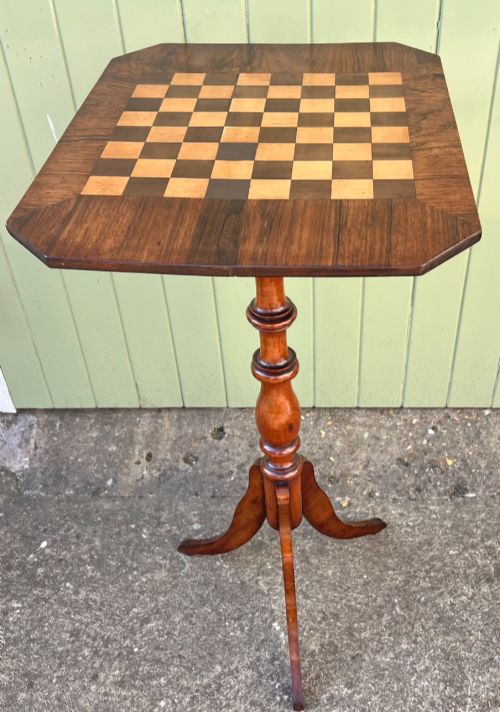
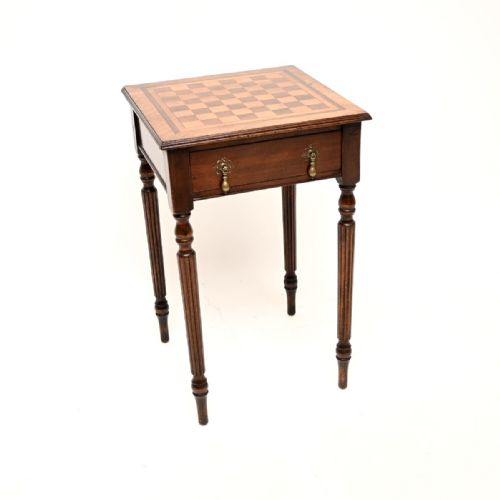
A vintage chess table brings both a permanent board and a fine piece of period furniture into a room, ready for play.
Vintage Chess Table
A vintage chess table provides a dedicated surface for play, merging functional joinery with domestic furniture across various past periods and styles.
The pieces appearing in this selection range from traditional Rosewood and Mahogany designs to Edwardian Satinwood and walnut models.
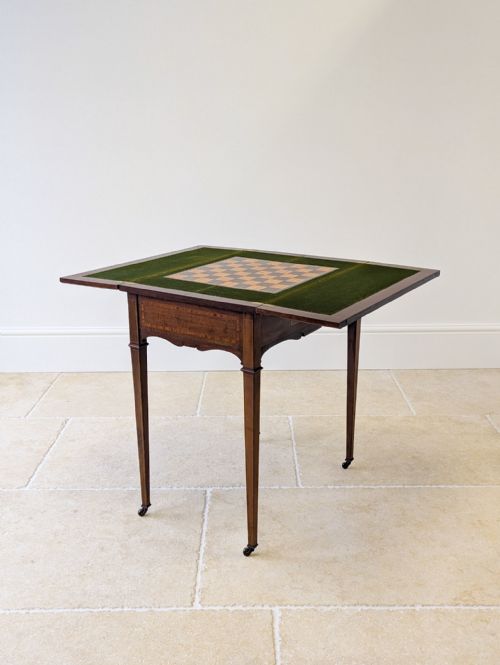
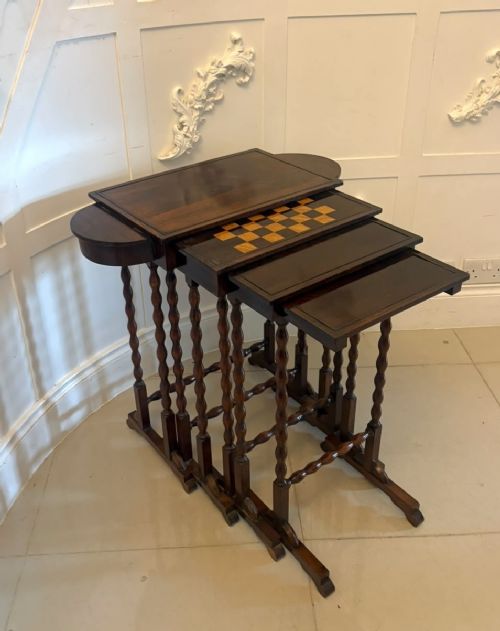
Buyers will encounter multiple formats including fold-over game surfaces, integrated nesting sets, and occasional lamp tables with inlaid boards.
How they were made
Joiners and cabinet makers utilised dense timbers such as Rosewood, Mahogany, Walnut, and Oak to build sturdy frames capable of supporting inlaid playing surfaces.
Contrasting woods like Boxwood and Ebony formed the precise light and dark squares, often framed by decorative veneers or brass details.
Some folding models pack away so neatly you can pretend nobody in the house knows how to play.
What varies in quality
The standard of timber selection and the precision of the inlay set finer examples apart from simpler utilitarian pieces.
Sophisticated mechanisms in fold-over leaves or integrated nesting tables demonstrate a higher grade of period craftsmanship.
British Chess Company
The Vintage Chess Table Glossary
- Inlay
- A technique where pieces of contrasting wood or other materials are fitted into a recess to form a decorative surface on the table top.
- Games compendium
- A fitted box or cabinet containing equipment for multiple pastimes, occasionally combined with a chess table.
- Veneer
- A thin layer of superior wood applied over a secondary timber base to create a decorative exterior finish on furniture.
Vintage Chess Table: Frequently Asked Questions
Are these tables sturdy enough for daily use?
Most examples are built from durable hardwoods like mahogany or oak, designed to withstand regular domestic use and play.
Care should be taken with older veneered surfaces to avoid moisture and direct heat damage.
How do I identify the period of a chess table?
Period identification relies on examining the primary timber species, construction methods, and stylistic cues such as Regency or Edwardian turning.
Comparing the inlay style and edge profiling against documented furniture eras helps narrow down the decade of manufacture.
Can these tables be used for other games?
Several designs feature fold-over tops or multi-functional compartments that accommodate cards, backgammon, and other pastimes alongside chess.
Compendium editions often house complete sets for multiple games within the same unit.
How should I care for a vintage wood surface?
Maintaining the finish involves dusting with a soft cloth and occasionally applying appropriate natural waxes to preserve the timber.
Keeping the table away from strong sunlight prevents the rosewood, walnut, or satinwood from fading over time.