


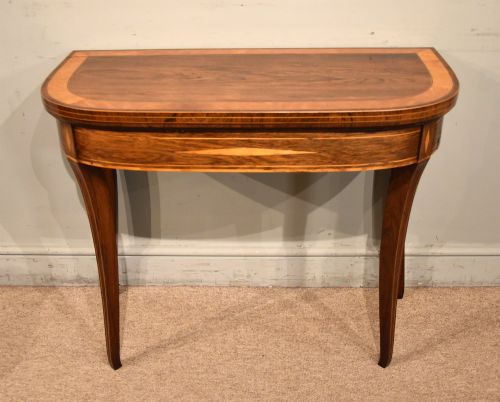
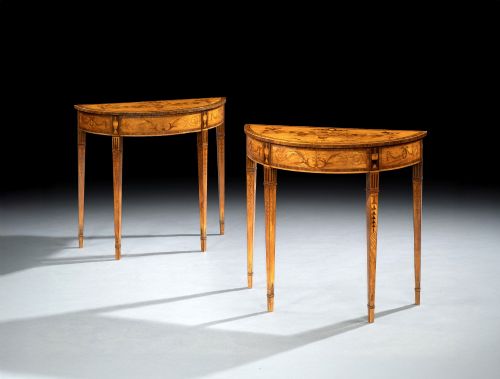
Georgian Satinwood Table
A georgian satinwood table brings figured timber and fine inlay into a room, offering both practical surface area and the refined presence of eighteenth and nineteenth-century cabinet making.
Georgian Satinwood Table
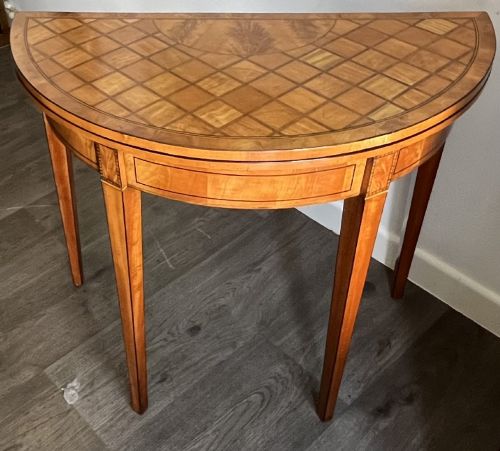
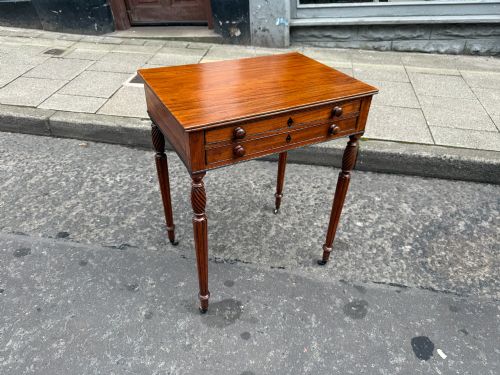
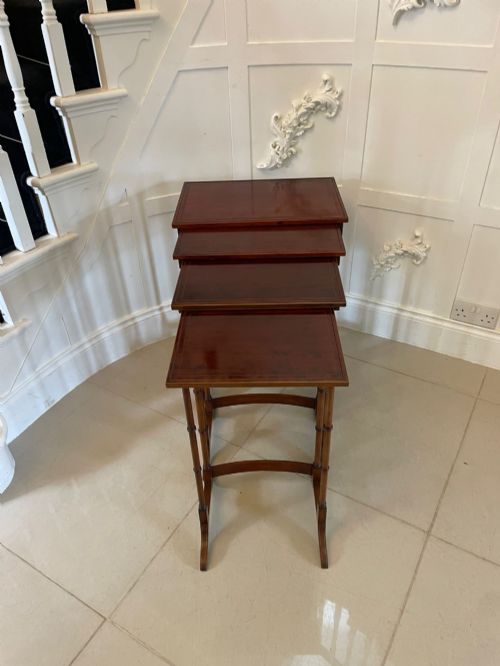
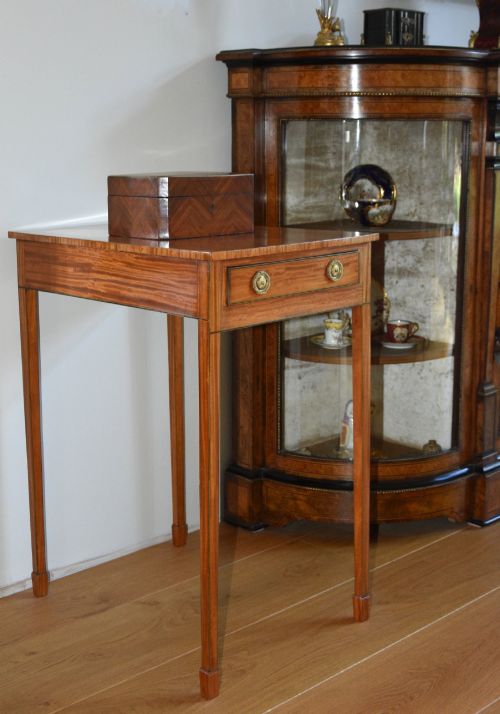
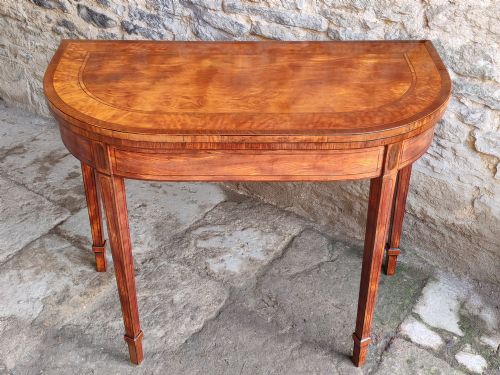
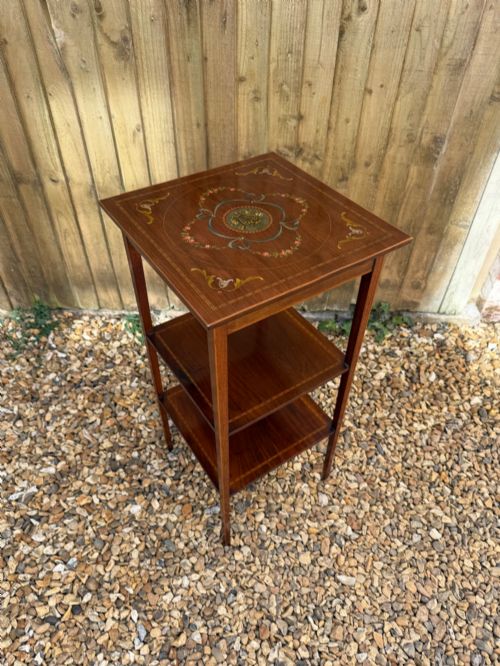
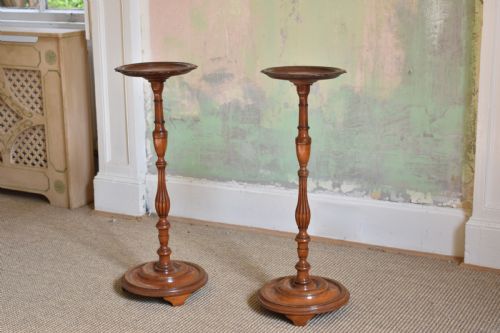
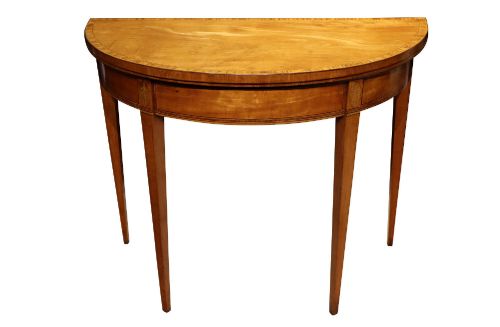
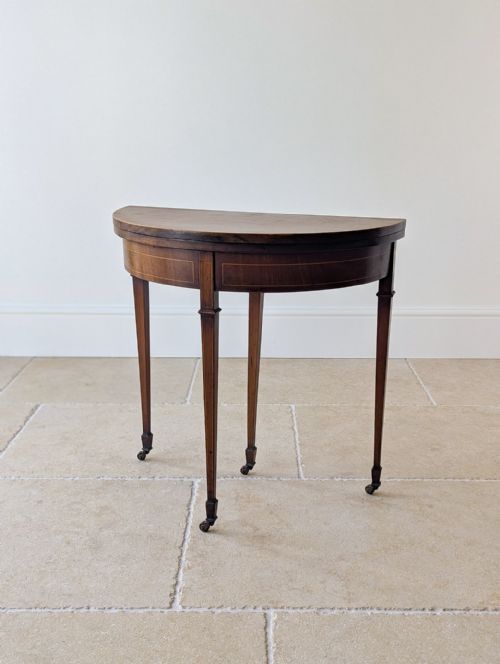
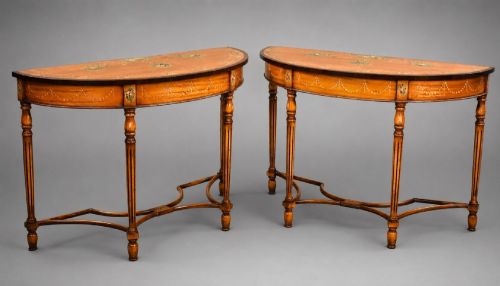
A georgian satinwood table encompasses a broad variety of domestic furniture, most frequently appearing as card tables, Pembroke tables, demi-lune console tables, and occasional stands. The examples on this page span the eighteenth century, the Regency era, and later revivals from the Edwardian period, reflecting shifting domestic tastes for light timber.
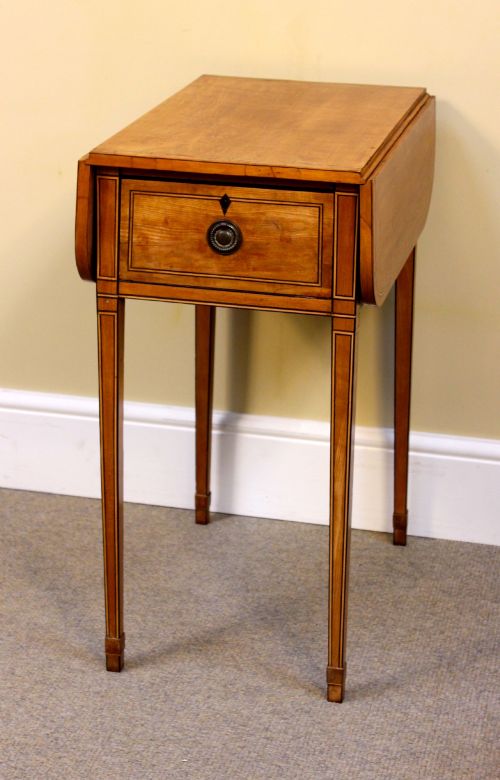
Card tables and Pembroke tables dominate the selection, often featuring hinged tops or drop leaves designed for flexibility in period sitting rooms and drawing rooms. Side tables and desks also recur frequently, showing how cabinet makers adapted the bright timber to both formal display and private writing tasks.
Originating largely in English workshops, these pieces often date from the George III period and the subsequent Sheraton Revival, drawing on neoclassical design principles. Buyers encounter both primary satinwood construction and mahogany structures enhanced by satinwood banding and crossbanding.
Materials and Technique
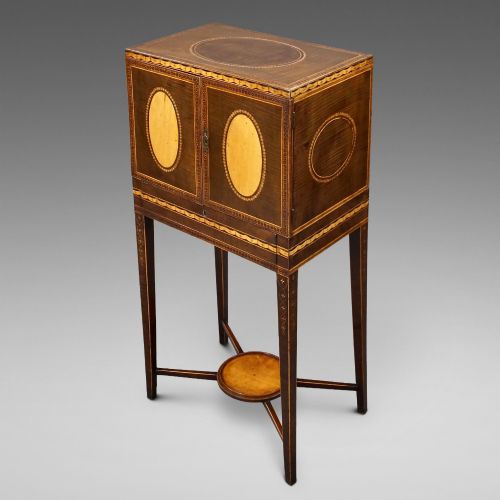
Makers utilised satinwood for its luminous, light-reflecting grain, frequently pairing it with contrasting timbers such as mahogany, rosewood, kingwood, and harewood. Inlaid borders and motifs incorporated boxwood and ebony stringing, creating geometric precision around the edges of table tops and drawers.
Marquetry and parquetry techniques required exceptional skill, involving the precise fitting of tinted and natural wood veneers into intricate floral or neoclassical patterns. Cabinet makers employed crossbanding to frame the principal grain directions, securing the edges while adding visual depth to the surface.
Several card tables conceal clever swing-leg mechanisms designed to support midnight wagers centuries ago.
Judging Quality
Quality rests upon the selection of timber veneers and the clarity of the inlay work, where crisp lines and tight joints distinguish superior craftsmanship from simpler production. The best examples display richly figured satinwood that catches the light naturally without relying on heavy modern finishes.
Structural integrity and the retention of original hardware, such as brass galleries, handles, or swing-leg mechanisms on card tables, determine the standing of a piece. Subtle details like hand-cut dovetails in drawer construction and harmonious proportions separate standard workshop output from exceptional cabinet work.
The Georgian Satinwood Table Glossary
- Crossbanding
- A border of veneer laid around the edge of a table top with the grain running perpendicular to the centre panel. This technique frames the primary timber and protects vulnerable edges.
- Demi-lune
- A half-moon shape common in card tables and console tables designed to stand flush against a wall. These pieces often feature a fold-over top supported by a swinging rear leg.
- Pembroke table
- A small, versatile table with two hinged drop leaves and a central drawer, popular for breakfast or writing. The design dates to the eighteenth century and offers adjustable surface space.
- Marquetry
- The art of forming decorative patterns using fitted pieces of wood veneer applied to a structure. Craftsmen used different toned timbers to create pictorial designs.
- Stringing
- Very narrow strips of contrasting wood inlaid into channels in the furniture surface. It provides delicate linear borders around panels and drawer fronts.
Georgian Satinwood Table: Frequently Asked Questions
How do I identify a genuine period piece?
Examine the secondary woods inside the drawers and the ageing of the timber beneath the finish, which should show natural oxidation rather than artificial distressing.
Construction methods, such as hand-cut dovetails and traditional glue formulations, offer further confirmation of eighteenth or nineteenth-century manufacture.
Can I use a card table every day?
Card tables function well for daily placement in a hallway or living room, provided you protect the polished surface from moisture and direct heat. The folding mechanisms are robust, but care should be taken when pivoting the rear leg to support the opened leaf.
Many owners use them as console or serving surfaces when the top remains closed against the wall.
What is the difference between Georgian and Sheraton Revival?
Genuine Georgian pieces date from the eighteenth and early nineteenth centuries during the reigns of the Hanoverian kings. Sheraton Revival furniture was produced later, chiefly around nineteen hundred, copying the lighter neoclassical styles popularised by Thomas Sheraton.
Both categories utilise satinwood and inlay, but secondary timbers and construction wear help distinguish the earlier originals from the later copies.
How do I care for satinwood furniture?
Keep satinwood surfaces away from direct sunlight and radiators to prevent the light timber from darkening unevenly or the veneer from drying out. Dust regularly with a soft, dry cloth and apply occasional high-grade furniture wax to nourish the historic finish.