


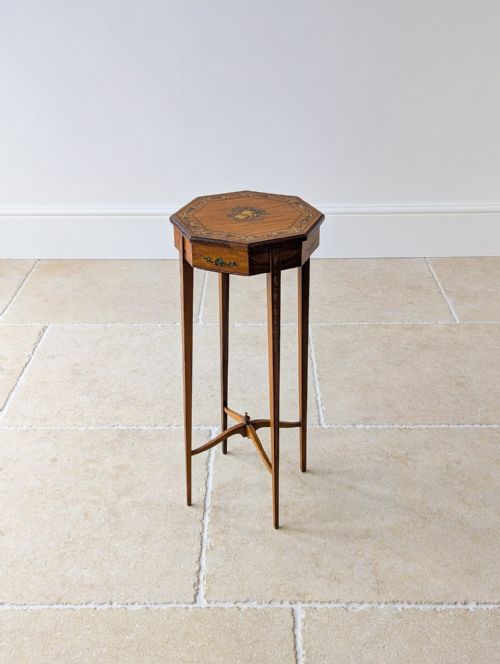
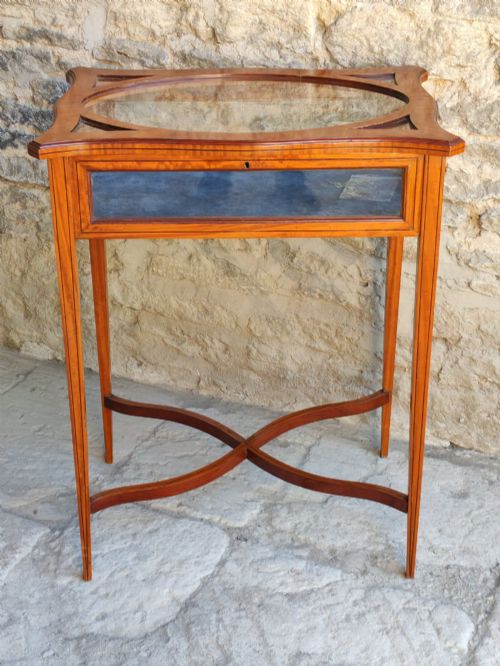
Sheraton Satinwood Table
When you search for a sheraton satinwood table, you encounter polished timber from the late eighteenth century and its later Edwardian revivals.
Sheraton Satinwood Table
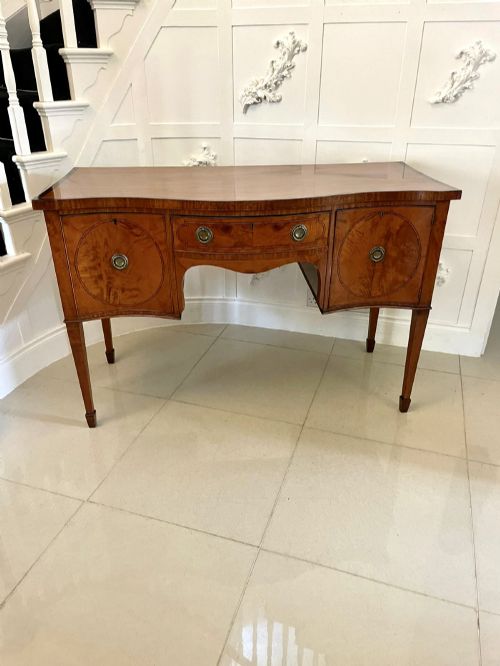
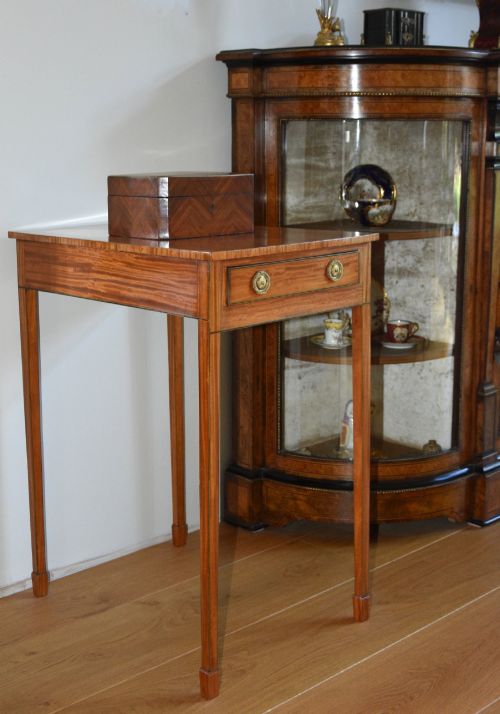
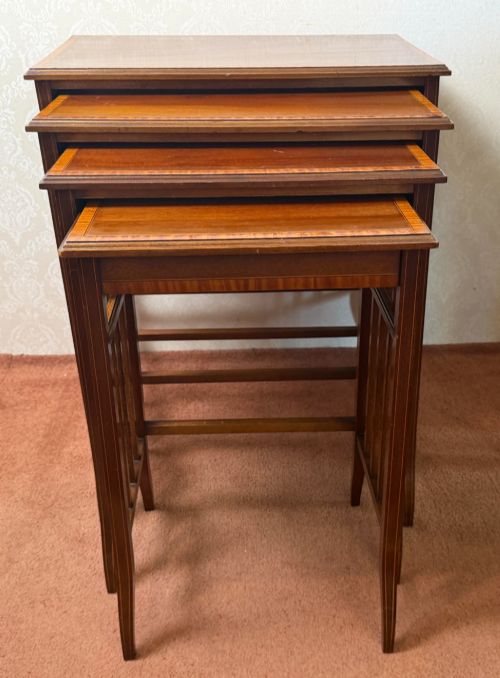
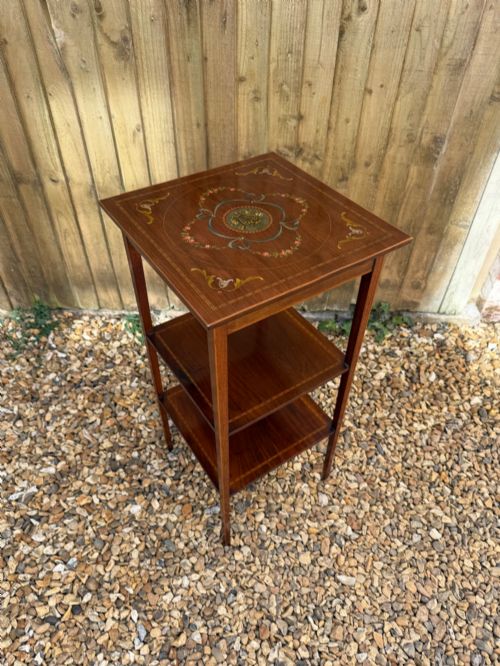
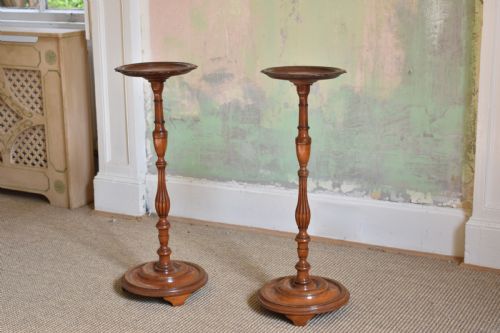
A sheraton satinwood table encompasses pieces produced during the Georgian period alongside later Victorian and Edwardian revivals. These items appear primarily as card tables, Pembroke tables, writing desks, and occasional lamp stands.
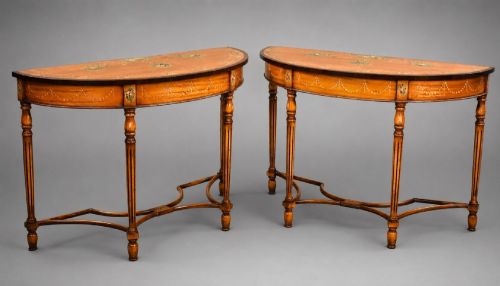
The aesthetic draws directly from the neoclassical designs associated with Thomas Sheraton, prioritising straight or gently curved lines, satinwood veneers, and contrasting stringing. Surviving examples range from small candle stands to large console tables designed for formal reception rooms.
Materials and Construction Techniques
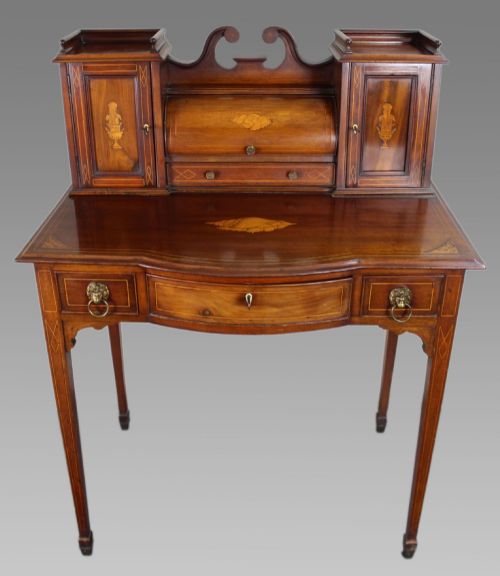
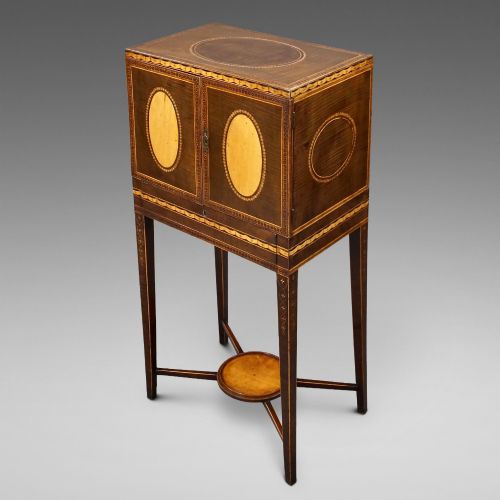
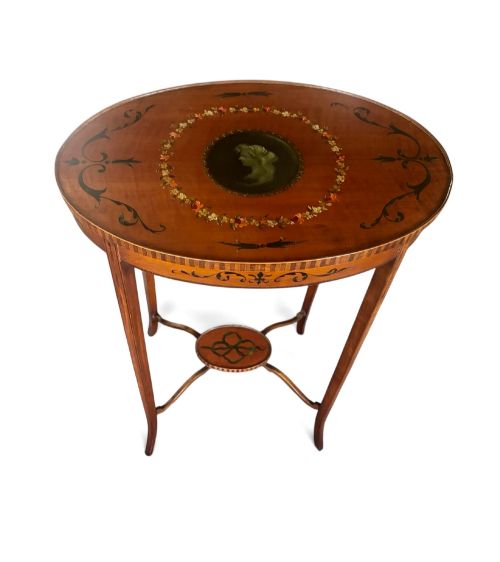
Cabinet makers utilised yellow-toned satinwood as a primary veneer, often laid over a supportive carcass of mahogany or pine. Detail was added through intricate inlay and marquetry, employing contrasting woods such as boxwood, sycamore, and rosewood.
Surfaces frequently feature hand-painted floral swags, ribbons, or classical motifs executed directly onto the wood. Structural stability was achieved using traditional tenon joints and hand-cut dovetails within drawer construction.
Sheraton Satinwood Table Retail Price Guide 2026
Typical asking prices for sheraton satinwood table among the pieces listed under this phrase on Sellingantiques today, from the lower quarter to the upper quarter. They describe what is for sale here now, not the wider market.
Some Edwardian writing desks hide clever compartment springs that pop open secret stationery drawers when pressed.
Determinants of Quality
The distinction between ordinary and exceptional pieces lies in the choice of timber and the precision of the marquetry. Highly figured satinwood exhibits a distinct chatoyant shimmer, whereas lesser examples appear flat and uniform in tone.
The finesse of the hand-painted decoration and the crispness of the boxwood stringing further differentiate workshop output. Original hardware, such as brass castors and swing handles, elevates the integrity of the piece.
Edwards and Roberts·Maple and Co
The Sheraton Satinwood Table Glossary
- Satinwood
- A lustrous hardwood native to the West Indies and Ceylon, prized for its golden sheen and smooth texture when polished. It formed the primary decorative surface for late eighteenth-century neoclassical furniture.
- Crossbanding
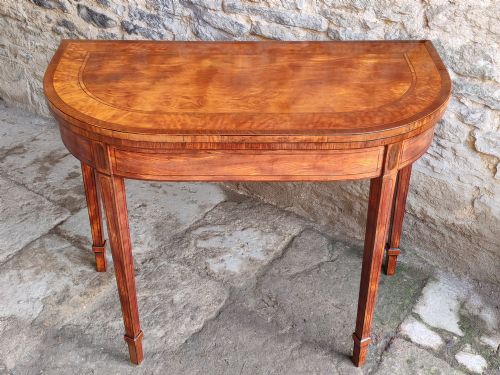
- A border veneer applied to the edges of a table top where the grain runs perpendicular to the central panel. This technique frames the primary timber and prevents edge warping.
- Marquetry
- The art of forming decorative patterns using fitted pieces of various coloured veneers. Craftsmen assembled these pictorial designs on furniture surfaces before gluing them to the carcass.
- Demi-lune
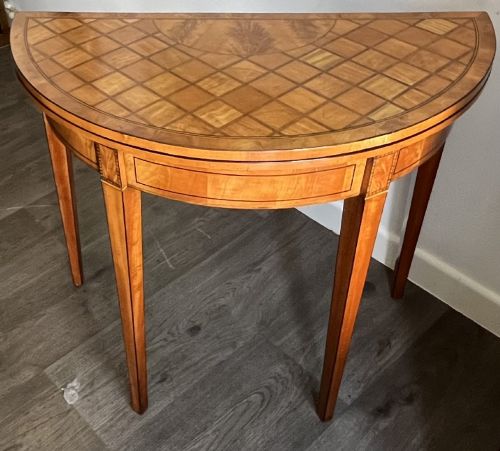
- A half-moon shape characteristic of console and card tables designed to stand flat against a wall. These tables often feature folding tops supported by a swinging rear leg.
- Pembroke
- A small rectangular table featuring two drop leaves supported by hinged brackets. Named after the Earl of Pembroke, these versatile pieces served for breakfast, writing, or needlework.
Sheraton Satinwood Table: Frequently Asked Questions
How do I distinguish eighteenth-century pieces from Edwardian revivals?
Eighteenth-century originals display hand-cut secondary timbers, such as oak or pine drawer linings, alongside age-related oxidation in the grain.
Edwardian Sheraton revival pieces often utilise machine-sawn components, standardised fixings, and internal construction methods characteristic of the early twentieth century.
Were these tables used for dining?
Most satinwood tables served specialised domestic functions rather than heavy family dining. Card tables accommodated evening entertainment, while Pembroke tables functioned as occasional writing desks or breakfast surfaces.
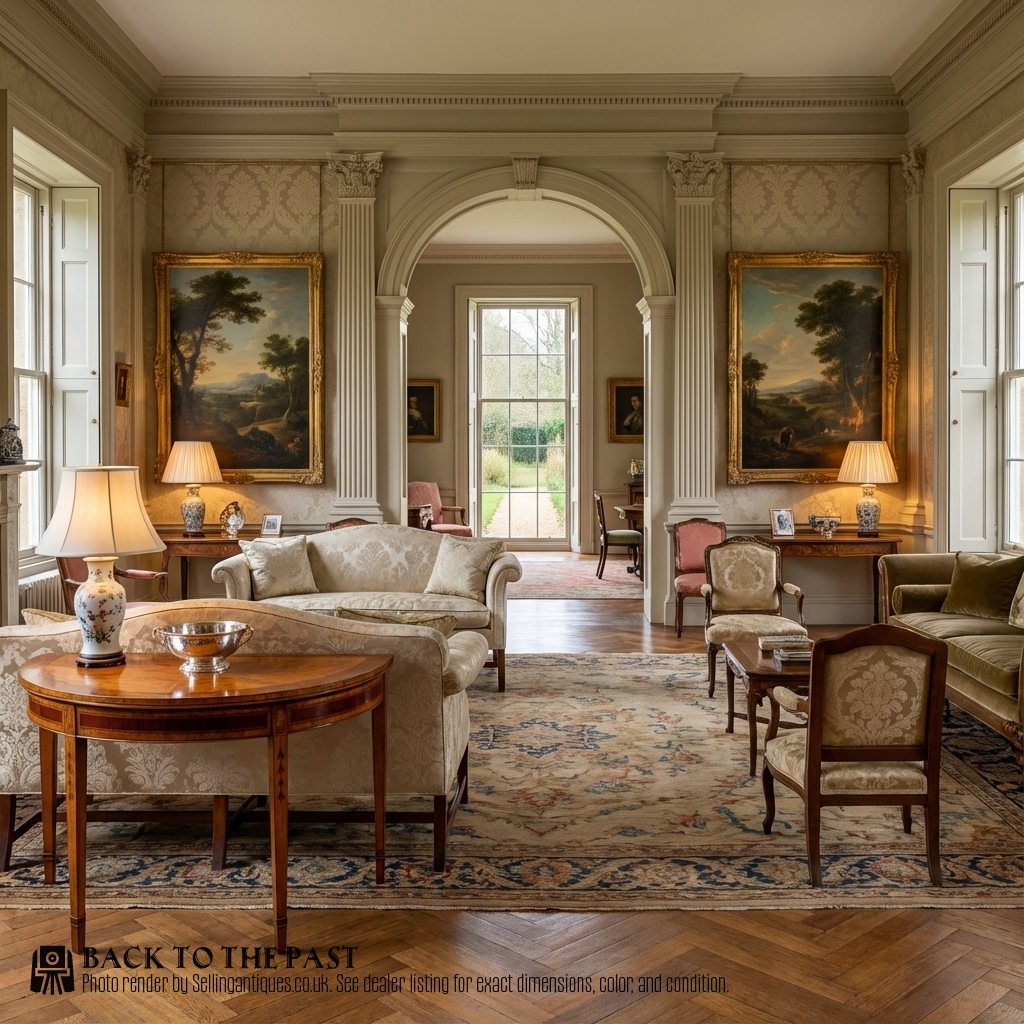
Console and lamp tables remained stationary against drawing room walls to display decorative ceramics or lighting.
How should I care for satinwood furniture?
Protect antique satinwood surfaces from direct sunlight to prevent the golden timber from darkening or bleaching unevenly over time. Maintain stable room humidity to avoid timber shrinkage and veneer lifting.
Apply occasional microcrystalline wax to nourish the polish without leaving heavy residue.
What does crossbanding indicate on a table top?
Crossbanding demonstrates an elevated level of cabinet-making skill, where thin strips of contrasting timber are mitred around the perimeter of the primary veneer. This decorative border frames the grain and provides a finished edge.
In finer pieces, multiple bands of boxwood and ebony stringing accompany the primary crossbanding.