


Georgian Book Trough
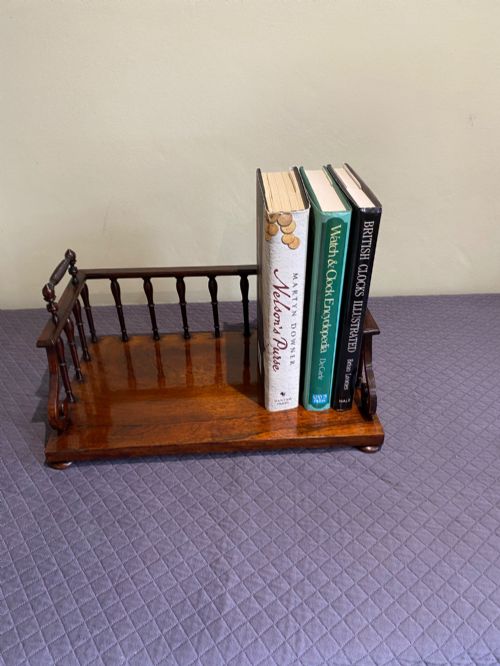
These georgian book trough pieces are desk and table accessories designed to hold volumes upright, bringing practical elegance to a library or study.
Georgian Book Trough
When you search for a georgian book trough, you encounter portable book carriers, desk stands, and extending book slides designed for tabletop use. These library pieces organise volumes within easy reach, reflecting the functional requirements of 18th-century and 19th-century studies.
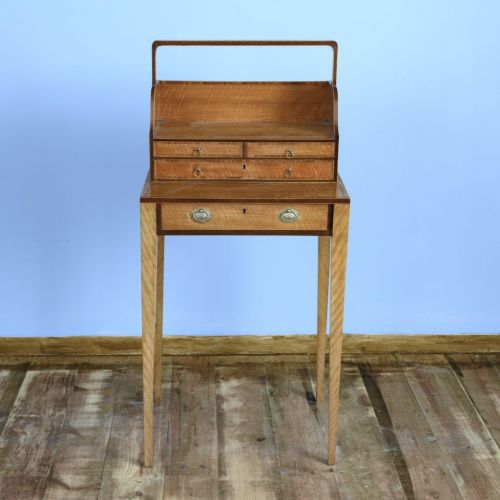
The versions you meet most frequently on this page date from the Georgian, Regency, and Victorian periods, often taking the form of open troughs, carriers, or cheverets. Makers constructed them from timbers such as mahogany, rosewood, and satinwood, occasionally incorporating brass details or wirework.
Forms range from simple tabletop book stands to compartmentalised desk organisers with integrated carrying handles. Surviving examples demonstrate how past readers kept working texts accessible on writing tables and library desks.
How they were made
Cabinet makers utilised dense, figured timbers like mahogany, rosewood, and satinwood, selecting boards for rich grain patterns and deep natural colour. These woods provided the structural rigidity necessary to support heavy leather-bound volumes without warping.
Joinery techniques included precise dovetailing and panel construction to secure the upright ends to the base boards. Brass fittings, such as carrying handles and hinges, were countersunk and secured with hand-turned screws.
Some Victorian readers clearly possessed a theatrical streak, commissioning novelty desk rests designed to make their library volumes look like resting performers.
What varies in quality
Quality shows in the selection of timber veneers and solid stock, where highly figured mahogany or contrasting satinwood inlay indicates a piece commissioned for a principal room rather than a utilitarian office. The crispness of carved details and the integration of brass mounts also separate standard workshop output from finer cabinet work.
Construction methods reveal the standard of production, particularly in the precision of joints and the retention of original finish. Pieces that retain their patination and structural integrity without heavy restoration hold greater interest for collectors of desk accessories.
The Georgian Book Trough Glossary
- Cheveret
- A small portable stand with a tiered upper section for books or writing materials above a drawer. This form emerged in the 18th century as a convenient desk accessory.
- Book carrier
- A tabletop trough or stand featuring a central carrying handle for moving volumes between rooms. These items typically combine solid mahogany or rosewood construction with brass hardware.
- Book slide
- An extending desk stand designed to hold an adjustable number of volumes upright. Mechanics often include sliding wooden sections or concertina wire actions.
- Patina
- The surface sheen and mellowing developed by wood over centuries of handling and polishing. Good patination reflects age and careful maintenance.
- Regency
- A British design period spanning the early 19th century, characterised by classical influences and rich dark timbers. Pieces from this era often incorporate bold brass mounts.
Georgian Book Trough: Frequently Asked Questions
What is a georgian book trough used for?
These items serve to hold, organise, and transport volumes on a desk or library table. They keep active reading material upright and within reach.
Historically, owners placed them on writing tables or carried them between rooms to keep working texts close at hand during the Georgian and Regency periods.
How do I date a book trough?
Dating relies on timber choices, construction methods, and stylistic details typical of periods like the 18th century, Georgian, Regency, or Edwardian revival. Mahogany and satinwood often point to earlier craftsmanship.
Examining the fixings, such as hand-cut screws or brass hardware, helps distinguish genuine period pieces from later Georgian Revival reproductions.
Are these pieces sturdy enough for modern books?
Solid timber construction in dense woods like mahogany and rosewood provides ample strength for modern hardback volumes. The original purpose was to support heavy leather-bound folios.
Care should be taken with extending mechanisms on antique book slides to ensure smooth movement without straining the historical wood.