

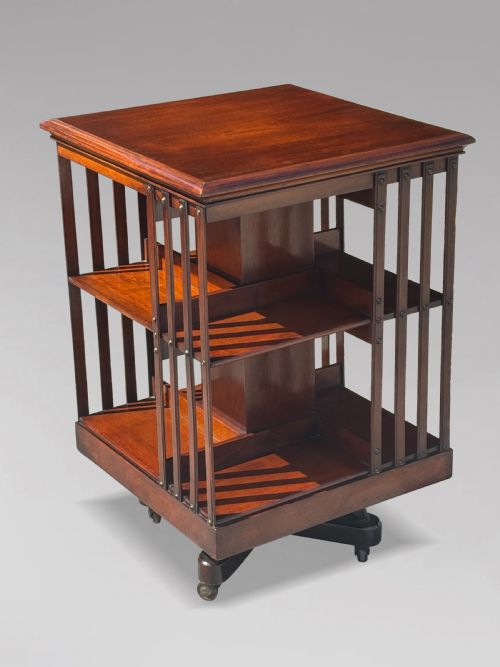
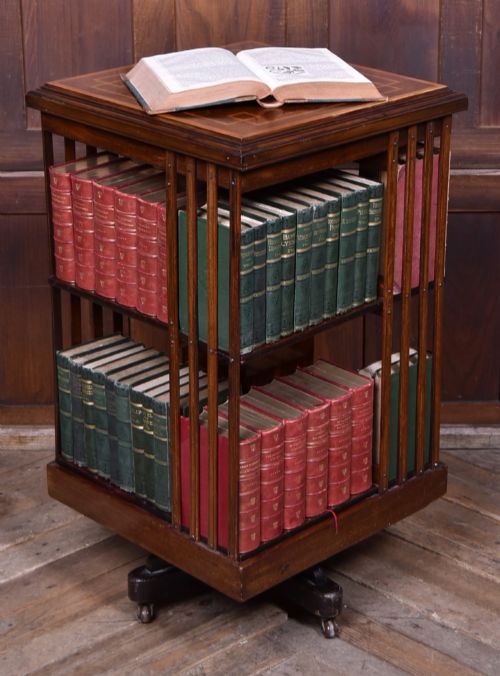


Antique Book Caddy
An antique book caddy holds daily volumes within easy reach, bringing practical surface organisation and period timber warmth to a desk or tabletop.
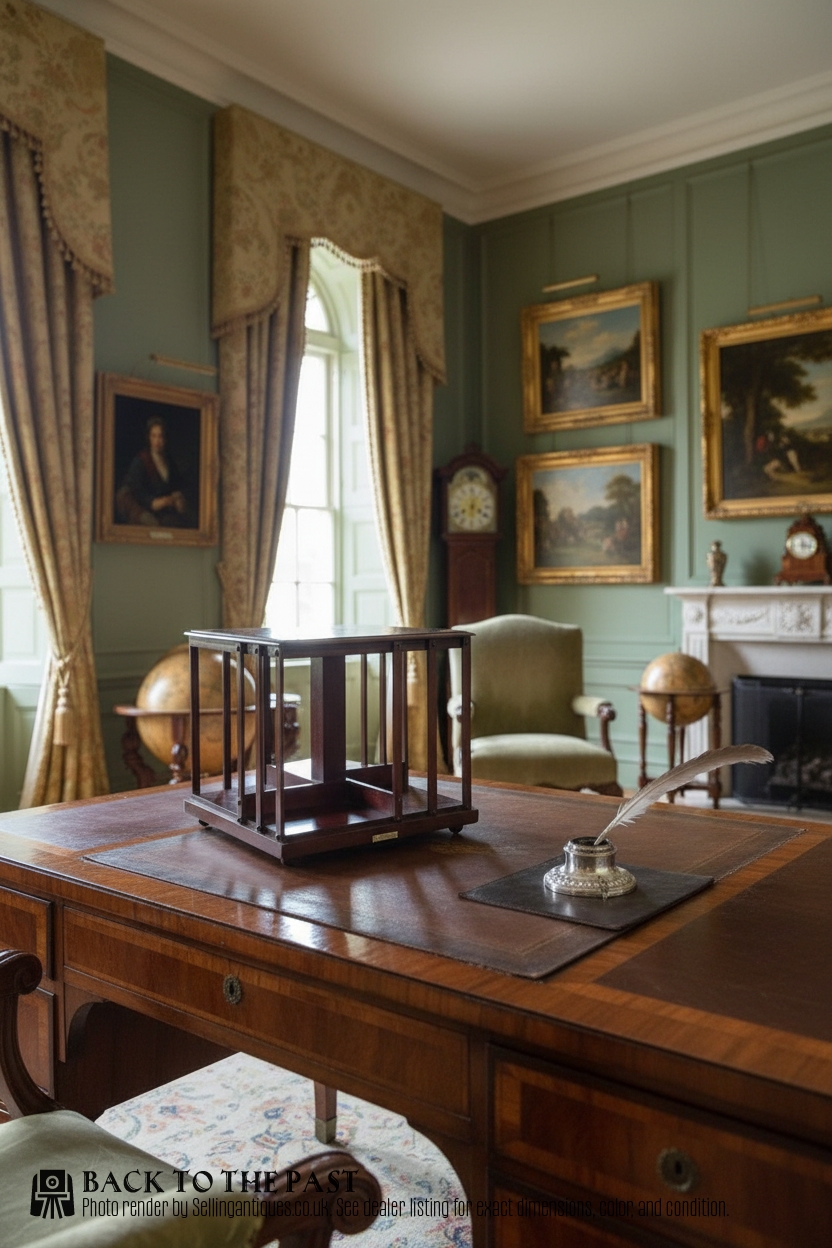
Antique Book Caddy
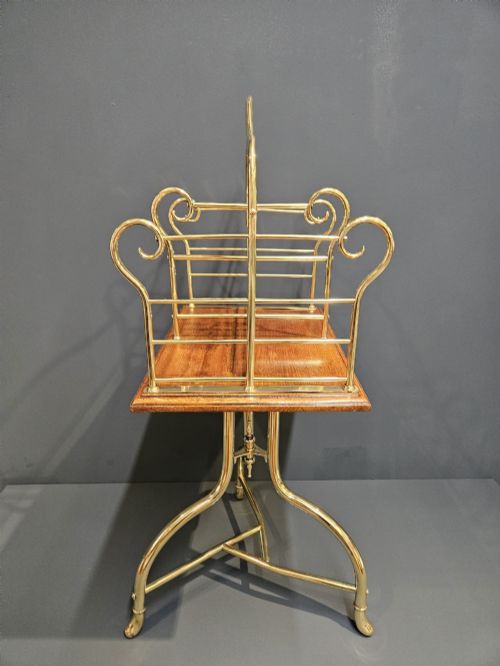
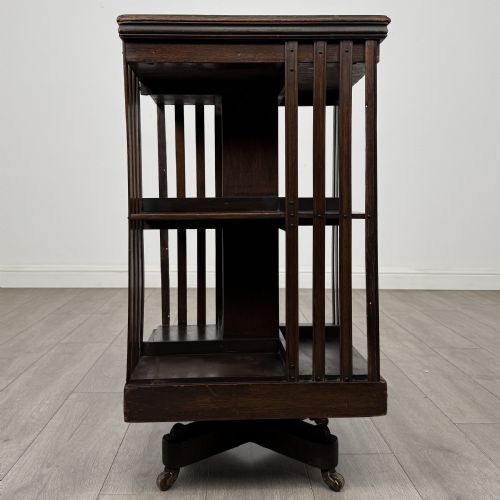
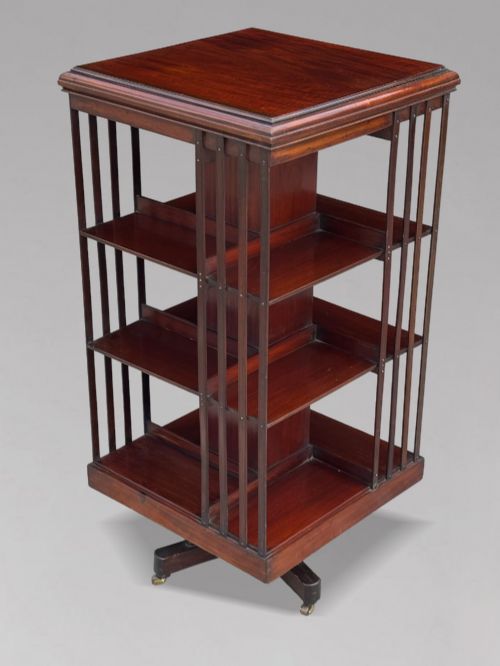
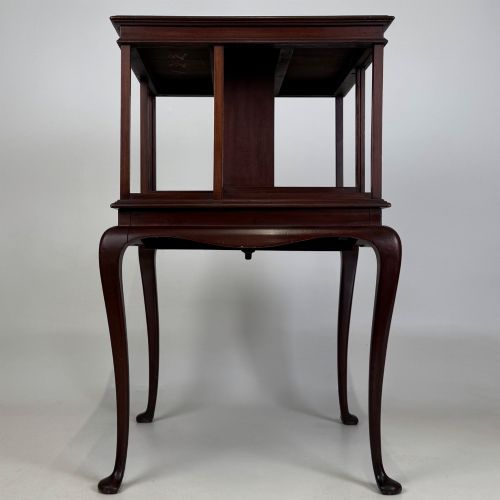
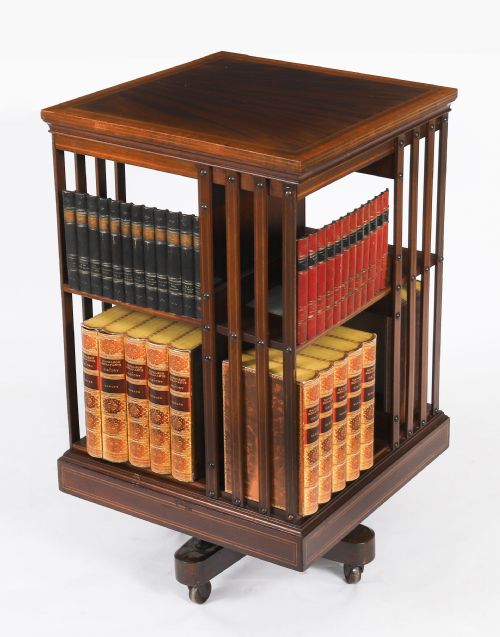
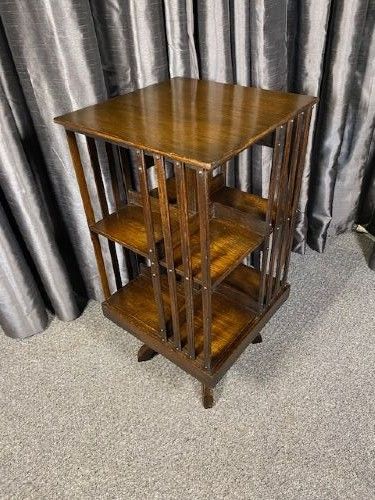
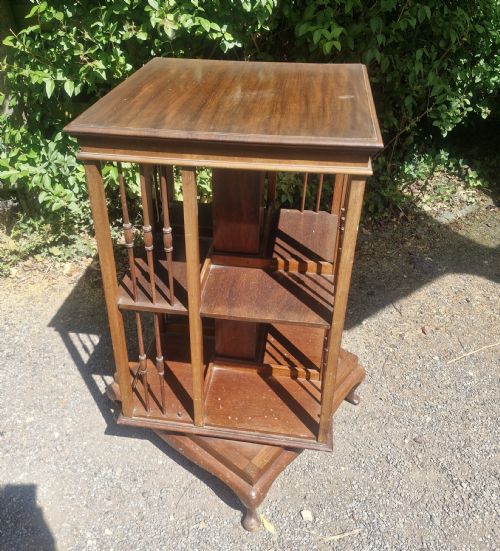
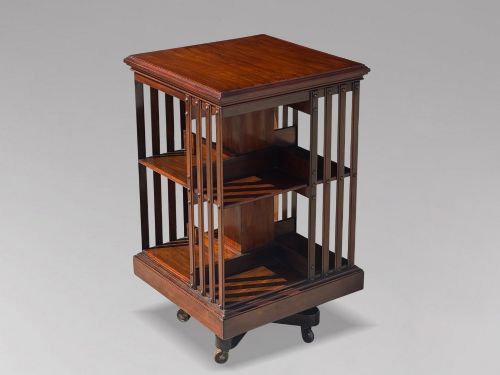
When you search for an antique book caddy, you look at desktop bookcases, book troughs, and revolving bookstands designed to keep texts organised. These pieces range from compact Edwardian table models to 19th-century revolving designs and Georgian desk stands.
You meet Edwardian mahogany revolving bookcases most frequently on this page, alongside oak table troughs and painted library stands. The selection spans periods from the 18th century through the Victorian and Edwardian eras into the 1930s Art Deco phase.
The objects serve as functional furniture for holding small libraries on desks, floors, or firesides. Form follows utility, whether as a rotating stand for rapid title selection or an open-front trough for volumes in constant use.
How these pieces were constructed
Carpenters utilised solid timber and veneers, primarily selecting mahogany and oak for structural stability. Satinwood inlay added decorative contrast on select Edwardian and 18th-century surfaces.
Metal components such as brass fittings and cast iron mechanisms supported the rotation of revolving bookcases and the reinforcement of desk carriers. Joinery techniques varied from simple open-front troughs to complex rotating platforms designed for heavy loads of books.
Antique Book Caddy Retail Price Guide 2026
Typical asking prices for book caddy among the pieces listed under this phrase on Sellingantiques today, from the lower quarter to the upper quarter. They describe what is for sale here now, not the wider market.
Listings feature mahogany as the dominant wood, accompanied by oak, walnut, and satinwood inlay across multiple decades.
What separates examples in quality
The refinement of timber grain and the precision of inlay distinguish finer pieces from standard utility items. Flame mahogany and crisp satinwood stringing elevate the visual impact of Edwardian and Victorian examples.
Mechanical smoothness defines the best revolving stands, where the underlying spindle turns without friction or wobble. Heavier timber gauge and balanced tier construction separate stable library pieces from lighter desk accessories.
Waring and Gillows
The Antique Book Caddy Glossary
- Revolving bookcase
- A freestanding or table-top bookcase mounted on a hidden rotating pivot. This design allows access to volumes from all sides in a compact footprint.
- Book trough
- An open-topped container with angled sides designed to hold books upright on a desk or floor. The V-shape keeps volumes from sliding sideways.
- Satinwood inlay
- A decorative technique where contrasting light-coloured timber is inserted into recesses in a darker ground wood. It frames panels on Edwardian and Georgian surfaces.
- Cheveret
- A small mobile writing table fitted with a shelf or book stand on top. It combines surface workspace with integrated book storage.
- Georgian revival
- A style movement replicating the proportions and decorative vocabulary of 18th-century design. Pieces show classical restraint and balanced symmetry.
Antique Book Caddy: Frequently Asked Questions
What is an antique book caddy used for?
These items organise active reading material on desks, tables, or beside fireplaces. They keep frequently referenced volumes accessible within arms reach.
Different forms serve different spaces, from rotating desktop models to open troughs placed directly on the floor.
How do I tell an Edwardian piece from a Victorian one?
Edwardian examples often display lighter timbers, satinwood inlay, and delicate Arts and Crafts or Art Nouveau detailing. Victorian versions typically utilise heavier mahogany with robust proportions and darker finishes.
Construction methods and secondary woods also help separate the late 19th-century pieces from early 20th-century items.
Do revolving bookcases need special care?
The internal rotating mechanism benefits from occasional light cleaning and checking of the central pivot. Avoid placing uneven weight loads on opposing sides to prevent strain on the turning base.
Maintaining stable room humidity protects the solid timber and prevents veneer from lifting.
Where should I place a book trough?
Tabletop versions sit comfortably on large desks or sideboards to hold current reference books. Floor-standing troughs suit corners or firesides where books need to stay upright and visible.
Keep wooden pieces away from direct heat sources to preserve the finish.