

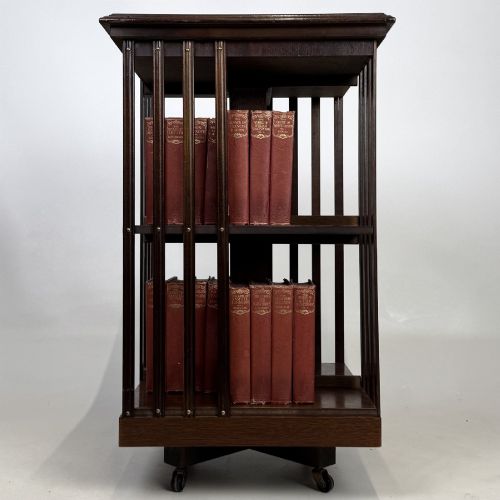
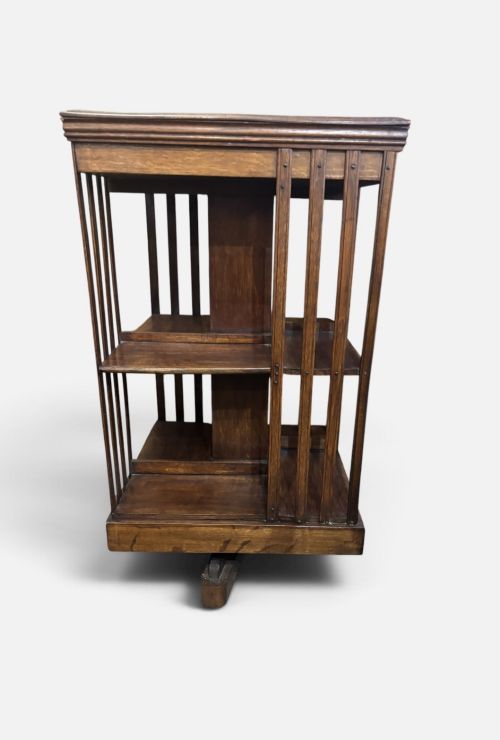
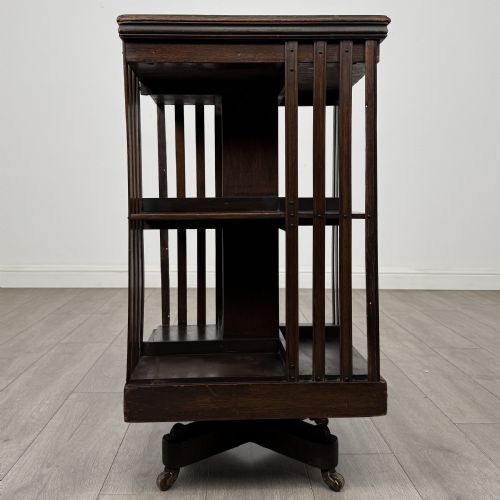
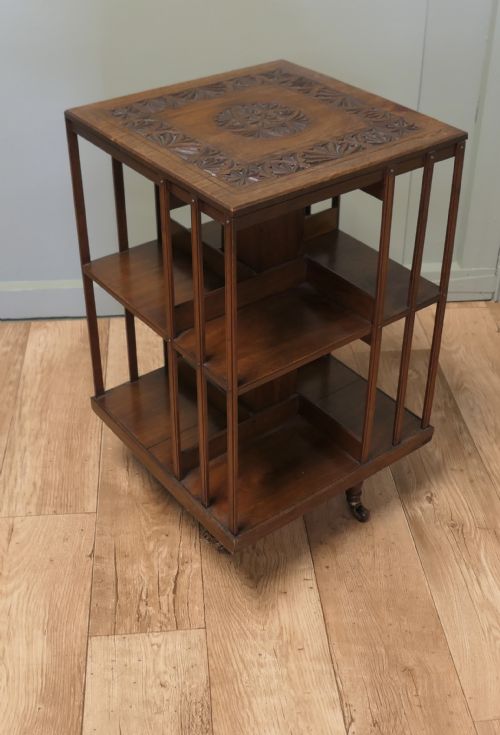

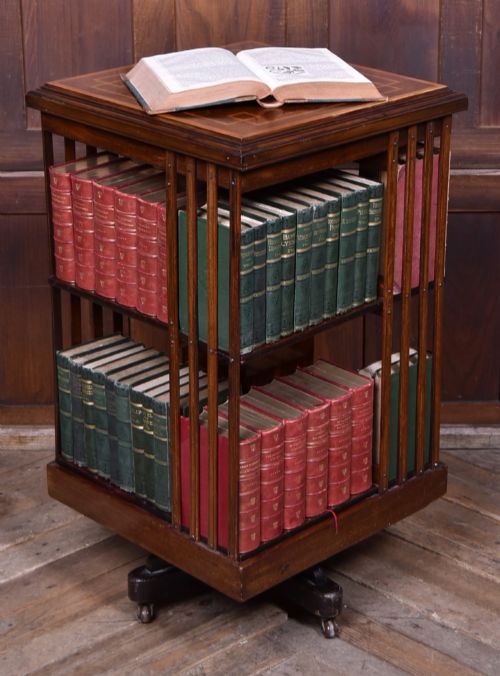
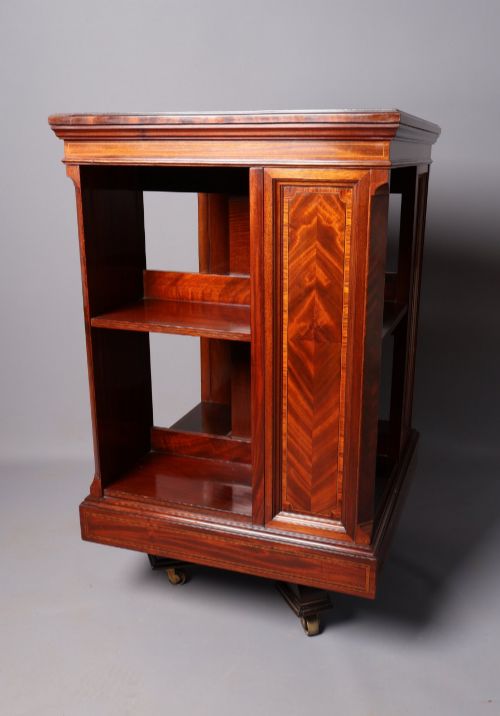
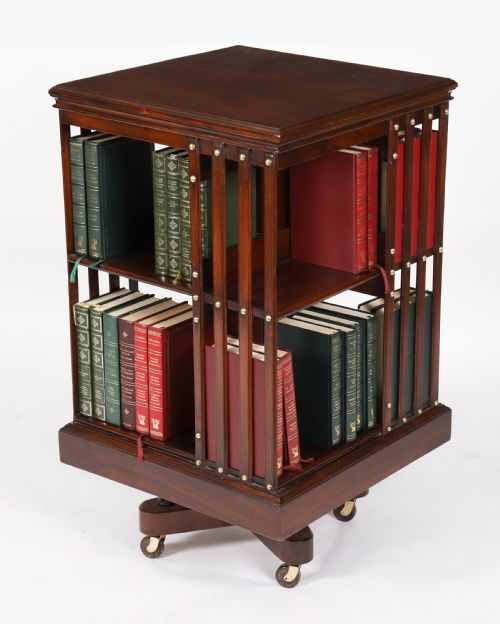
Two Tier Revolving Bookcase
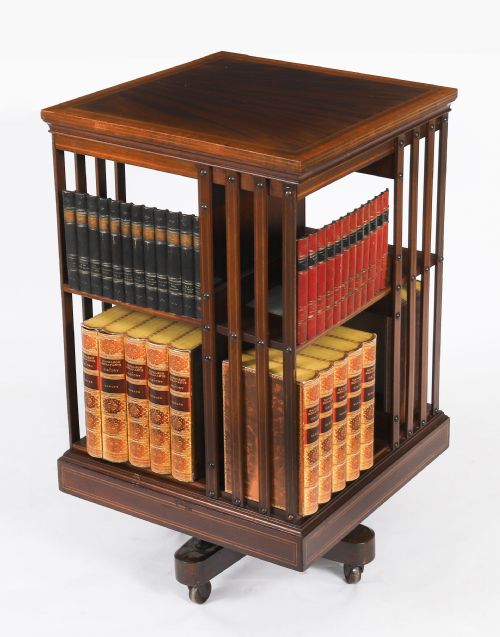
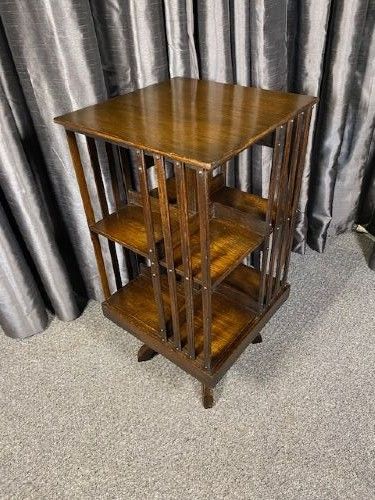
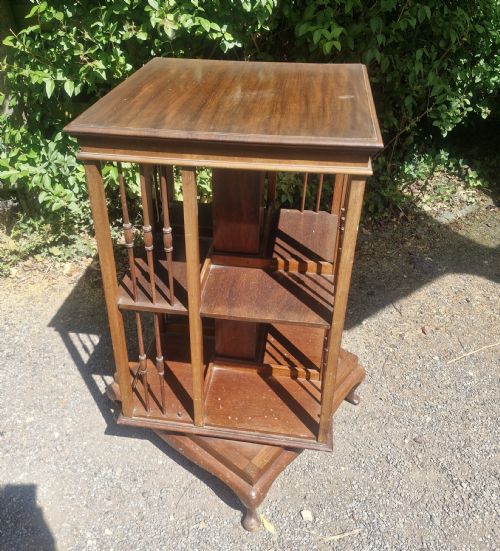
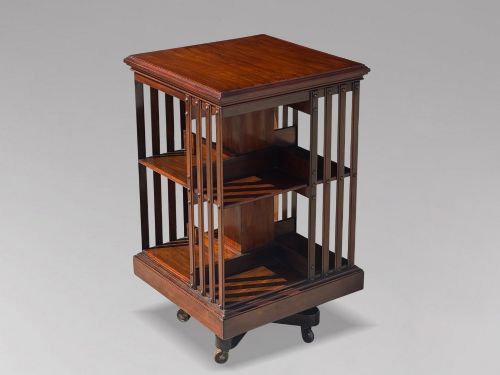
A two tier revolving bookcase turns smoothly to hand over its volumes, bringing useful surface space and timber warmth to a study corner.
Two Tier Revolving Bookcase
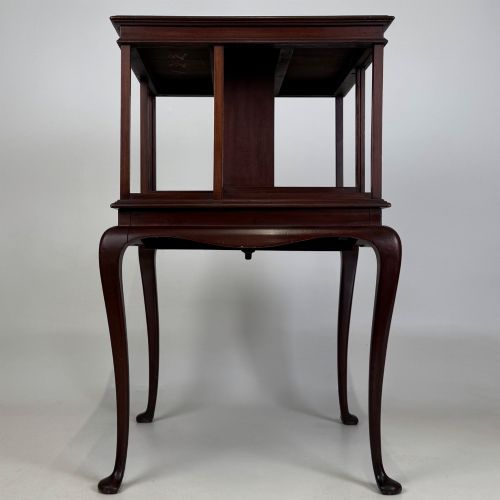
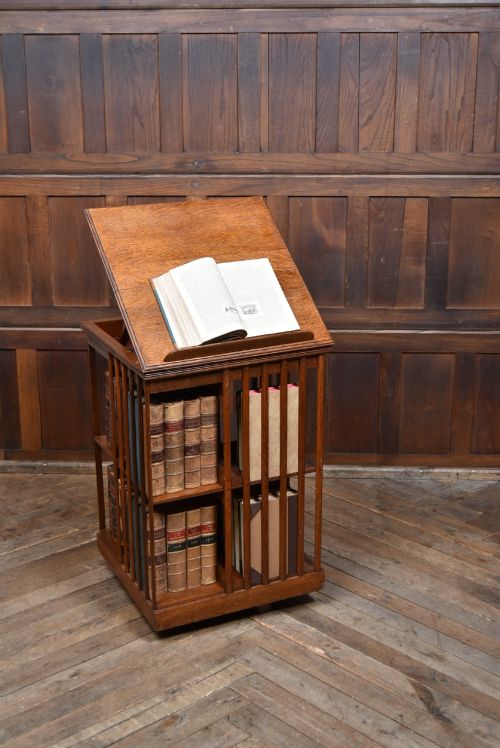
When you search for a two tier revolving bookcase, you encounter compact, rotating wooden furniture designed to sit beside an armchair or desk for holding frequently read volumes. These pieces appear most often from the Victorian and Edwardian periods, stretching into the early twentieth century.
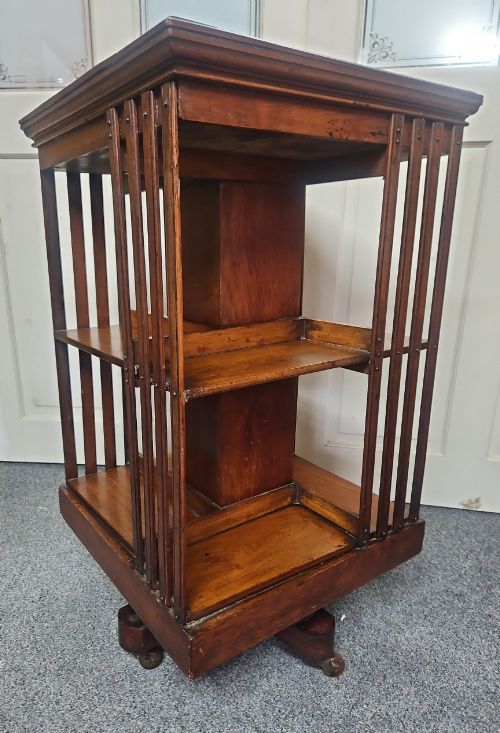
The format relies on a central spindle and a concealed revolving mechanism beneath square or circular wooden tiers. Mahogany is the dominant timber across the selection, accompanied by oak, walnut and rosewood.
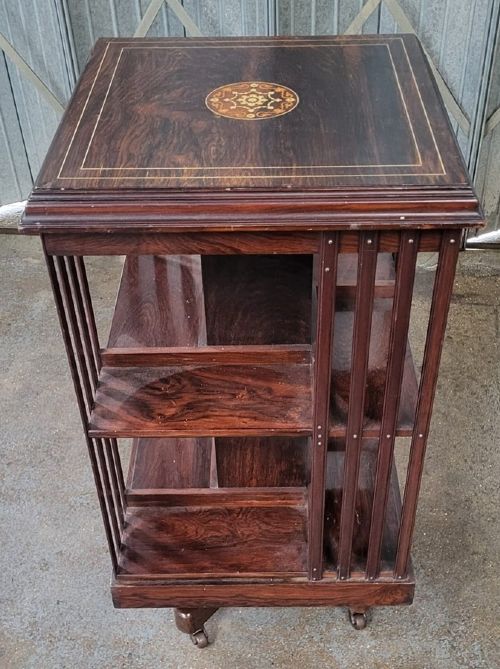
Most examples found here date from the Edwardian era, featuring slatted sides and cross-banded tops. You also encounter styles drawing on Chippendale and Queen Anne revivals, alongside circular configurations.
How they were made
Cabinet makers constructed these revolving units using solid mahogany, oak or walnut for the structural frames, often selecting flame mahogany veneers for the top surface to show off rich grain patterns.
Makers integrated brass and cast iron components within the undercarriage mechanism to allow smooth rotation under weight, while supporting the tiers with vertical slats or turned spindles.
Inlaid decoration in satinwood and rosewood appears on select Edwardian pieces, contrasting with the darker body timber through banding and stringing.
Two Tier Revolving Bookcase Retail Price Guide 2026
Typical asking prices for two tier revolving bookcase among the pieces listed under this phrase on Sellingantiques today, from the lower quarter to the upper quarter. They describe what is for sale here now, not the wider market.
Many an Edwardian reader has lost a favourite bookmark down the central spindle shaft, only for it to emerge decades later during a dusting.
What varies in quality
The standard of timber selection and cabinet work dictates the standing of a piece, with figured flame mahogany and precise satinwood inlay marking out the more ambitious workshops.
The smoothness and stability of the revolving action depend entirely on the hidden internal mechanism, where heavier cast iron and brass hardware provides superior endurance.
Proportion and joinery detailing, such as finely turned spindle galleries and dovetailed tier construction, separate standard utility pieces from finer examples.
Maple & Co
The Two Tier Revolving Bookcase Glossary
- Revolving mechanism
- The internal bearing system, typically combining cast iron and brass, that allows the bookcase tiers to spin freely.
- Flame mahogany
- A veneer cut from the fork of the mahogany tree, prized for its swirling, feather-like grain pattern.
- Satinwood inlay
- Contrasting pale wood sections inserted into the primary timber surface to create decorative borders and motifs.
- Spindle
- A slender turned wooden post forming the protective vertical partitions between the shelves of the bookcase.
- Cross-banding
- A decorative border veneer applied so that the grain runs perpendicular to the main surface timber.
Two Tier Revolving Bookcase: Frequently Asked Questions
How do I care for the wood?
Dust the timber regularly with a soft cloth and feed the mahogany or oak occasionally with a traditional beeswax polish to maintain the finish.
Keep the revolving bookcase away from direct heat sources and strong sunlight to prevent the timber and veneer from drying out.
Can it hold heavy books?
The lower tier handles heavier volumes easily, provided the internal mechanism and base remain stable and balanced during rotation.
Distributing heavier books evenly across both tiers ensures the revolving action remains smooth and prevents strain on the central pivot.
How do I date an Edwardian piece?
Edwardian examples typically date between nineteen hundred and nineteen ten, identifiable by lighter mahogany tones and subtle satinwood inlay work.
Construction methods on pieces from this period often blend machine-cut precision with hand-finished assembly on the revolving frames.
Where should I place it?
These compact bookcases fit well beside an armchair, desk, or sofa where books remain within easy reach for daily reading.
Because the tiers rotate through a full circle, leave enough clearance space around the perimeter so the corners turn freely.