

Antique Revolving Bookstand
An antique revolving bookstand is a rotating desk accessory designed to keep multiple volumes within easy reach.
Antique Revolving Bookstand
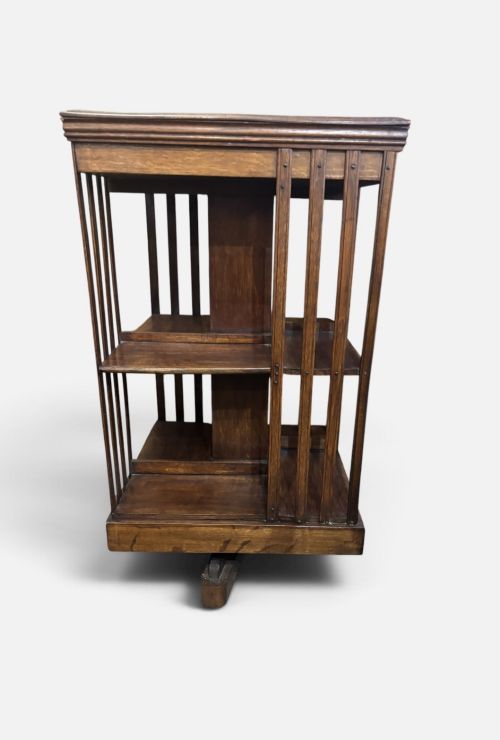
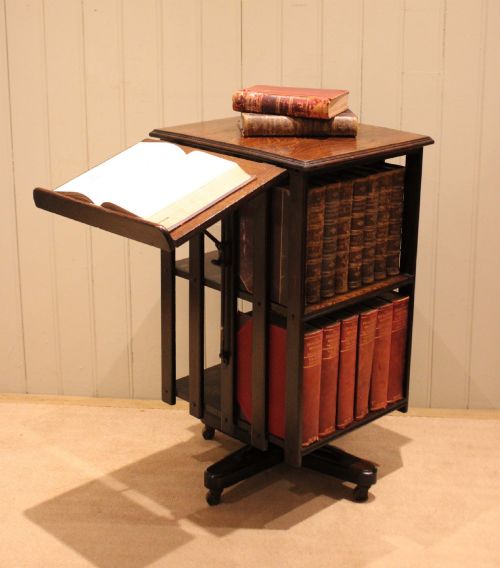
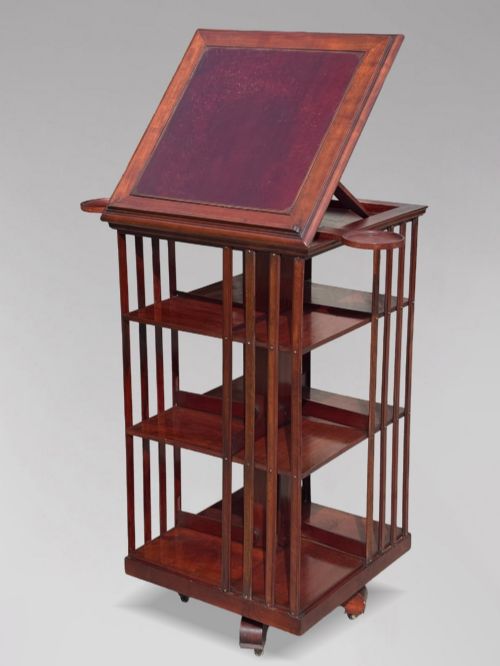
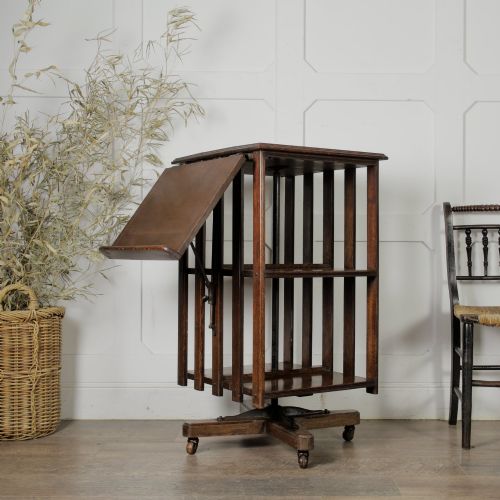
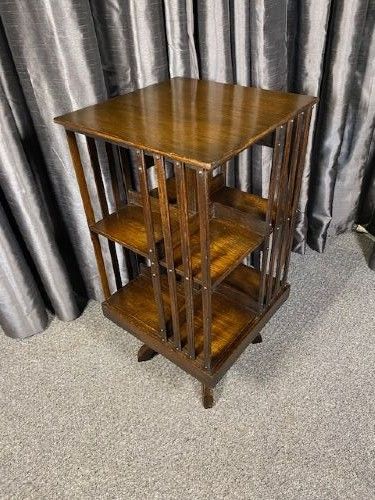
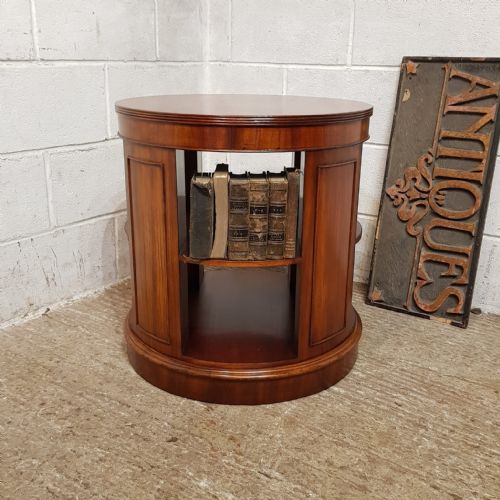
An antique revolving bookstand is a rotating desktop or table-top design intended to hold reference books or daily reading near at hand. These pieces allow a user to access several titles simply by turning the tiered structure on its base.
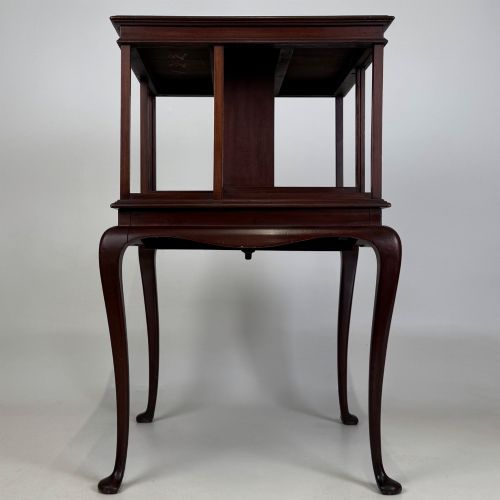
The pieces listed on this page and in the archive span the Edwardian and Victorian periods, with Edwardian examples appearing most frequently. Materials include mahogany, oak, walnut and rosewood.
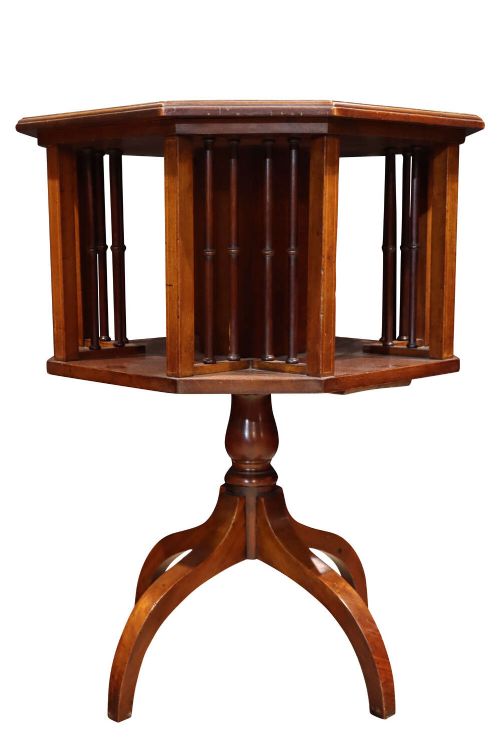
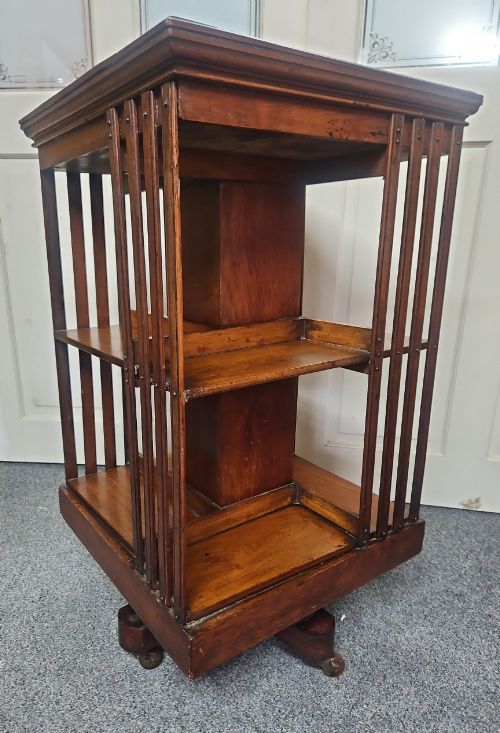
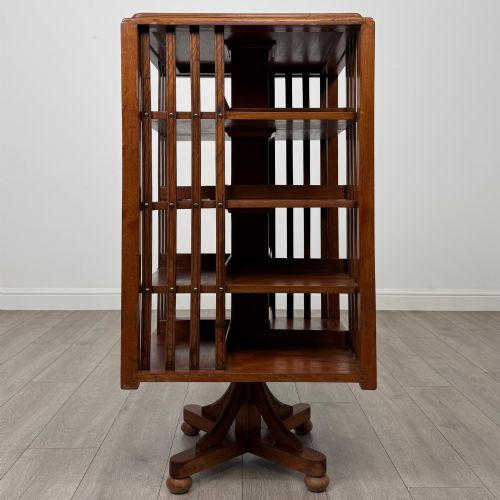
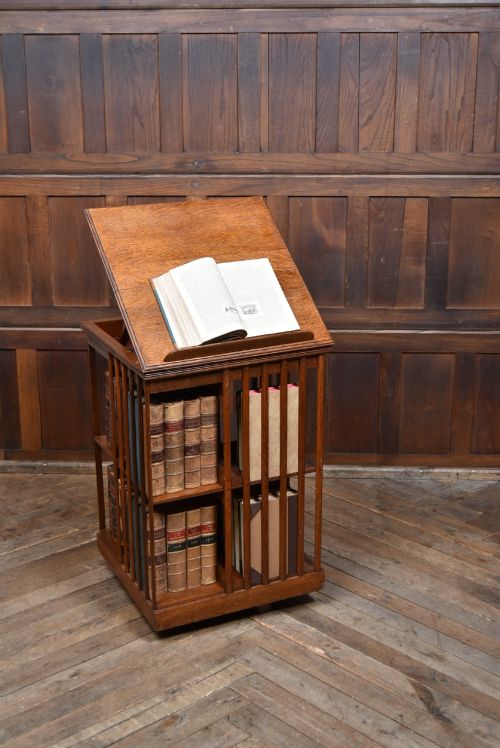
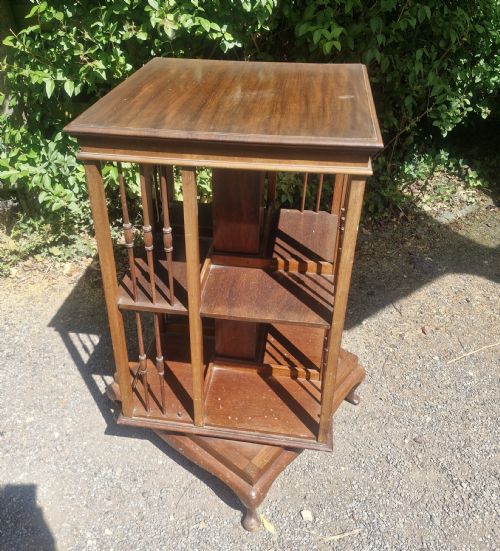
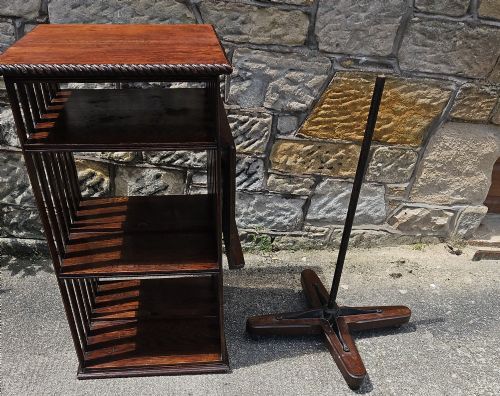
Most entries take the form of small bookcases or bookstands that sit on a table or desk, though variations in scale and timber are common. Construction relies on a pivoting mechanism concealed beneath the wooden tiers.
How they were made
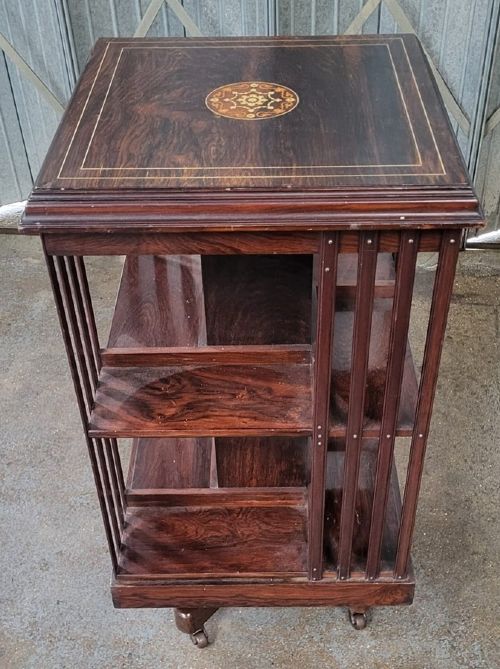
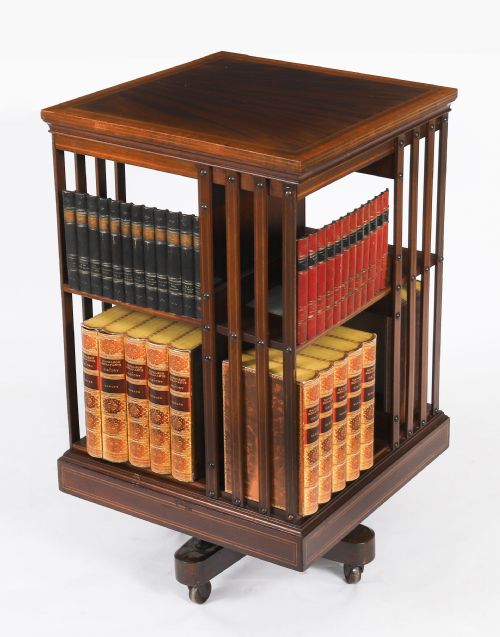
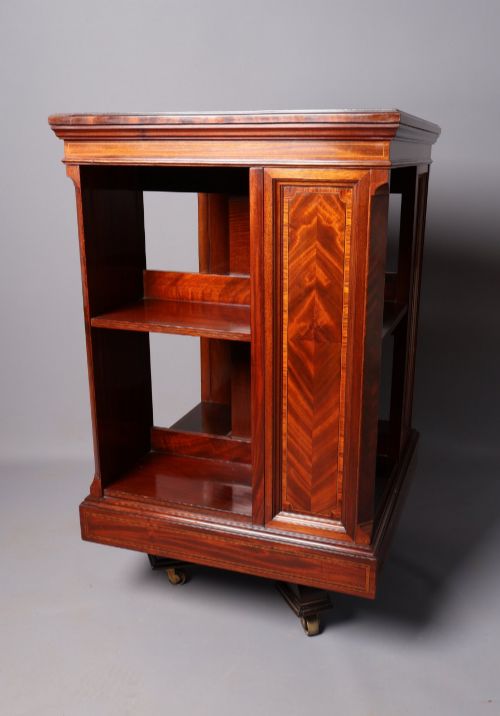
Cabinetmakers utilised solid timbers and veneers such as mahogany, oak, walnut and rosewood to build the tiered frames. Boxwood inlay appears on certain Edwardian rosewood examples to add decorative detail to the woodwork.
The internal pivot mechanism incorporates iron, cast iron and other metals to support the weight of the volumes while allowing smooth rotation. Ceramic elements sometimes form part of the base fittings or castors.
Antique Revolving Bookstand Retail Price Guide 2026
Typical asking prices for revolving bookstand among the pieces listed under this phrase on Sellingantiques today, from the lower quarter to the upper quarter. They describe what is for sale here now, not the wider market.
Early makers added cast iron mechanisms so hefty that a small bookstand can weigh as much as a small library.
What varies in quality
Quality rests in the selection of timber grain, the crispness of any boxwood inlay and the stability of the revolving action. A well-made piece turns evenly without listing to one side or binding on its metal pivot.
Finer examples display careful joinery at the slatted partitions and corners, whereas simpler pieces rely on standard commercial construction from the period. The presence of dense hardwoods like rosewood or figured mahogany elevates the character of the object.
The Antique Revolving Bookstand Glossary
- Revolving bookcase
- A tiered wooden stand fitted with a central pivot that allows the entire structure to spin horizontally. This form provides access to multiple books from a single seated position.
- Inlay
- A decorative technique where contrasting materials, such as boxwood, are set into recesses flush with the surrounding wood surface. It defines borders and geometric panels on table-top pieces.
- Pivot
- The central vertical axis upon which the bookstand turns. It connects the upper structure to the weighted base beneath.
- Edwardian
- The period spanning the reign of King Edward VII, characterised in furniture by lighter proportions and a revival of eighteenth-century styles. Pieces from this era often feature clean mahogany or inlaid rosewood surfaces.
- Slats
- The vertical wooden bars forming the sides of each book compartment to keep volumes in place. They allow titles to be identified easily from various angles.
Antique Revolving Bookstand: Frequently Asked Questions
What is a revolving bookstand?
A revolving bookstand is a rotating wooden fixture designed to hold small collections of books on a desk or table.
The central pivot permits the user to turn the shelves and select a volume without moving position.
How do you date them?
Dating relies on timber selection, decorative motifs and construction methods characteristic of specific eras like the Victorian or Edwardian periods.
Heavier oak pieces with arts and crafts influences often date to the late nineteenth century, while lighter inlaid rosewood versions point to the Edwardian decades.
Where were they used?
These stands sat on top of large library tables, partner desks or reading tables in studies and drawing rooms.
They kept dictionaries, atlases or current reading matter immediately accessible to the reader.
How do I maintain the mechanism?
The internal metal pivot requires minimal intervention beyond standard dusting and occasional light cleaning.
Avoid applying heavy oils or lubricants to the hidden bearing unless movement becomes stiff.