




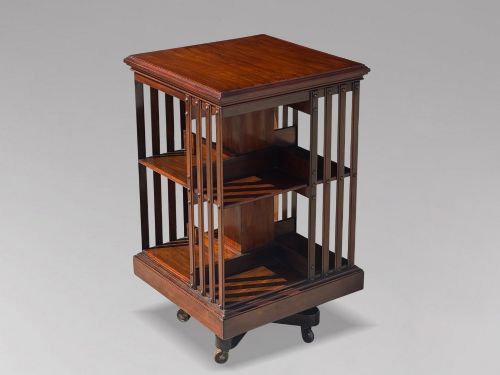
Rotating Bookcase Table
A rotating bookcase table provides immediate access to volumes while turning smoothly on a compact stationary base.
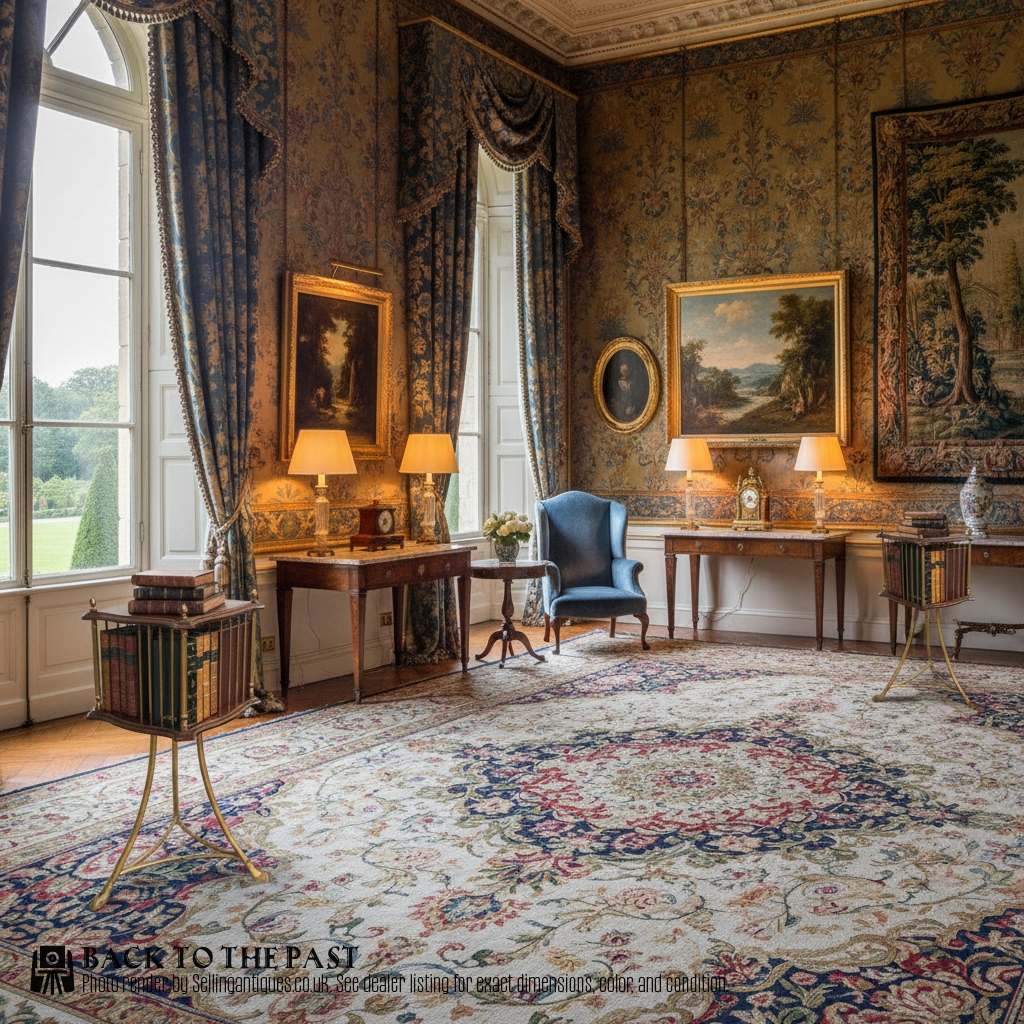
Rotating Bookcase Table
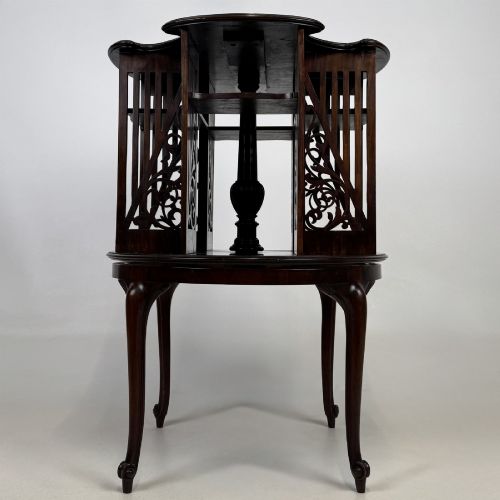
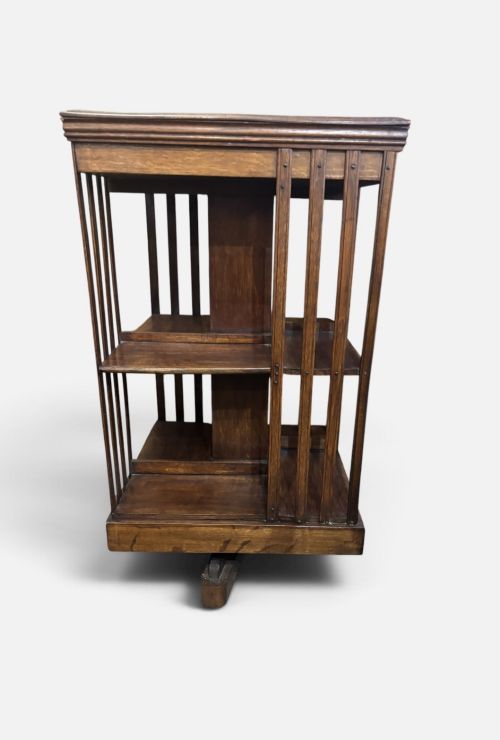
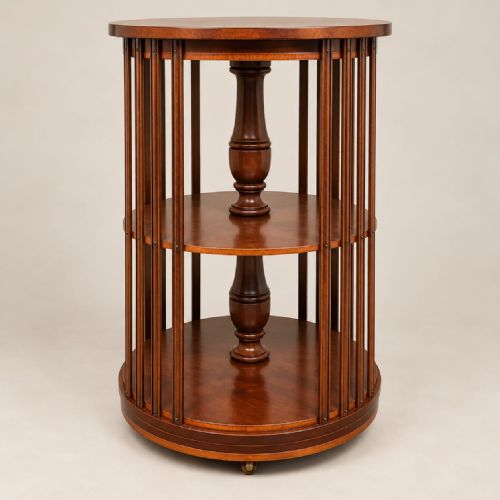
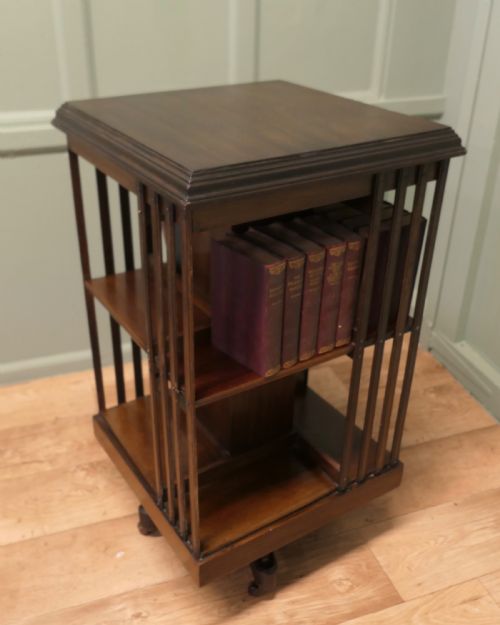
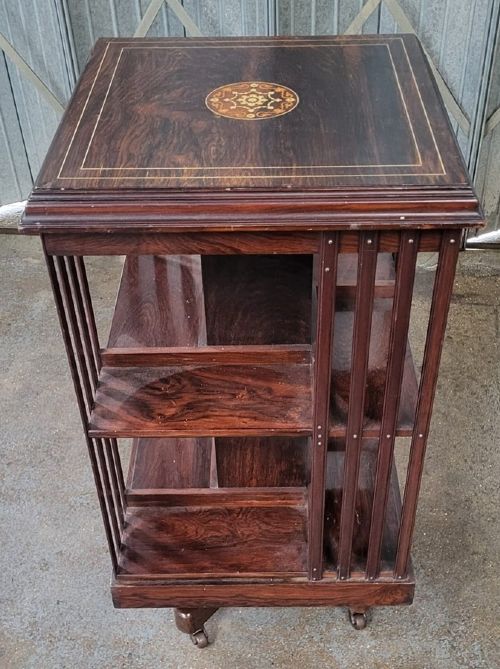
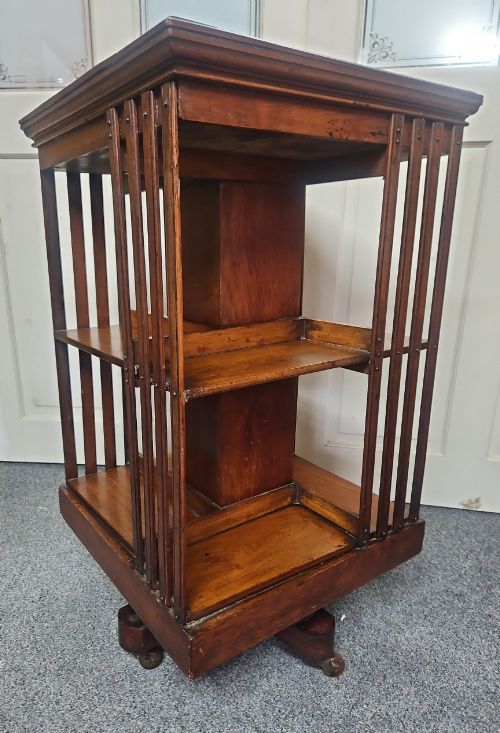
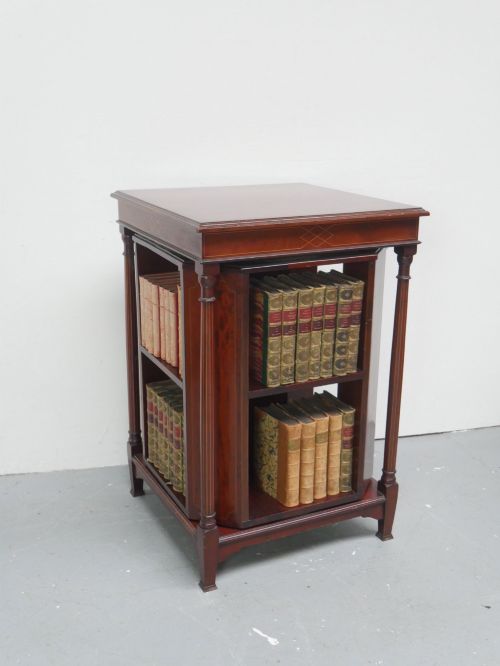
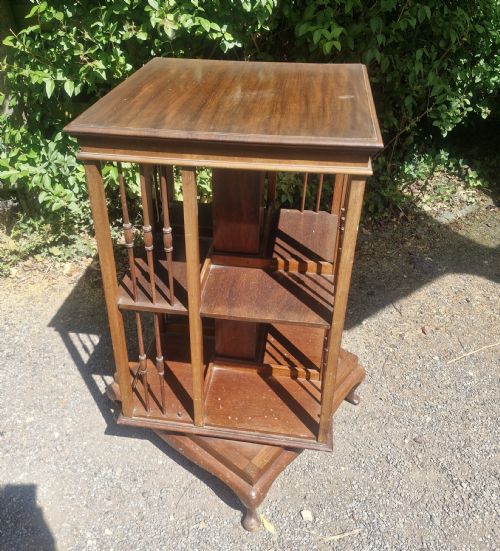
A rotating bookcase table combines the storage of a revolving bookcase with the surface area of a side table. Buyers searching for a rotating bookcase table will find pieces originating primarily from the Edwardian and Victorian periods, alongside occasional Georgian examples.
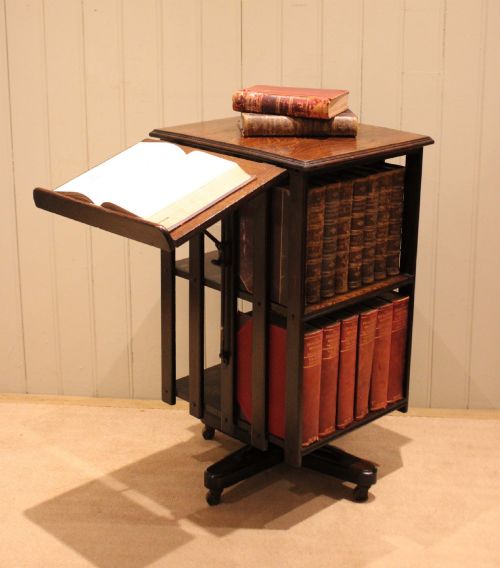
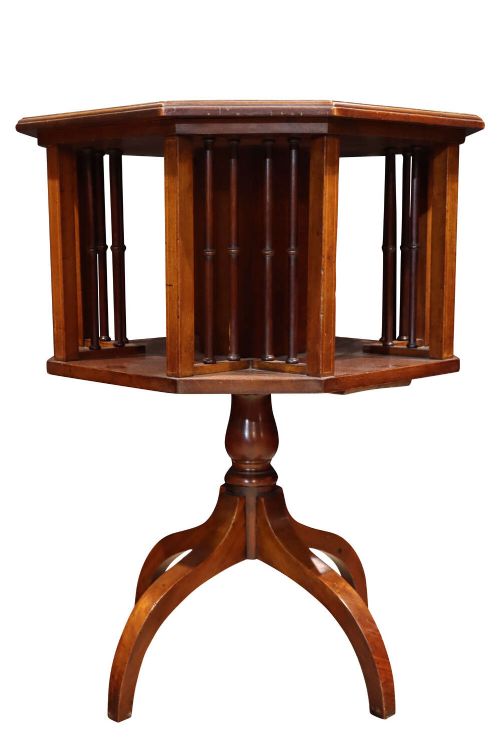
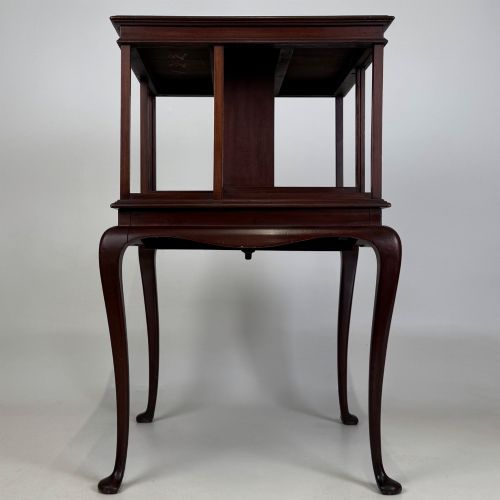
The most common form on this page is the freestanding mahogany floor model, often featuring inlaid details in satinwood or rosewood. Smaller table top or desktop versions also appear, alongside specialised reading tables and library forms.
Construction spans multiple styles, including Arts and Crafts, Art Nouveau, and Sheraton Revival designs. These pieces served as functional library and parlour furniture designed to hold frequently referenced volumes within arm's reach.
Materials and Construction
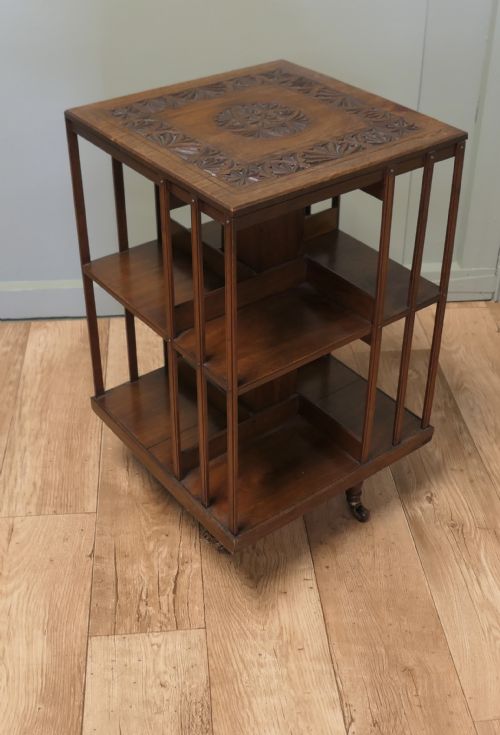
Makers relied heavily on mahogany as the primary timber, occasionally utilising walnut, oak, and rosewood. Flame mahogany veneers and contrasting satinwood inlay provide decorative surface detail on Edwardian and Victorian examples.
Internal mechanisms frequently incorporate brass or iron components to ensure the revolving action functions smoothly under the weight of books. Inlay work and marquetry adorn the top surfaces and shelf dividers of finer items.
Rotating Bookcase Table Retail Price Guide 2026
Typical asking prices for rotating bookcase table among the pieces listed under this phrase on Sellingantiques today, from the lower quarter to the upper quarter. They describe what is for sale here now, not the wider market.
Some Victorian examples add a marble top to your rotating library table, because checking a reference volume clearly heavy work.
Qualities of Construction and Design
Quality rests in the smoothness of the internal revolving mechanism and the stability of the central axis. Superior examples maintain a balanced rotation without wobbling when fully loaded with books.
The choice of timber and precision of inlay set finer pieces apart from standard production. Flame mahogany and crisp satinwood marquetry indicate higher craftsmanship, whereas simpler oak or plain mahogany represent more utilitarian workshops.
Maple & Co
The Rotating Bookcase Table Glossary
- Revolving bookcase
- A freestanding or table top tiered book holder mounted on a concealed pivot so the entire structure turns. This allows a reader to access multiple shelves from a single seated position.
- Marquetry
- The art of applying pieces of veneer to a structure to form decorative patterns and pictures. Dutch floral marquetry appears on select library tables.
- Inlay
- A technique where contrasting woods or metals are embedded into recesses cut into the primary surface. Satinwood inlay is common on Edwardian mahogany frames.
- Sheraton Revival
- A late nineteenth and early twentieth century style drawing on the lighter neoclassical designs of Thomas Sheraton. These pieces often feature delicate satinwood banding and tapered supports.
- Flame mahogany
- A wood veneer cut from the fork of the mahogany tree where the branch joins the trunk. It creates a distinctive rippled, flame-like pattern highly prized by cabinetmakers.
Rotating Bookcase Table: Frequently Asked Questions
How do these tables rotate?
A concealed internal pivot mechanism allows the upper tiers to turn freely upon a stationary base.
Most incorporate brass or iron hardware to ensure smooth movement.
What is the difference between floor and table top models?
Floor models are taller freestanding pieces designed to stand beside an armchair or desk.
Table top or desktop versions are smaller variants intended to sit directly upon a larger surface.
Which woods were used?
Mahogany is the predominant timber found across these pieces, frequently enhanced with satinwood inlay.
Walnut and oak also appear, particularly in Arts and Crafts or Victorian examples.
How can I identify an Edwardian piece?
Edwardian items typically date from the period spanning 1901 to 1910, often showing lighter mahogany frames.
They frequently feature decorative stringing, marquetry, and Sheraton Revival influences.