
Vintage Rotating Bookcase
A vintage rotating bookcase is a clever space-saving invention that brings books to hand with a simple spin.

What these pieces are
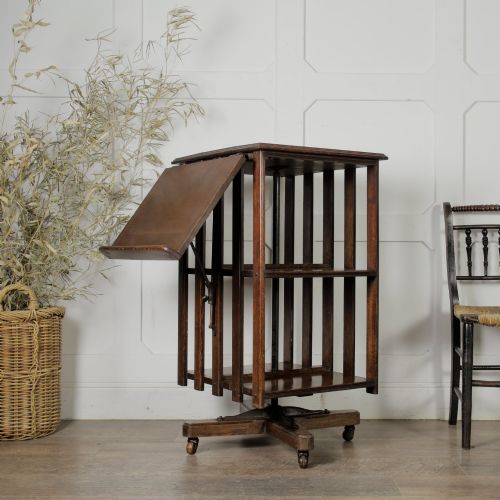
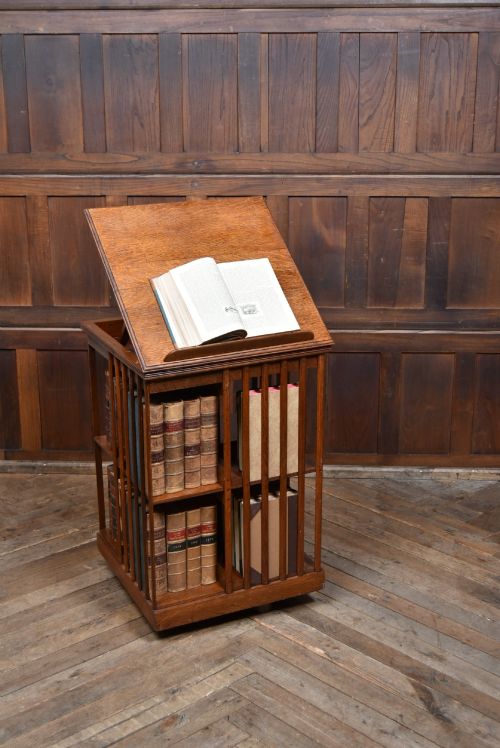
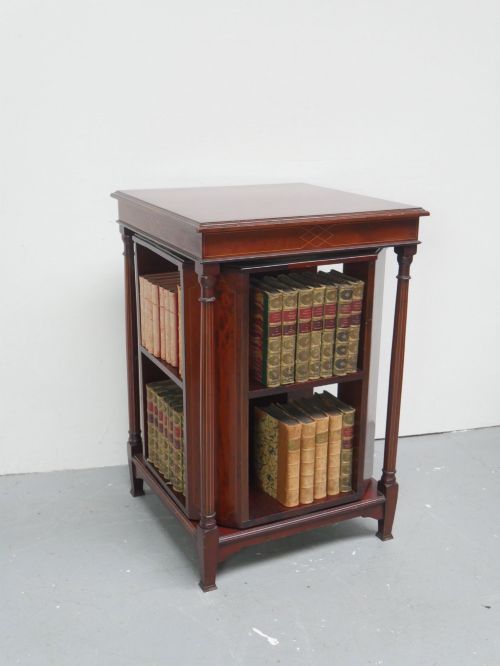
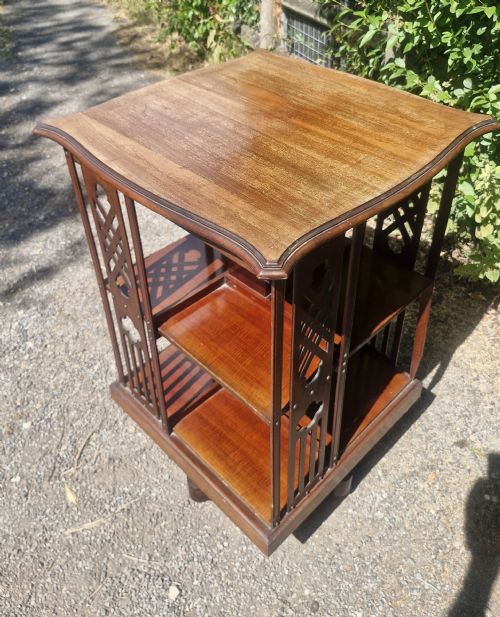
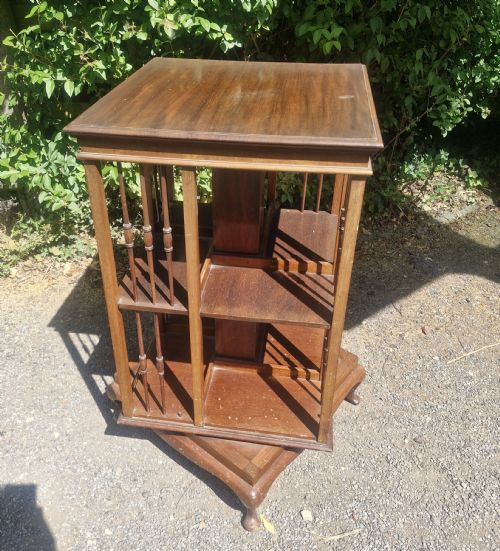
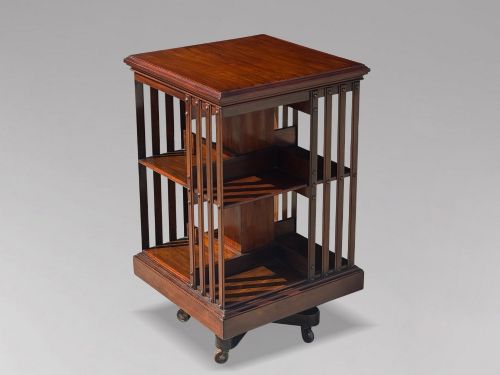
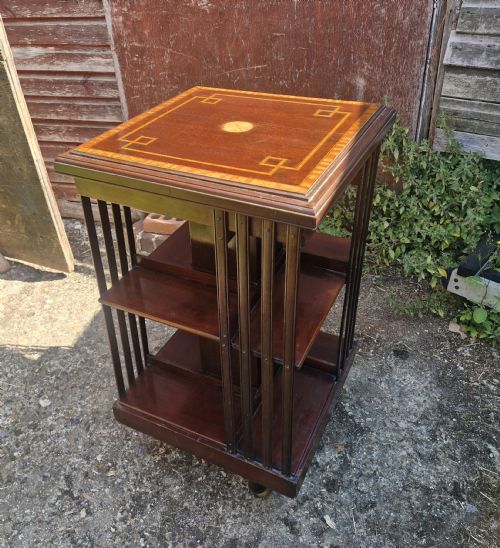
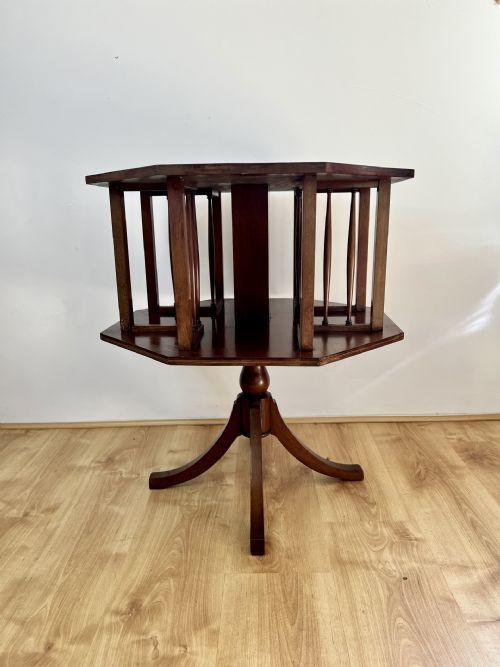
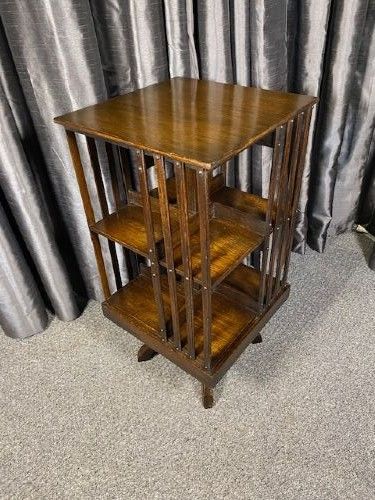
A vintage rotating bookcase offers tiered shelving designed to spin smoothly on a central axis, making every volume accessible from a single spot. Buyers searching this phrase encounter compact circular and square forms built to sit beside armchairs or on tabletops.
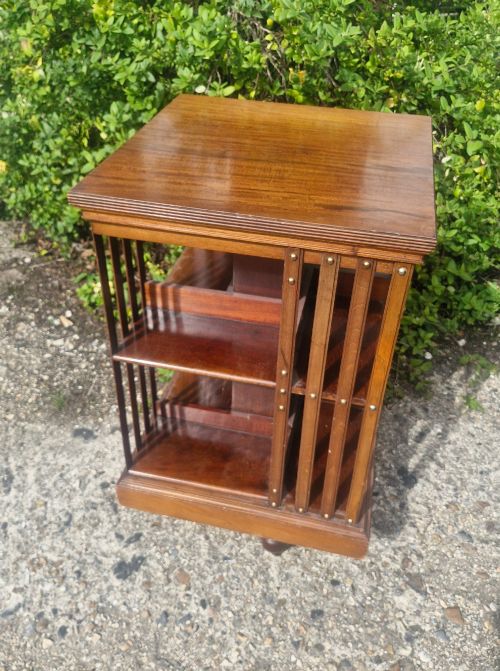
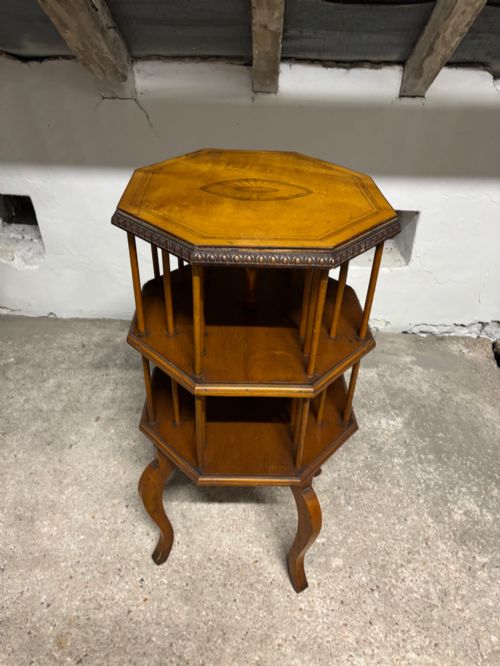
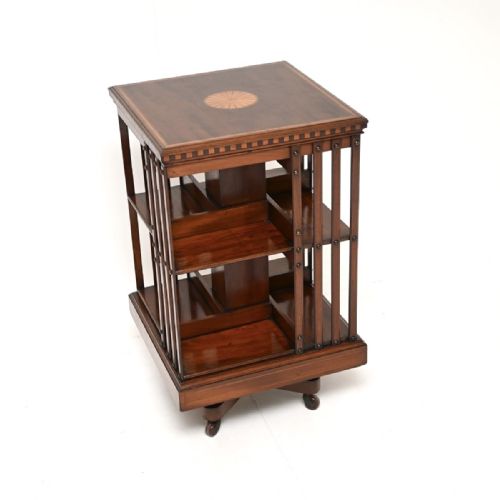
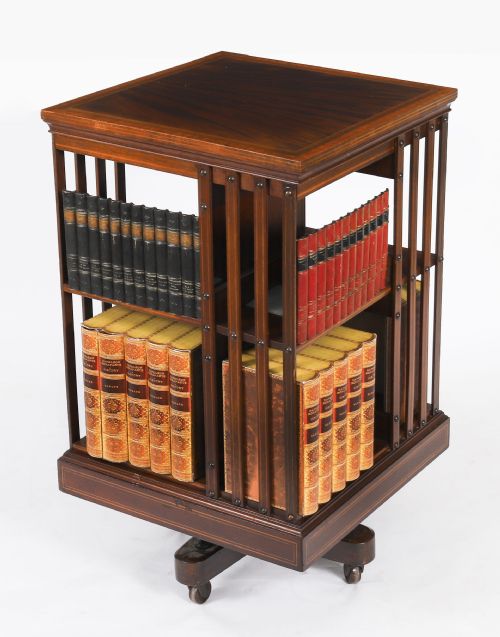
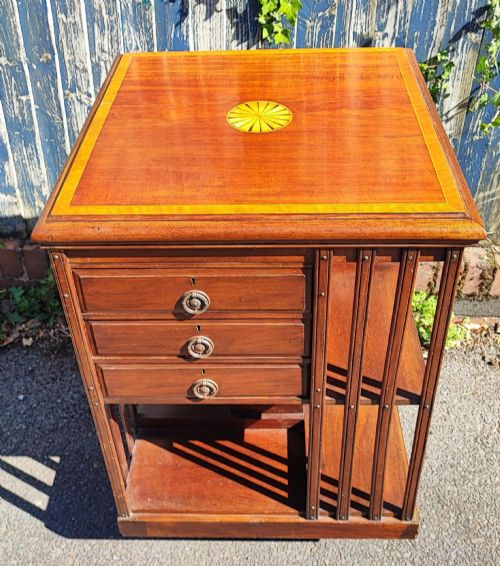
The pieces listed on this page span the Edwardian era, the Victorian period, and the nineteen thirties. Common variations include tall oak structures, models with satinwood inlay, and hybrid side tables.
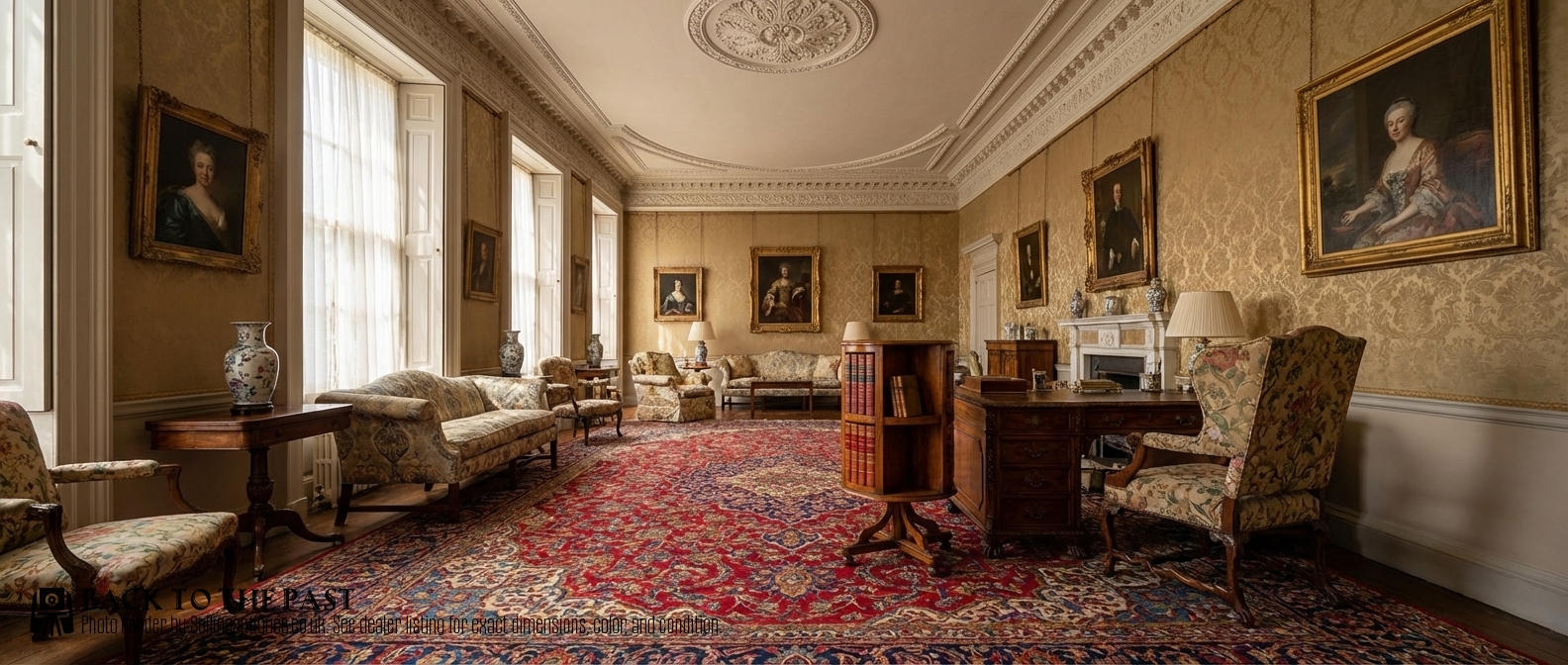
Mahogany and oak dominate the selection, often incorporating brass or cast iron mechanisms underneath to ensure effortless movement. These items serve both as functional library furniture and as decorative centrepieces for studies and living rooms.
How they were made
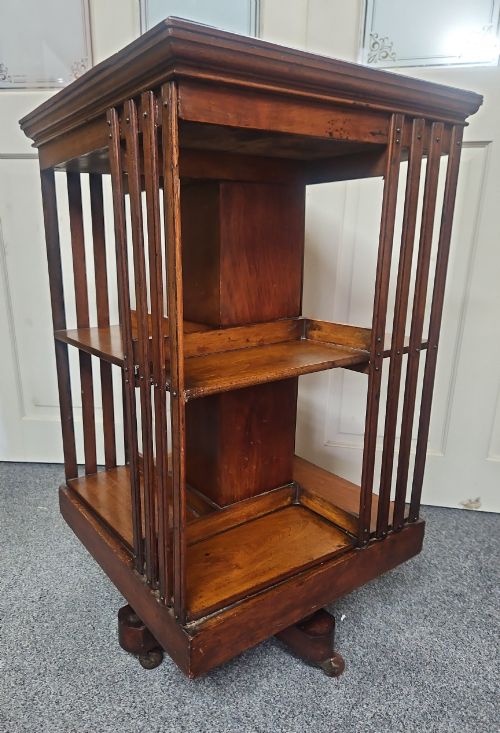
Cabinet makers constructed these rotating bookcases using solid timbers such as mahogany and oak, frequently applying delicate satinwood inlay for surface decoration. Joinery techniques ensured the tier frames remained rigid while supporting the weight of heavy volumes.
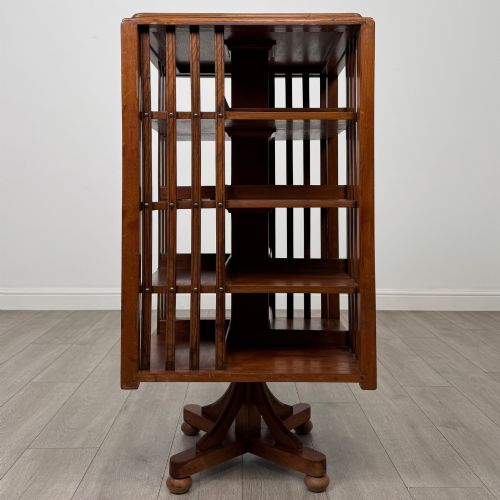
The underlying turning mechanism relies on robust iron and brass hardware concealed beneath the base. This engineered pivot allows the entire upper tiers to rotate freely without wobbling or straining the wooden structure.
Retail Price Guide 2026
Typical UK retail prices for vintage rotating bookcase, calculated from the Sellingantiques database of over a million retail prices indexed since 2003. This retail price guide relies exclusively on Sellingantiques data; no external sources or auction records are used, so the figures do not describe the wider market.
Materials recorded across these rotating bookcases include brass and cast iron hardware supporting timber shelves.
What varies in quality
Quality in these bookcases rests on the calibre of the timber selection and the precision of the turning action. Superior examples feature dense mahogany or figured oak with crisp inlay work, whereas simpler versions rely on plain grain without ornamentation.
The sophistication of the internal pivot mechanism marks the difference between standard production and finer craftsmanship. A smooth, silent rotation that distributes weight evenly across the iron and brass components separates the best pieces from stiffer, heavier runners.
The Vintage Rotating Bookcase Glossary
- Edwardian
- Dating from the reign of King Edward VII, this period favours lighter proportions and refined classical details compared to Victorian heaviness. Many rotating bookcases from this era utilise mahogany and subtle inlay.
- Satinwood inlay
- A decorative technique where contrasting light-toned satinwood is set into recesses in a darker primary wood like mahogany. It creates delicate geometric or floral patterns.
- Revolving bookcase
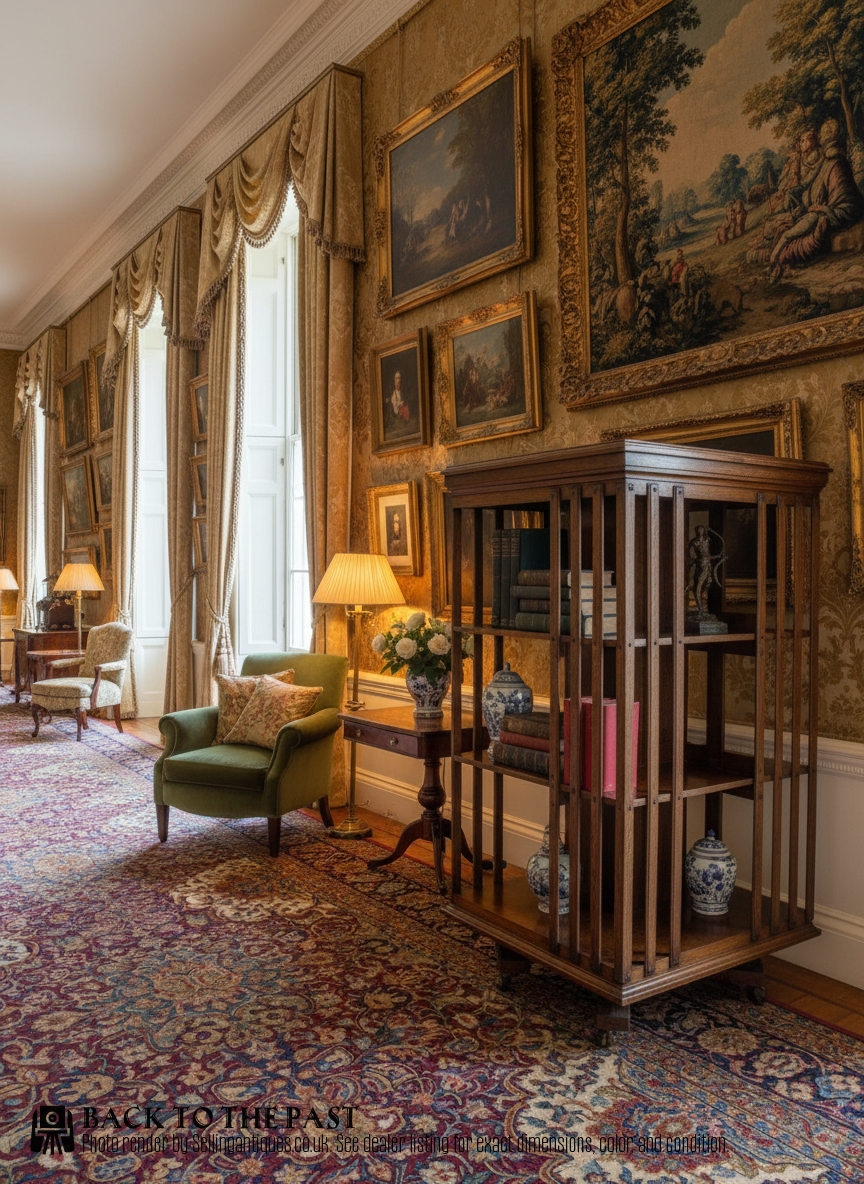
- A freestanding or tabletop shelving unit built on a hidden pivot mechanism allowing 360-degree rotation. This design lets readers browse multiple shelves without moving their seat.
- Cast iron
- A strong, durable metal alloy used for the internal weight-bearing components and support bases of turning furniture. It provides the necessary ballast to keep the tall tiers stable during rotation.
Frequently Asked Questions
How do I use a rotating bookcase?
Place the bookcase beside an armchair, desk, or in an open corner where you can easily reach the shelves from a seated position.
Simply spin the tiers gently to browse titles stored on all four sides without needing to walk around the unit.
What wood types are common?
Mahogany and oak appear most frequently across these pieces, offering distinct grain patterns and structural durability.
Some models feature contrasting satinwood inlay for added visual interest on the top surface or side slats.
Are these pieces heavy?
Solid timber construction combined with internal iron or brass mechanisms gives these bookcases a substantial weight that keeps them anchored.
This heft ensures the unit remains stable when loaded with books and spun continuously.
How do I date an Edwardian model?
Edwardian pieces generally date from the first decade of the twentieth century, displaying lighter timber tones and restrained decoration.
They often combine mahogany or oak with subtle inlay work, differing from the heavier proportions typical of earlier Victorian furniture.