



Pedestal Revolving Bookcase
A pedestal revolving bookcase gives you tiered storage that spins at a touch, turning a collection of volumes into an accessible centrepiece.
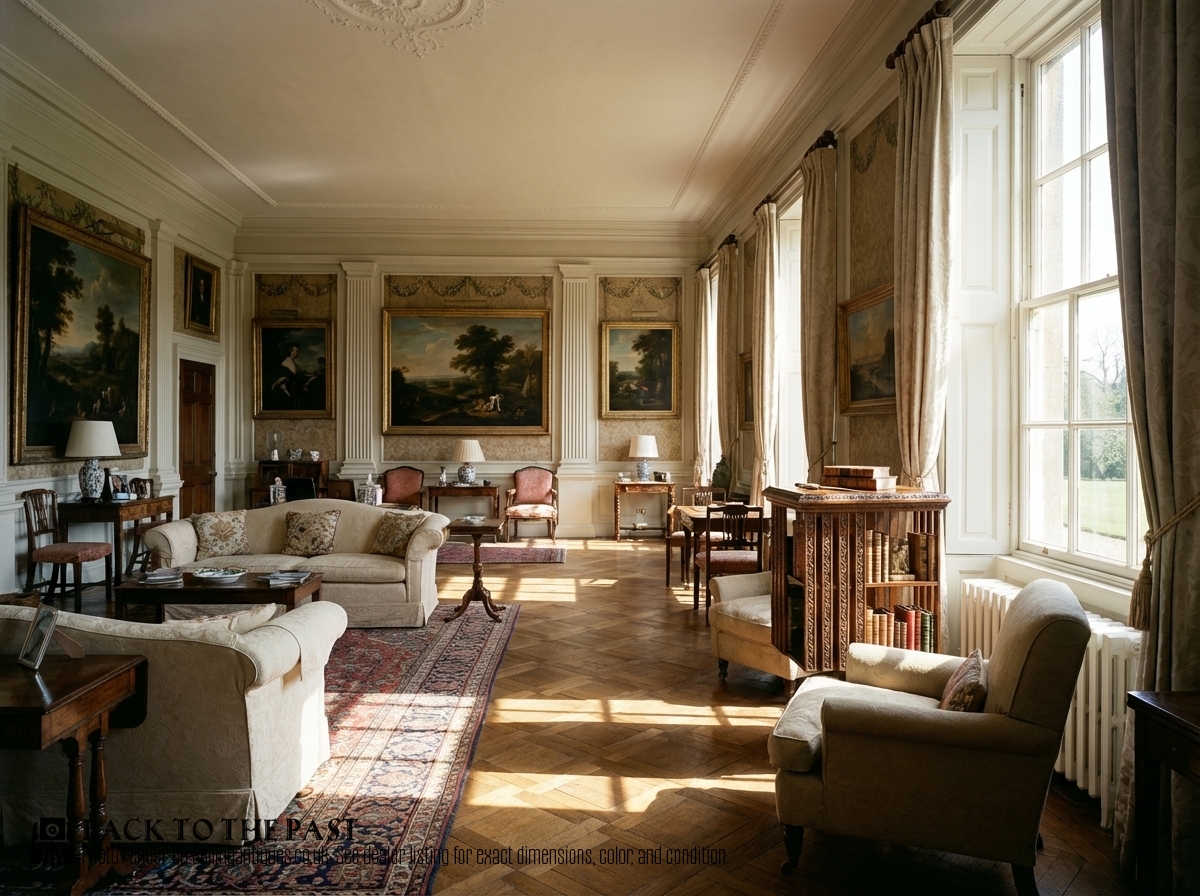
Pedestal Revolving Bookcase
A pedestal revolving bookcase provides multi-sided book storage supported by a central column and a stable base. When you search for a pedestal revolving bookcase, you encounter forms designed to sit beside a desk or chair for easy volume retrieval.
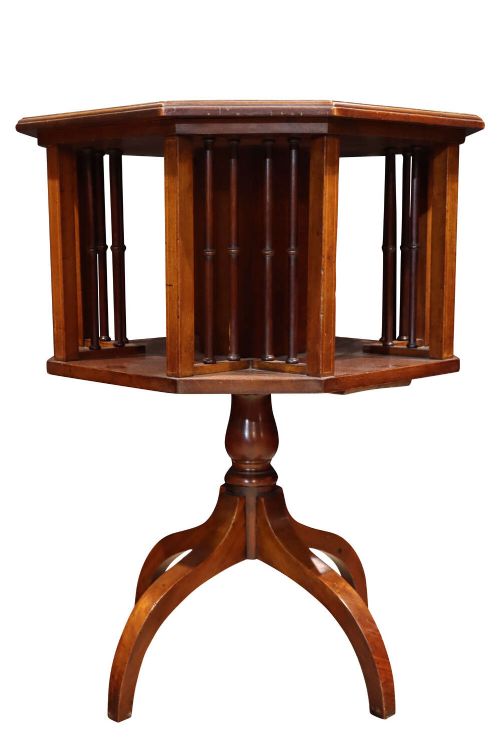
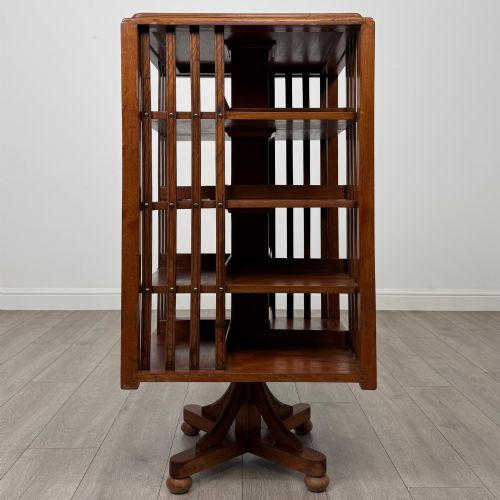
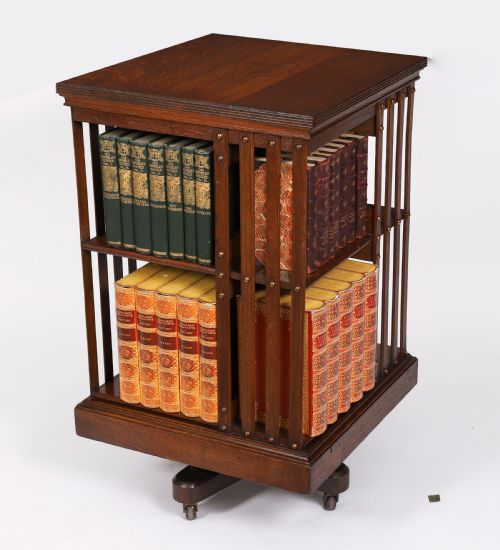
The surviving pieces on this page span the Victorian and Edwardian eras, alongside examples from around nineteen-thirty and Anglo-Indian workshops. These range from simple square oak models to inlaid mahogany versions and octagonal shapes.
Most examples rely on a compact footprint to maximise storage capacity without dominating the room. The revolving mechanism allows complete access to every shelf from a single stationary position.
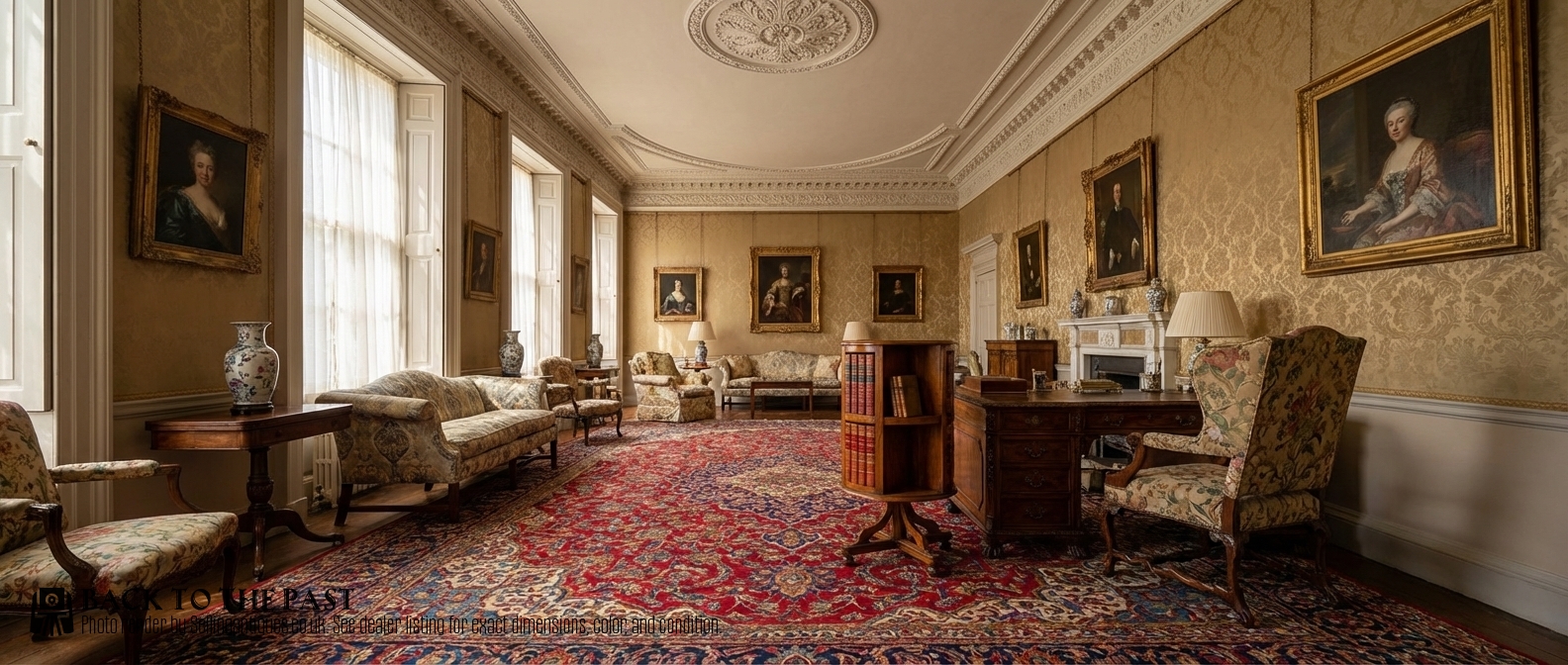
Materials and construction methods
Cabinetmakers built these pieces primarily in timber, employing oak, mahogany, teak, and rosewood across the recorded items. Selected pieces incorporate brass fittings, iron internal components, and ceramic elements.
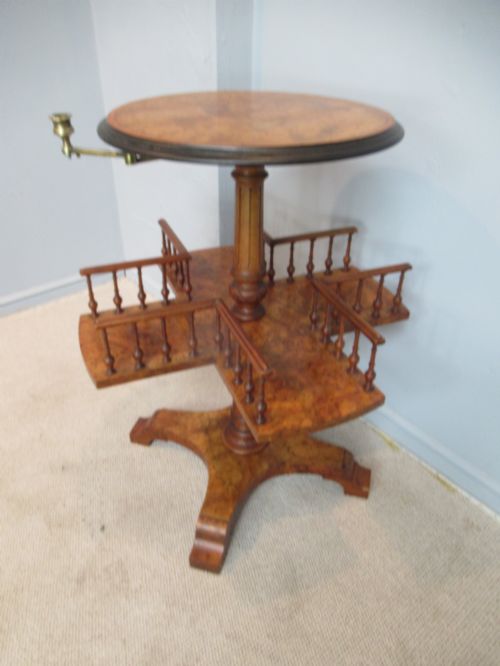
Construction techniques balanced structural strength with smooth rotational movement. Craftsmen added decorative detail through mahogany inlay work and distinct timber grain patterns on the revolving tiers.
Pedestal Revolving Bookcase Retail Price Guide 2026
Typical asking prices for pedestal revolving bookcase among the pieces listed under this phrase on Sellingantiques today, from the lower quarter to the upper quarter. They describe what is for sale here now, not the wider market.
Recorded listings feature oak, mahogany, teak, and rosewood across Victorian, Edwardian, and nineteen-thirty periods.
Distinguishing quality across examples
Quality separates the standard production piece from the finer workshop creation through the choice of timber and the precision of the turning mechanism. Superior examples utilise rich timbers like rosewood or finely figured mahogany paired with subtle inlay work.
The smoothness of the rotation and the stability of the central pedestal define the upper tier of the range. Solid construction and careful joinery ensure the loaded tiers turn without wobble or friction.
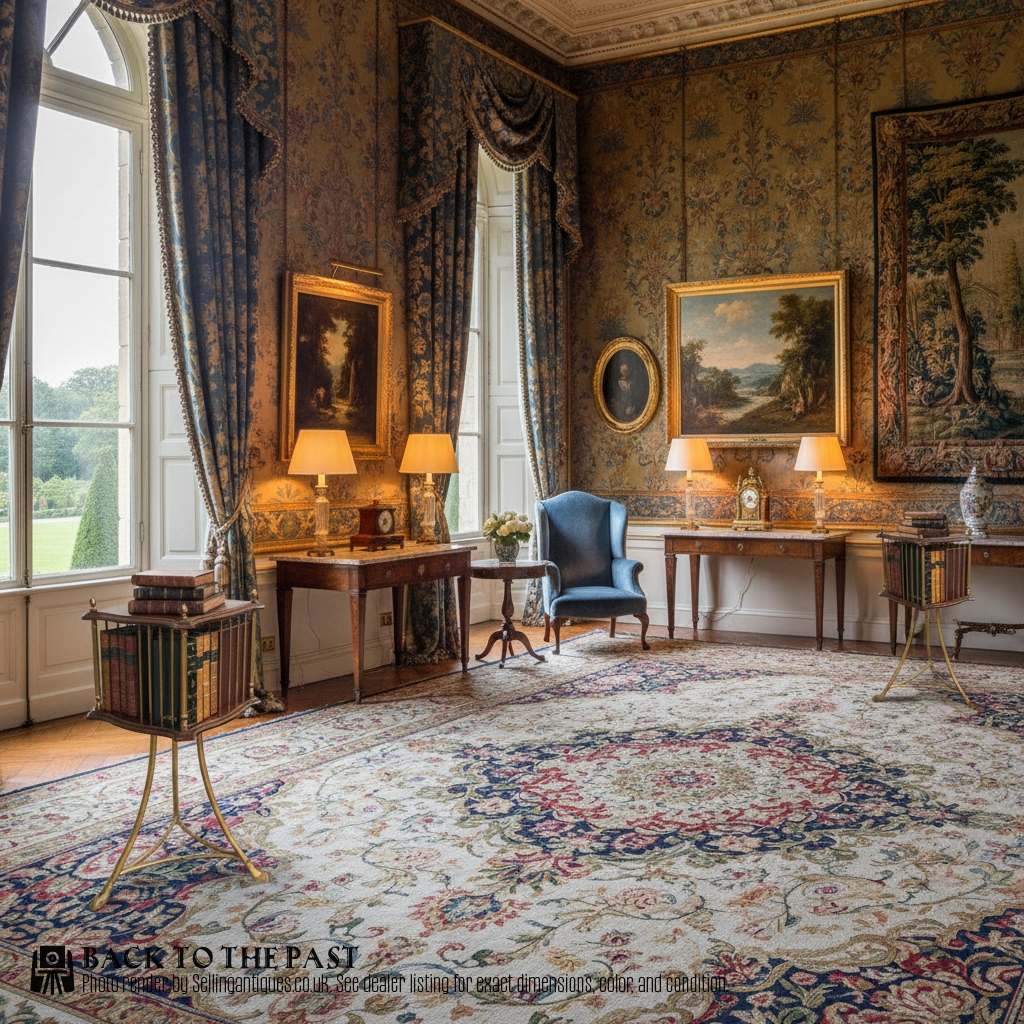
The Pedestal Revolving Bookcase Glossary
- Pedestal
- The central vertical support column that elevates the revolving tiers above the floor base. It typically rests on spreading feet for stability.
- Revolving
- The rotational function enabled by concealed internal iron and brass mechanisms. This allows the bookcase body to turn smoothly on its fixed base.
- Inlaid
- A decorative technique where contrasting strips or pieces of timber are set flush into the primary wood surface. Edwardian versions frequently utilise this method on the top tier.
- Octagonal
- A geometric eight-sided shelf configuration seen on specific Regency style variants. This shape alters the book capacity compared to standard square formats.
Pedestal Revolving Bookcase: Frequently Asked Questions
How do these bookcases spin?
Internal iron and brass hardware systems hidden beneath the tiers allow the entire upper structure to rotate freely around the central pedestal.
This concealed mechanism bears the weight of heavy volumes while keeping the motion light and balanced.
Where should I place a revolving bookcase?
These pieces function best beside armchairs, desks, or in open room corners where users can walk around them to reach every shelf.
Because they rotate, they do not need to sit flat against a wall to remain practical.
How do I identify an Edwardian model?
Edwardian examples often feature lighter timbers like mahogany enhanced with delicate inlaid details. They date from the early twentieth century and display refined proportions.
Earlier Victorian versions tend to utilise heavier oak construction with simpler functional lines.
What is an Anglo-Indian revolving bookcase?
This variant reflects nineteenth-century craftsmanship influenced by cross-cultural design traditions and imported timber varieties. It brings distinct decorative carving or regional wood choices to the standard revolving form.
Such pieces share the same practical rotating function while offering a different visual character.