






Victorian Revolving Bookcase
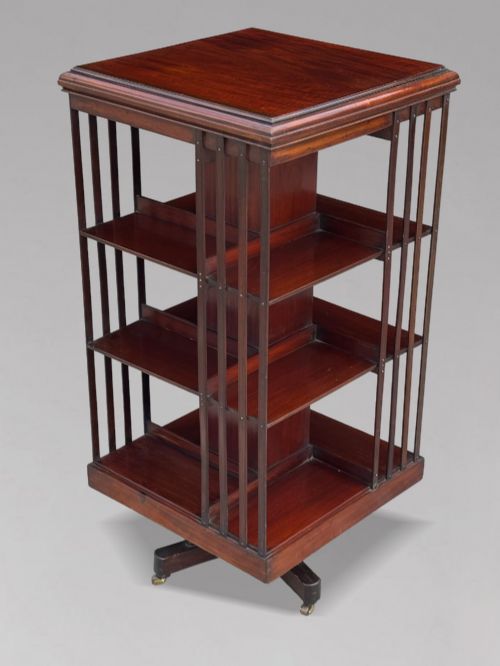
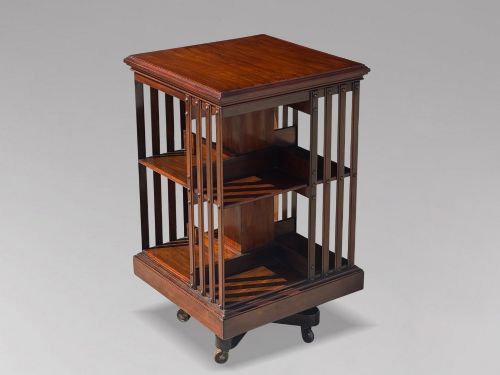
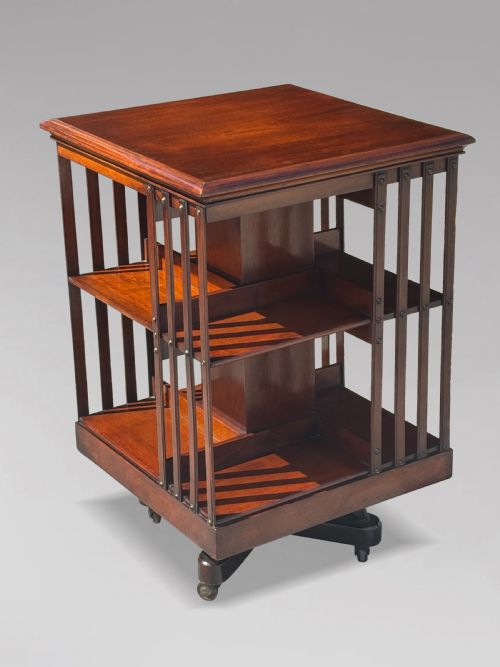
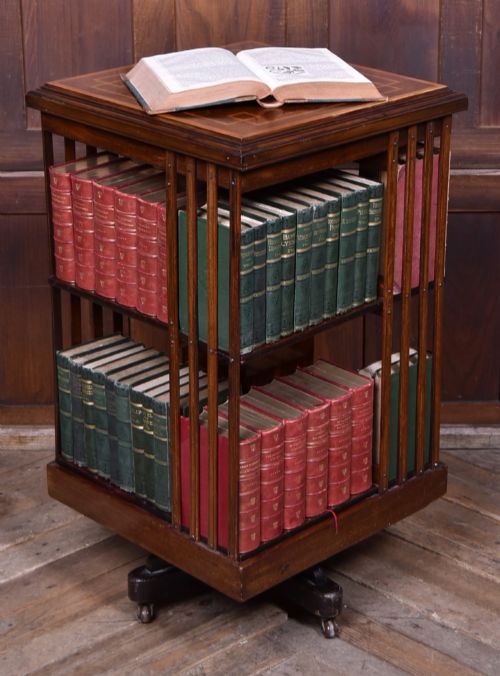
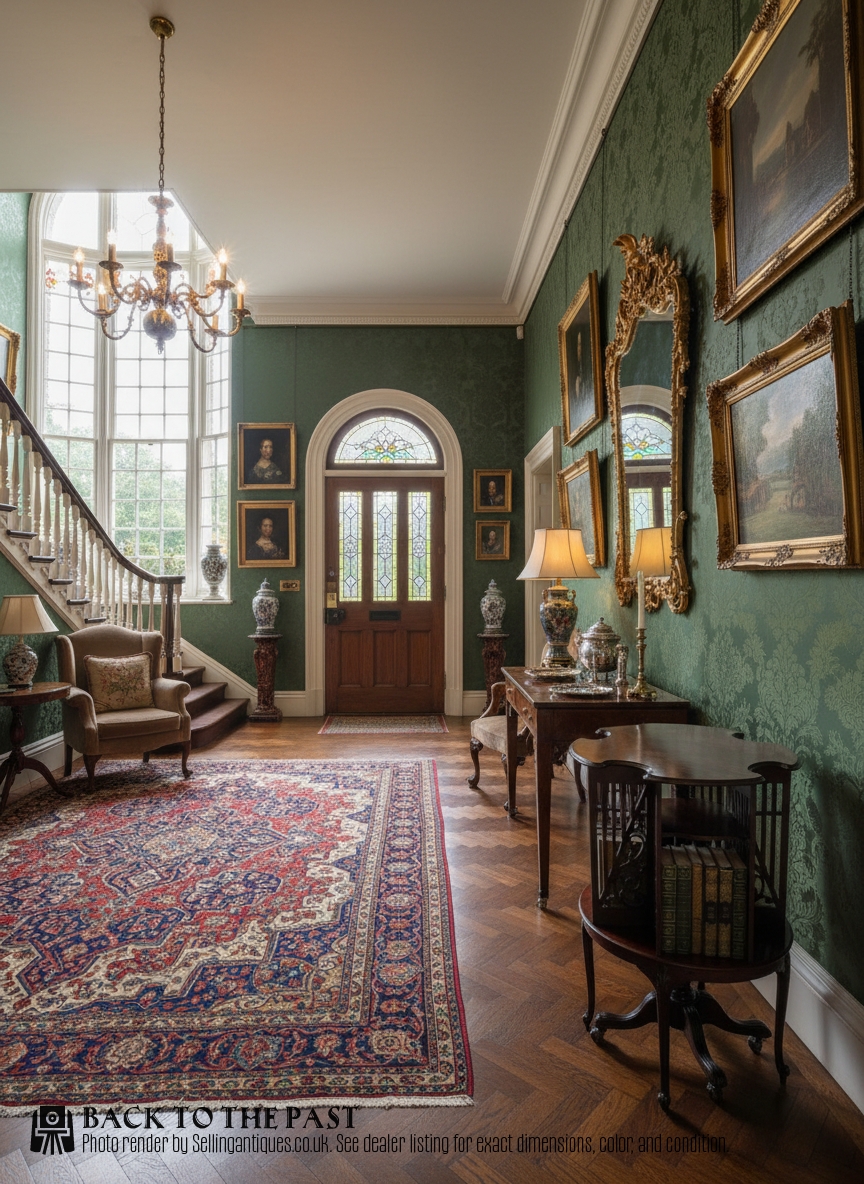
A victorian revolving bookcase brings a practical desktop or floor-standing library solution to any study, spinning smoothly on a concealed mechanism.

Victorian Revolving Bookcase
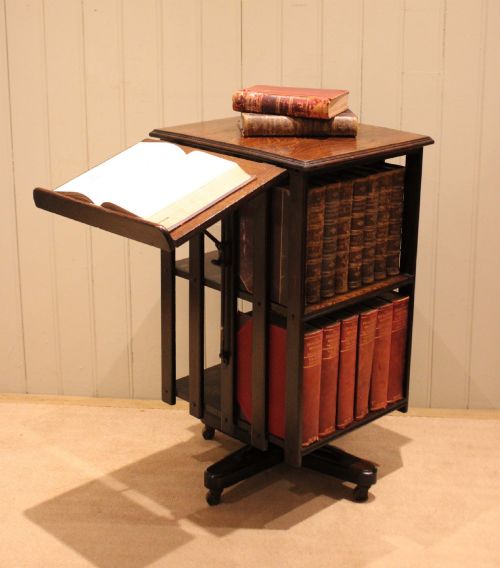
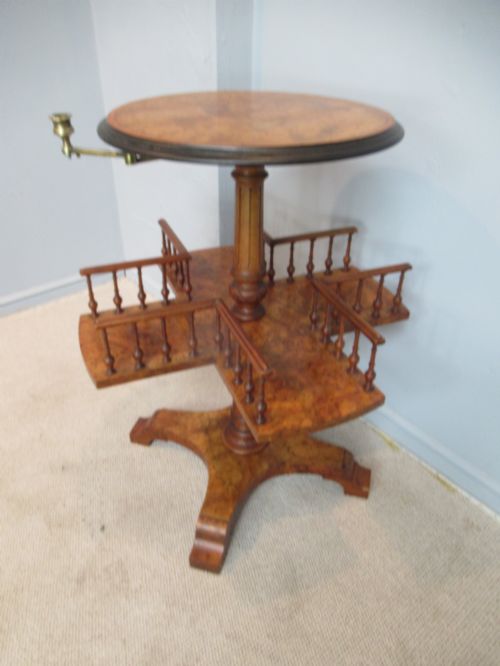
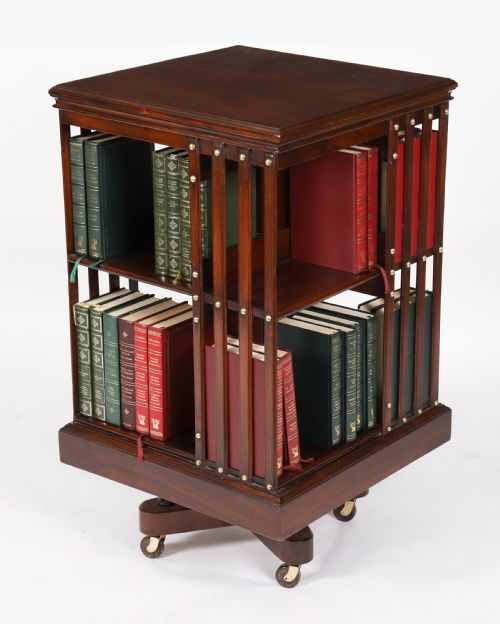
When you search for a victorian revolving bookcase, you encounter compact table models and multi-tiered floor-standing designs intended for easy access to reference volumes.
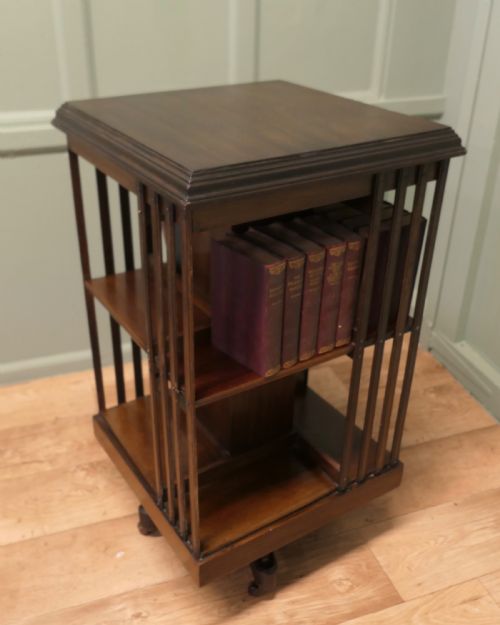
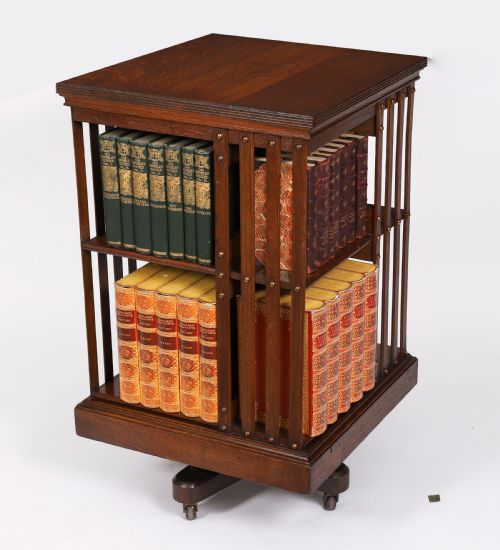
The pieces listed span the nineteenth century into the Edwardian era, predominantly featuring square or circular formats with slatted or panelled sides.
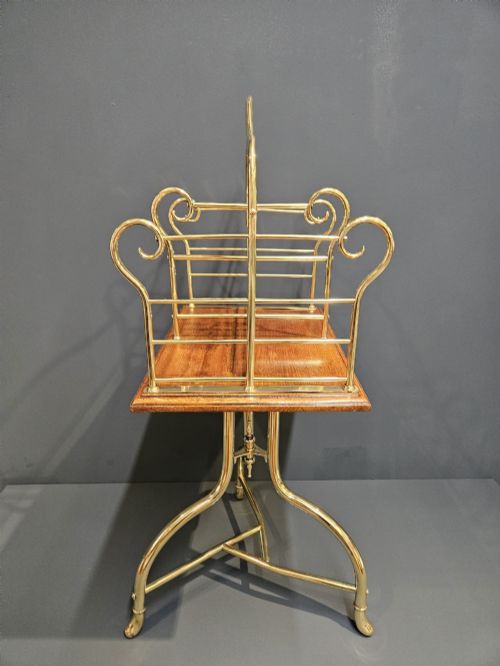
Makers produced these rotating furniture pieces in mahogany, oak, and walnut, frequently incorporating decorative inlays or brass details for library and study interiors.
Materials and construction
Cabinet makers utilised dense hardwoods including mahogany, walnut, and oak to build the tier structures, often selecting figured veneers such as flame mahogany or burr walnut for the top surfaces.
Internal iron and brass pivot mechanisms allowed the wooden tiers to turn effortlessly while supporting the heavy weight of bound books.
Victorian Revolving Bookcase Retail Price Guide 2026
Typical asking prices for victorian revolving bookcase among the pieces listed under this phrase on Sellingantiques today, from the lower quarter to the upper quarter. They describe what is for sale here now, not the wider market.
Judging execution and detail
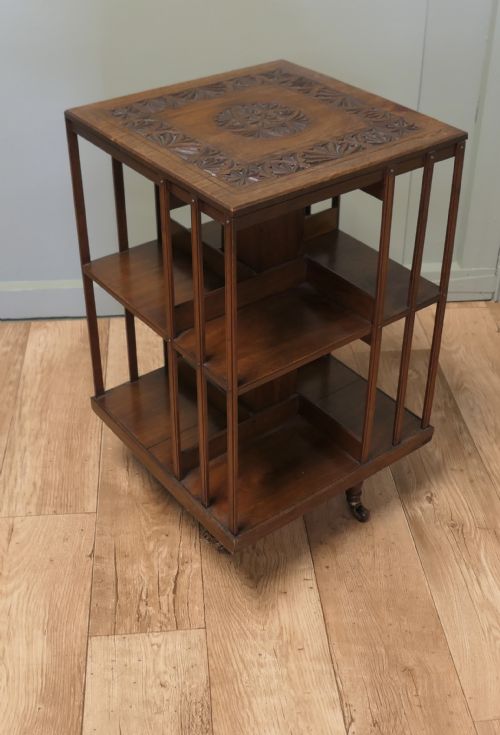
Superior examples display fine timber selection, precise marquetry inlay, and robust internal bearing systems that maintain a smooth spin without listing to one side.
Makers who stamped their work or added cast brass galleries and carved mouldings produced pieces that stand apart from simpler utilitarian library items.
Maple & Co·James Shoolbred & Co·Francis & James Smith
The Victorian Revolving Bookcase Glossary
- Revolving mechanism
- The internal pivot and ball-bearing system concealed beneath the tiers that allows the bookcase to turn 360 degrees. This hardware determines how smoothly the piece operates under load.
- Tier
- An individual level of shelving designed to hold books upright within the rotating framework. Units appear in single, double, and taller four-tier configurations.
- Marquetry
- Decorative veneer patterns assembled from contrasting woods to form geometric or floral designs on the top surface. Artisans reserved this detailed work for high-end library furniture.
- Gallery
- A raised decorative rail fitted around the edge of a top surface to prevent items from sliding off. These fixtures appear in brass or carved wood.
Victorian Revolving Bookcase: Frequently Asked Questions
How do I care for the wood surface?
Apply a traditional beeswax polish occasionally to nourish the hardwood and maintain the natural sheen of the timber.
Keep the rotating bookcase away from direct heat sources and strong sunlight to prevent the veneer from drying or cracking.
Can these hold heavy hardback books?
The sturdy timber frames and solid partitions are engineered to support substantial reference volumes and heavy library books without warping.
Distribute the weight evenly across the tiers to ensure the internal pivot mechanism continues to spin smoothly.
How do I distinguish walnut from mahogany?
Mahogany displays a reddish-brown tone with a straight or ribbon grain pattern that deepens in richness over the decades.
Walnut exhibits a darker, cooler brown coloration often featuring complex burr or figured patterns across the panels.
Where were these placed in period homes?
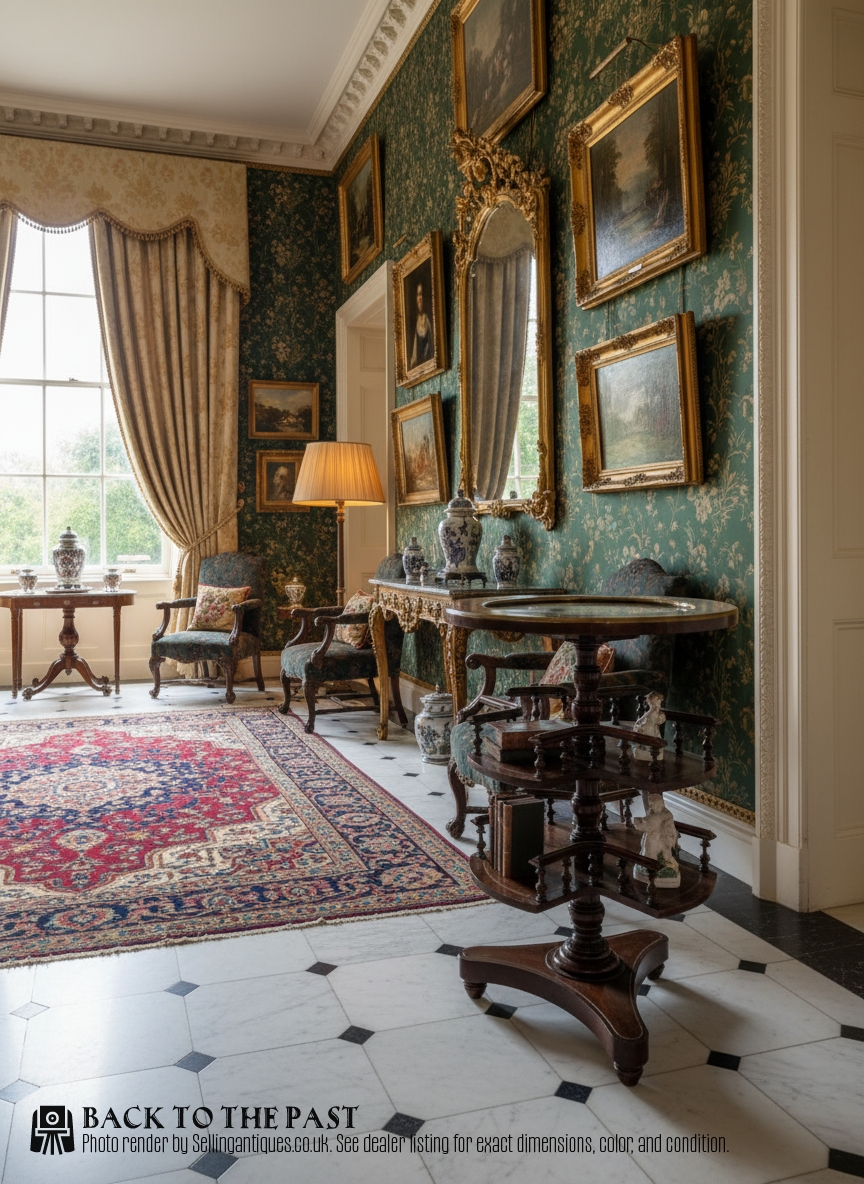
Libraries, studies, and drawing rooms housed these rotating pieces beside armchairs or near large desks for immediate access to frequently consulted texts.
Smaller table versions sat directly on library tables or sideboards to keep specialised volumes close at hand.