

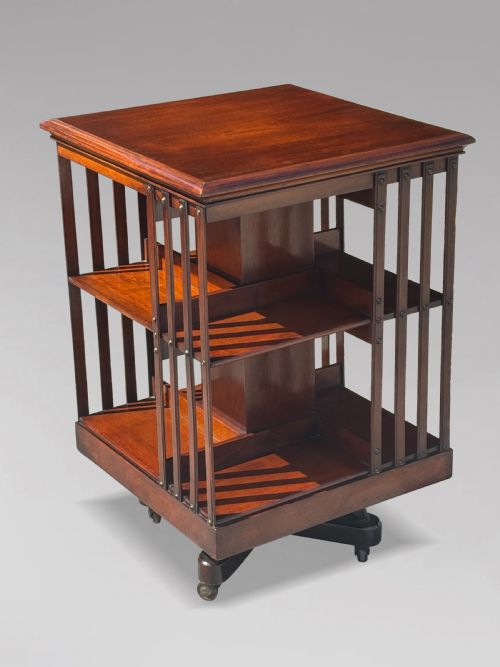
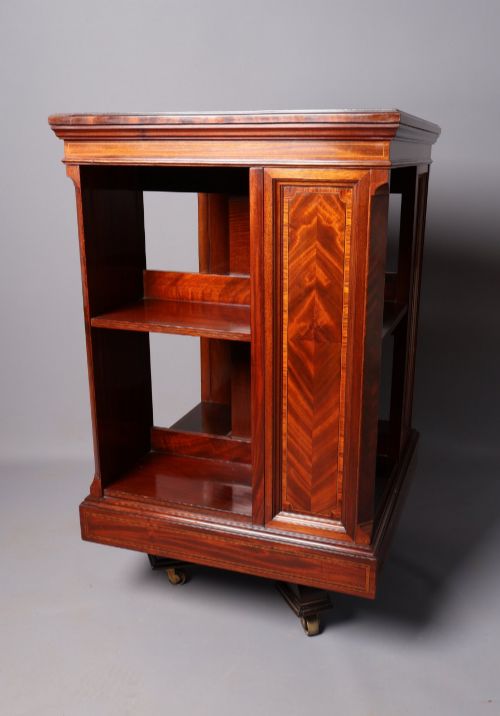

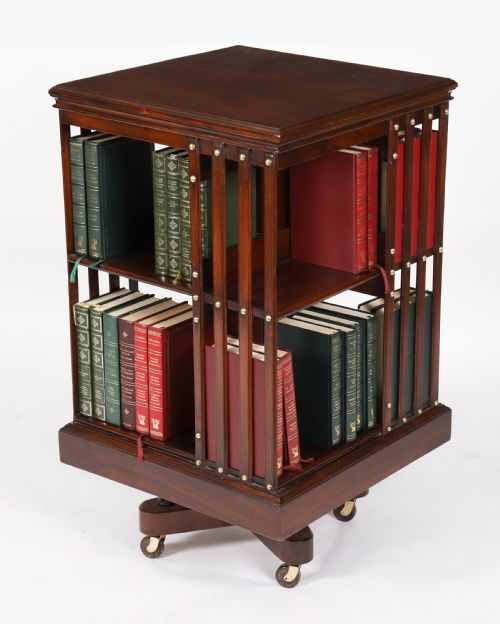


Square Revolving Bookcase
A square revolving bookcase brings compact, accessible shelving to any room, turning smoothly on its base to keep a library within arm's reach.
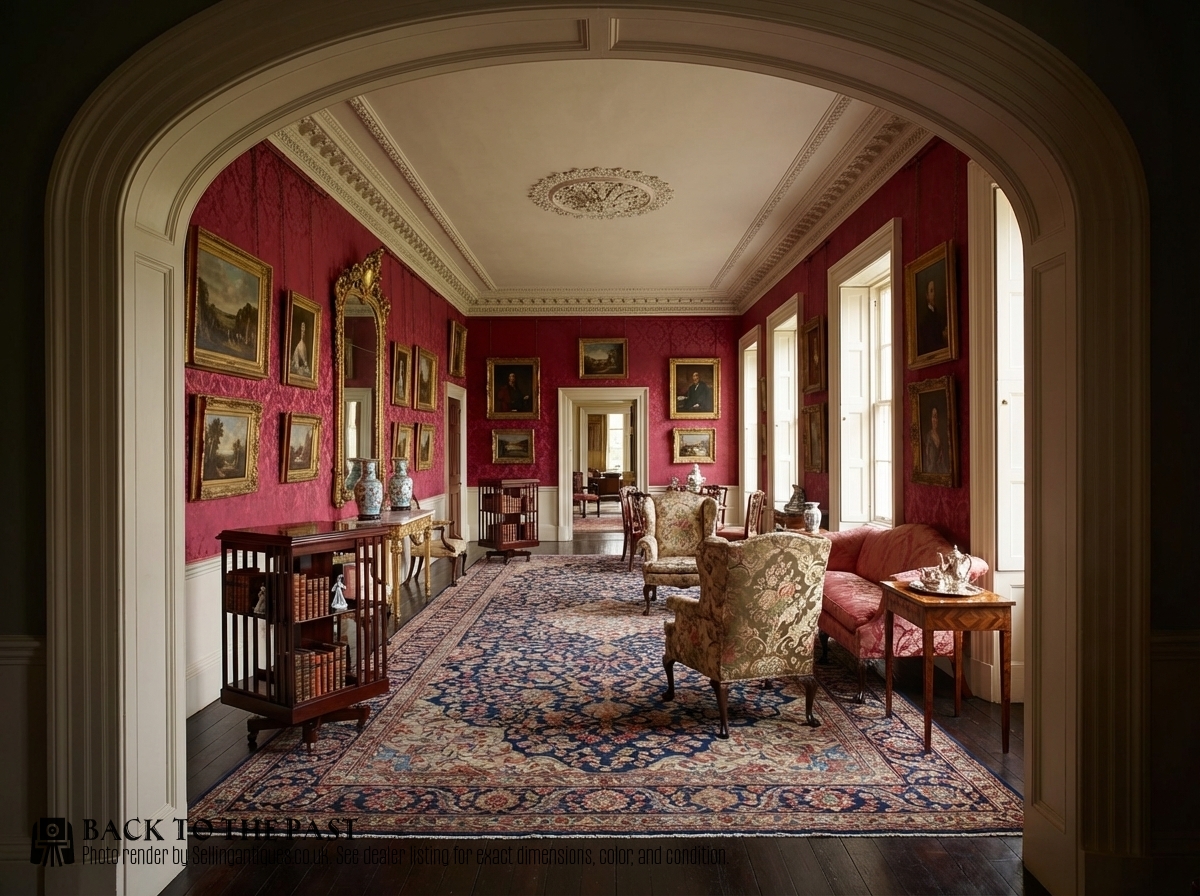
Square Revolving Bookcase
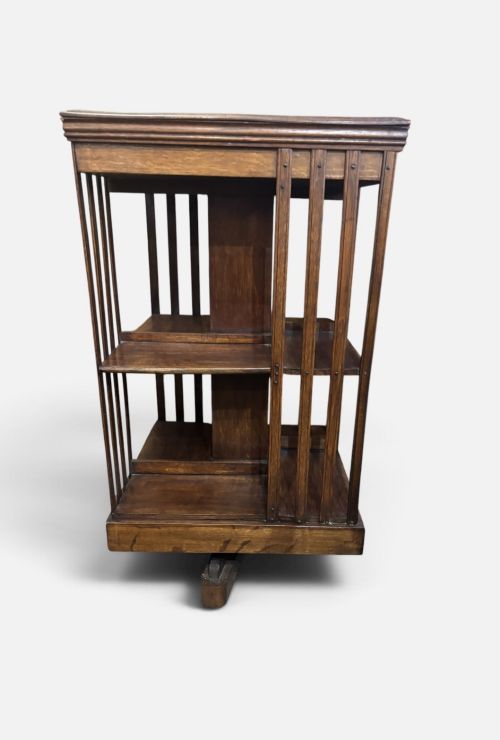
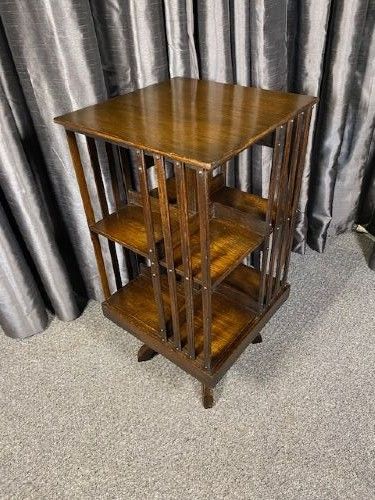
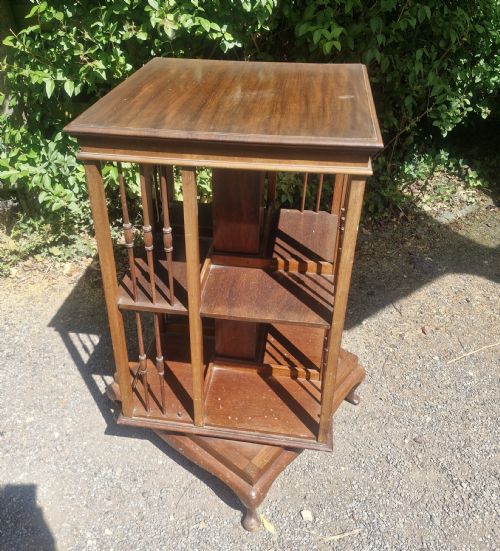
A square revolving bookcase provides accessible storage across tiers designed to spin on a central pivot mechanism. These pieces frequently appear in Edwardian and nineteenth-century forms, dating from roughly 1880 to 1910.
Most examples found here utilise mahogany or walnut timber, often shaped in a square footprint for tabletop or floor placement. Makers such as Maple and Co and Heals produced notable iterations during the late Victorian and Edwardian periods.
The inventory ranges from plain timber constructions to decorated versions featuring satinwood inlay and Chippendale style influences. Buyers are most likely to encounter Edwardian mahogany editions alongside nineteenth-century Victorian variants.
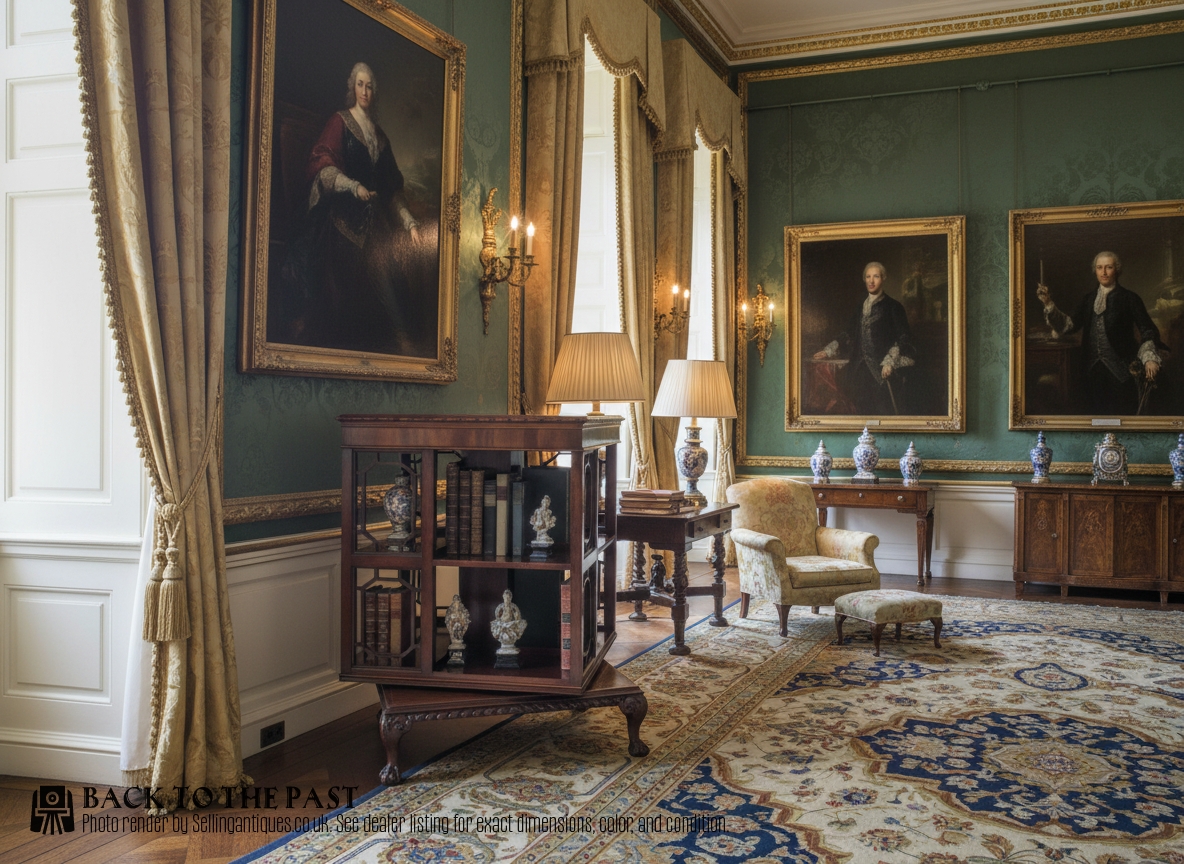
How they were made
Cabinet makers constructed these rotating bookcases primarily using solid and veneered mahogany or walnut. Selected pieces incorporate delicate satinwood inlay to add contrast along the top surfaces and upright slats.
Internal rotation relies on hidden metal, iron, and brass components that allow the tiered wooden structure to turn freely. These underlying cast iron and metal mechanisms support the heavy weight of books while maintaining a smooth action.
Square Revolving Bookcase Retail Price Guide 2026
Typical asking prices for square revolving bookcase among the pieces listed under this phrase on Sellingantiques today, from the lower quarter to the upper quarter. They describe what is for sale here now, not the wider market.
Current site listings feature mahogany and walnut woods alongside satinwood inlay across Edwardian and nineteenth-century periods.
What varies in quality
Quality rests heavily on the smoothness of the internal turning mechanism and the stability of the revolving platform. Finer pieces maintain a balanced rotation without listing or binding, even when fully loaded with volumes.
The refinement of the timber and the crispness of any inlay or carved Chippendale style detail distinguish standard workshop production from notable cabinet makers. Rich grain selection in the mahogany or walnut elevates the visual presence of the furniture.
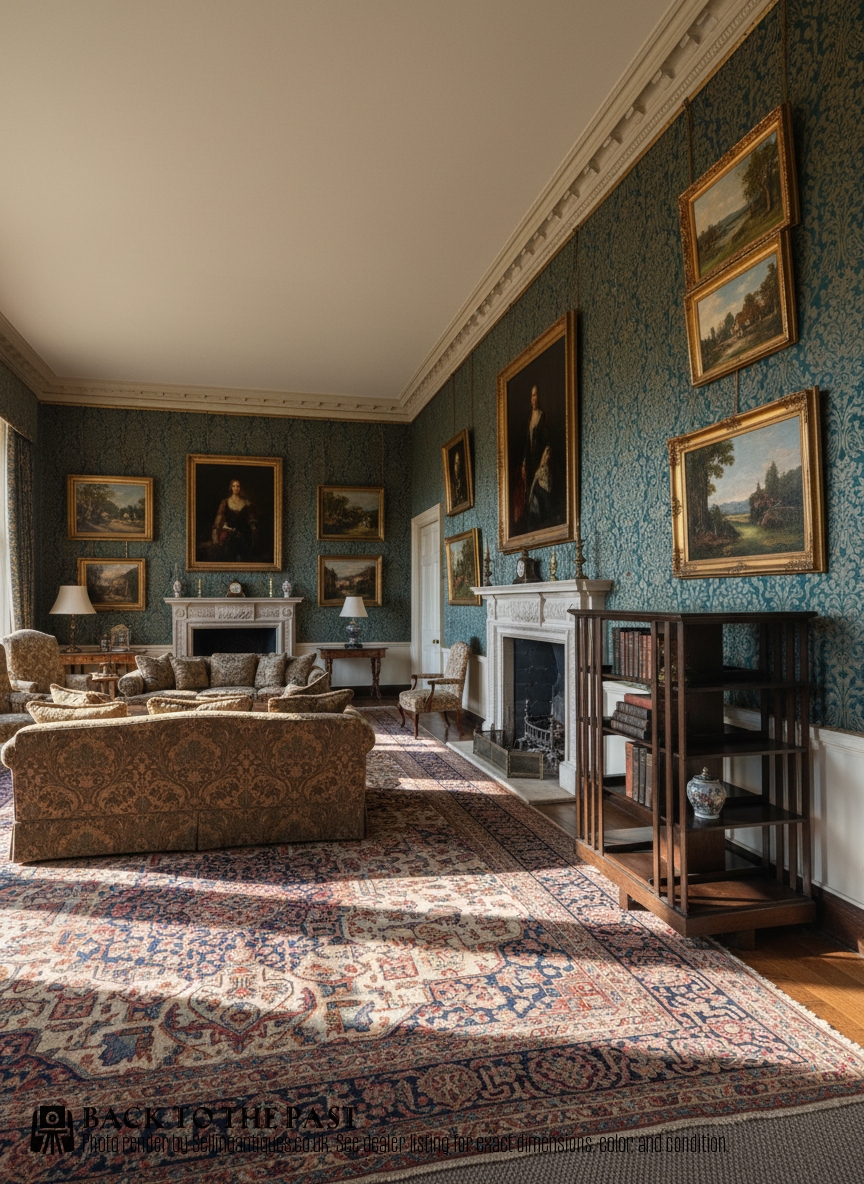
Maple and Co·Heals
The Square Revolving Bookcase Glossary
- Edwardian
- Pertaining to the reign of King Edward VII, spanning from 1901 to 1910, though the style often encompasses pieces made slightly before and after. Furniture from this era typically exhibits lighter proportions and refined inlay work.
- Chippendale style
- A revival design aesthetic drawing upon the mid-eighteenth-century pattern books of Thomas Chippendale. It frequently incorporates classical motifs adapted for later Victorian and twentieth-century tastes.
- Satinwood inlay
- A decorative technique where contrasting pieces of pale, glossy satinwood are inserted into recesses within a darker primary wood such as mahogany or walnut. This creates geometric or botanical patterns across flat surfaces.
- Revolving mechanism
- The internal pivot and ball-bearing or spindle assembly concealed beneath the tiers that permits the bookcase to spin. The engineering quality dictates the longevity and ease of the rotation.
Square Revolving Bookcase: Frequently Asked Questions
How do these bookcases spin?
Rotation is enabled by a concealed metal or cast iron pivot mechanism housed beneath the central column. This engineering allows multiple tiers of heavy books to turn smoothly with minimal effort.
Over decades of use, these internal bearings require clean movement and occasional maintenance to preserve their original balance and prevent sticking.
Where should I place a revolving bookcase?
These compact pieces fit well beside armchairs, beside desks, or within open floor spaces where access from all four sides is useful. Because they spin, they do not need to sit flush against a wall.
Placing them away from direct heat sources helps protect the mahogany or walnut veneers from drying and warping over time.
How do I distinguish Edwardian from Victorian examples?
Edwardian versions, dating around 1900 to 1910, often feature lighter wood tones, delicate satinwood inlay, and restrained proportions. Nineteenth-century Victorian pieces tend to show heavier timber construction and denser grain patterns.
Makers' marks or labels when present can also clarify the exact period of production.
Can these hold heavy hardback books?
The sturdy timber partitions and reinforced internal framework are designed to support standard library volumes and reference books. The structural integrity relies on solid wood framing around the revolving axis.
Distributing weight evenly across the tiers ensures the mechanism continues to turn without strain.