



Mahogany Rotating Bookstand
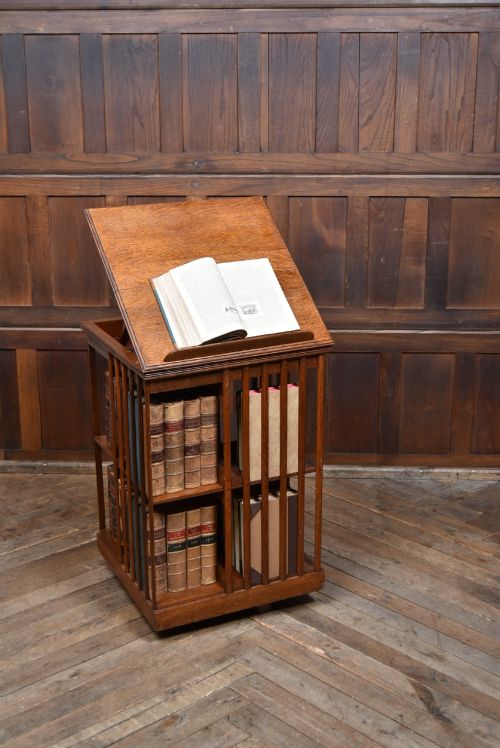
A mahogany rotating bookstand offers practical desktop or floor storage that turns smoothly to hand.
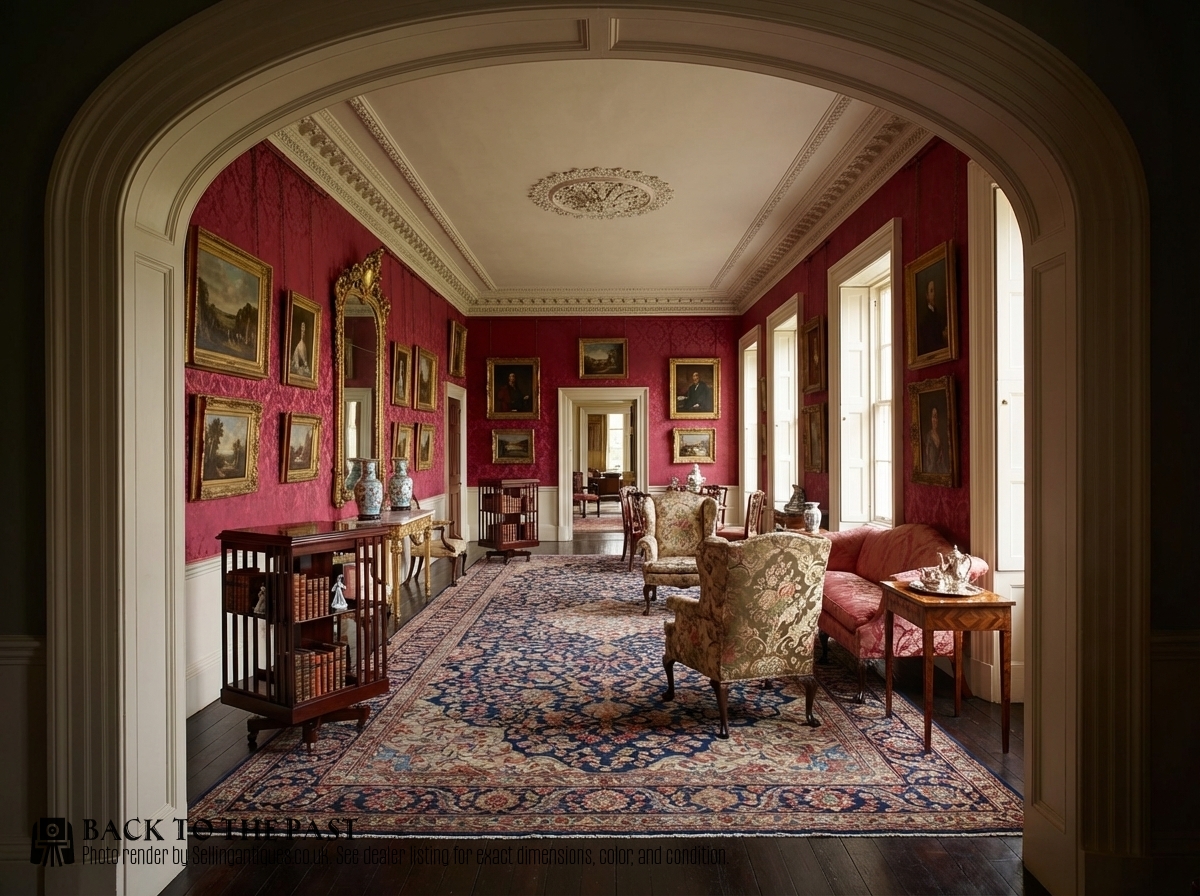
Mahogany Rotating Bookstand
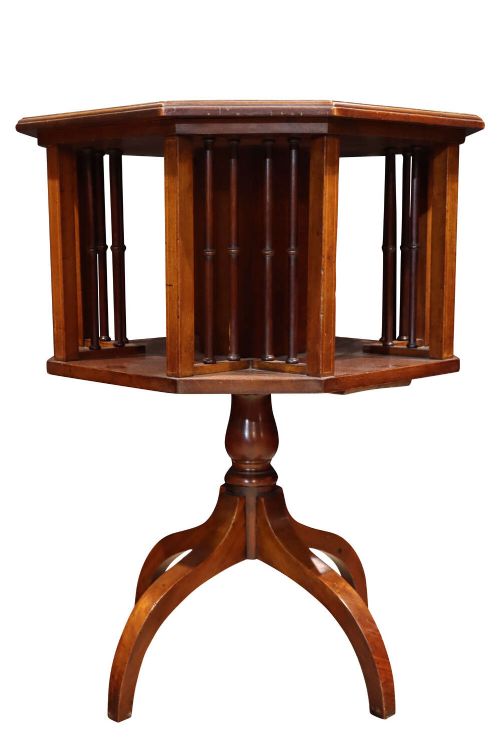
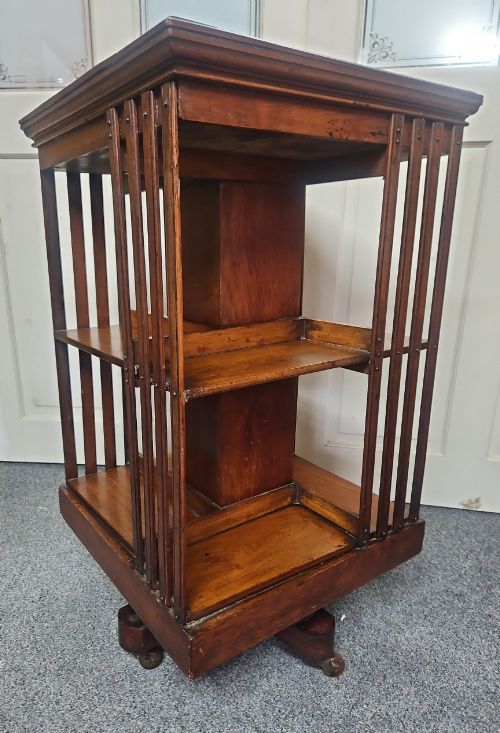
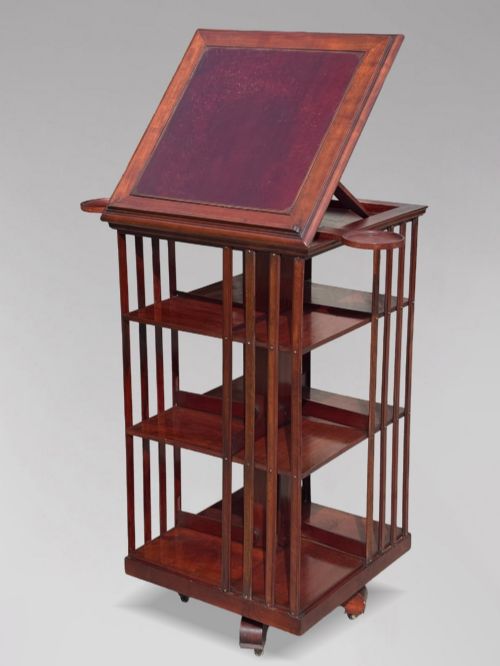
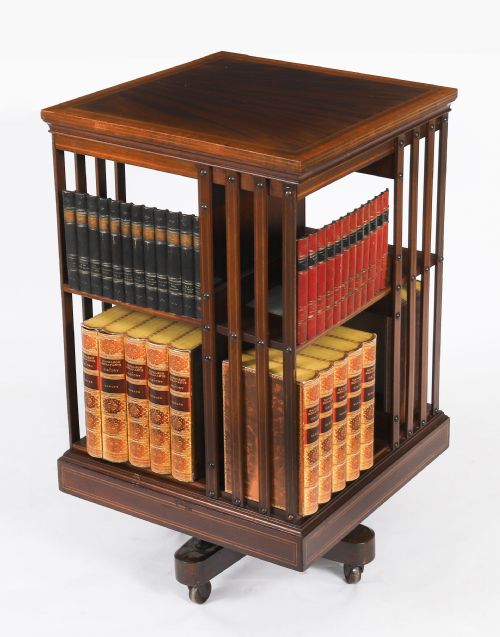
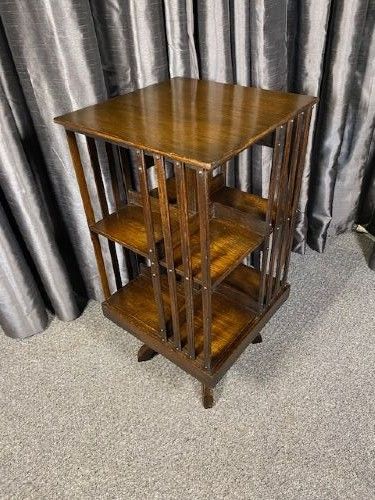
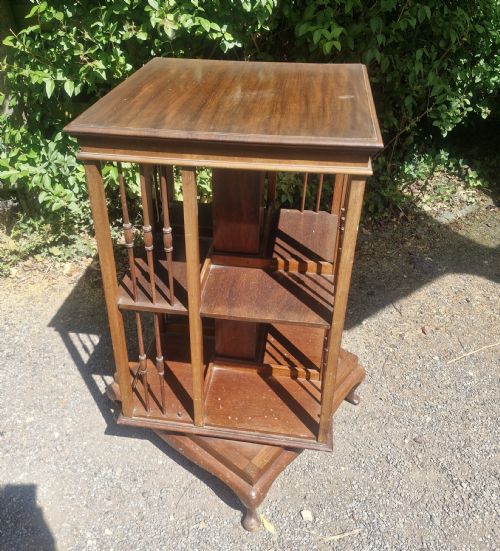
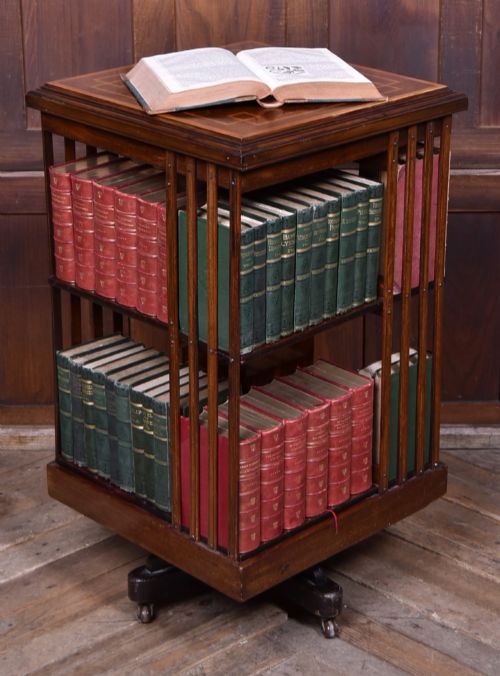
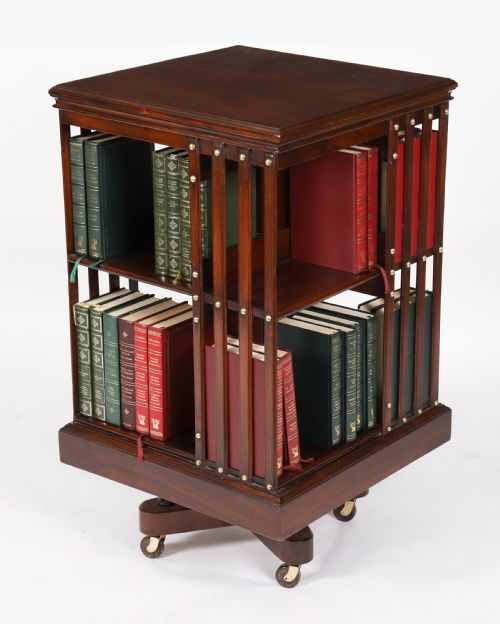
A mahogany rotating bookstand is a revolving bookcase designed to hold volumes upright within easy reach. These pieces appear most frequently from the Edwardian era and the late Victorian period.
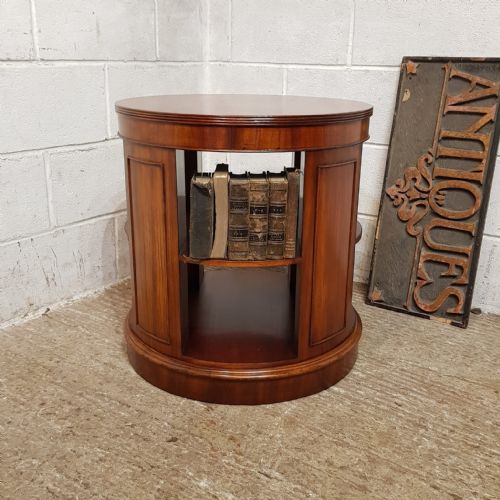
The selections span standard floor models and table top versions, alongside taller designs in oak. Makers constructed these items primarily as functional furniture for studies and libraries.
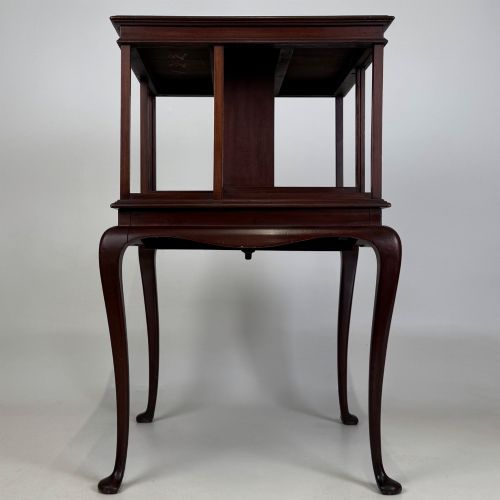
Round and square tier configurations dominate the styles, often incorporating Sheraton Revival or Queen Anne influences. Buyers encounter these items as practical additions to domestic reading spaces.
How they were made
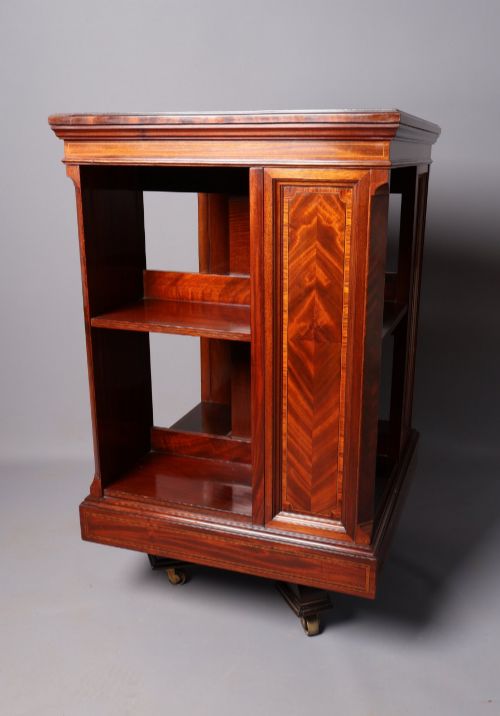
Cabinet makers utilised solid mahogany and flame mahogany veneers over secondary timbers, occasionally adding satinwood inlay for decorative contrast. Brass and cast iron components formed the internal revolving mechanisms that allow the tiers to turn.
Structural framing relied on traditional joinery methods to support the weight of heavy volumes on each tier. Inlaid surfaces received hand-polished finishes to highlight the grain of the wood.
Mahogany Rotating Bookstand Retail Price Guide 2026
Typical asking prices for mahogany rotating bookstand among the pieces listed under this phrase on Sellingantiques today, from the lower quarter to the upper quarter. They describe what is for sale here now, not the wider market.
Even busy writers need a gentle spin when choosing between dictionaries.
What varies in quality
Construction standards depend heavily on the smoothness of the internal rotating mechanism and the stability of the tier framing. Superior examples feature robust timber selection and precise inlay work without warping.
Finishing details distinguish standard production items from finer workshop pieces, particularly in the crispness of the satinwood banding and the durability of the polish.
Maple and Co
The Mahogany Rotating Bookstand Glossary
- Flame mahogany
- A veneer figure resembling flickering flames, prized for its distinctive grain patterns. Cabinet makers selected these cuts for the primary display surfaces.
- Satinwood inlay
- Contrasting pale timber inserted into the mahogany ground to create decorative borders. This technique appeared frequently on Edwardian pieces.
- Revolving mechanism
- The internal pivot and bearing system allowing the tiers to turn freely. Metal and brass components ensure smooth rotation under load.
- Sheraton Revival
- A late nineteenth and early twentieth century style drawing on eighteenth century neoclassical designs. Pieces display refined proportions and delicate inlay.
Mahogany Rotating Bookstand: Frequently Asked Questions
How do I care for a mahogany rotating bookstand?
Dust the timber regularly with a soft, dry cloth to protect the polished surface from abrasive particles. Avoid placing the stand in direct sunlight or near heat sources to prevent the wood from drying out.
Check the rotating mechanism periodically to ensure it turns freely without catching. Apply a suitable paste wax occasionally to maintain the lustre of the mahogany.
Can these bookstands hold heavy reference books?
Most floor standing models easily accommodate standard hardbacks and reference volumes across their multiple tiers. The internal wooden and metal framing provides robust structural support for daily use.
Table top versions suit lighter collections of novels and poetry rather than encyclopedias. Distribute books evenly across opposing sides to keep the rotation balanced.
How do I tell an Edwardian bookstand from a Victorian one?
Edwardian models often feature lighter satinwood inlay and delicate Sheraton Revival styling. They tend to appear brighter in timber tone compared to earlier pieces.
Victorian examples frequently display heavier proportions and simpler mahogany surfaces without extensive banding. Examining the construction details and secondary woods helps confirm the period.
Where should I place a rotating bookstand in a room?
These pieces function effectively beside an armchair or desk where books are needed within arm's reach. Their ability to turn means they fit neatly into corners while keeping all titles accessible.
Floor models also serve well as freestanding pieces in the centre of a study or library. Ensure adequate clearance around the base for the tiers to rotate fully.