



Revolving Book Caddy
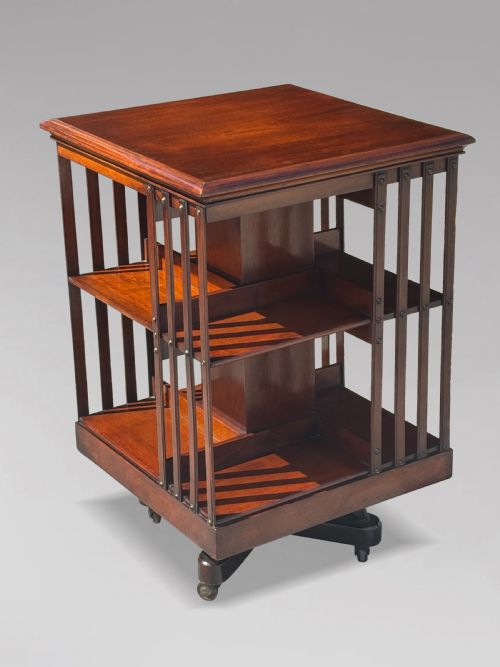
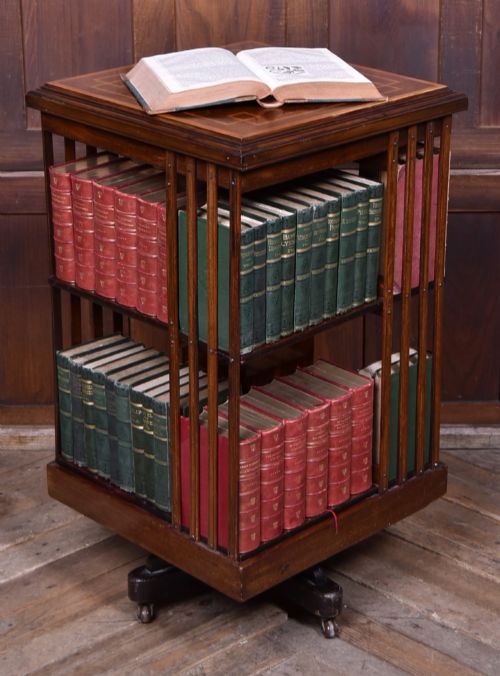
A revolving book caddy gives you a rotating library at your fingertips, combining compact practicality with handsome timber grain.
Revolving Book Caddy
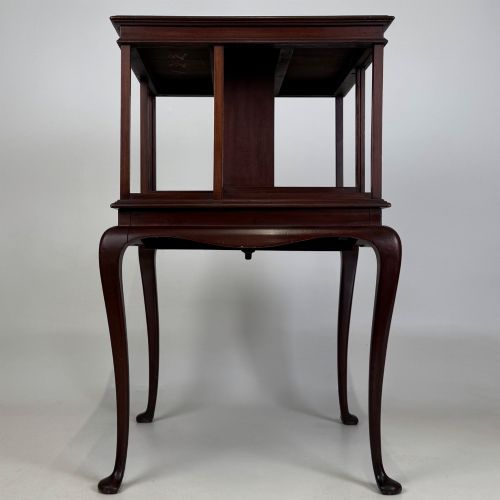
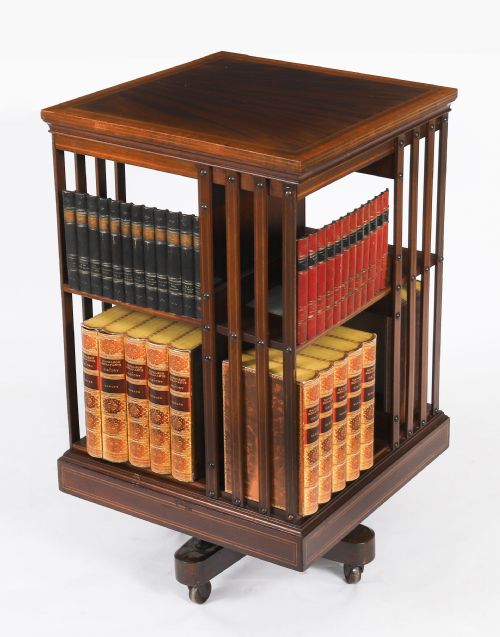
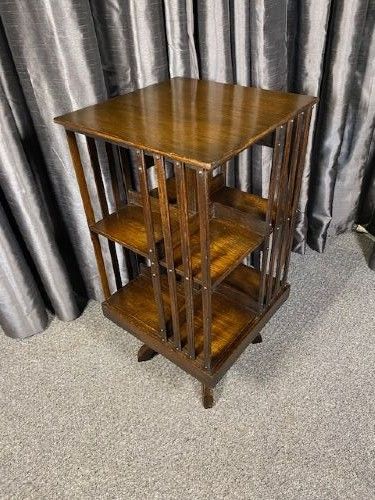
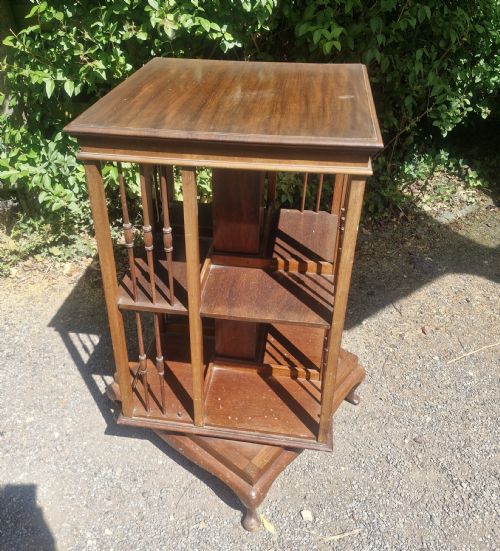
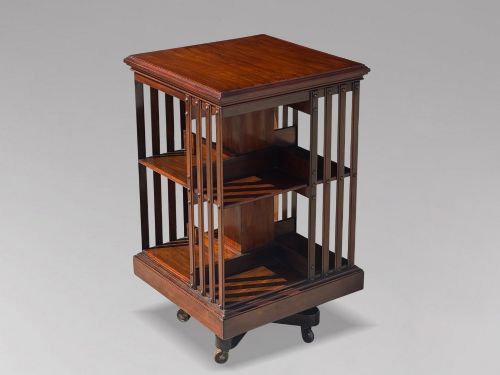
A revolving book caddy serves as a compact, rotating repository for volumes, designed for tabletop or floor use. When you search for a revolving book caddy, you encounter pieces that range from small desk companions to larger freestanding bookcases. The selection spans the Edwardian period, the nineteenth century, and the nineteen-thirties.
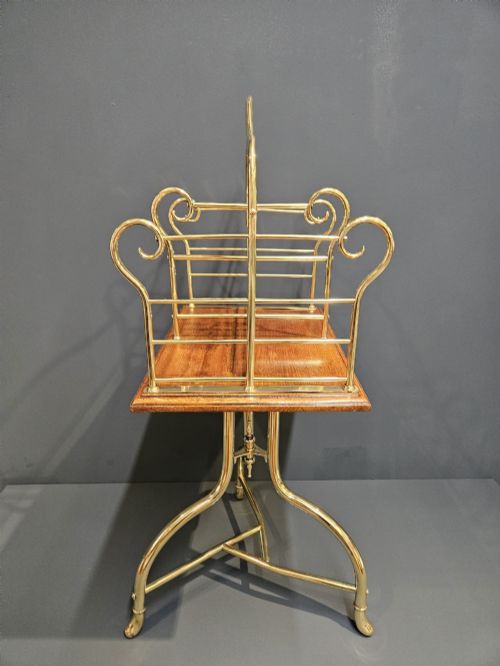
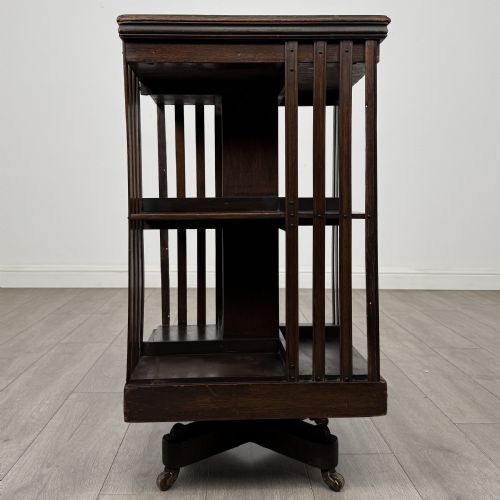
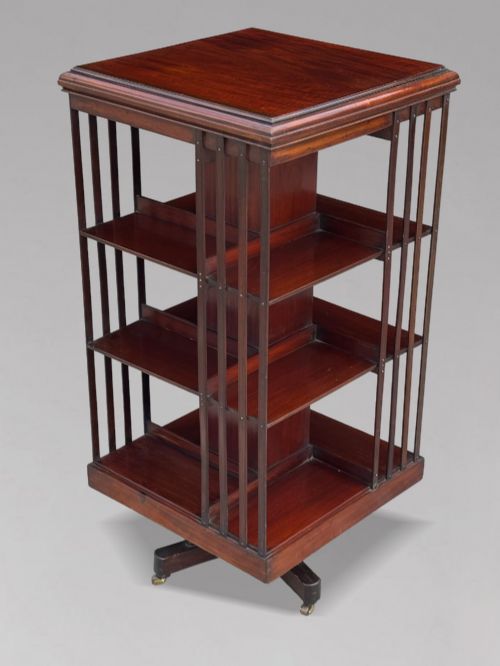
The floor-standing versions typically feature slatted sides and a cruciform base resting upon small castors or feet. Meanwhile, the smaller desk-top caddies designed in France utilise rich timbers accented with brass mounts. These rotating libraries allow a reader to access multiple texts without shifting position.
Edwardian examples frequently employ mahogany or satinwood inlay, while later pieces turn to oak or walnut. The rotating mechanism sits discreetly beneath the tiers, engineered to handle the weight of heavy books while turning smoothly. Each piece balances functional utility with the decorative character of its chosen wood.
Materials and construction methods
Cabinetmakers constructed these pieces using solid timbers and select veneers such as mahogany, satinwood, walnut, kingwood, and oak. Crossbanding and string inlay often define the top surfaces and shelf edges, showcasing precise joinery skills. Iron and brass components strengthen the internal pivot mechanisms and exterior mounts.
Woodturners shaped central columns and spindle supports, while joiners housed shelves securely within sturdy uprights. French polish finishes were applied to bring out the natural chatoyancy and grain patterns of the hardwood. Desk-top versions incorporate cast brass galleries to keep volumes secure during rotation.
Revolving Book Caddy Retail Price Guide 2026
Typical asking prices for revolving book caddy among the pieces listed under this phrase on Sellingantiques today, from the lower quarter to the upper quarter. They describe what is for sale here now, not the wider market.
Markers of superior craftsmanship
Quality rests upon the choice of timber and the precision of the rotating action. Finer examples display carefully selected mahogany or figured satinwood with crisp inlay, whereas simpler pieces utilise plain oak. The bearing mechanism dictates how fluidly the tiers spin under weight.
Attention to detail separates standard production from exceptional work. Delicately pierced slats, well-fitted brass galleries, and hand-cut dovetails indicate a higher tier of manufacture. The integrity of the polish and the stability of the revolving pivot remain central to the overall standard.
The Revolving Book Caddy Glossary
- Revolving bookcase
- A freestanding or tabletop tier designed to rotate on a central pivot for easy volume selection. This format keeps a working library accessible within a narrow footprint.
- Satinwood
- A light-coloured tropical timber prized for its reflective sheen and smooth texture. Makers used it extensively during the Edwardian era for banded borders and inlaid motifs.
- Kingwood
- A dense, dark purple-brown timber featuring lighter golden streaks, favoured by French cabinetmakers. It provides a striking contrast when paired with polished brass mounts.
- String inlay
- A narrow line of contrasting wood embedded flush into the surface of a panel. This technique outlines the perimeter of shelves and tabletops to add visual definition.
Revolving Book Caddy: Frequently Asked Questions
What is a revolving book caddy?
A revolving book caddy is a compact container or bookcase engineered to spin on a central axis. This mechanism allows a reader to browse multiple volumes from a single seated position.
Historically, these pieces served scholars, solicitors, and home readers who needed frequent access to reference books. They appear in both small desk-top formats and larger floor-standing variations.
How do I date an antique bookcase?
Dating relies upon observing the timber selection, decorative styles, and construction techniques evident in the piece. Edwardian examples often feature satinwood inlay on mahogany, while later pieces utilise plain oak.
Nineteenth-century models tend to display heavier proportions and darker patination. Examining the interior construction and pivot mechanism provides further clues to the period of manufacture.
Where were these caddies used?
These caddies found homes on executive desks, library tables, and study floors where space was at a premium. Their rotating design made them ideal for placing beside an armchair or desk.
Desk-top versions held active ledgers or dictionaries, while floor-standing variants stored entire sets of novels or legal texts. Their portability suited the well-appointed Victorian and Edwardian study.
Are desk-top and floor versions different?
Desk-top versions are typically smaller French pieces constructed from kingwood or mahogany with protective brass galleries. Floor-standing variants are taller Edwardian or nineteenth-century structures with cruciform feet.
While both share the core revolving function, their scale and ornamentation reflect their intended placement in a room. Floor models rely on integrated castors for mobility across carpets and floorboards.