
Rotating Book Table
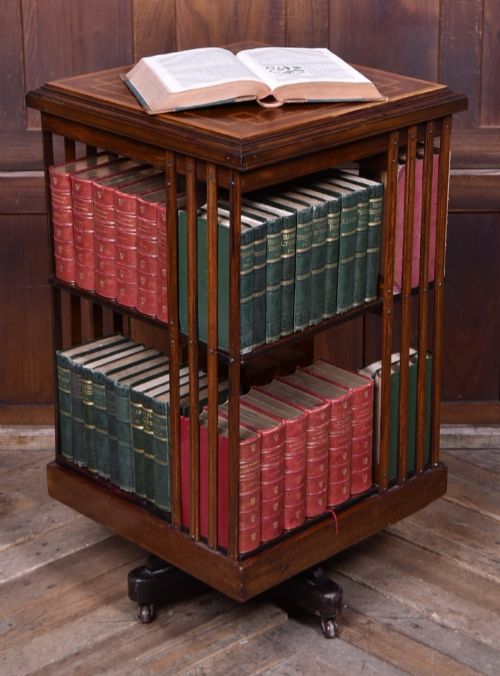
A rotating book table turns smoothly on its axis, bringing volumes within reach while resting beside a favourite armchair.
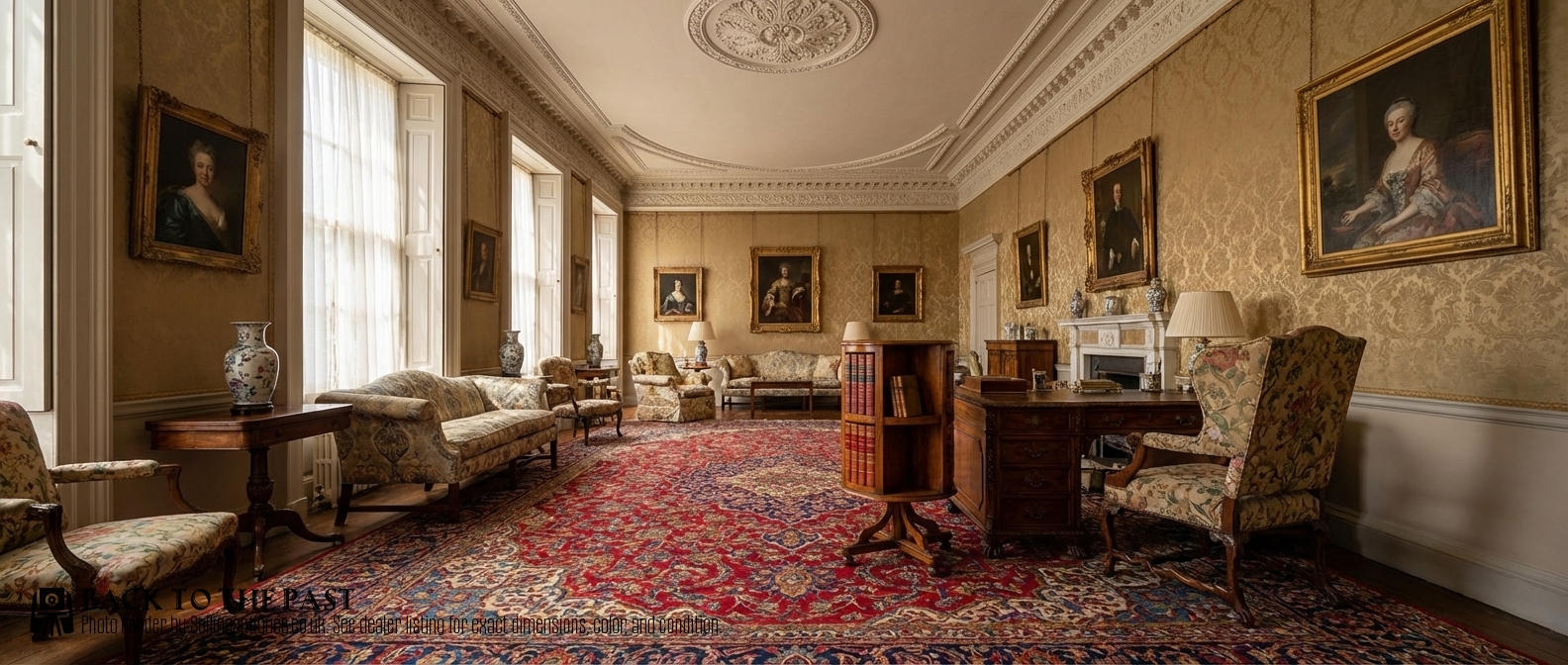
Rotating Book Table
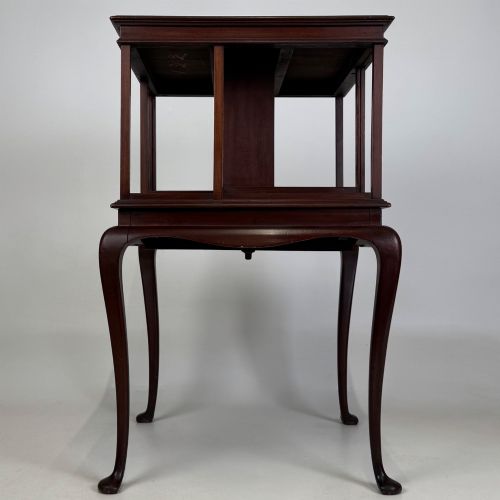
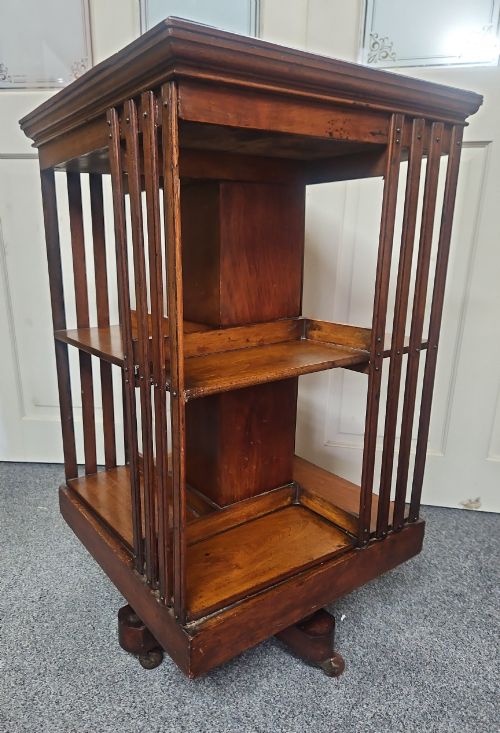
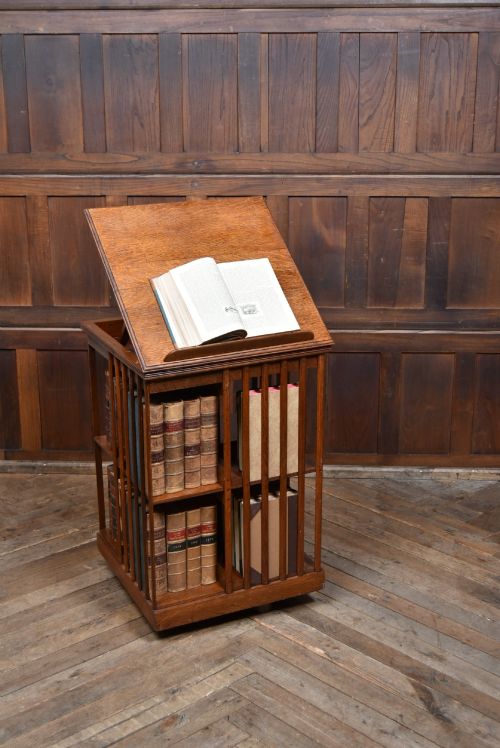
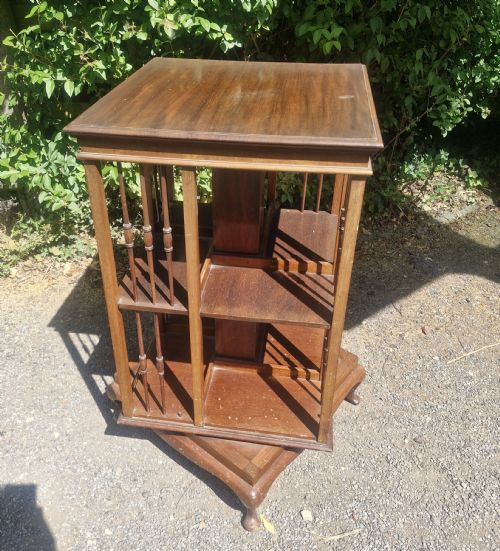
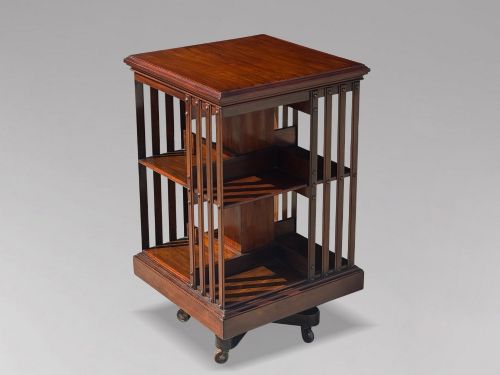
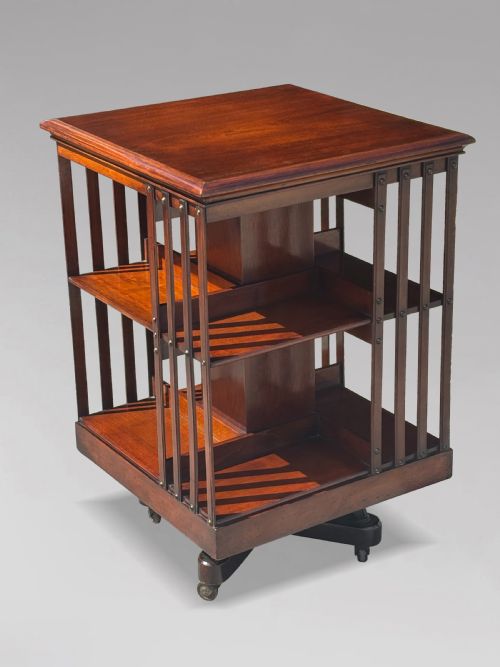
A rotating book table serves as a functional piece of library or study furniture designed to hold multiple volumes in a compact footprint. These pieces pivot on a concealed mechanism, allowing a reader to access a collection of books without leaving the seat.
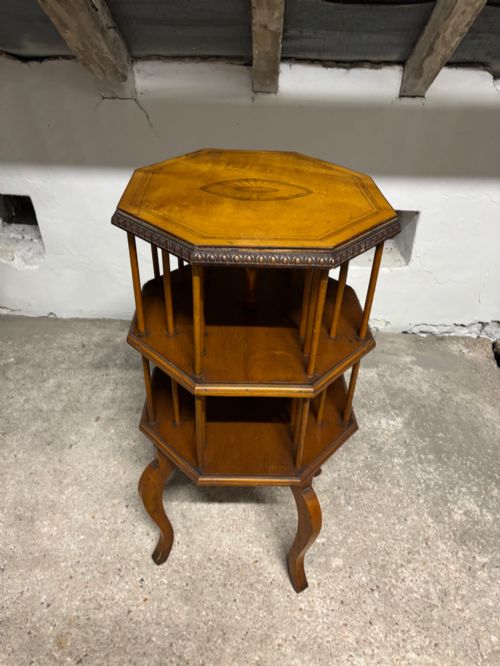
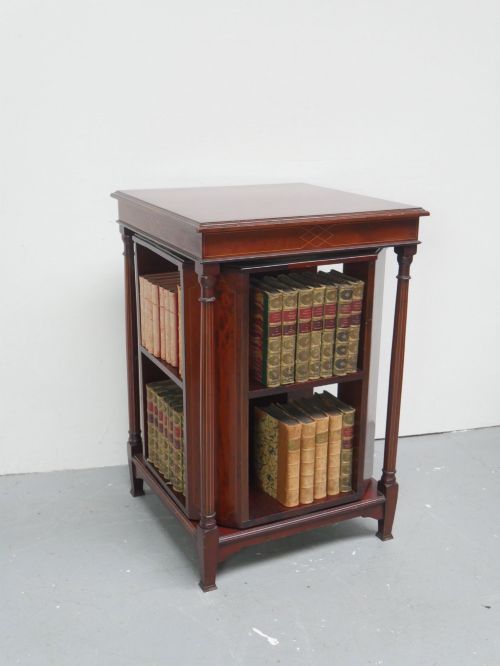
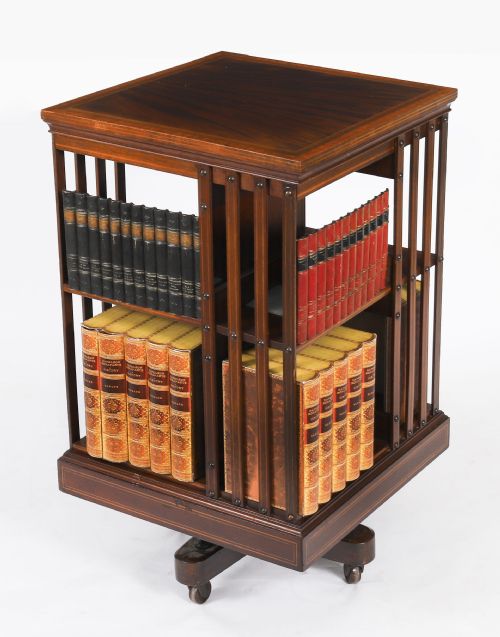
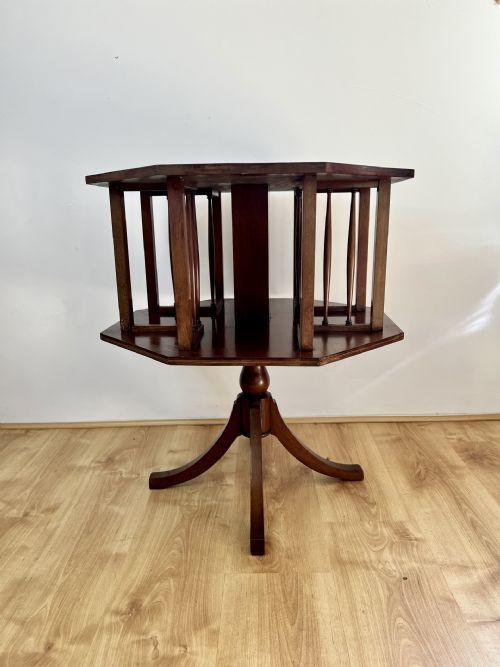
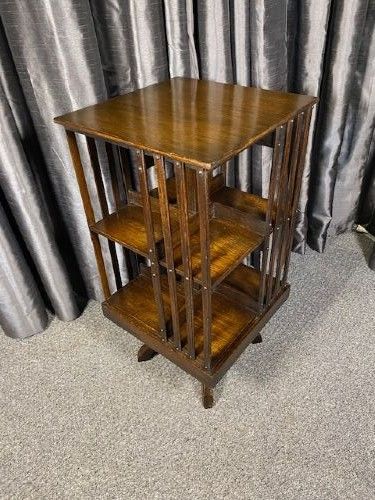
The most common examples encountered on this page belong to the Edwardian and Victorian periods, often constructed as low floor-standing units or smaller table-top variants. Makers built these tables to sit beside desks or armchairs, placing reference books or novels directly at hand.
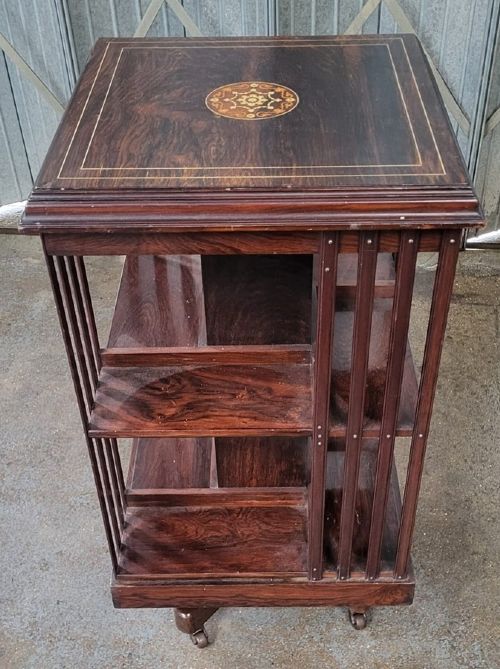
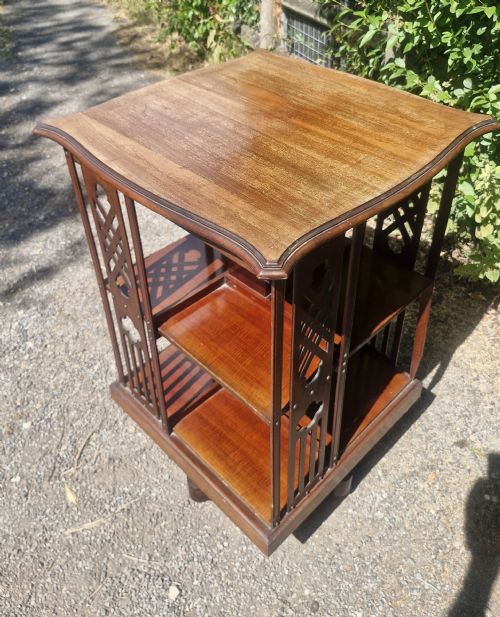
Makers utilised various woods and decorative styles, ranging from plain oak to inlaid mahogany and satinwood. Alongside standard square forms, some examples incorporate round designs, brass mounts, or marble tops.
Materials and Construction
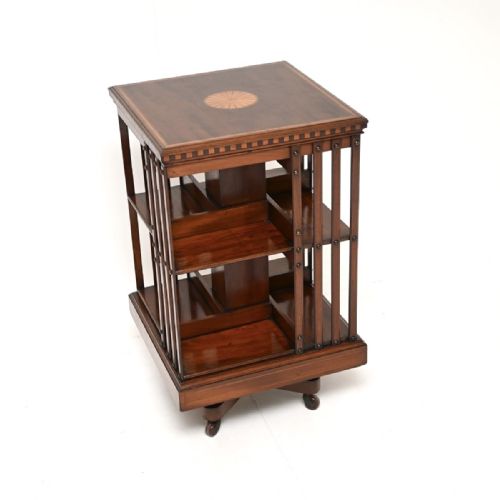
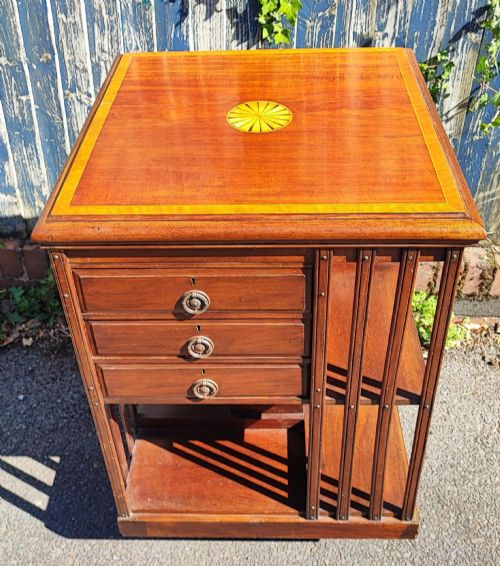
Craftsmen built the primary carcase of these tables using timbers such as mahogany, oak, and walnut, often selecting figured veneers for the exterior surfaces. Satinwood inlay and contrasting stringing frequently decorate the panels of Edwardian and Victorian pieces.
The internal turning mechanism relies on a combination of wood and metal components, including cast iron, to support the weight of heavy volumes while maintaining a smooth rotation. Brass details appear on corners, handles, and occasional inlay work.
Some models feature a marble top, proving that heavy stone surfaces and books enjoy a surprising partnership.
Distinctions in Quality
Quality rests in the smoothness of the revolving action and the stability of the underlying wooden framework. Superior examples maintain a balanced motion without tilting, even when the shelves carry heavy volumes.
The choice of timber and the precision of the inlay work separate standard workshop production from finer cabinet-making. Subtle details such as polished interiors, matched flame mahogany veneers, and sturdy brass fittings elevate the standard of a piece.
Maple Co
The Rotating Book Table Glossary
- Revolving bookcase
- A freestanding or table-top unit mounted on a central pivot that turns freely in either direction. This design allows users to store books on multiple sides within a confined space.
- Marquetry
- The art of applying decorative pieces of veneer to a structure to form intricate pictorial designs or patterns. Dutch floral examples employ this technique with contrasting woods.
- Satinwood
- A durable tropical hardwood known for its golden yellow sheen and lustrous grain. Cabinet-makers used it extensively for banding and inlay on late nineteenth-century furniture.
- Inlay
- A technique where pieces of contrasting material are inserted into a recessed wooden surface to create ornamentation. Lines of satinwood or ebony frequently define the borders of shelves.
Rotating Book Table: Frequently Asked Questions
What is a rotating book table used for?
These tables provide accessible storage for dictionaries, reference volumes, or current reading material within a study or library.
The rotating action allows a reader to browse multiple shelves from a single seated position.
How do I identify an Edwardian rotating book table?
Edwardian examples frequently feature lighter timbers such as mahogany with satinwood inlay or stringing.
They tend to display refined proportions and cleaner lines compared to heavier Victorian models.
Are there table-top versions available?
Cabinet-makers produced smaller versions designed to sit on top of desks, side tables, or libraries.
These compact units hold a smaller selection of books while retaining the pivoting function.
What woods were commonly used?
Mahogany remains the predominant timber found across these pieces, often selected in flame or figured grain varieties.
Oak and walnut also appear, particularly in Arts and Crafts or earlier Victorian interpretations.