

Mahogany Library Stand
A mahogany library stand offers practical elegance for organising books and papers within a traditional study.
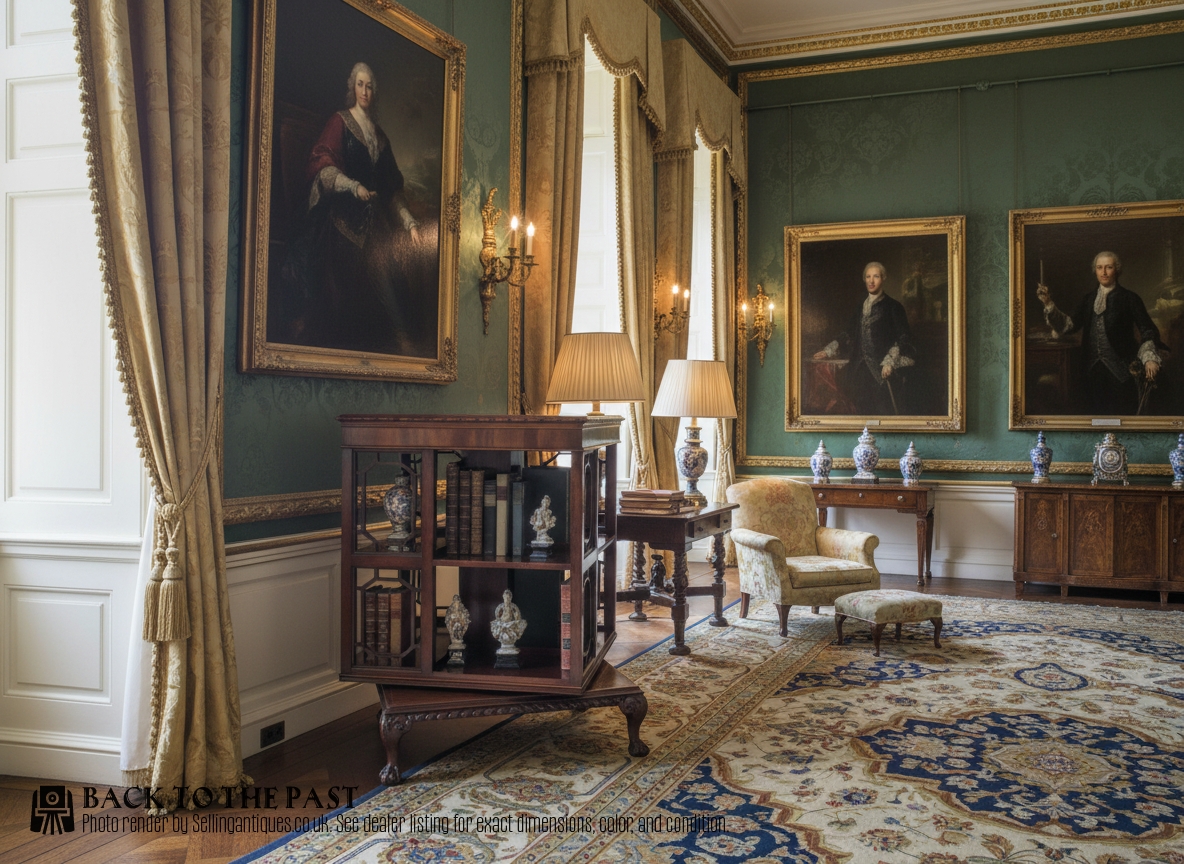
Mahogany Library Stand
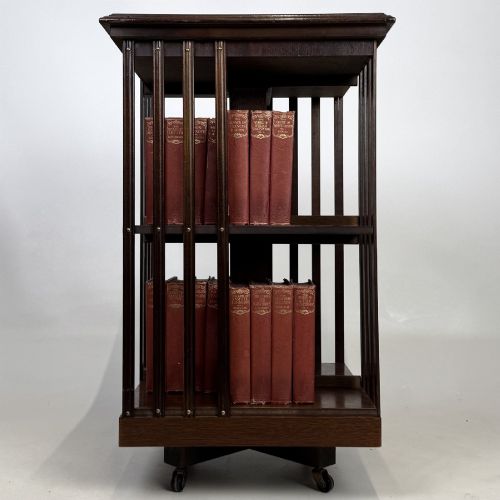
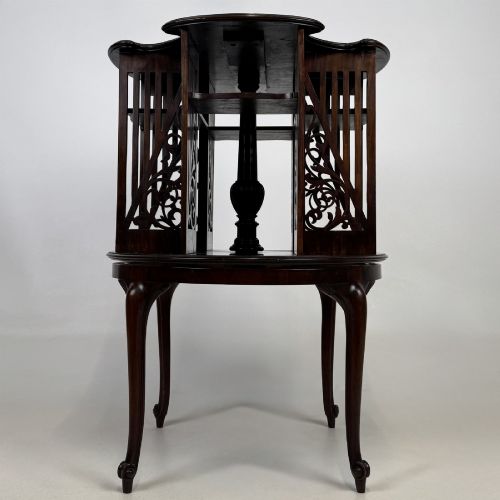
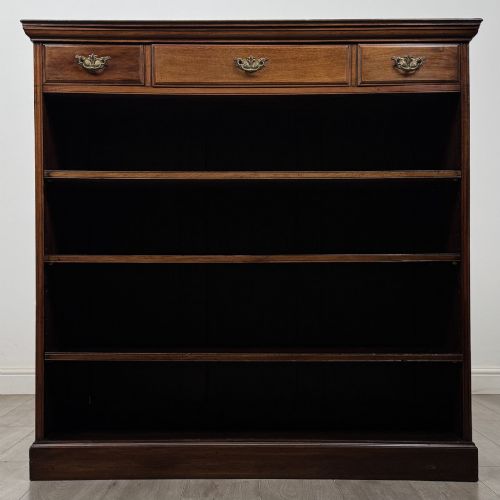
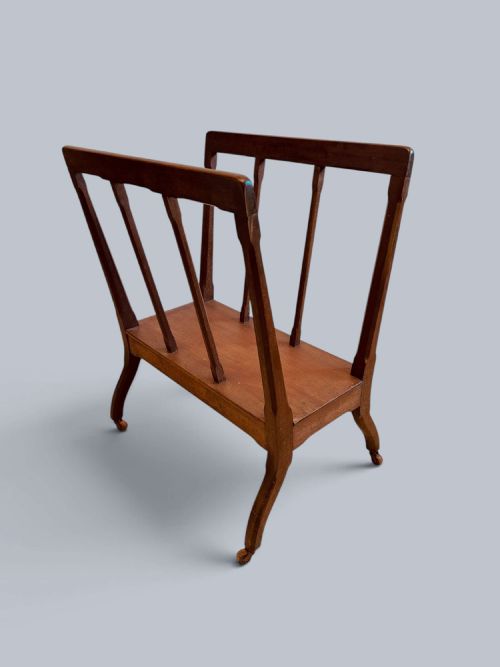
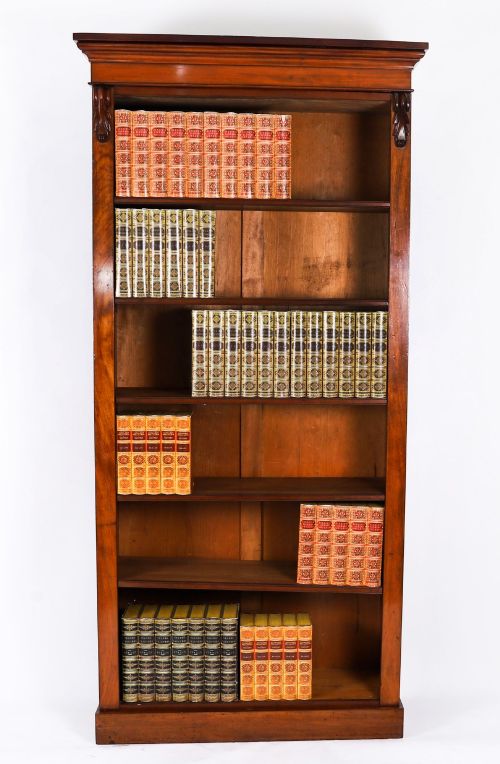
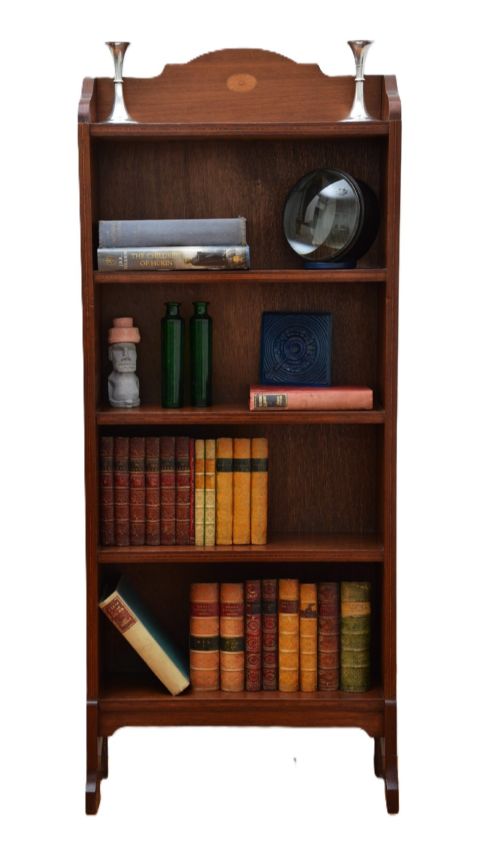
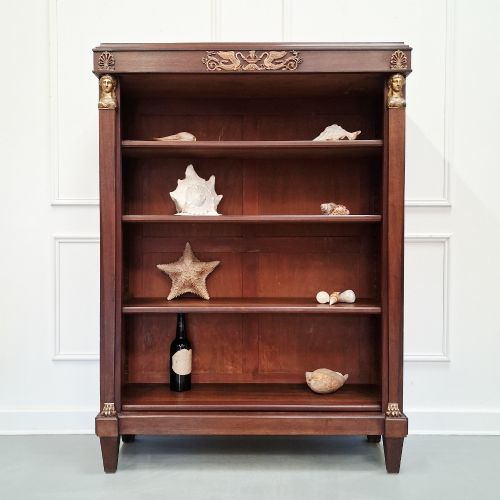
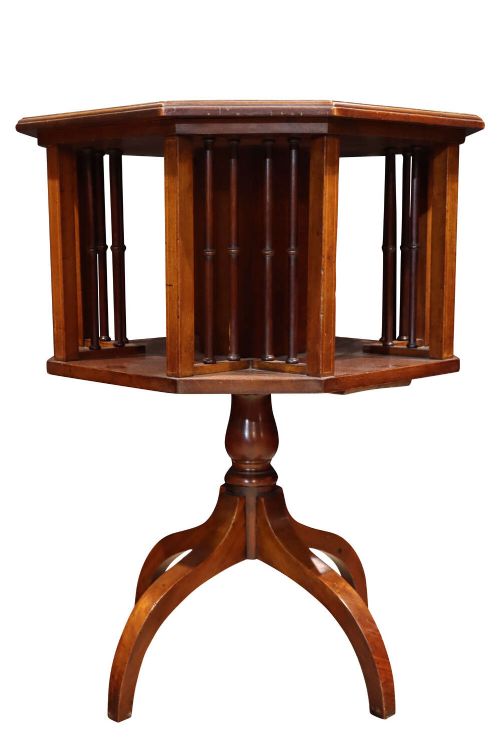
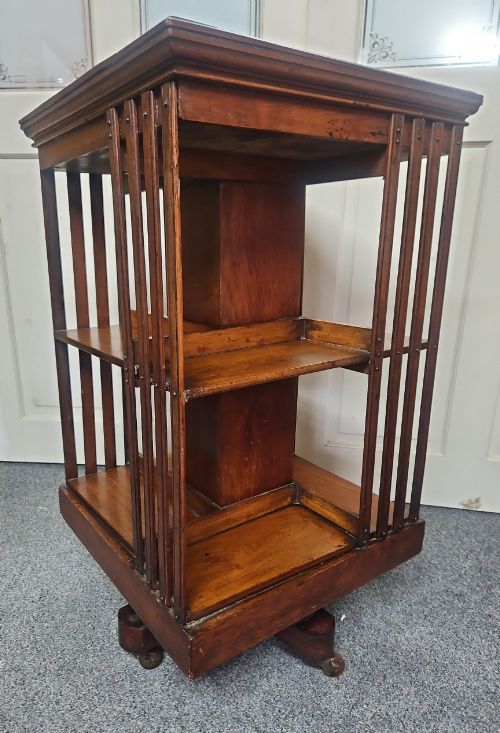
A mahogany library stand comprises several distinct forms intended for the arrangement and reading of books within domestic and institutional settings. These items appear in period records as revolving bookcases, open bookshelves, whatnots, and music stands spanning the nineteenth and early twentieth centuries.
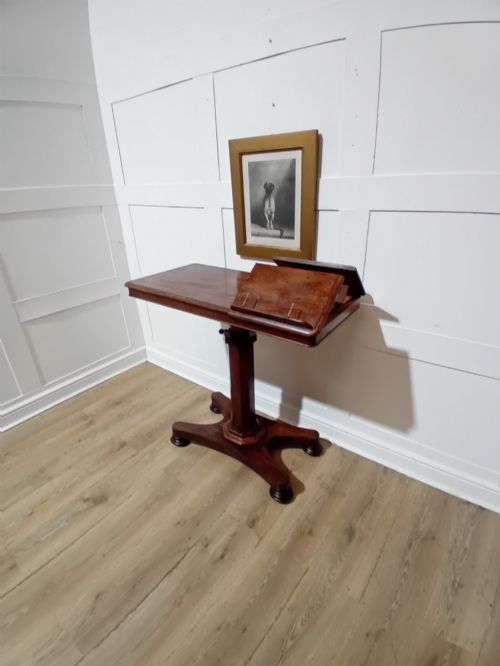
The pieces represented in this selection range from Regency open variants and George IV music stands to Edwardian revolving bookstands and later Chippendale style adaptations. Makers and manufacturers of these utilitarian objects utilised dense timber to withstand heavy daily use in studies and libraries.
Buyers encountering this search phrase will find that revolving designs and multi-tiered book stands dominate the current offerings, alongside broader occasional bookcases. Each iteration reflects the specific domestic requirements of its respective era, from the freestanding reading furniture of the Regency period to compact Edwardian models.
Materials and construction methods
Makers constructed these stands primarily using mahogany, frequently supplemented by secondary timbers, rosewood, and burr walnut veneers. Metal components such as brass fittings, cast iron, and standard hardware provide structural support and functional movement.
Joinery techniques observed in these items include traditional framing, dovetailed joints for drawers, and specialised turning for columns and peg feet. Certain models incorporate inlaid decorative elements and leather panels to enhance the refined appearance of the finished piece.
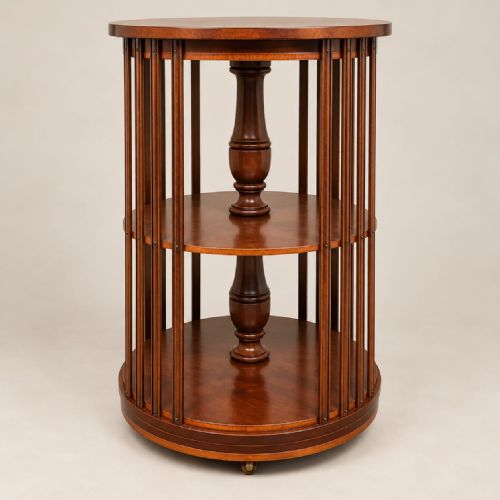
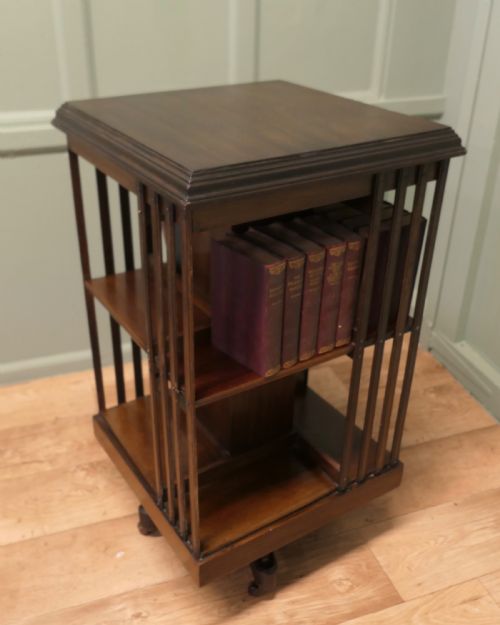
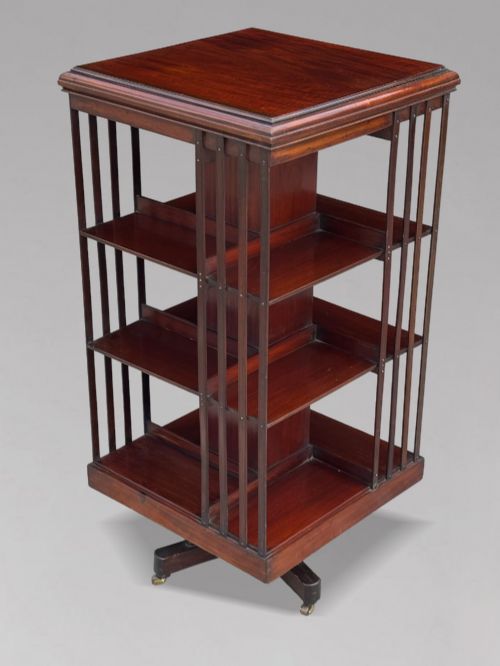
Revolving mechanisms rely on internal wooden or metal pivots that allow the upper tiers to turn smoothly on a fixed base. Open shelves and cabinets utilise fitted interior shelving, three-quarter galleries, and arcaded door panels built to endure regular handling.
Mahogany Library Stand Retail Price Guide 2026
Typical asking prices for mahogany library stand among the pieces listed under this phrase on Sellingantiques today, from the lower quarter to the upper quarter. They describe what is for sale here now, not the wider market.
The archive records mahogany library stands spanning the Regency, Victorian, Edwardian, and George IV periods, alongside later twentieth-century interpretations.
Factors influencing quality
The grade of timber selection largely dictates the visual merit of a library stand, with figured mahogany and finely matched veneers marking out superior examples. Plain surfaces and poorly matched grain patterns typically indicate more utilitarian or later commercial production.
The precision and smoothness of mechanical elements, particularly in revolving bookcases and adjustable reading stands, demonstrate the maker's original skill. Heavy, stable rotation without excessive wobble separates well-engineered pieces from lighter, looser alternatives.
The integrity of original construction, including untouched surface patination and minimal restorative intervention, preserves the historical character of each item. Well-preserved mounts, intact galleries, and crisp carving details further elevate the standing of an individual piece.
Carter of London
The Mahogany Library Stand Glossary
- Revolving bookcase
- A freestanding book stand designed to rotate on a central pivot for easy access to volumes from any seating position. These typically feature multiple stacked tiers.
- Whatnot
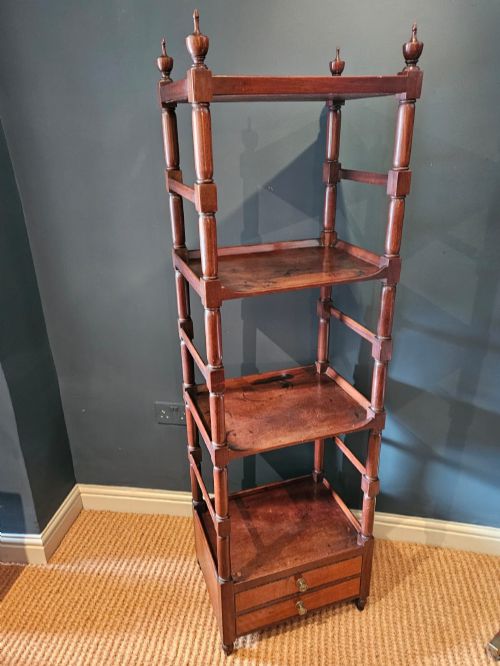
- A multi-shelved open stand utilised for displaying or holding books, ornaments, and small household items. This versatile form became popular during the nineteenth century.
- Gallery
- A raised decorative border running along the edge of a shelf or top surface to prevent items from sliding off. These appear in pierced brass or carved timber.
- Freestanding
- Finished on all sides so that the piece may sit away from a wall in the centre of a room. Library tables and certain bookcases utilise this configuration.
- Inlay
- A decorative technique where contrasting materials such as lighter woods are inserted into recesses cut into the mahogany ground. This adds geometric or floral detail to the surface.
Mahogany Library Stand: Frequently Asked Questions
What is a revolving library stand?
A revolving library stand is a compact, multi-tiered bookcase designed to sit on a floor or tabletop and rotate smoothly on a central spindle. This mechanism allows users to browse and select books from all sides without moving the entire piece of furniture.
Such stands became particularly common during the Victorian and Edwardian eras as domestic collections expanded and efficient use of study space became a priority.
How do I date a mahogany stand?
Dating a mahogany stand involves examining the timber grain, construction techniques, hardware, and stylistic indicators such as leg shape and decorative inlay. Pieces from the Regency period often display classical proportions and brass mounts, whereas Edwardian examples may show lighter framing and machine-made screws.
Archival comparisons with documented nineteenth-century furniture help confirm whether a piece belongs to the George IV era or later revival periods.
Where were these stands used?
These stands were primarily designed for domestic libraries, studies, and drawing rooms where reference books and current reading material needed to be kept close at hand. Freestanding models were often positioned beside armchairs or near large library tables.
Their practical footprint made them equally suitable for institutional offices and quiet reading corners in large country houses.
How do I care for mahogany?
Maintaining mahogany furniture requires placing pieces away from direct sunlight and heat sources to prevent the timber from drying out or fading. Regular dusting with a soft, dry cloth preserves the natural lustre of the polished surface without the need for heavy silicone polishes.
Maintaining a stable room humidity prevents the wood and any applied veneers from warping or cracking over time.