


Antique Rotating Bookshelf
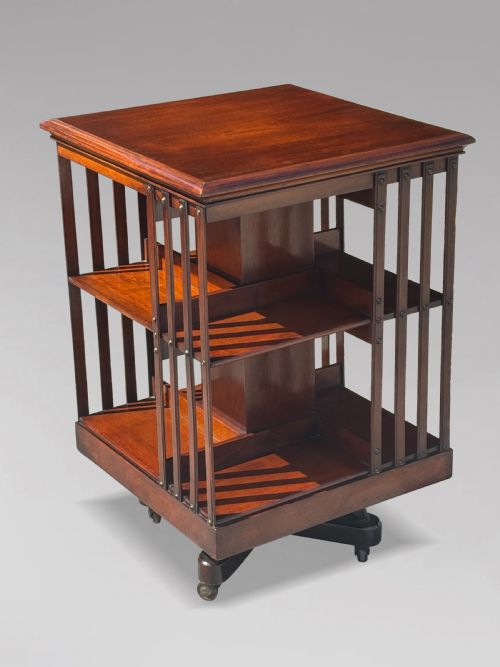
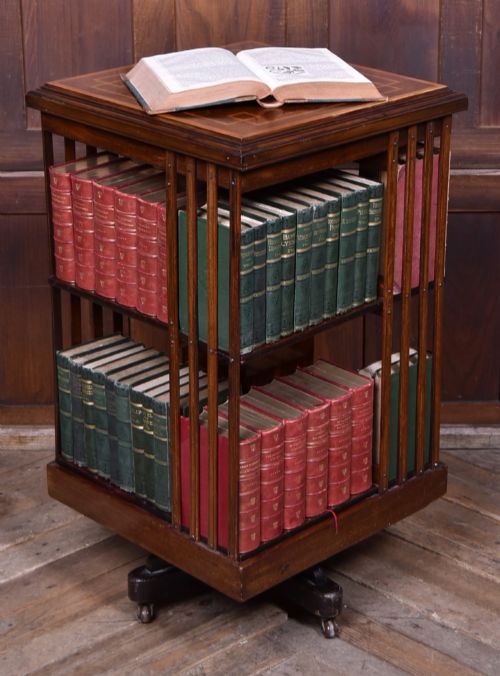
An antique rotating bookshelf delivers books to your fingertips with a gentle spin.
Antique Rotating Bookshelf
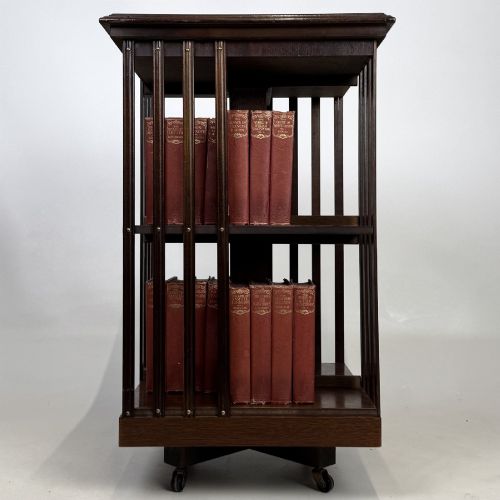
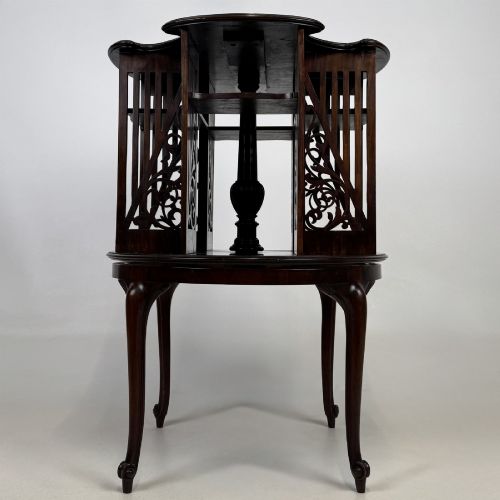
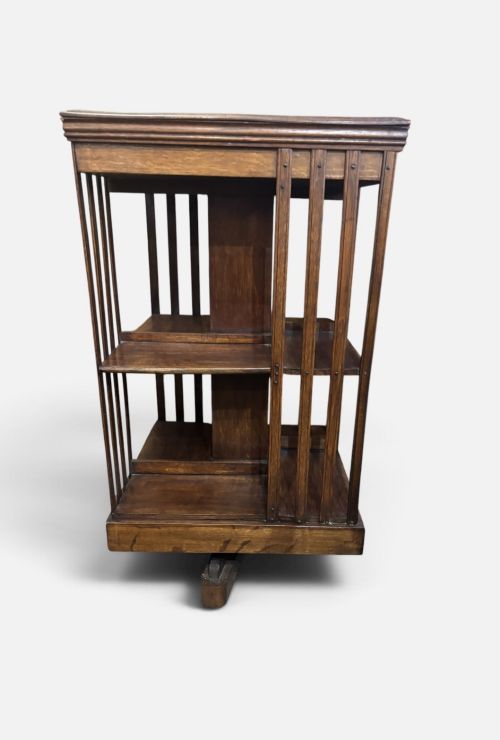
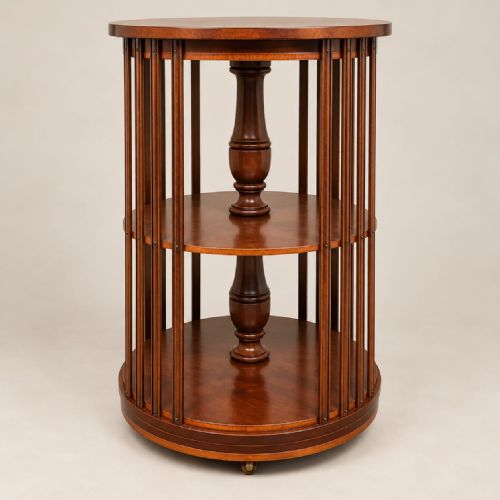
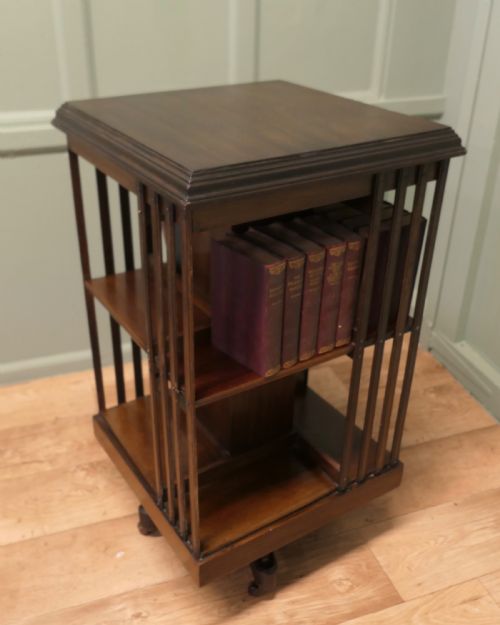
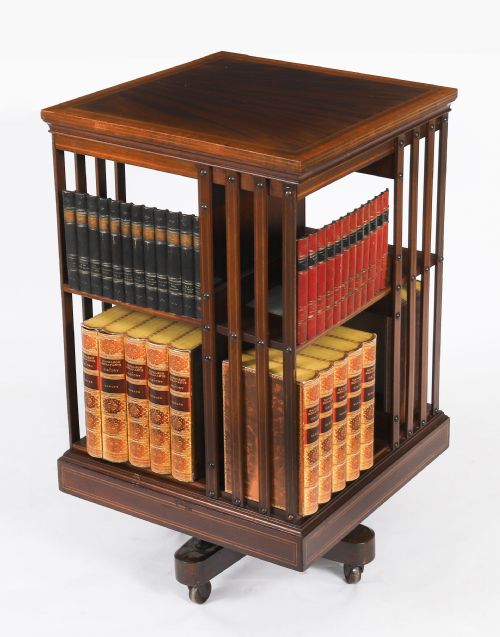
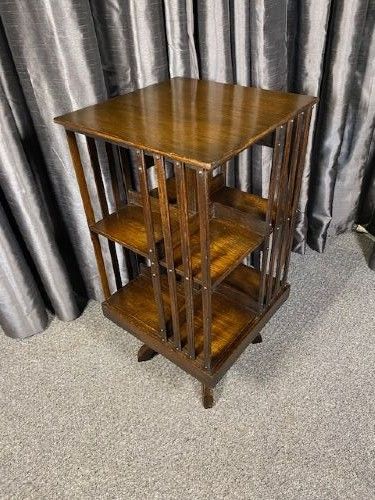
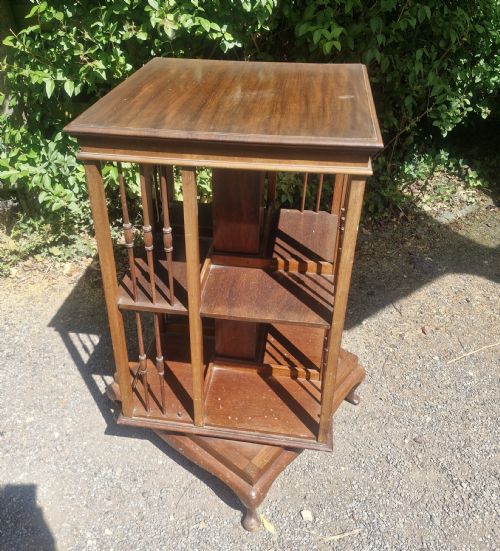
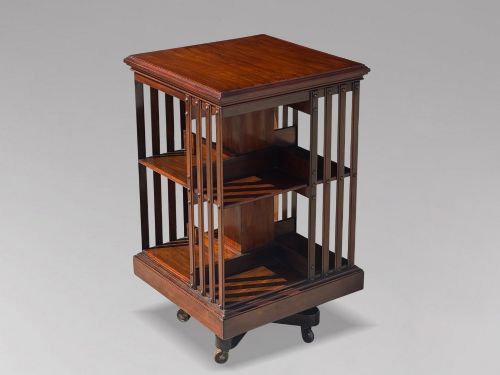
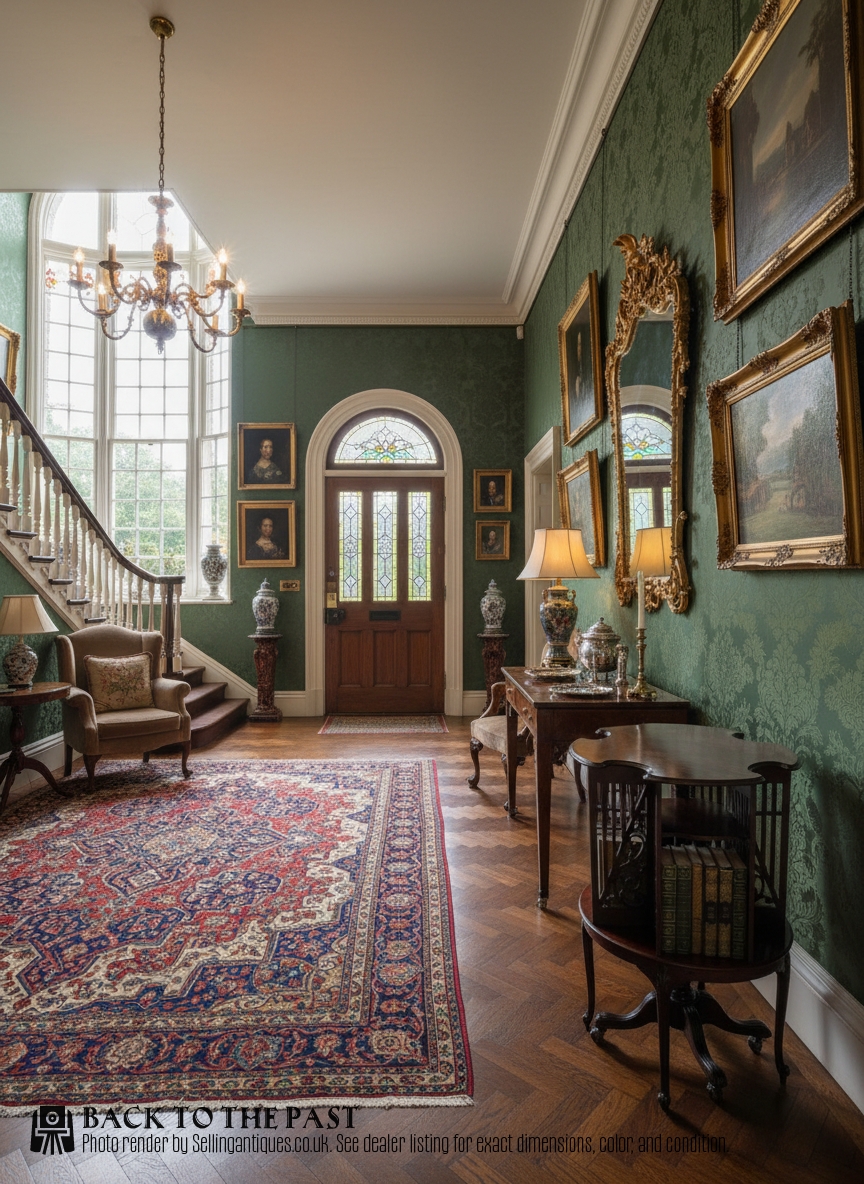
An antique rotating bookshelf offers a clever way to keep volumes within arm's reach while occupying minimal floor or desk space. The pieces listed here span the late nineteenth century into the early twentieth century, taking the form of floor-standing bookcases and smaller table top versions.
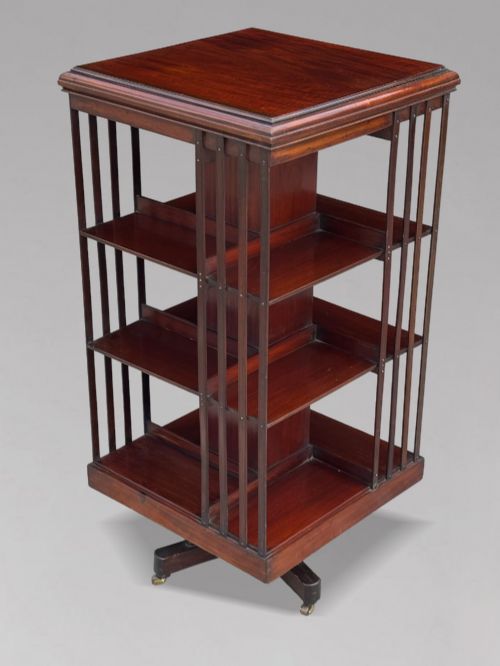
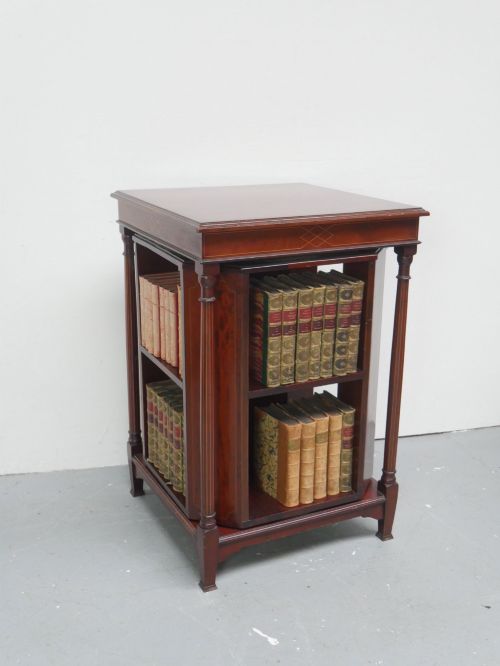
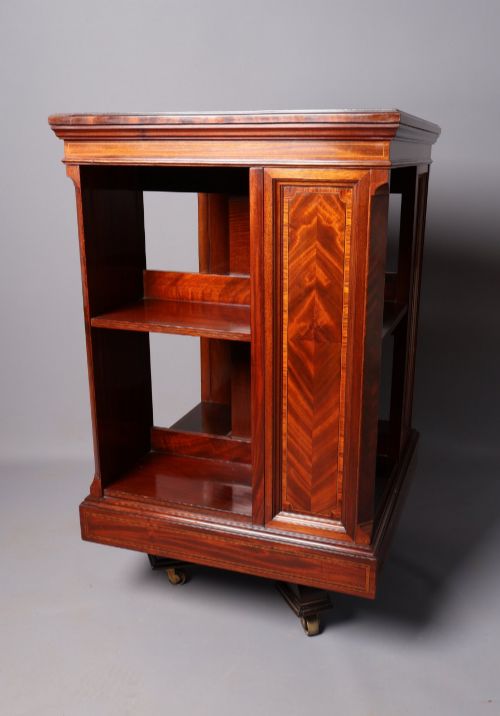
Mahogany dominates the selection, often enriched with satinwood inlay or flame grain, alongside robust examples in oak and walnut. Makers such as Heals and Maple and Co appear among the Edwardian designs, reflecting the domestic utility prized during the period.
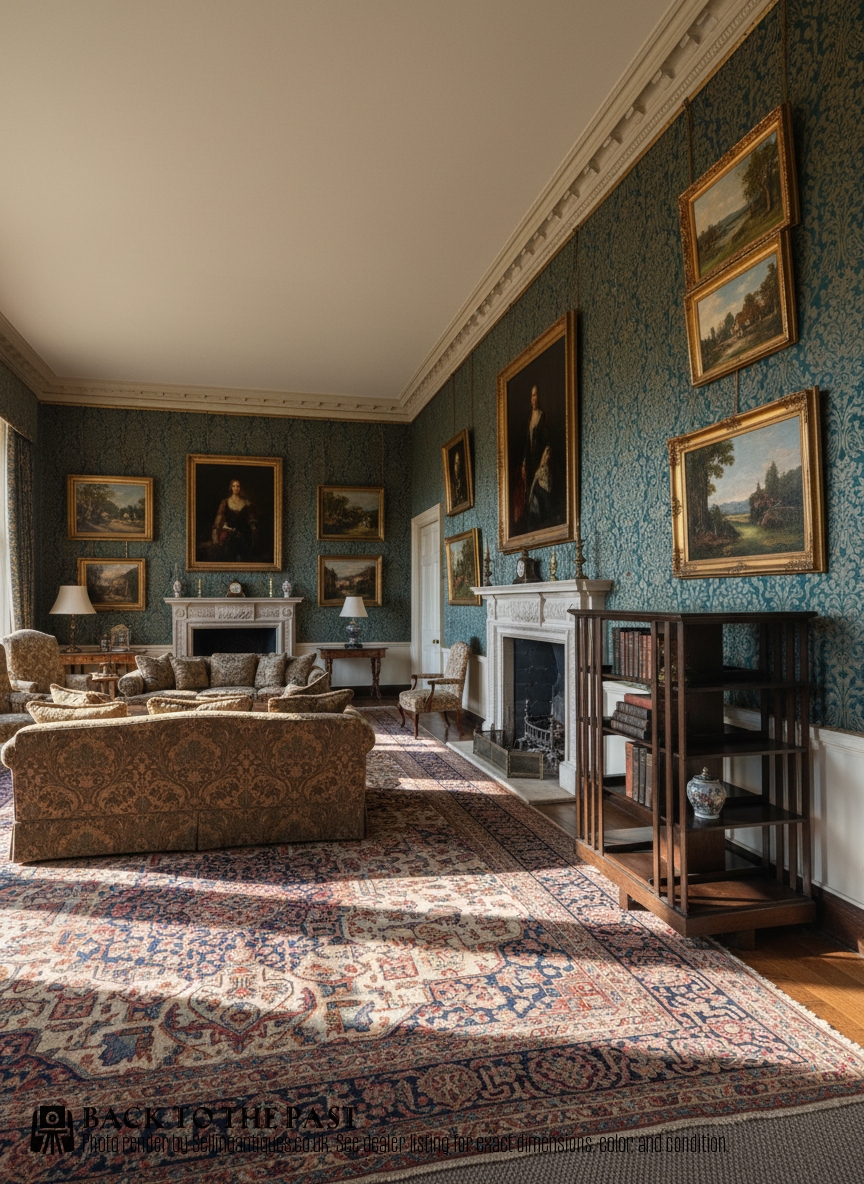
How they were made
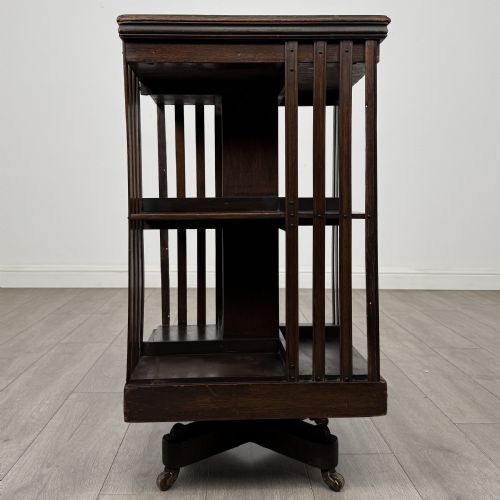
Cabinet makers constructed these revolving units using solid timbers and veneers of mahogany, oak, and walnut, frequently incorporating satinwood inlay for decorative contrast. Internal mechanics relied upon cast iron and brass components to support the weight of heavy volumes while ensuring a smooth pivot.
Makers shaped the tiers with slatted or panelled sides to secure the books, mounting the whole superstructure on a concealed revolving platform fitted to a sturdy base.
Antique Rotating Bookshelf Retail Price Guide 2026
Typical asking prices for rotating bookshelf among the pieces listed under this phrase on Sellingantiques today, from the lower quarter to the upper quarter. They describe what is for sale here now, not the wider market.
Mahogany and oak are the primary woods seen across these Edwardian and nineteenth-century listings.
What varies in quality
Quality rests upon the choice of timber and the precision of the internal turning mechanism, distinguishing standard utilitarian pieces from finer cabinet work. Richly figured flame mahogany, crisp satinwood inlay, and branded maker details elevate certain examples far above basic workshop production.
The smoothness of the rotation and the structural integrity of the slatted dividers indicate the level of care invested in the construction.

Heals·Maple and Co
The Antique Rotating Bookshelf Glossary
- Revolving bookcase
- A freestanding or desktop bookcase mounted on a pivot mechanism that allows the entire structure to turn. This design provides easy access to multiple shelves of books from a single seated position.
- Flame mahogany
- A wood veneer cut from the fork of a mahogany tree where the branches join the trunk. This produces a distinctive, fiery ripple pattern highly prized in cabinet making.
- Satinwood inlay
- A decorative technique where contrasting light-coloured satinwood is set flush into the primary timber of the cabinet. It creates geometric or floral borders characteristic of Edwardian pieces.
- Arts and Crafts
- A design movement valuing traditional craftsmanship and simple forms over mass production. Pieces from this style often feature plain oak construction with minimal ornament.
- Chippendale style
- A revival design drawing upon eighteenth-century furniture patterns featuring rich mahogany and classical proportions. These items reflect later interpretations of classic cabinet making.
Antique Rotating Bookshelf: Frequently Asked Questions
How do these bookcases spin?
A concealed internal mechanism involving metal or cast iron components allows the upper tiers to turn freely upon a fixed base.
This clever engineering lets you browse an entire collection of books without leaving your chair.
Where should I place one?
Floor-standing models suit corners or beside armchairs where you read frequently, while smaller table top versions fit neatly upon desks.
Their compact footprint makes them practical for rooms with limited wall space for traditional shelving.
How do I date an example?
Examine the primary timber, decorative inlay, and construction style to determine whether an item belongs to the Victorian or Edwardian era.
Heavier proportions often suggest late nineteenth-century manufacture, whereas lighter inlaid mahogany points toward nineteen-hundred production.
Are they sturdy enough for heavy books?
The internal frame and revolving mechanism are engineered to bear the weight of standard volumes securely.
Solid wood construction and robust cross-framing ensure the structure remains stable during daily rotation.