


Victorian Book Caddy
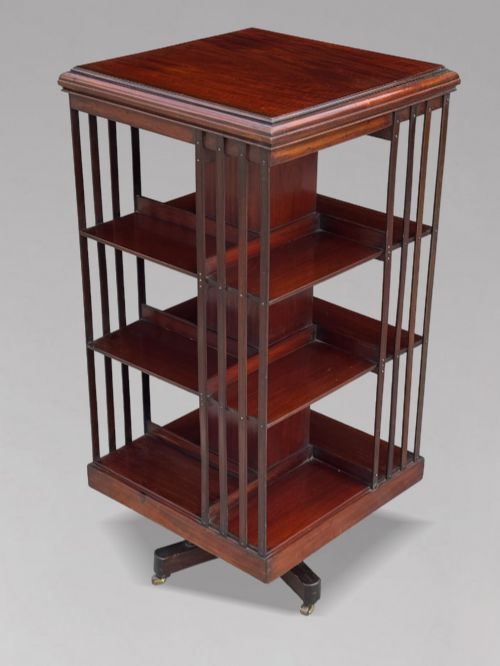
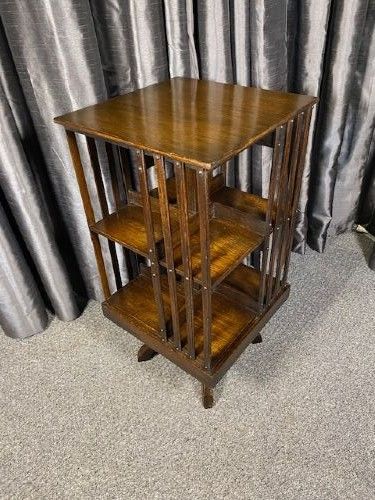
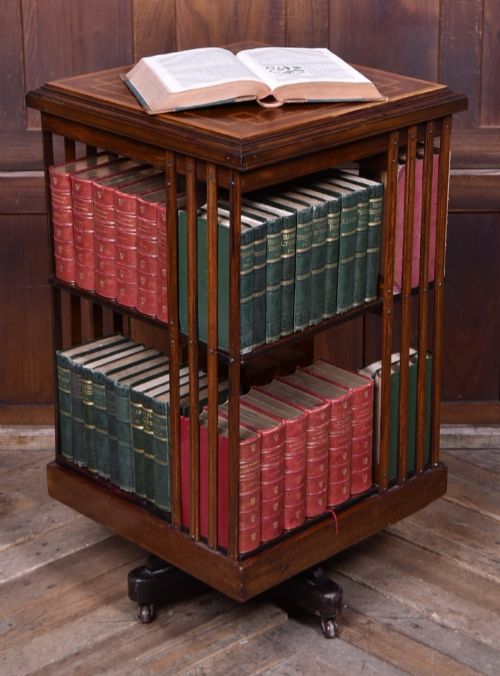
These Victorian book caddy pieces are revolving bookcases and biscuit tins designed to hold volumes or biscuits close to hand.
Victorian Book Caddy
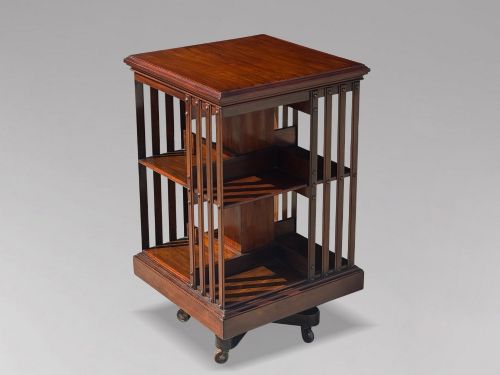
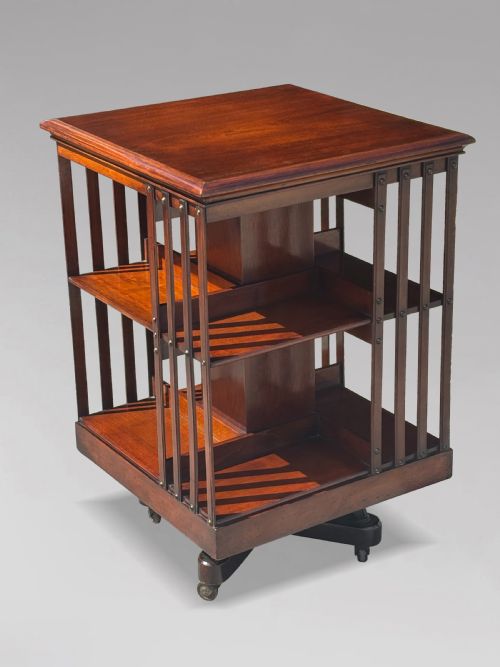
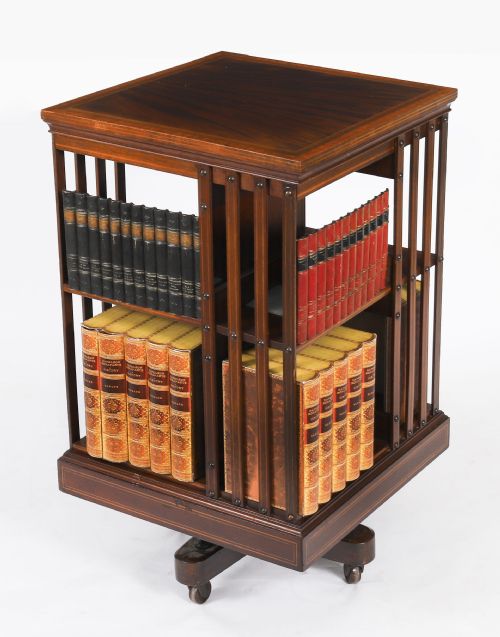
When you search for a Victorian book caddy, you are looking at revolving bookcases alongside decorative tins that hold biscuits, spanning periods from the nineteenth century into the Edwardian era. The most frequent form you meet on this page is the revolving bookcase made of mahogany, often standing on a circular or square top.
The objects combine utility with display, designed to sit beside a desk or chair for easy access to small collections of books. Alongside timber pieces, the selection includes biscuit tins shaped like books from manufacturers such as Huntley & Palmers.
Origins stretch from standard British cabinetmaking to Anglo-Indian production, reflecting varied regional preferences in timber and decorative carving. Pieces range from plain utilitarian items to more decorative examples featuring satinwood inlay or brass details.
How they were made
Makers constructed these revolving bookcases primarily using mahogany and oak, occasionally incorporating satinwood for contrast or inlay work. Timber sections were joined to allow smooth rotation on internal mechanisms.
Metal components such as brass and cast iron formed the revolving actions and structural braces hidden beneath the timber tops. Lithographed metal and tinplate appear in the decorative biscuit tins, printed with book spine designs.
Some book caddies are actually biscuit tins dressed up as leather volumes to fool the hungry reader.
What varies in quality
The distinction between a standard piece and a superior one rests in the selection of timber figures, such as flame mahogany grain, and the precision of the joinery. Finer examples display crisp turning and stable rotation without wobble.
Decorative restraint and harmonious proportions separate workshop output, where simpler oak versions contrast with intricately carved Anglo-Indian pieces or detailed lithographed tins.
The Victorian Book Caddy Glossary
- Flame mahogany
- A timber veneer showing a distinctive flickering, flame-like pattern derived from the branch junctions of the tree. It provides a highly decorative surface on cabinet furniture.
- Revolving bookcase
- A freestanding small bookcase designed to spin on a central pivot base for easy book selection. They appear in circular and square formats.
- Lithographed metal
- A printing process applied to tinplate where designs are transferred using oil-based inks. It allows detailed pictorial decoration on metal containers.
- Satinwood
- A durable, hard timber with a natural golden sheen and smooth texture. Cabinetmakers used it for stringing and decorative inlay work.
Victorian Book Caddy: Frequently Asked Questions
What is a Victorian book caddy?
A Victorian book caddy refers to revolving bookcases and book-shaped decorative tins designed to hold reading material or biscuits.
They served practical storage needs in studies and drawing rooms while offering compact display surfaces.
How do I date a revolving bookcase?
Dating relies on timber choices like mahogany or oak, construction methods, and stylistic details spanning the nineteenth and early twentieth centuries.
Simpler forms often align with Edwardian production, whereas heavier proportions suggest earlier nineteenth-century origins.
Where were these pieces used?
These pieces sat beside armchairs, desks, or reading tables to keep frequently referenced volumes within arm's reach.
Their compact revolving design allowed them to fit easily into smaller domestic spaces.
Are biscuit tins considered book caddies?
Biscuit tins shaped like volumes share the thematic form of book storage containers produced by firms like Huntley & Palmers.
They mimic miniature leather-bound books while serving as decorative food packaging.