

Low Open Bookshelf
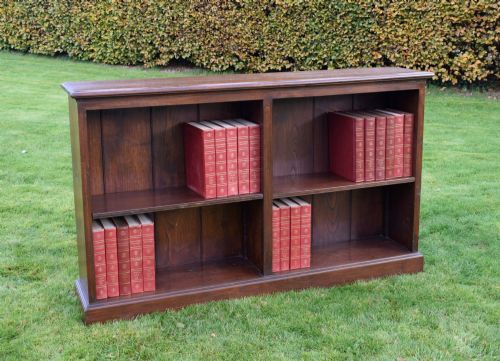
A low open bookshelf offers immediate access to volumes while keeping sightlines clear across a room.
Low Open Bookshelf
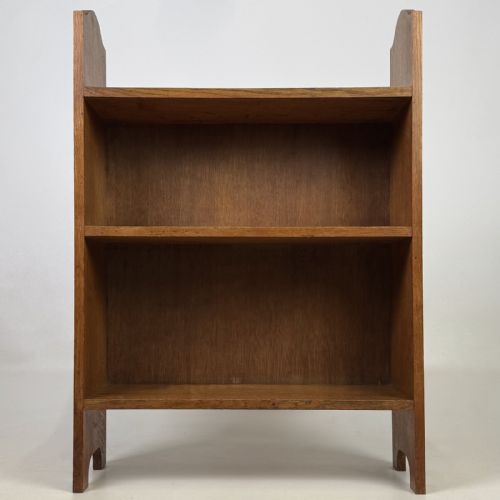
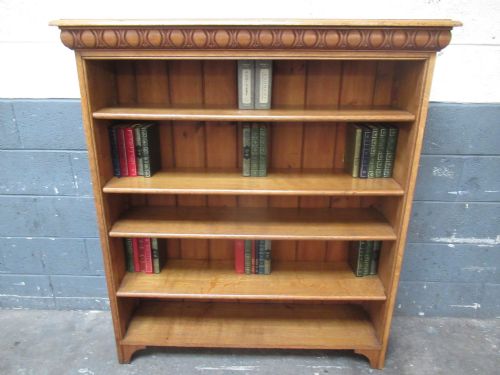
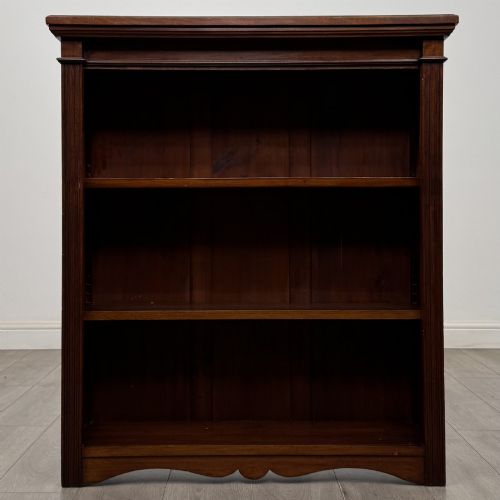
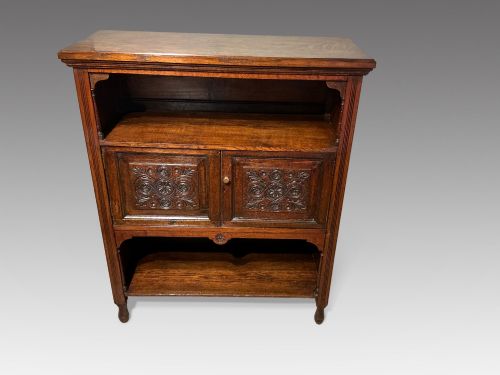
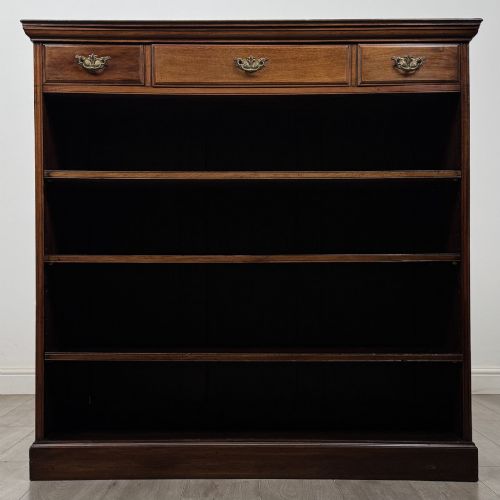
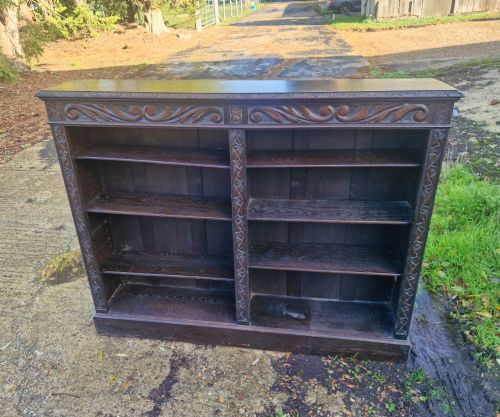
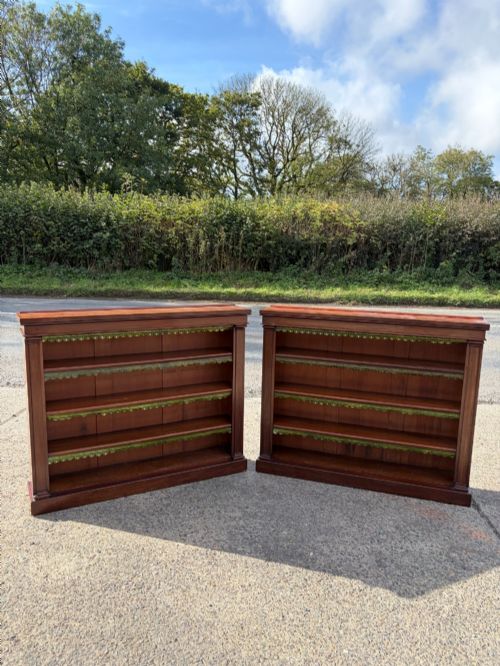
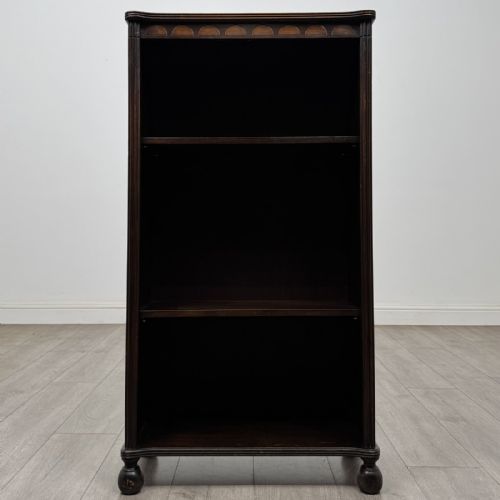
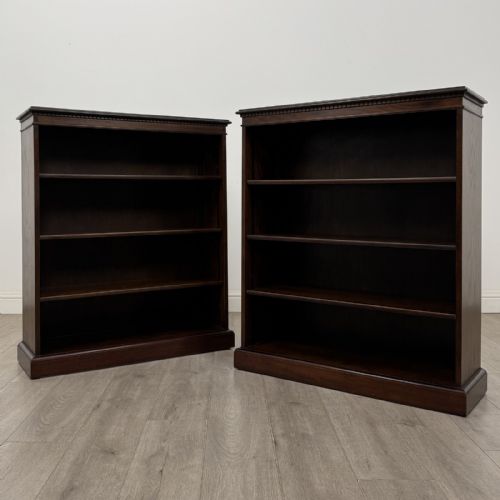
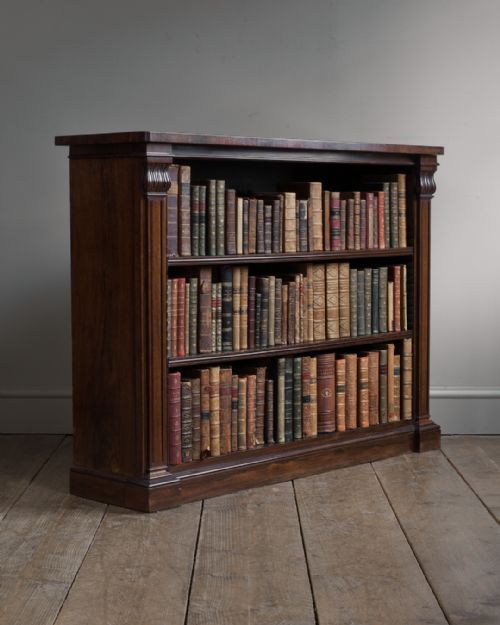
A low open bookshelf provides accessible display and storage, keeping rooms feeling spacious through its modest height. When searching for a low open bookshelf, buyers encounter pieces spanning from the Regency period through the Edwardian era and into the 1930s.
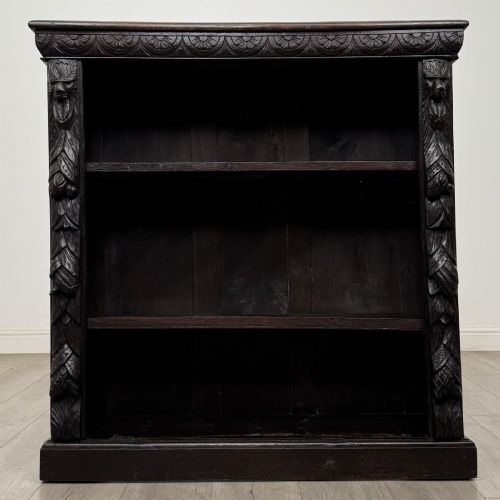
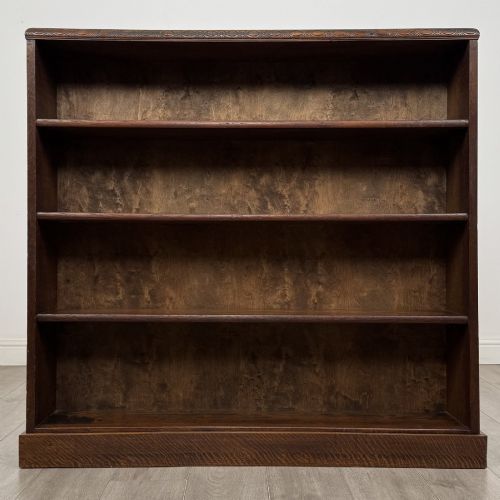
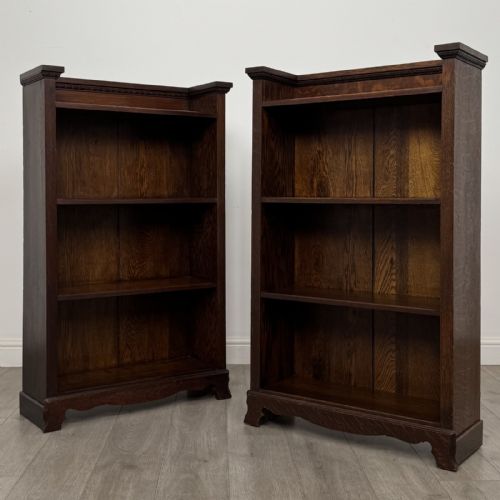
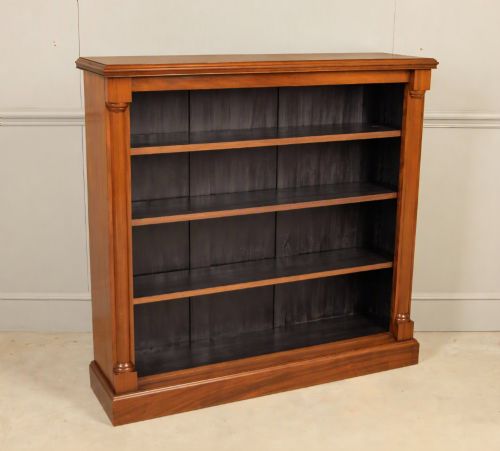
The selection ranges from simple rustic country pine iterations to formal mahogany and walnut pieces influenced by Neoclassical Empire, Aesthetic Movement, and Arts and Crafts styles. Most examples date from the Victorian and Edwardian periods, frequently featuring adjustable shelves to accommodate varying book sizes.
Materials and construction methods
Cabinetmakers utilised timber such as oak, mahogany, walnut, pine, and rosewood, often pairing solid woods with quarter-sawn figuring. Construction relied on traditional joinery, incorporating brass hardware, carved detailing, and occasionally painted or ebonised surfaces.
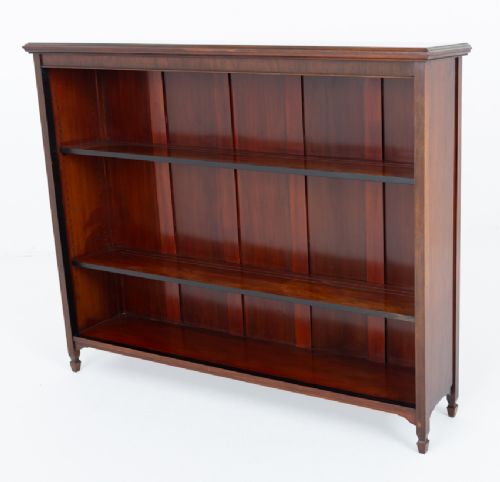
Shelving systems commonly integrated adjustable supports via wooden laths or brass pins. Certain pieces incorporated decorative elements such as inlaid stringing, beaded edges, or ormolu mounts to enhance the exposed grain of the timber.
Low Open Bookshelf Retail Price Guide 2026
Typical asking prices for low open bookshelf among the pieces listed under this phrase on Sellingantiques today, from the lower quarter to the upper quarter. They describe what is for sale here now, not the wider market.
Distinctions in quality and execution
Quality rests upon the selection of timber and the precision of the joinery rather than mere scale. Finer pieces demonstrate thoughtful timber matching, crisp carving, and robust internal shelving systems that endure heavy volumes without sagging.
Simpler provincial items rely on honest pine construction and straightforward utility, whereas sophisticated examples display refined proportions, specialised veneers, and documented maker attribution that elevate their standing.
Johnstone and Jeanes·Waring and Gillows·Heals
The Low Open Bookshelf Glossary
- Adjustable shelves
- Shelving that can be moved to different heights using slots, pilasters, or metal pins. This system allows the interior space to adapt to books of varying heights.
- Breakfront
- A piece of furniture where the central section projects forward from the side sections. This architectural arrangement adds depth and shadow to the front profile.
- Ebonised
- Wood finished with a dark stain or paint to imitate ebony. Cabinetmakers utilised this technique during the Victorian period to create high-contrast decorative furniture.
- Ormolu
- Gilded bronze mounts applied to furniture as ornamentation. This decorative technique appears on high-status nineteenth-century pieces.
- Quarter-sawn
- Timber cut radially across the growth rings rather than tangentially. This method produces distinctive figuring, particularly in oak, and yields more stable boards.
Low Open Bookshelf: Frequently Asked Questions
What defines a low open bookshelf?
A low open bookshelf stands at a height that allows the top surface to be used for display while keeping the room feeling open. These pieces lack doors, placing the book spines directly on view.
They appear in various timbers and styles, serving as versatile furniture for studies, living rooms, and libraries.
How do I adjust the shelves?
Many period bookcases feature internal vertical tracks or traditional wooden supports that allow shelves to be repositioned easily. This functionality accommodated heavy folios and smaller octavo volumes alike.
Checking the mechanism reveals whether the shelving system remains in its original working order.
How do I identify the wood type?
Examining the grain pattern, colour, and weight helps distinguish between oak, mahogany, walnut, and pine. Oak displays prominent medullary rays, while mahogany offers a rich reddish-brown hue.
Secondary timbers inside the piece often provide further clues to its period of origin.