


Edwardian Side Table Bookcase
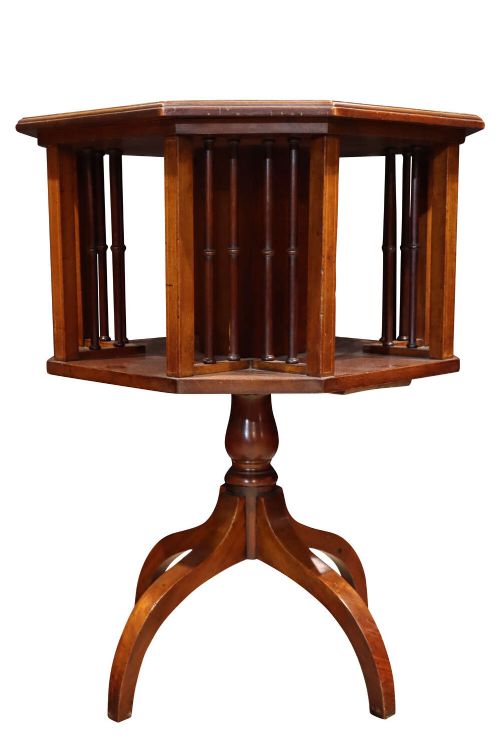
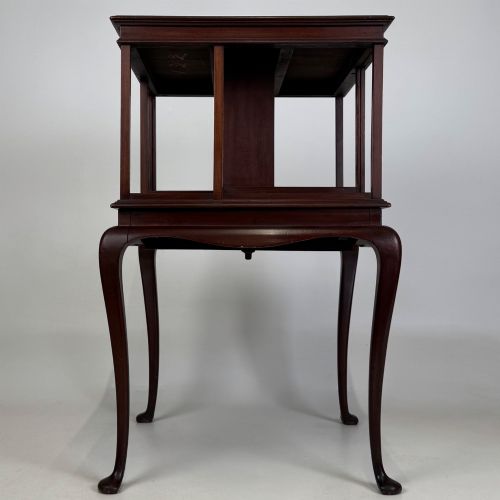
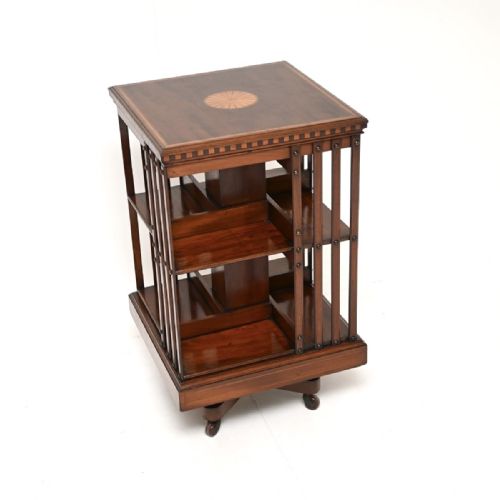
These pieces unite the low stance of an edwardian side table bookcase with the rotating convenience of a revolving bookcase.
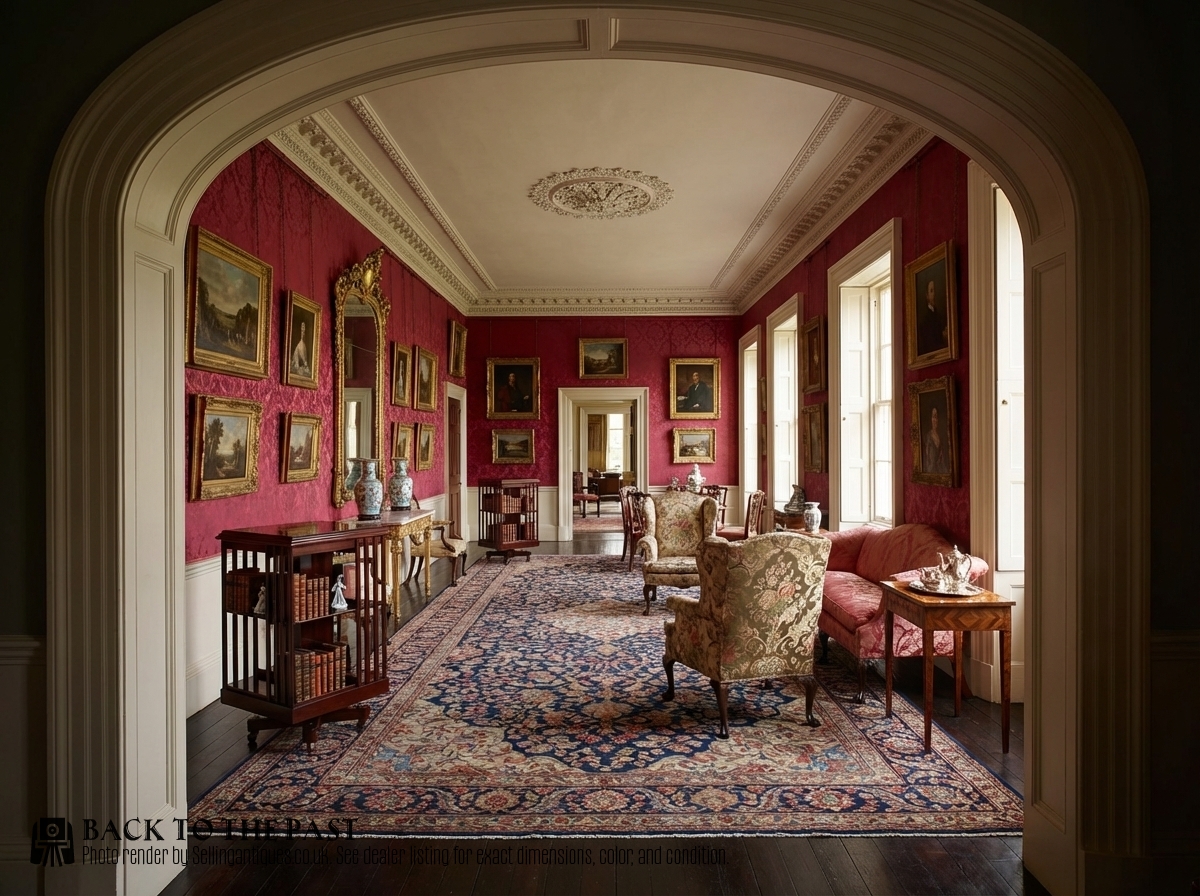
Edwardian Side Table Bookcase
The edwardian side table bookcase combines two distinct domestic functions into a single compact footprint, bringing books directly to hand beside a chair or desk. Most examples encountered here belong to the Edwardian period or date from the early twentieth century, though nineteenth century Victorian and later 1930s interpretations also appear.
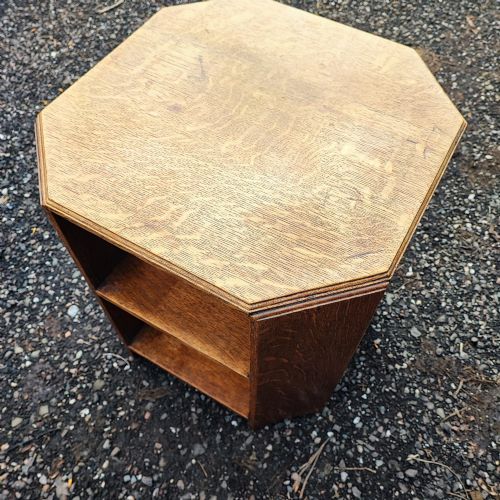
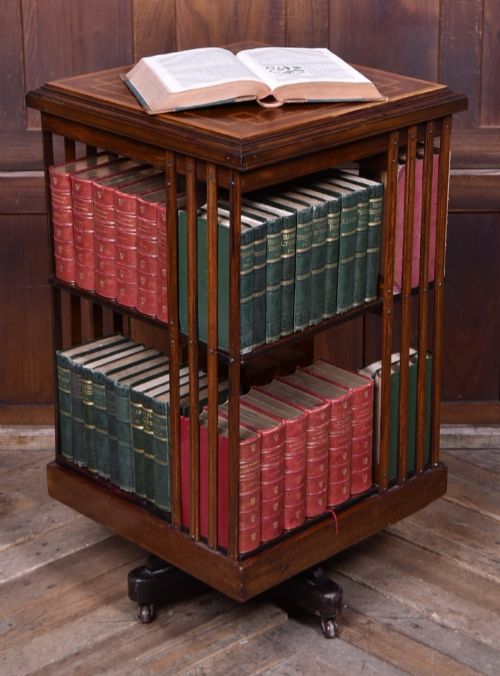
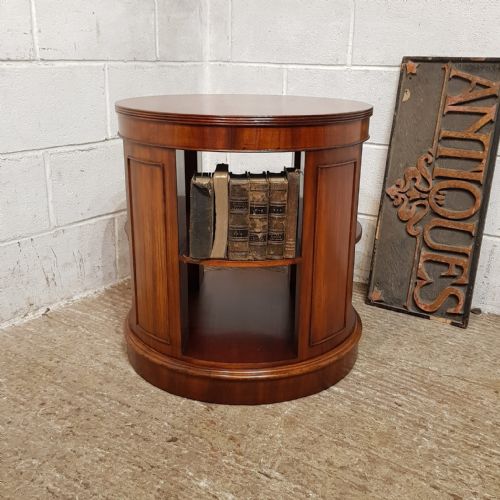
The core form takes several shapes, ranging from square and round rotating library tables to octagonal occasional pieces and low side writing tables. Revolving bookcases dominate the selection, designed to sit low in a room while holding a substantial collection of volumes across multiple tiers or compartments.
Origins stretch across classic English cabinet-making traditions, with styles moving from traditional Edwardian Sheraton Revival and Queen Anne Revival to Arts and Crafts simplicity and later Art Deco lines. Buyers will also find specialised items such as bedside tables incorporating open shelf space for reading material.
Standards of Craftsmanship
Quality rests in the precision of the rotating action and the integrity of the internal pivot mechanism, which should turn silently and evenly without listing to one side. Superior examples display tight joinery at the corners and precise alignment of tiers.
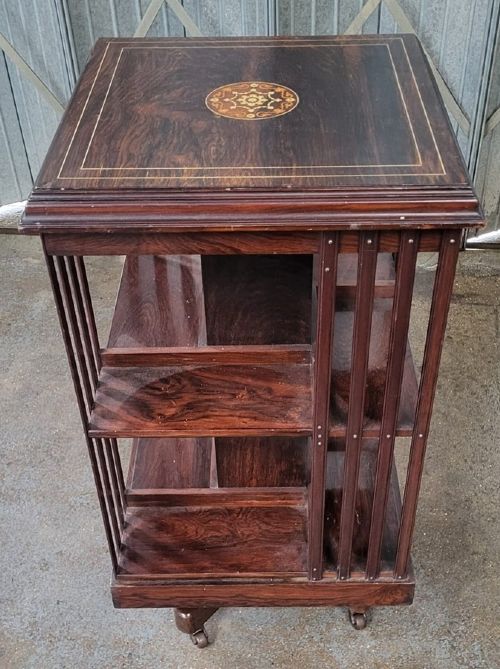
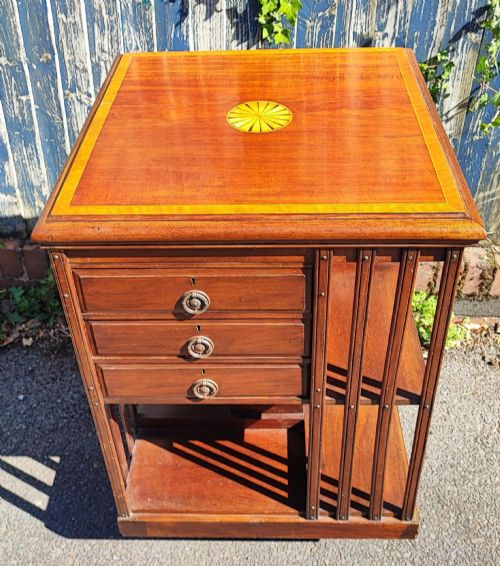
The refinement of the decorative elements distinguishes finer pieces, particularly in the hand-cut crispness of boxwood inlay and the choice of richly figured mahogany, satinwood, or burr walnut veneers. Secondary details such as polished brass fittings and well-proportioned turnover tops elevate the execution of the design.
Listings feature woods spanning mahogany, oak, walnut, rosewood, and satinwood, frequently enhanced with boxwood inlay and brass fittings.
Heals
The Edwardian Side Table Bookcase Glossary
- Revolving bookcase
- A low, freestanding bookcase built upon a concealed central pivot that allows the entire unit to spin for easy access to books from a seated position.
- Sheraton Revival
- A late nineteenth and early twentieth century design movement that reinterpreted the light, neoclassical furniture forms of the eighteenth-century designer Thomas Sheraton.
- Boxwood inlay
- A decorative technique where small pieces of pale boxwood are fitted into recesses cut into a darker primary wood to create contrasting geometric or floral patterns.
- Occasional table
- A small, versatile table designed to serve a specific, intermittent purpose in a room, such as holding books or a lamp.
- Parcel gilt
- A method of decorating furniture where specific carved or raised details are partially gilded with gold leaf, leaving the surrounding wood visible.
Edwardian Side Table Bookcase: Frequently Asked Questions
How do I choose between a round and square revolving bookcase?
Round revolving bookcases fit more easily into open floor spaces and allow books to be accessed from any angle without sharp corners projecting into the room. Square models offer slightly more internal shelf capacity per tier and line up flat against adjacent seating.
Consider the surrounding furniture layout and the available clearance space beside your armchair or sofa before deciding on the footprint.
Where should I place a revolving bookcase in my room?
These low pieces work best beside a reading chair, next to a sofa, or freestanding near the centre of a room where the rotating action remains fully accessible. Because they are designed to be viewed from all sides, placing them away from walls lets the wood grain and inlay show properly.
Keep them away from direct heat sources and strong sunlight to protect the polished timber surfaces and prevent veneer lifting.
How do I tell an Edwardian piece from a Victorian one?
Edwardian furniture generally exhibits lighter proportions, brighter mahogany and satinwood timbers, and delicate boxwood stringing influenced by eighteenth-century revivals. Victorian pieces often lean towards heavier construction, darker walnut or oak, and more robust ornamentation.
Construction methods inside the piece, such as drawer linings and backboards, also offer clues to the prevailing manufacturing standards of each era.
Can these tables hold heavy hardback books?
The sturdy internal brass and iron mechanisms on most revolving bookcases are built to support the weight of standard library volumes across multiple compartments. Distributing the heavier books on the lower tiers helps maintain stability as the unit turns.
Overloading the top shelf of a small rotating table should be avoided to ensure the smooth, balanced rotation intended by the maker.