
Vintage Revolving Book Table
A vintage revolving book table brings practical library utility and fluid rotation directly to an armchair or desk.
Vintage Revolving Book Table
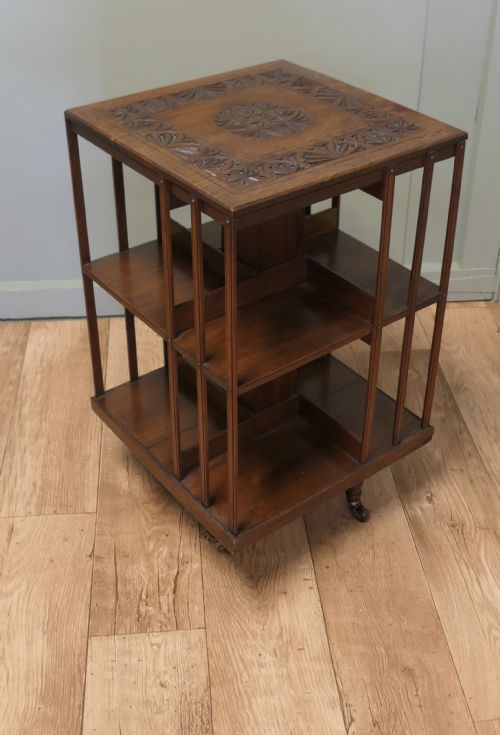
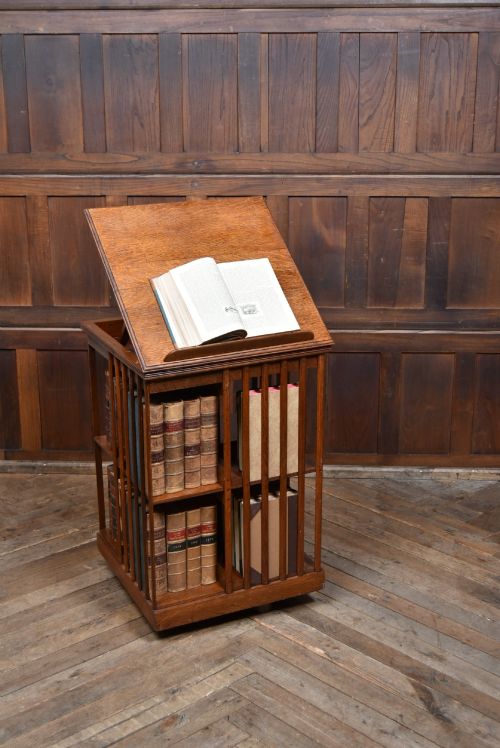
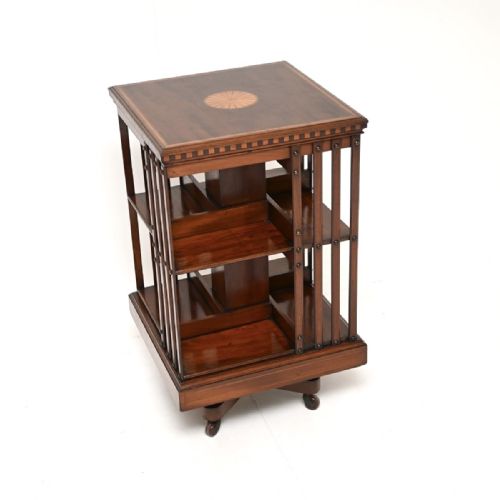
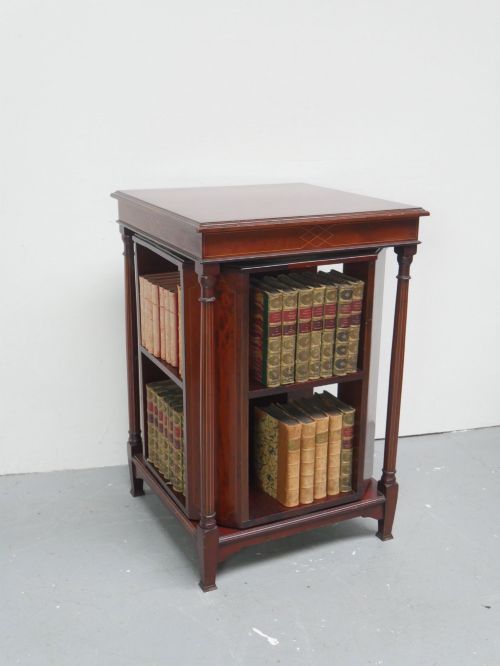
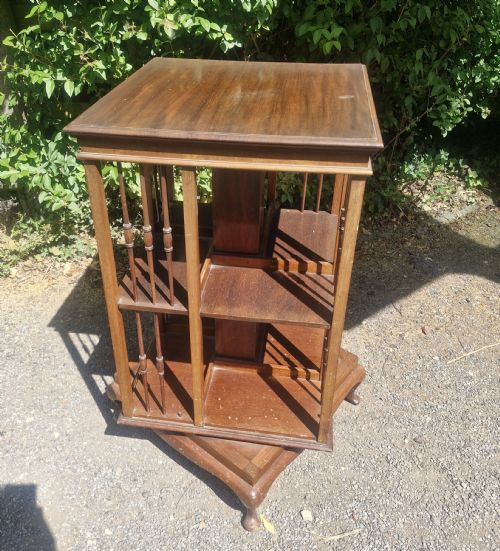
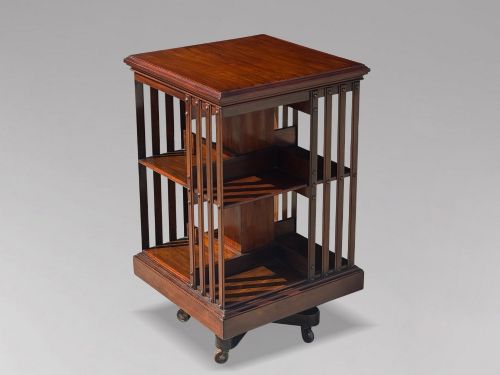
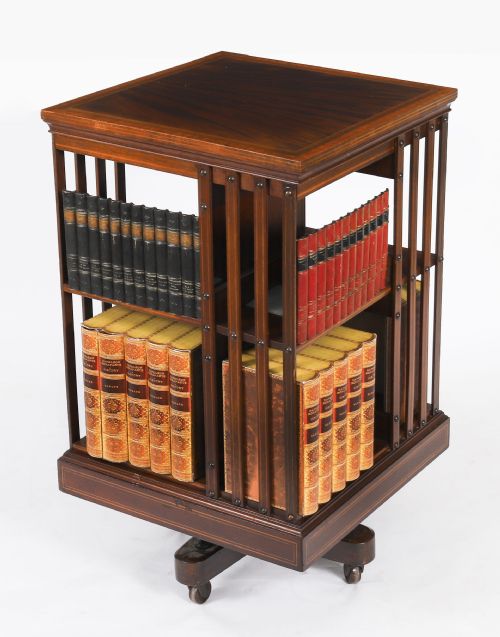
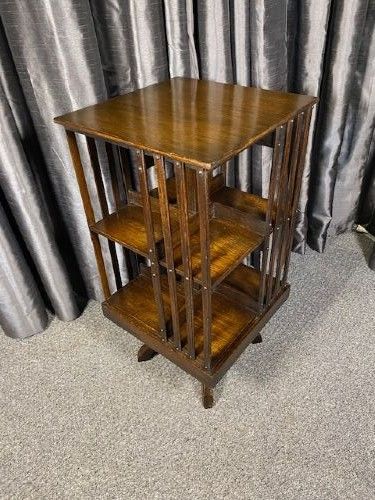
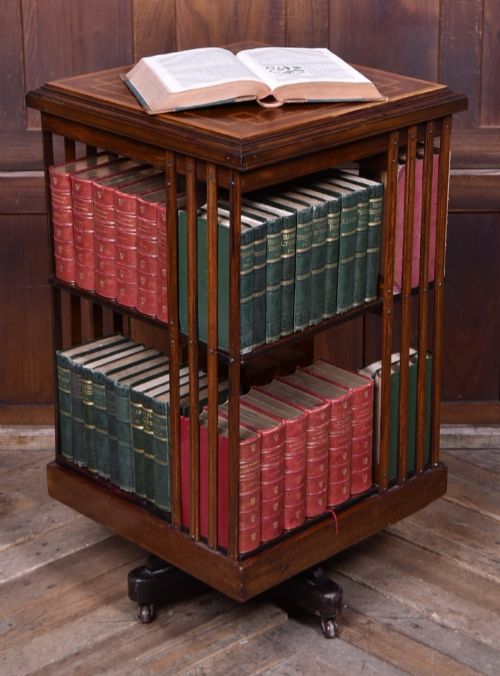
A vintage revolving book table functions as a rotating repository for volumes, designed to sit within arm's reach beside a chair or upon a desktop. These pieces allow a reader to spin a collection of books smoothly to access titles without leaving a seat.
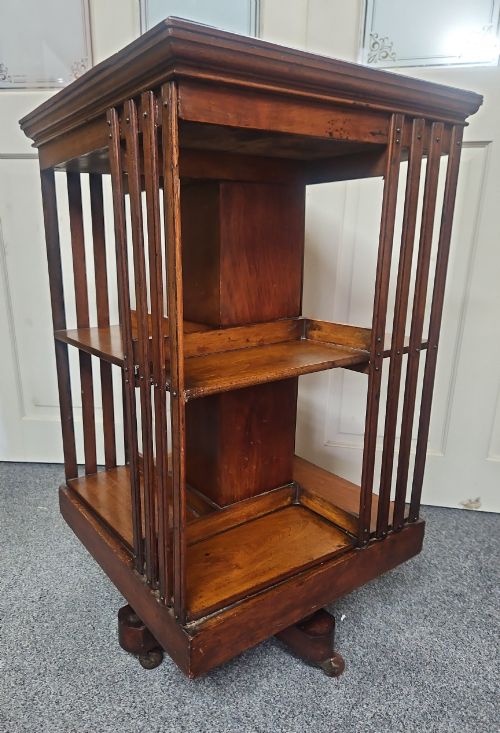
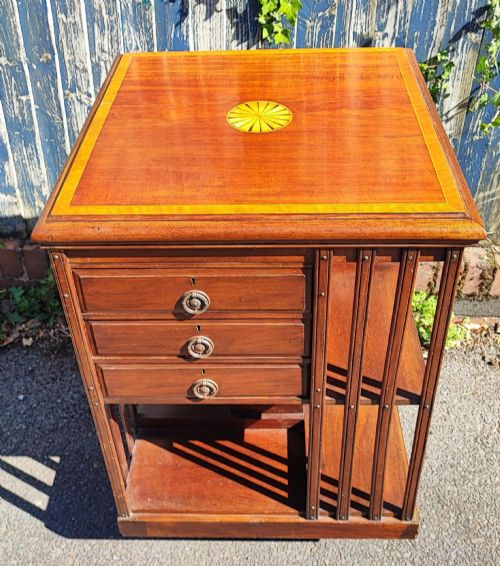
Most examples encountered here belong to the Edwardian era or the broader nineteenth century, constructed primarily in forms that accommodate tiered shelving in a compact footprint. Buyers will frequently find mahogany and oak editions featuring slatted or solid partitions tailored for everyday reading.
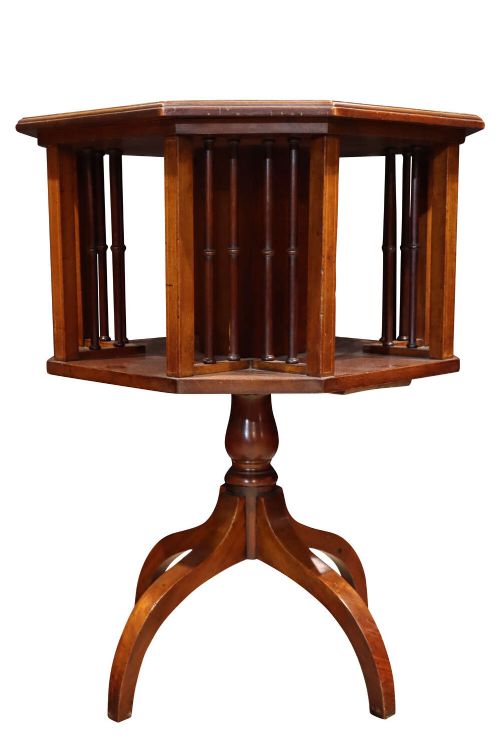
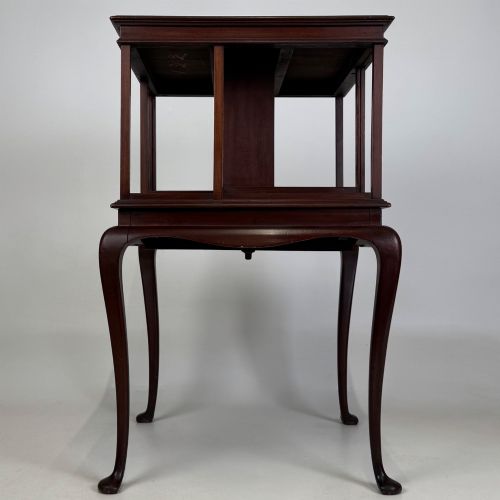
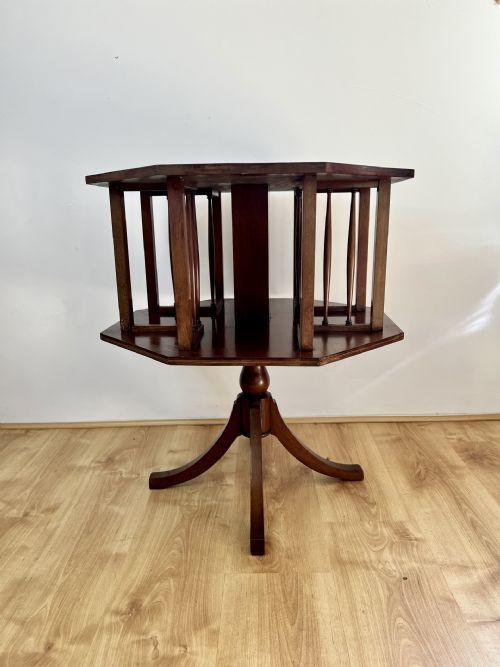
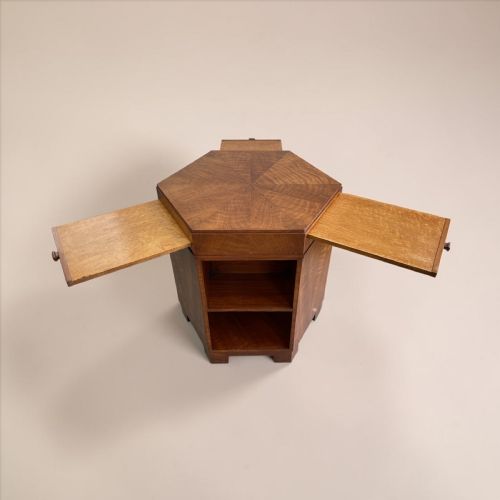
Alongside standard floor-standing revolving bookcases, the selection incorporates desktop bookstands and occasional table hybrids. These variations provide the characteristic rotating mechanism scaled down for smaller spaces or specific surface placement.
Evaluating craftsmanship and execution
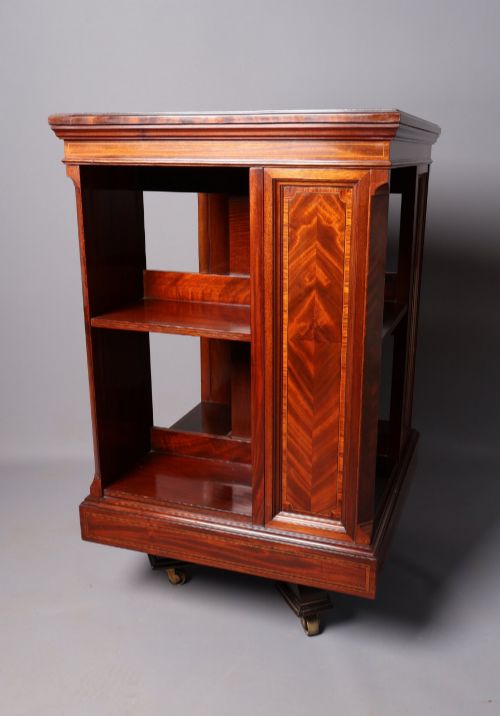
The distinction between standard utility pieces and finer examples rests upon the crispness of the inlay work, the choice of figured veneers, and the integrity of the timber framing. Superior pieces exhibit precise joinery at the corners and well-matched grain across the rotating tiers.
The smoothness and stability of the underlying pivot mechanism determine the practical success of the furniture. Finer editions maintain a balanced rotation without lateral wobble, regardless of how the shelves are loaded.
Listings feature pieces spanning the Victorian, Edwardian, and Art Deco periods, executed in mahogany, oak, walnut, and satinwood.
The Vintage Revolving Book Table Glossary
- Revolving bookcase
- A freestanding or tabletop piece of furniture fitted with a concealed pivot mechanism that allows the book compartments to turn full circle. This design originated to keep a working library accessible from a single stationary position.
- Flame mahogany
- A wood veneer cut from the fork of a mahogany tree to produce a distinct, undulating flame-like pattern. Cabinetmakers utilised this figure on prominent exterior surfaces to create visual movement.
- Inlay
- A decorative technique where contrasting woods or materials such as satinwood are fitted into recesses flush with the surrounding surface. This method defines borders and geometric motifs on Edwardian cabinetwork.
- Skyscraper
- A stepped architectural style adopted by designers during the art deco period to emphasise vertical lines. In book tables, this translates to tiered shelves of diminishing circumferences.
Vintage Revolving Book Table: Frequently Asked Questions
How do I care for the wood finish?
Apply a traditional beeswax polish occasionally to nourish the timber and maintain a soft sheen.
Avoid placing the table in direct sunlight or near heat sources to prevent the wood from drying and splitting.
Can these tables hold heavy books?
The structural design easily accommodates standard hardbacks and reference volumes across the partitioned shelving.
Distributing weight evenly across opposing sides ensures the internal rotation mechanism remains balanced and smooth.
How do I distinguish Edwardian from Victorian pieces?
Victorian examples tend to feature heavier, darker timber frames with robust mouldings and straightforward utility construction.
Edwardian pieces often introduce lighter satinwood stringing, inlaid decoration, and slightly more delicate proportions.
Are desktop versions stable when loaded?
Desktop revolving bookstands utilise a weighted base or broad footprint to anchor the rotating tiers securely.
They function best when placed on sturdy surfaces where the turning action will not cause the unit to shift.