





Antique Book Stand Castors
These antique book stand castors support movable furniture designed to hold volumes within arm's reach, offering tactile historic charm to a room.
Antique Book Stand Castors
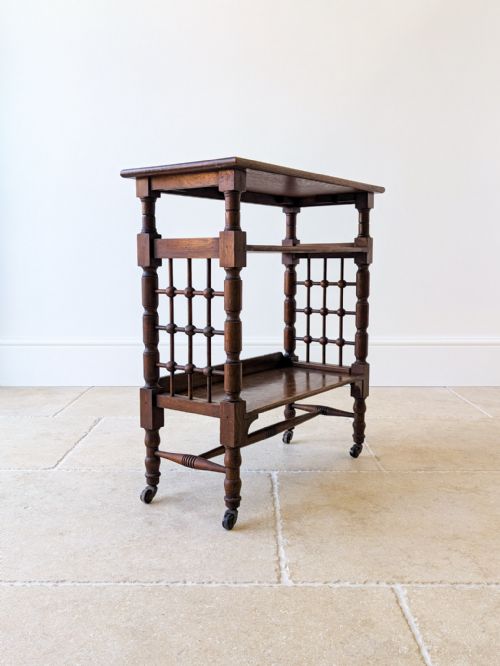
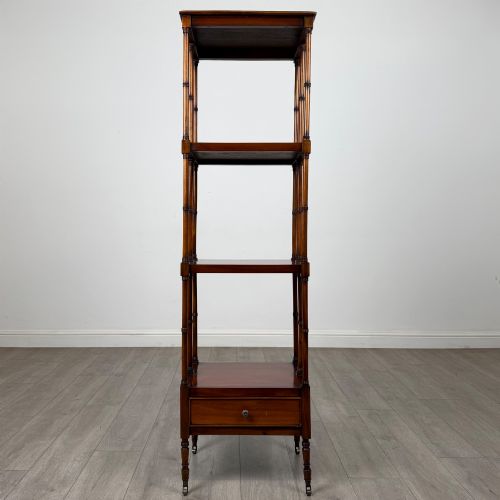
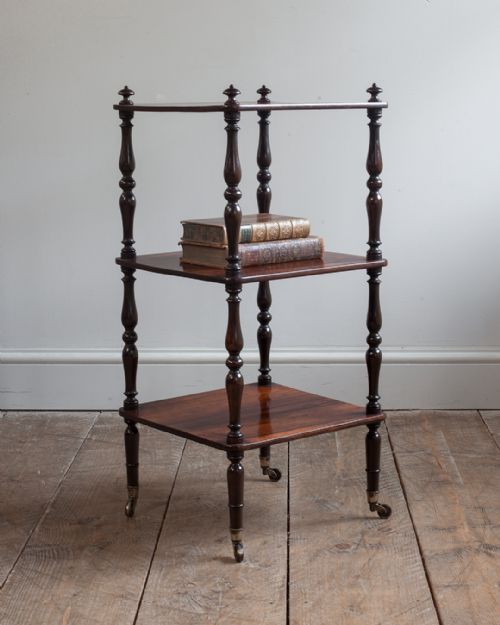
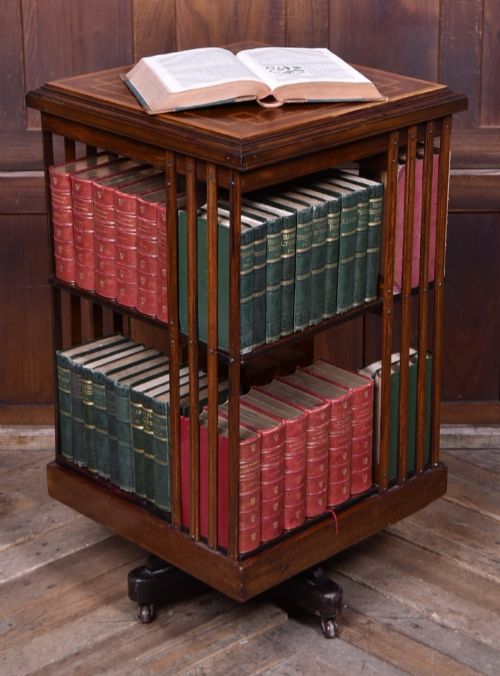
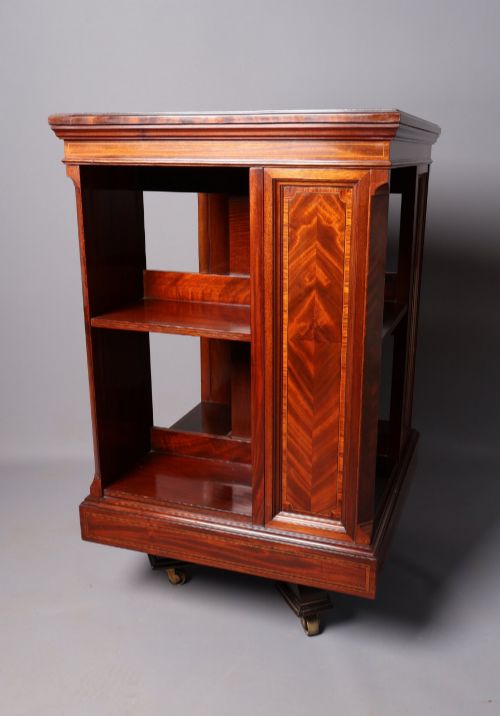
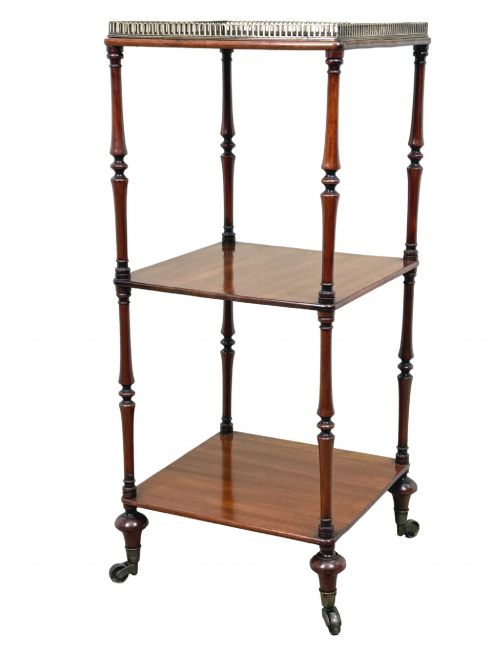
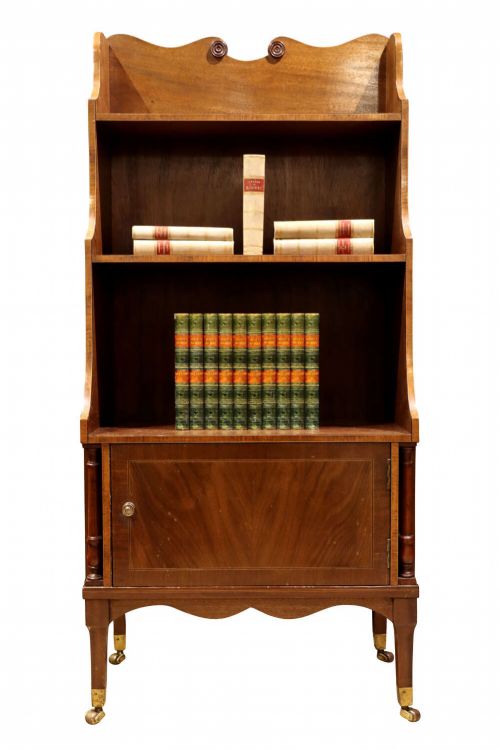
When you search for antique book stand castors, you encounter hardware fitted to items like revolving bookcases, whatnots, etageres, and reading tables. These pieces span the nineteenth century, Regency, William IV, Victorian, and Edwardian periods.
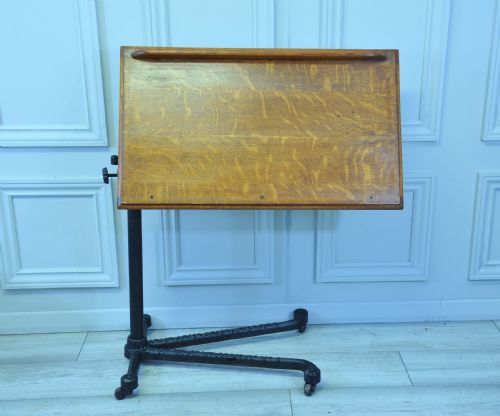
The objects themselves range from small rosewood étagères to oak and cast iron adjustable tables and mahogany revolving bookcases. Most examples combine timber frameworks with metal wheels to allow smooth repositioning across a floor.
How they were made
Workshops built these stands using hardwoods such as mahogany, rosewood, oak, and satinwood, occasionally incorporating satinwood inlay or birdseye maple veneers. Metal components like brass and cast iron formed the supporting castors and adjustable mechanisms.
Joiners and cabinetmakers turned timber for uprights and fashioned slatted or panelled tiers to bear the weight of heavy volumes. Castors were then integrated into the base framework to ensure mobility for multi-tiered furniture.
Some tables combine heavy cast iron with oak so readers could crank their books up to the exact height required.
What varies in quality
Distinctions in quality often rest on the selection of timber veneers, such as figured mahogany or rosewood, paired with precise inlay work. Superior items display harmonious proportions across revolving tiers or étagère shelves.
The integration of the castor hardware itself marks a difference in execution, with robust brass mounts and smooth-running wheels distinguishing finer utilitarian tables and bookcases from simpler variants.
Carters Of London
The Antique Book Stand Castors Glossary
- Castor
- A small wheel fitted to the foot of a piece of furniture to allow easy movement. These metal and wooden fixtures support heavier reading stands and bookcases.
- Étagère
- A piece of furniture consisting of open shelves for displaying small objects or books. These multi-tiered items frequently feature supporting castors.
- Whatnot
- An open shelving unit designed for ornaments or books, developed in the nineteenth century. They often sit on castors for repositioning.
- Revolving bookcase
- A freestanding bookstand engineered to turn on a central axis for easy access to volumes. Many examples rest on low bases with castors.
Antique Book Stand Castors: Frequently Asked Questions
What furniture uses these castors?
These castors appear on movable library furniture, including revolving bookcases, whatnots, reading tables, and etageres designed to hold books.
Such pieces allowed readers to shift heavy reference volumes easily across a study or library floor without lifting the entire cabinet.
Which woods are most common?
Mahogany, rosewood, and oak form the primary timbers seen across nineteenth-century and Edwardian examples.
Cabinetmakers also utilised satinwood inlay and birdseye maple to decorate the surfaces of these movable bookcases and tables.
Were these stands used in libraries?
They served primarily in studies, drawing rooms, and home libraries where accessible book storage was necessary.
Adjustable tables and revolving stands kept working volumes close to seating areas throughout the Victorian and Edwardian periods.