


Dark Wood Revolving Bookshelf
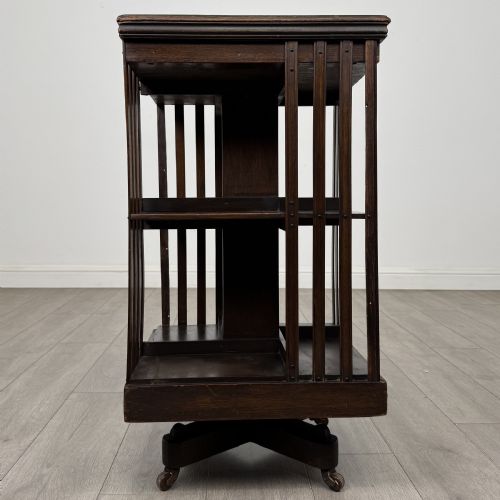
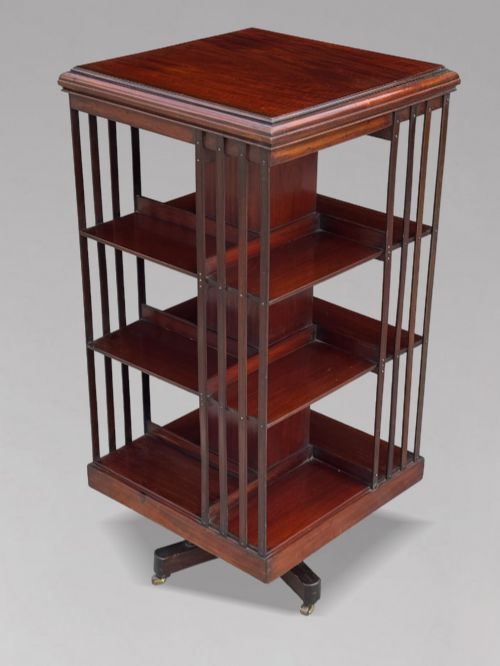
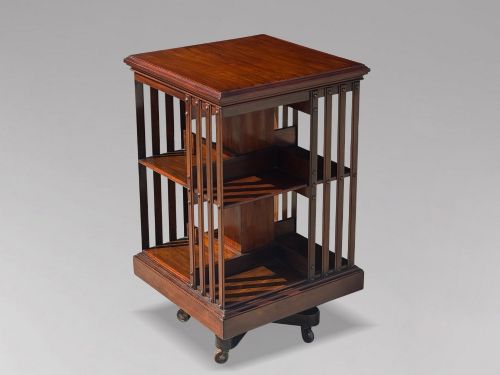
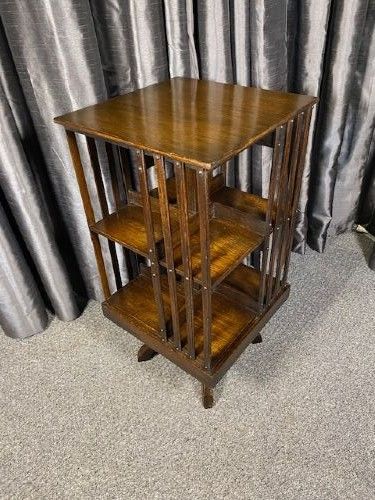
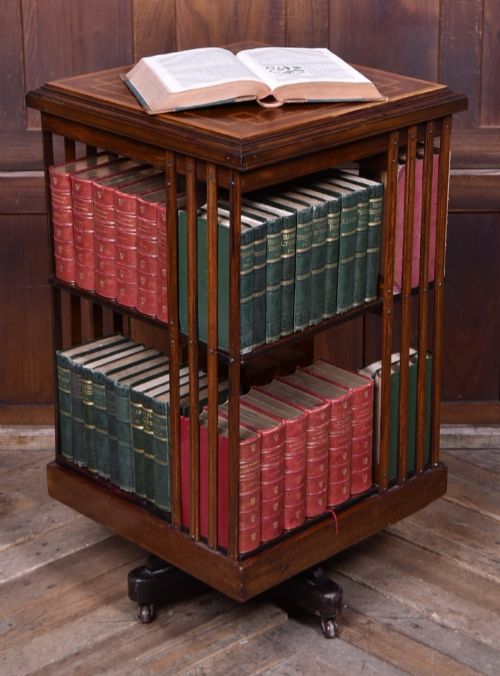
A dark wood revolving bookshelf delivers instant desk-side utility and rich timber grain, turning smoothly to keep heavy volumes within arm's reach.
Dark Wood Revolving Bookshelf
A dark wood revolving bookshelf provides compact storage for heavy volumes, spinning freely on a central axis for easy selection from an armchair or desk.
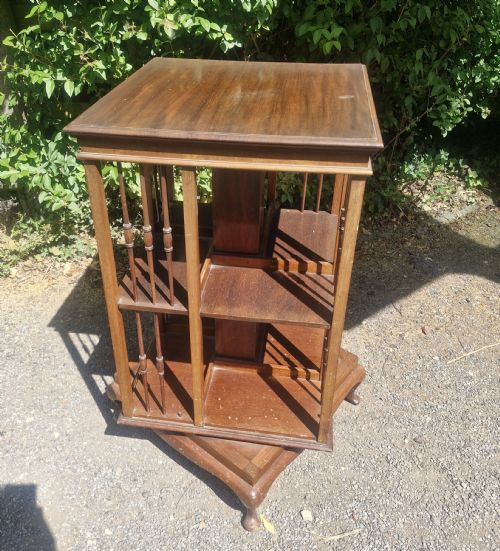
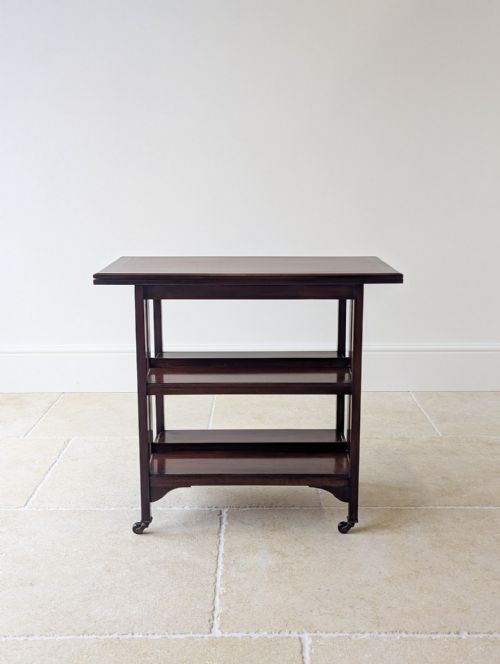
The versions met on this page span Victorian and Edwardian periods alongside later traditional examples, taking the form of tiered bookcases and occasional tables.
Makers shaped these rotating pieces to sit beside reading chairs or under writing desks, combining practical utility with rich timber surfaces.
How they were made
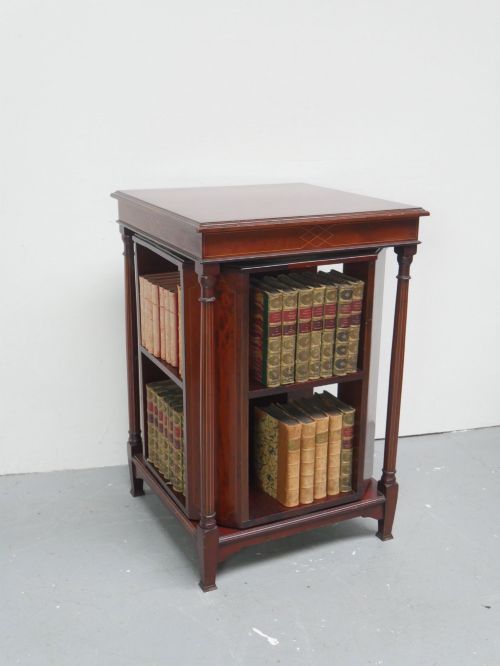
Cabinet makers relied primarily on mahogany, sometimes enriched with satinwood inlay, constructing slatted or panelled tiers joined securely to internal pivot mechanisms.
Internal rotation relied on sturdy brass and cast iron components, ensuring the loaded wooden tiers turned smoothly without binding or sagging.
Some variations double as card tables with built-in bookshelf bases, settling two evening pastimes into one spinning piece of furniture.
What varies in quality
Quality rests in the stability of the revolving mechanism and the richness of the timber grain, distinguishing heavy, smooth-spinning pieces from stiffer, lighter builds.
Subtle details such as satinwood stringing and well-fitted slatted sides separate standard library furnishings from finer workshop productions.
Heals
The Dark Wood Revolving Bookshelf Glossary
- Revolving bookcase
- A rotating tiered storage unit designed to hold books upright within reach of a seated reader. These pieces turn smoothly on a concealed base.
- Satinwood inlay
- Decorative contrasting wood veneer set flush into the primary timber surface. This technique adds pale, golden geometric lines to dark mahogany furniture.
- Edwardian
- A period spanning the early twentieth century noted for lighter furniture proportions. Pieces from this era often refine earlier Victorian structural forms.
- Chippendale style
- A decorative revival drawing on eighteenth-century furniture designs. This aesthetic brings carved details and traditional proportions to later wooden pieces.
Dark Wood Revolving Bookshelf: Frequently Asked Questions
How do revolving bookcases work?
These units rest on a concealed internal pivot and ball-bearing or spindle system hidden beneath the lower tier. This engineering lets the entire wooden structure spin freely with a gentle push.
Weight distribution matters for smooth rotation, so heavier volumes sit on the bottom shelf to keep the centre of gravity low.
Where should I place a revolving bookshelf?
Their compact footprint suits tight spaces beside an armchair, beside a desk, or in the corner of a study. Because all four sides hold books, they work particularly well freestanding rather than pushed flat against a wall.
Placing them away from direct heat sources protects the timber and prevents the joints from drying out over time.
How do I tell Edwardian from Victorian examples?
Victorian pieces generally display heavier proportions, deeper mahogany tones, and sturdier construction built for dense home libraries. Edwardian equivalents often feature lighter framing and occasional satinwood inlay details.
Examining the internal timber and the style of the slatted sides helps clarify the period of manufacture.
Can these hold heavy reference books?
The sturdy mahogany and oak frames accommodate standard hardbacks and heavy reference volumes comfortably across multiple tiers. The slatted wooden dividers keep books securely upright while the unit turns.
Spreading heavy dictionaries across the lower levels ensures the revolving mechanism continues to operate without strain.