




Revolving Book Tower
A revolving book tower puts your volumes within arm's reach while turning smoothly on its hidden base.
Revolving Book Tower
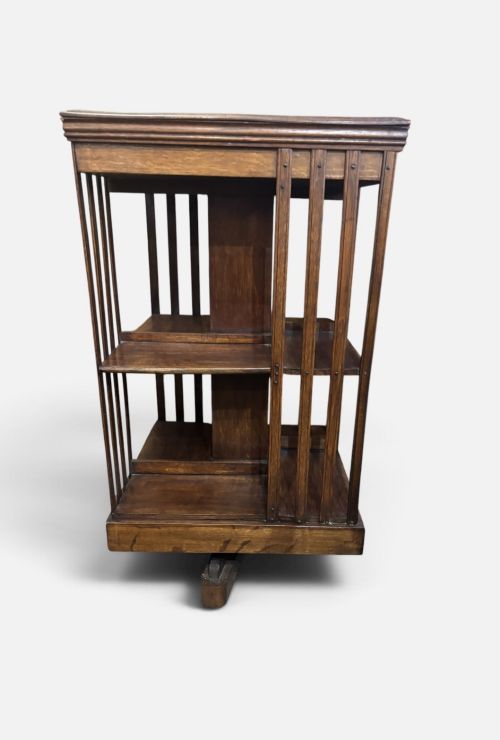
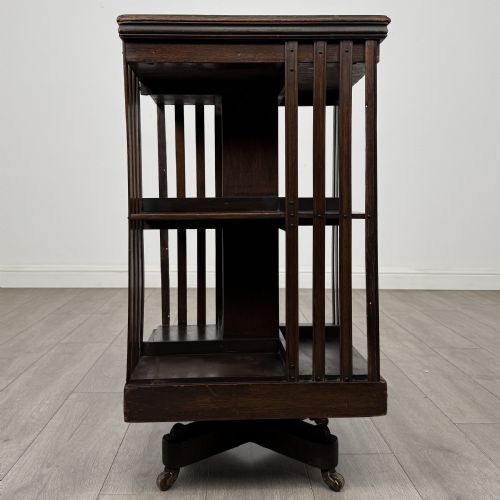
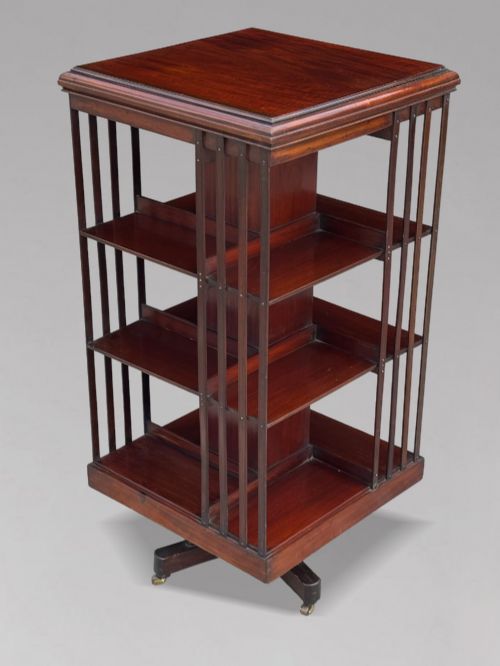
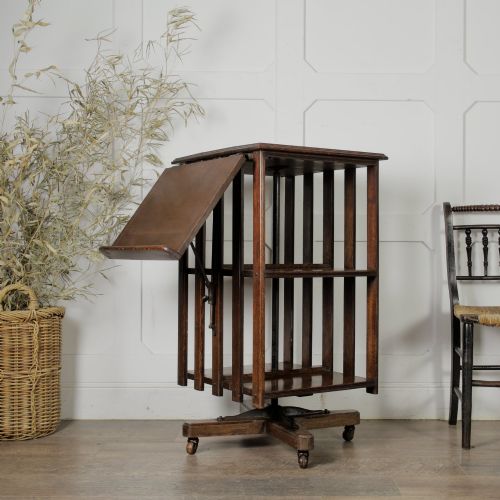
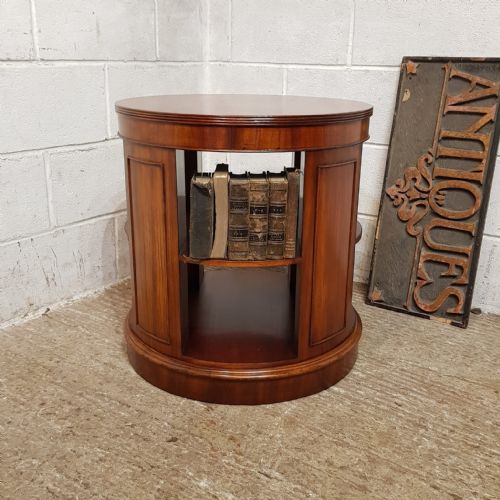
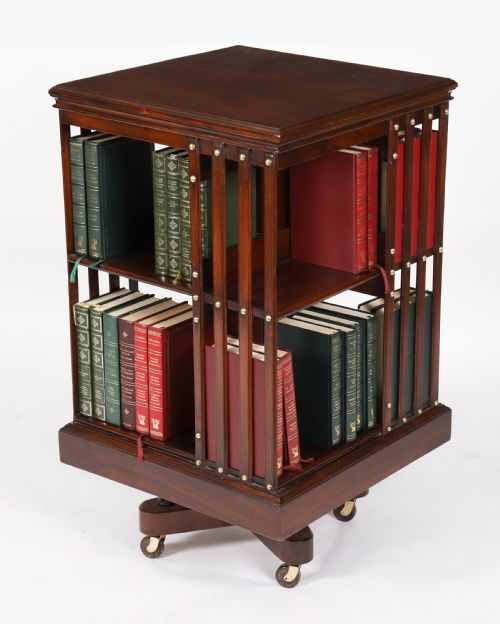
A revolving book tower, also catalogued as a revolving bookcase, is a compact furniture form designed to hold a sizeable library in a minimal footprint. These pieces let a reader access volumes from a seated position by spinning the tiers on a concealed mechanism.
Makers utilised timber frames ranging from solid oak to figured mahogany and walnut. Certain examples display fine fruitwood inlay or brass fittings, whilst others keep a simpler profile in plain oak.
How they were made
Cabinetmakers built these revolving book towers using substantial timbers such as mahogany, oak, and walnut. They selected well-seasoned woods to ensure the vertical tiers maintained structural integrity under the weight of heavy volumes.
Details like fruitwood inlay added decorative contrast to mahogany surfaces, while brass components reinforced corners and mechanisms. Joinery relied on sturdy construction methods to support the continuous rotation of loaded shelves.
Revolving Book Tower Retail Price Guide 2026
Typical asking prices for revolving book tower among the pieces listed under this phrase on Sellingantiques today, from the lower quarter to the upper quarter. They describe what is for sale here now, not the wider market.
These towers let you spin your entire reference shelf with a single flick of the wrist.
What varies in quality
The distinction between standard examples and superior pieces rests on the choice of timber and the complexity of decoration. Finer items exhibit figured mahogany or walnut veneers, delicate fruitwood inlay, and Sheraton-style proportions.
Mechanics dictate the daily experience of the piece, where a smooth, silent turn separates a well-engineered pivot from a stiff rotation. The integration of brass fittings and the crispness of carved or inlaid details further elevate the work.
Maple and Co
The Revolving Book Tower Glossary
- Edwardian
- Dating from the reign of King Edward VII, typically spanning from nineteen hundred to nineteen ten. Pieces from this period often display lighter proportions and refined classical revival details.
- Mahogany
- A durable tropical hardwood prized for its reddish-brown colour and fine grain. Cabinetmakers favoured it for polished finishes and crisp carving.
- Inlay
- A technique where pieces of contrasting wood, such as fruitwood, are set into the primary surface to create decorative patterns. It adds visual depth to mahogany carcases.
- Walnut
- A rich brown timber with distinctive grain patterns used frequently for high-end cabinet work. It offers both warmth and a smooth surface for polishing.
Revolving Book Tower: Frequently Asked Questions
How do I care for the wood surface?
Dust the timber regularly with a soft, dry cloth to prevent dirt accumulation. Avoid placing the piece in direct sunlight or near heat sources to protect the polished finish.
Apply a traditional beeswax polish occasionally to nourish the grain and maintain the natural lustre of the mahogany or oak.
Where should I place a revolving bookcase?
Position the piece beside an armchair or desk where you need immediate access to reference books. Ensure there is enough clearance on all sides for the tiers to spin freely.
Because these towers are compact, they fit well into corners or beside low seating without dominating the room.
How does the rotating mechanism work?
The upper tiers rest upon a concealed base fitted with ball bearings or a central pivot that allows smooth rotation. This internal engineering supports the weight of heavy volumes while keeping the movement light.
Keep the bearing mechanism clean and lightly lubricated if specified, ensuring the tower continues to turn without catching.
How can I tell an Edwardian piece from a Victorian one?
Edwardian pieces generally feature lighter framing and brighter timber tones, reflecting a shift toward airier domestic interiors. They often incorporate restrained inlay work or Sheraton-style influences.
Victorian examples tend to use heavier solid timbers like dark mahogany or oak with robust proportions designed for more formal libraries.