

Antique Revolving Stand
An antique revolving stand brings practical rotation to libraries and halls, offering swift access to books, coats, or serving tiers.
Antique Revolving Stand
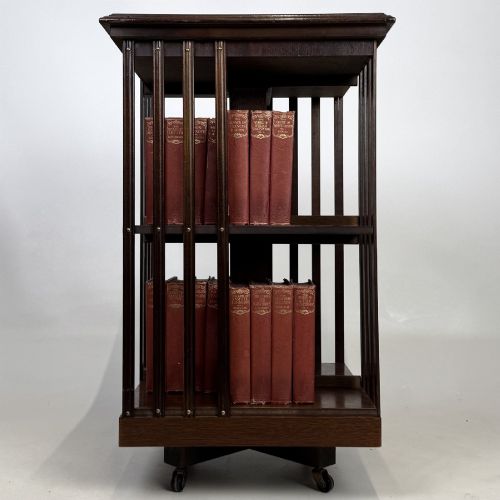
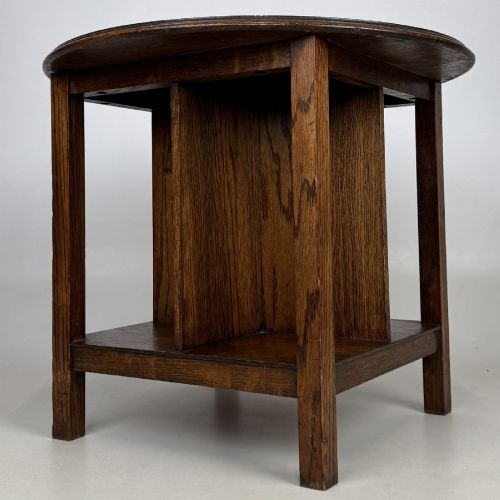
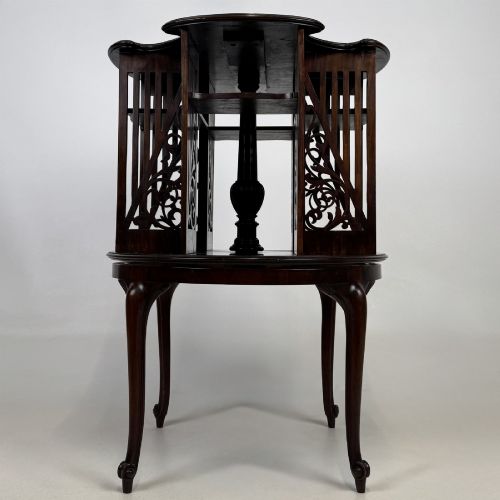
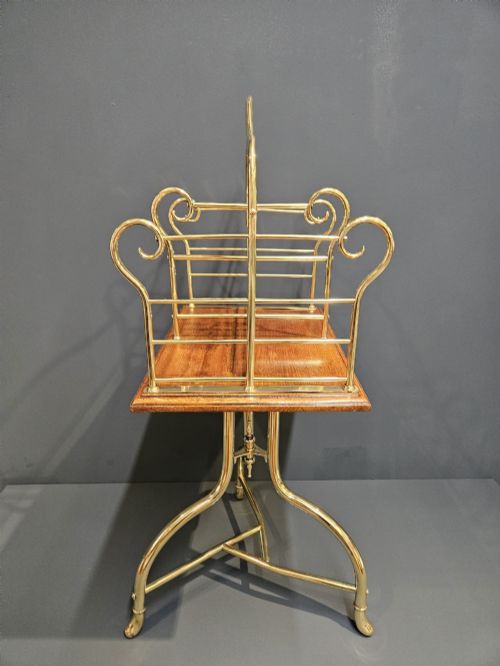
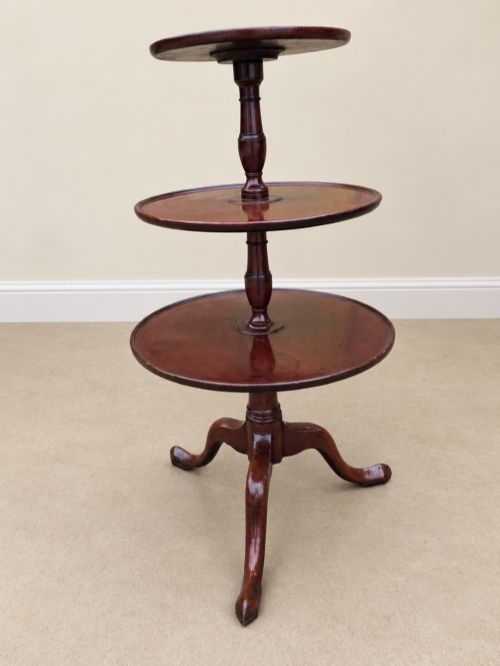
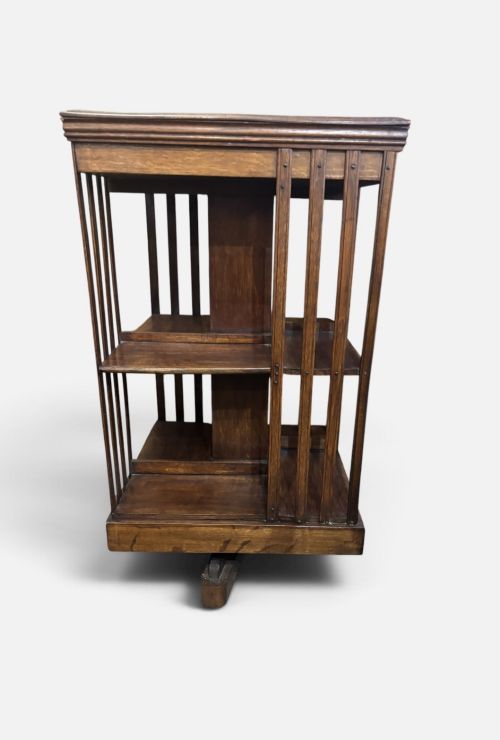
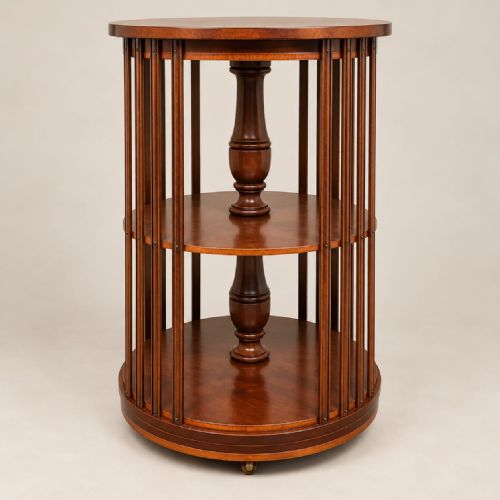
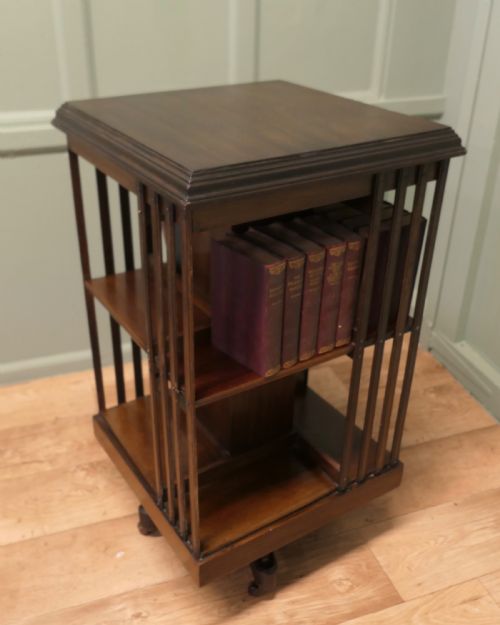
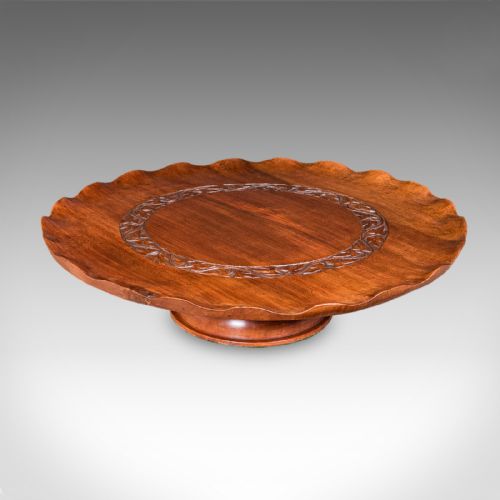
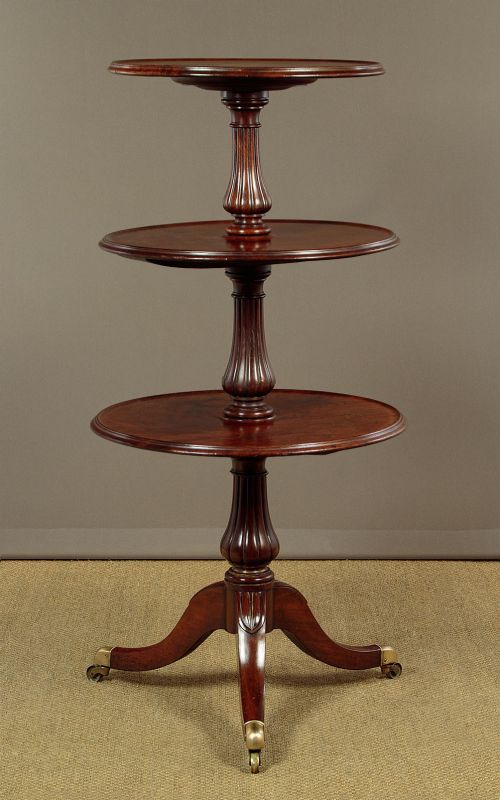
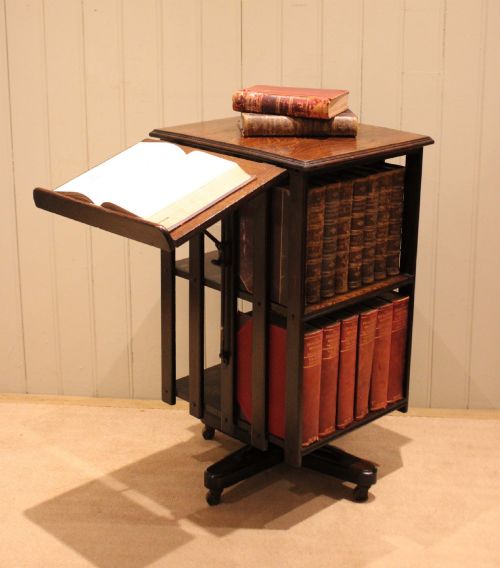
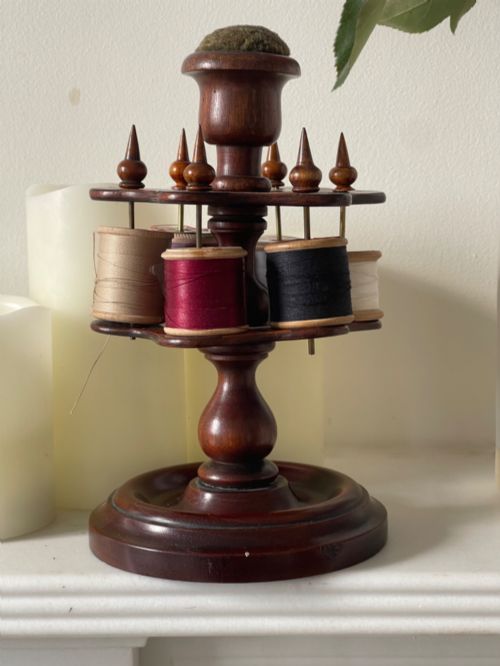
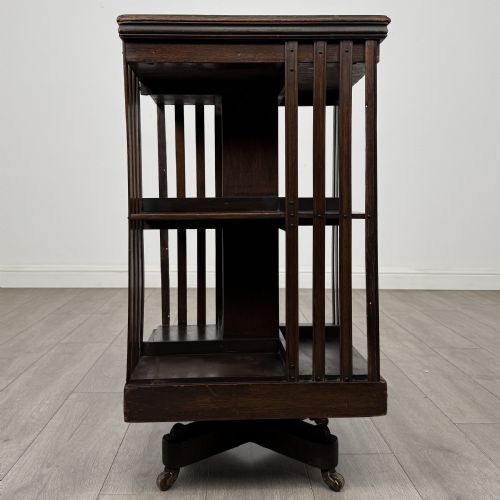
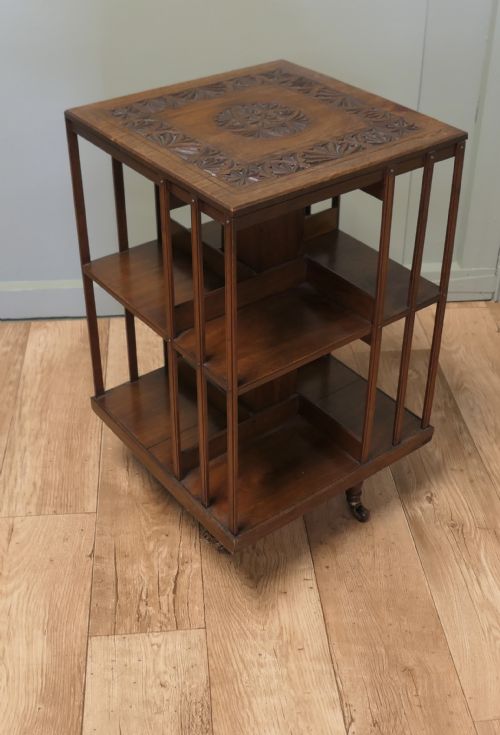
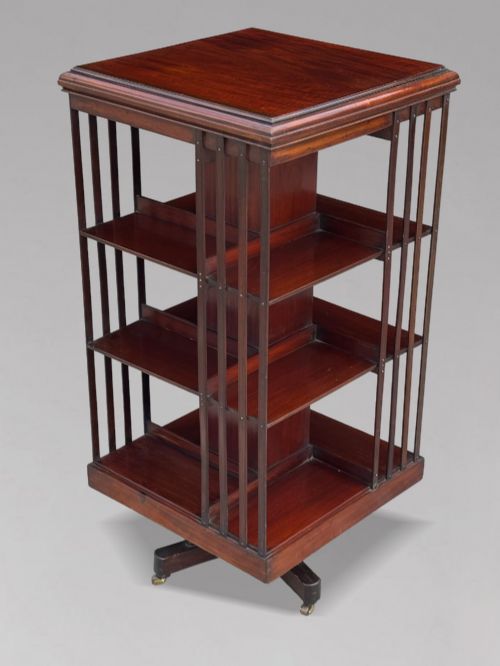
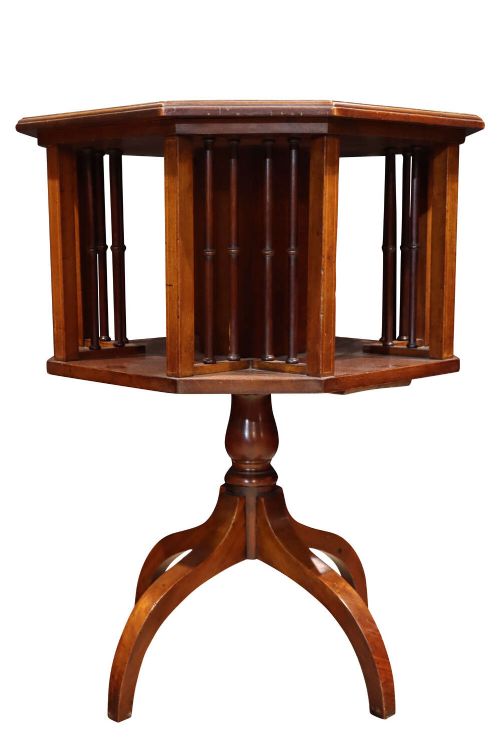
An antique revolving stand encompasses various rotating domestic pieces designed for functional utility across studies, libraries, and hallways. The form most commonly encountered on this page is the revolving bookcase, frequently originating from the Edwardian period or the nineteenth century. These items also include dumb waiters, coat and hat stands, lazy susans, and snooker cue stands.
Materials and construction methods
Timbers dominate the construction of these pieces, with mahogany and oak appearing frequently across both standard and large formats. Walnut, satinwood inlay, and bentwood provide alternative finishes and structural variations suited to specific styles such as Arts and Crafts or Edwardian design.
Brass and cast iron components offer mechanical support and decorative accenting, particularly within internal pivot mechanisms, magazine racks, and hall stand hooks. Marquetry and satinwood inlay enhance exterior surfaces on select mahogany and walnut examples, demonstrating skilled cabinetmaking techniques.
Antique Revolving Stand Retail Price Guide 2026
Typical asking prices for revolving stand among the pieces listed under this phrase on Sellingantiques today, from the lower quarter to the upper quarter. They describe what is for sale here now, not the wider market.
Listings feature mahogany, oak, walnut, and satinwood, spanning periods from the Georgian era through to the twentieth century.
Assessing quality in rotating furniture
The smoothness and stability of the internal pivot mechanism determine fundamental operational quality. A superior stand turns evenly without listing or catching, supported by a sturdy cruciform or tripod base.
Material selection and decorative detailing distinguish finer examples from standard utility pieces. Timber figuring, such as flame mahogany or burr walnut, alongside precise marquetry or brass mountings, elevates the craftsmanship of the object.
Thonet·William Tonks and Sons
The Antique Revolving Stand Glossary
- Revolving bookcase
- A rotating shelving unit designed to hold books accessibly on all sides. It usually sits upon a low cruciform base fitted with concealed castors.
- Dumb waiter
- A tiered freestanding stand used for serving food or holding volumes. Examples range from Georgian mahogany designs to Victorian revolving formats on tripod bases.
- Bentwood
- Wood softened by steam and bent into curved structural forms. This technique appears frequently in hall stands and hat stands associated with Thonet production.
- Marquetry
- Decorative veneer work forming pictures or geometric patterns using various coloured woods. It ornaments the tops and panels of select library tables and bookcases.
Antique Revolving Stand: Frequently Asked Questions
What is an antique revolving stand used for?
These rotating stands serve multiple domestic functions depending on their specific form. Bookcases provide accessible storage for frequently referenced volumes near a desk or armchair.
Other variants such as hall stands hold coats, hats, and umbrellas, while dumb waiters and lazy susans assist with serving items in dining areas.
How do I identify an Edwardian revolving bookcase?
Edwardian models typically date from around 1900 to 1910 and often feature inlaid satinwood details on mahogany or solid oak construction. They generally present lighter proportions compared to earlier Victorian counterparts.
Many examples from this era incorporate slatted or panelled sides surrounding a central rotating pivot.
Where should I place a revolving stand in my home?
A revolving bookcase functions well beside a sofa or writing desk where 360-degree access to books proves practical. Smaller desk-top book rests sit comfortably on tables or sideboards.
Tall hall stands suit entrance hallways, providing organised storage for outerwear and walking sticks within reach of the door.
How do Victorian revolving stands differ from later pieces?
Victorian stands, dating from the nineteenth century, often utilise heavier cuts of mahogany or oak with robust internal iron mechanisms. They tend to feature deeper colouration and sturdier architectural proportions.
Later Edwardian and twentieth-century versions frequently introduce lighter woods, marquetry inlay, and alternative materials like bentwood.