



Antique Lazy Susan
An antique lazy susan brings effortless rotation to the dining table, turning heavy courses and serving dishes smoothly between guests.
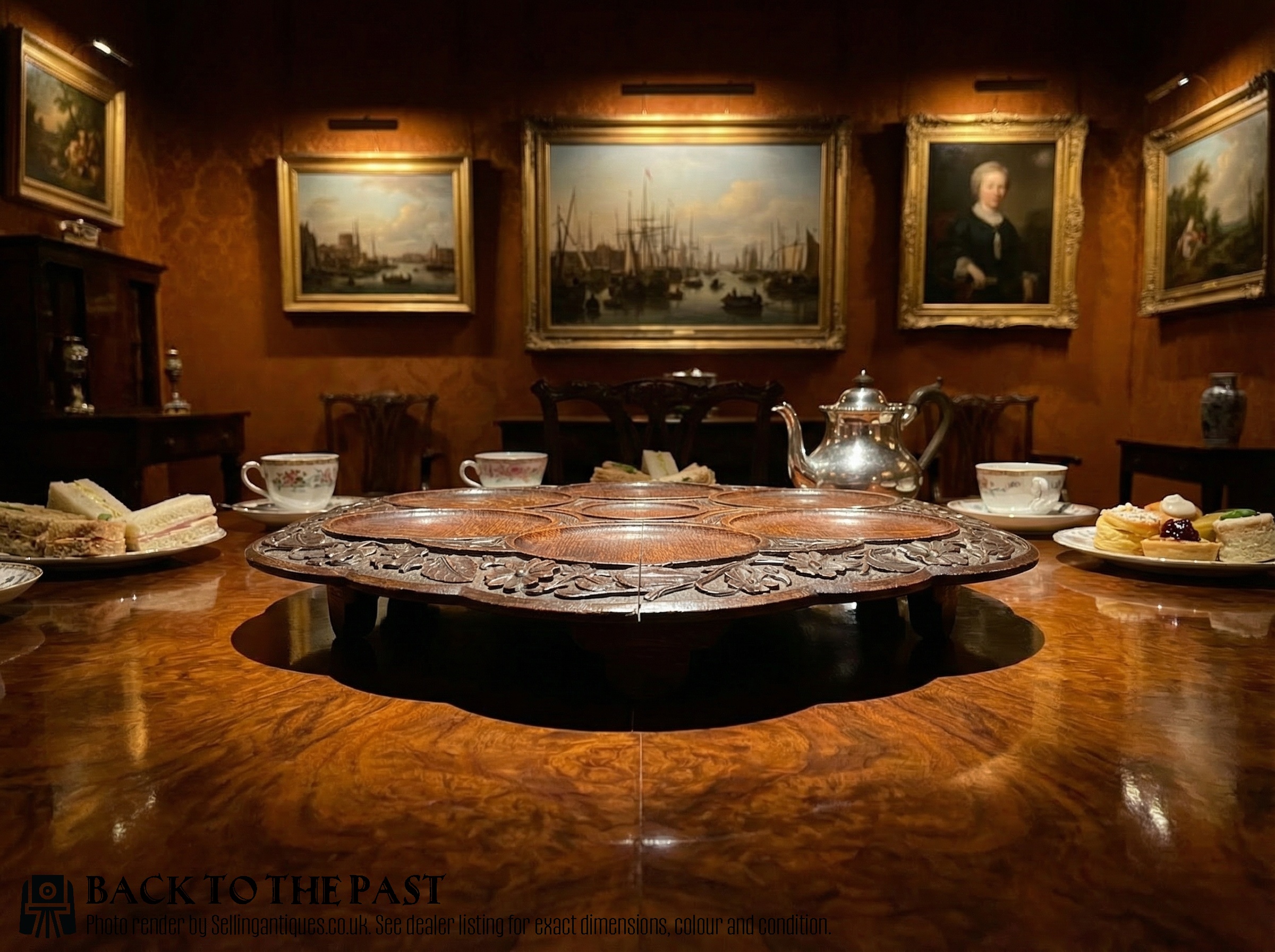
Antique Lazy Susan
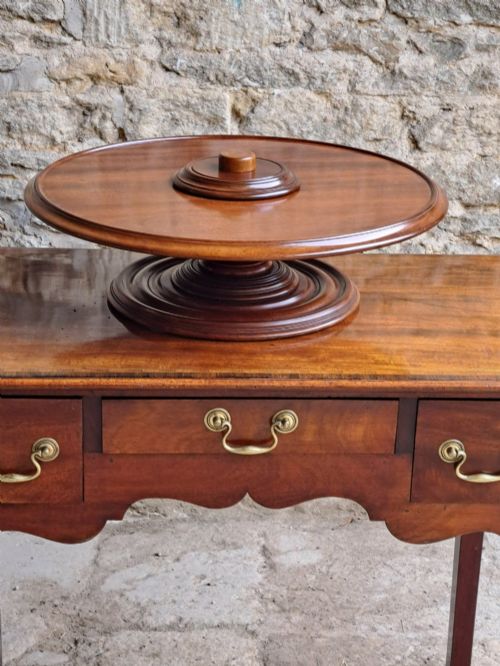
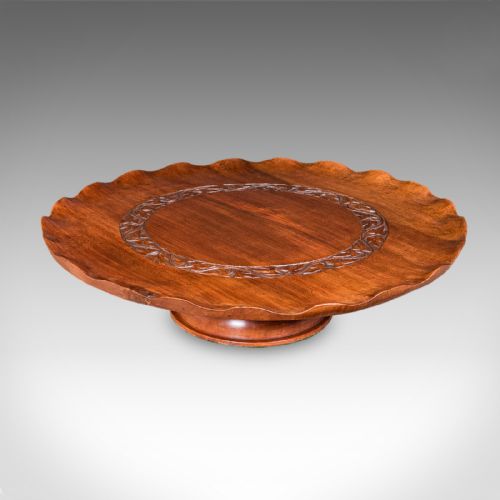
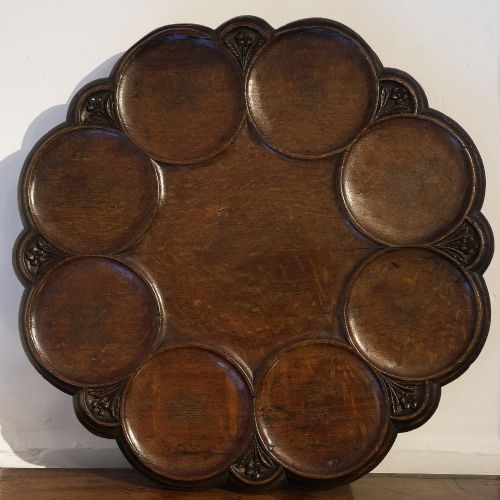
An antique lazy susan is a revolving tray or table top stand designed to pass food and condiments around the dining table without reaching or passing dishes by hand. The examples seen on this page span several centuries, appearing as simple wooden table top round stands as well as more complex tiered serving pieces and dining tables.
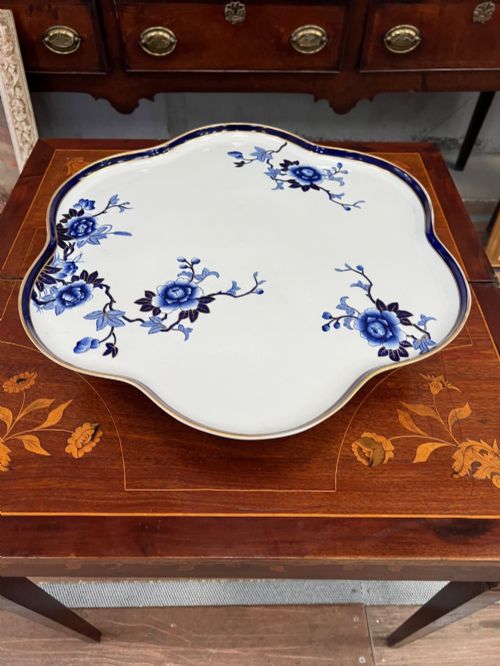
The materials and forms vary across the periods represented, with sturdy oak and rich mahogany predominating in Georgian and Victorian iterations. One also encounters walnut, brass, glass, and porcelain additions such as fitted quarter dishes, alongside later Art Deco designs and Edwardian party turntables.
Earlier pieces frequently take the form of heavy table top stands or dumb waiters from the eighteenth and nineteenth centuries, while later decades introduce decorative tazzas and silver plated serving trays. Each version serves the same fundamental purpose of aiding hospitality and dining convenience.
How They Were Made
Cabinet makers utilised dense hardwoods like mahogany and oak to construct the main bodies and revolving platforms, ensuring the pieces could withstand the weight of heavy ceramics and food. Cross banding and satinwood inlay frequently decorate the finer mahogany surfaces, adding visual depth to the circular tops.
The underlying rotation mechanisms rely on precision joinery and pivots concealed beneath the wood or supported by brass fittings. Silver plating and glass elements appear in later Victorian and Edwardian iterations to hold specialised porcelain dishes and prevent staining during service.
Antique Lazy Susan Retail Price Guide 2026
Typical asking prices for lazy susan among the pieces listed under this phrase on Sellingantiques today, from the lower quarter to the upper quarter. They describe what is for sale here now, not the wider market.
One exceptional Edwardian party setup includes four distinct Minton quarter dishes designed to spin in harmonious union.
What Varies in Quality
The smoothness and balance of the rotation mechanism determine the fundamental quality of a revolving tray, separating sturdy examples from those that wobble or bind. Fine turning of the wood and the selection of well-figured timber grain distinguish superior pieces from utilitarian workshop output.
Completeness dictates value in fitted examples, particularly when original porcelain quarter dishes or maker-stamped components remain intact. The sophistication of edge moulding, subtle inlay work, and robust structural joinery further mark out the upper tier of surviving pieces.
Waring and Gillow·Wylie and Lockhead·Gillows·Coalport·Minton
The Antique Lazy Susan Glossary
- Lazy Susan
- A revolving tray or platform placed on a dining table to assist in passing food. This central device eliminates the need to lift and pass heavy dishes across the board.
- Dumb Waiter
- A tiered revolving stand or piece of furniture designed to hold food and tableware near the dining table. These structures often feature multiple graduating circular tiers.
- Cross Banding
- A border technique where thin strips of veneer are laid perpendicular to the grain of the main surface. This decorative framing appears frequently on mahogany tabletops.
- Tazza
- An elevated shallow bowl or dish mounted on a stem and foot. In later contexts, this form merges with the revolving mechanism of a serving tray.
- Quarter Dishes
- Sector-shaped porcelain containers designed to fit together in a ring around a central well. These pieces are typically encountered in fitted supper sets.
Antique Lazy Susan: Frequently Asked Questions
What is an antique lazy susan used for?
These revolving trays were designed to sit upon dining tables or sideboards to facilitate the easy sharing of food, condiments, and drinks.
By spinning the central platform, diners could help themselves without interrupting conversation or reaching across neighbours.
How do I date an antique lazy susan?
Dating relies upon examining the timber species, construction joints, edge profiles, and any associated hardware like brass pivots.
Georgian and Victorian examples typically display heavier solid timbers and hand-cut joinery, while Edwardian and Art Deco iterations introduce lighter veneers and silver plating.
Are all lazy susans table top stands?
While many examples are standalone circular platforms meant to rest on an existing table, others form part of larger dumb waiter furniture pieces.
Some configurations incorporate multi-tiered structures or dedicated serving tables with revolving surfaces.
Can I use an antique lazy susan today?
Many surviving examples remain structurally sound and function smoothly for modern dining and entertaining.
Care should be taken to protect antique wood and fitted porcelain components from moisture and heavy impacts during regular use.