



Antique Revolving Tray
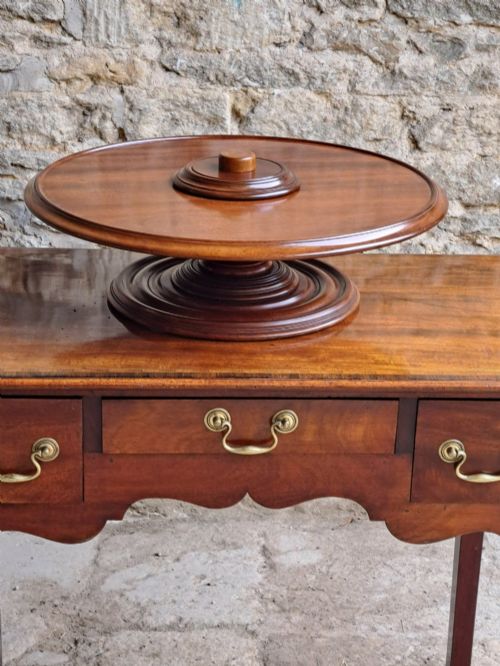
These antique revolving tray pieces are clever rotating servers that bring dishes within easy reach at the dining table.
Antique Revolving Tray
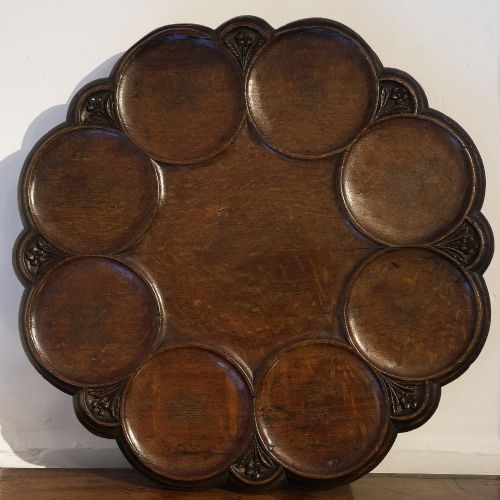
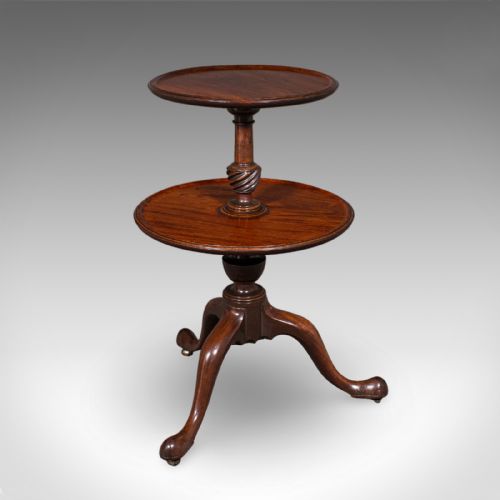
When you search for an antique revolving tray, you encounter practical rotating servers and tiered stands designed to pass food effortlessly across the table. The selections span compact tabletop lazy susans and substantial multi-tiered dumb waiters fitted with rotating platforms.
The pieces on this page originate from periods such as the Georgian, Regency, and Victorian eras, alongside Edwardian and Art Deco examples. Mahogany and oak form the backbone of these designs, often taking the shape of round table stands or multi-level serving units.
Materials and construction methods
Cabinet makers relied primarily on solid mahogany and oak to construct the main platforms and tiers, frequently turning the wood on a lathe to achieve smooth circular tops. Supporting structures range from simple central pivots to tripod bases and tiered wooden columns.
Secondary decorative touches utilise brass fittings, papier-mache, lacquer, and gold leaf, particularly on surfaces intended for display or games such as Pope Joan. The rotating mechanism relies on internal pivots that allow the upper tiers to turn freely.
Antique Revolving Tray Retail Price Guide 2026
Typical asking prices for revolving tray among the pieces listed under this phrase on Sellingantiques today, from the lower quarter to the upper quarter. They describe what is for sale here now, not the wider market.
The listings span from the Georgian period through the nineteenth century to Art Deco items from the 1930s.
Assessing quality in revolving trays
Quality rests in the smoothness of the rotation and the integrity of the timber used for the top. Superior examples maintain a level surface without sagging at the edges over the central pivot.
Finer pieces display careful turning on the columns and crisp detailing on tripod legs, whereas utilitarian versions remain plain. The choice of well-figured mahogany or quarter-sawn oak elevates the visual presence of the server.
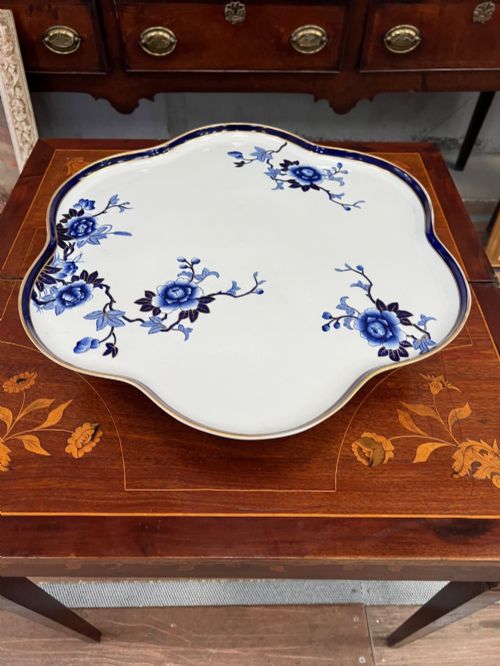
Coalport Porcelain
The Antique Revolving Tray Glossary
- Lazy Susan
- A revolving tray placed on a table to assist in moving food. This term appears frequently across Georgian and later tabletop designs.
- Dumb Waiter
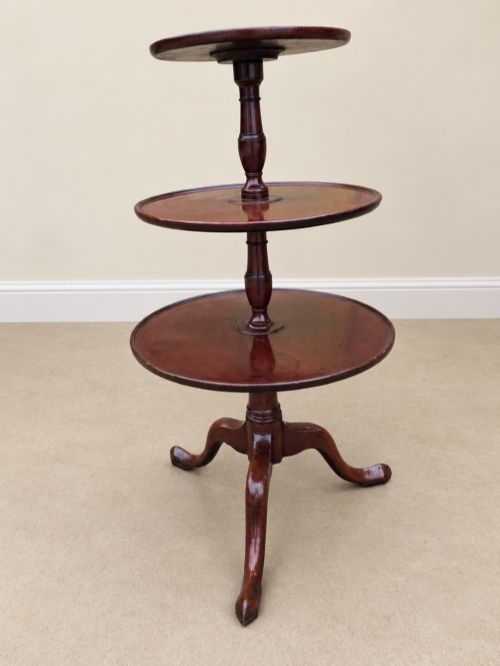
- A freestanding tiered shelving unit, often revolving, used to hold dishes during meals without servant intervention. Examples range from two to three tiers.
- Tripod Base
- A three-legged support structure commonly found beneath freestanding dumb waiters and occasional tables. It provides stable ground contact for heavy revolving tiers.
- Tazza
- A shallow bowl or dish mounted on a stem and foot, utilised for serving small items. Art Deco versions sometimes incorporate a revolving element.
Antique Revolving Tray: Frequently Asked Questions
What is a dumb waiter?
A dumb waiter is a tiered freestanding stand used beside a dining table to hold food and plates. They often feature revolving trays to let diners help themselves.
Versions from the Georgian and Regency periods usually have two or three graduating mahogany tiers supported by a turned pillar and tripod legs.
How do you use a lazy susan?
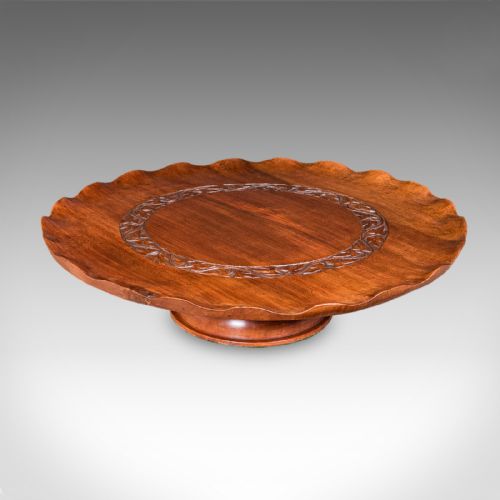
A lazy susan sits in the centre of a dining table or on top of a sideboard to hold condiments, sauces, or dishes. Diners spin the tray to access items without passing dishes across the table.
Tabletop models from the Victorian and Edwardian eras sit directly on dining surfaces on small integrated bases.
How do I date a mahogany lazy susan?
Dating relies on timber selection, turning style, and construction methods. Georgian examples often feature deep, rich mahogany with hand-turned central pivots.
Later Victorian and Edwardian pieces show more uniform machine-cut components, while Art Deco items introduce simpler geometric profiles from the 1920s and 1930s.
What woods were used for revolving trays?
Mahogany and oak are the primary woods found in these rotating trays and dumb waiters. Cabinet makers selected them for their strength and ability to be turned smoothly on a lathe.
In addition to solid hardwoods, some pieces incorporate lacquer, papier-mache, and brass details to enhance the decorative finish.