



Revolving Cake Stand
A revolving cake stand brings practical ingenuity to the table, offering smooth motion for afternoon tea and serving tasks.
Revolving Cake Stand
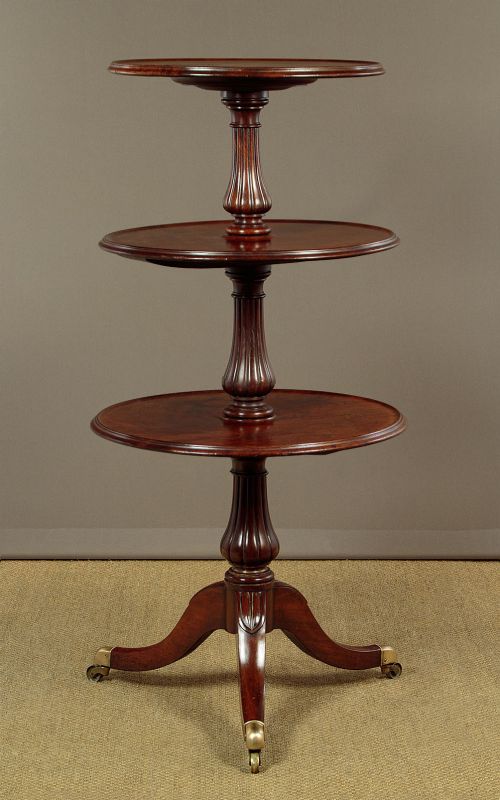
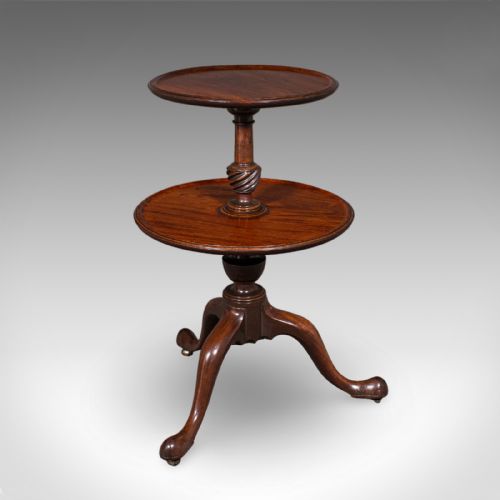
A revolving cake stand provides an accessible surface for serving, frequently taking the form of a tiered dumb waiter or a table-top lazy Susan. When searching for a revolving cake stand, buyers encounter pieces designed to turn effortlessly during meals and gatherings.
The selections span distinct historical eras, ranging from Georgian and Regency examples to Edwardian and Art Deco pieces. Occasional tables and tiered serveware dominate the forms, offering multi-level platforms for display.
Mahogany and oak serve as the primary timbers, often paired with brass mechanisms to facilitate the rotating movement. These materials provide the structural integrity required for daily use and formal presentation.
Construction and materials
Cabinetmakers constructed these pieces primarily from solid mahogany and oak, selecting timber for strength and rich grain patterns. Traditional joinery secures the tiers and columns, ensuring stability during rotation.
Brass fittings and internal pivots enable the smooth revolving action central to the design. Tripod bases provide balanced support for multi-tiered dumb waiters without tipping.
Judging quality and craftsmanship
Quality rests in the precision of the turning mechanism and the stability of the central column. A superior piece rotates evenly without wobble, demonstrating careful alignment by the maker.
Finer examples display thoughtful timber selection, with matched grain across tiers and well-finished brass components. The proportion between the base and the revolving trays dictates visual harmony.
The Revolving Cake Stand Glossary
- Dumb waiter
- A multi-tiered freestanding serving stand designed to hold food and tableware near a dining table. These pieces often feature revolving trays or graduated circular shelves.
- Lazy Susan
- A revolving tray placed on a table or counter to assist in moving food easily between diners. They appear in compact table-top formats as well as larger serving accessories.
- Tripod base
- A three-legged support structure commonly found beneath occasional tables and dumb waiters. This design ensures firm contact on uneven dining room floors.
- Tazza
- A shallow saucer-like dish mounted on a stem and foot, used for serving small cakes or fruit. In revolving formats, the tazza turns smoothly upon its base.
Revolving Cake Stand: Frequently Asked Questions
What is a revolving cake stand used for?
These pieces function as practical servers for afternoon tea, cakes, and dining accompaniments. The rotating mechanism allows diners to access food items from across the table without reaching.
Historically, dumb waiters reduced the need for servants during meals by holding extra dishes within arm's reach. Today, they serve both a decorative and a functional purpose in dining rooms.
How do I date a revolving cake stand?
Dating relies on timber characteristics, construction methods, and the prevailing style of the period. Georgian and Regency pieces show hand-turned mahogany columns and traditional joinery.
Later Edwardian and Art Deco examples introduce oak construction and simpler hardware. Examining the brass pivot mechanism also offers clues regarding the manufacturing era.
Are these stands stable when loaded?
Quality stands feature weighted tripod bases or solid footings designed to counterbalance the weight of tiered trays. Proper construction prevents tipping when items are placed on the outer edges.
Placing heavier items on the lower tiers ensures optimal balance during rotation. Regular inspection of the central pivot maintains smooth and steady movement.
How do I care for antique mahogany wood?
Maintenance involves dusting with a soft cloth and applying appropriate wax polish periodically to nourish the timber. Direct sunlight and excessive moisture should be avoided to prevent fading or warping.
Keeping the brass swivel mechanism clean and lightly lubricated ensures continued smooth rotation. Gentle handling preserves the original finish and structural integrity.