



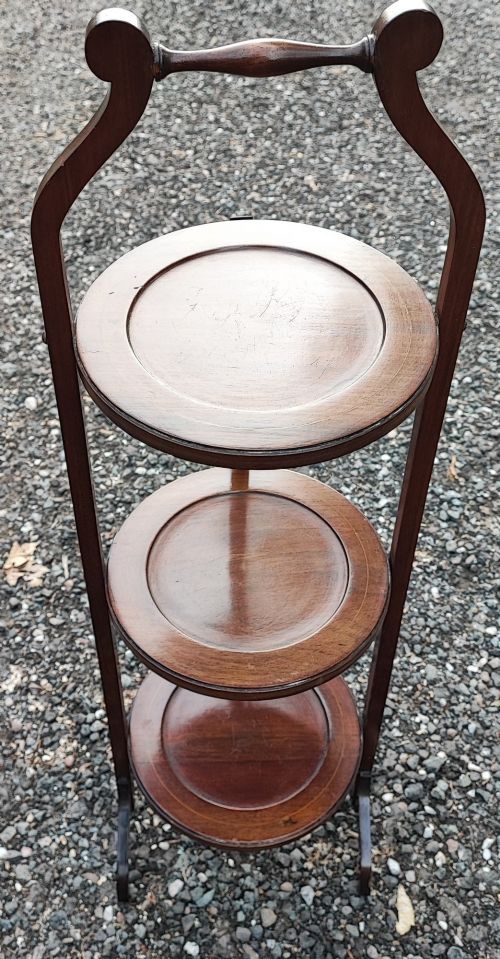


Wooden Cake Stand
When you need a wooden cake stand, you are looking for a practical serving tier that brings warmth and period character to tea time.
Wooden Cake Stand
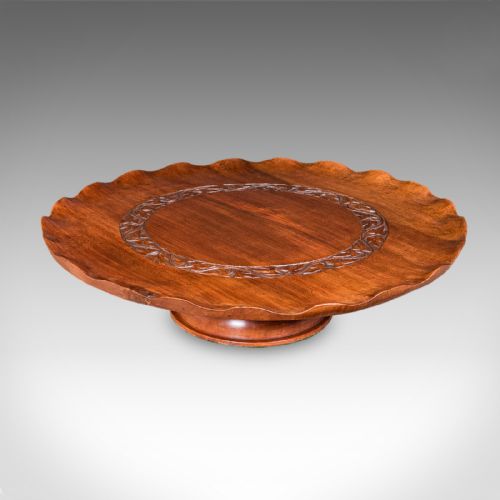
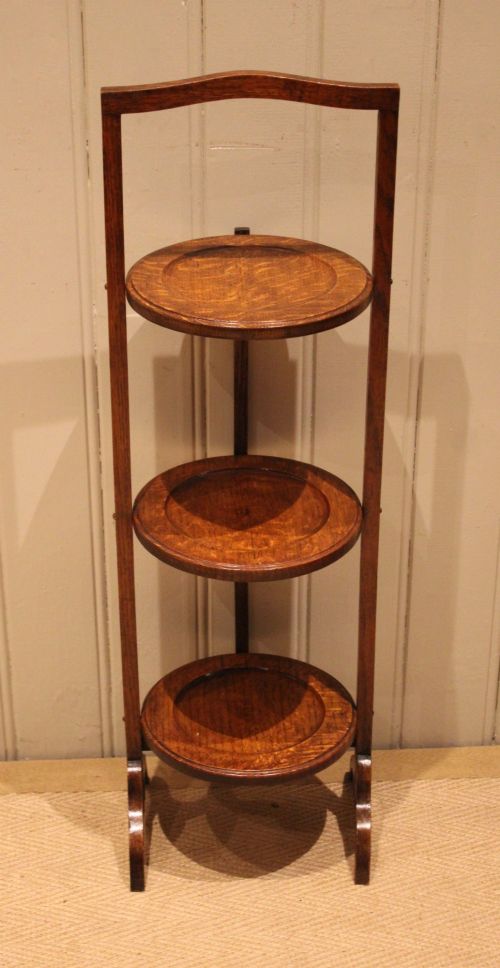
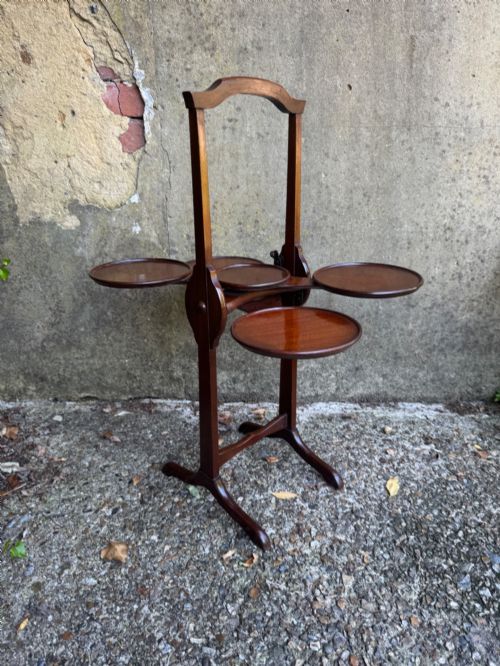
A wooden cake stand provides tiered or single-surface display for afternoon tea, combining domestic utility with period cabinet-making. These pieces range from simple single-tier serving boards to multi-tiered folding structures designed to save space when not in service.
The most common examples encountered on this page belong to the Edwardian period and the early twentieth century, constructed largely in mahogany or oak. Buyers frequently find three-tier folding designs alongside circular cheese stands, lazy susans and occasional display tables.
Earlier roots appear in Georgian dumb waiters and nineteenth-century circular stands, showing that these serving pieces evolved from larger dining room furniture into lighter, portable tea stands. The selection spans several decades of British and continental craftsmanship, crossing Victorian robustness and Sheraton Revival elegance.
How they were made
Makers relied primarily on mahogany and oak as structural timbers, utilising walnut and satinwood for decorative contrast and finer grain patterns. Selected pieces incorporate brass hardware for hinges and folding mechanisms, alongside iron components in specific mechanical tables.
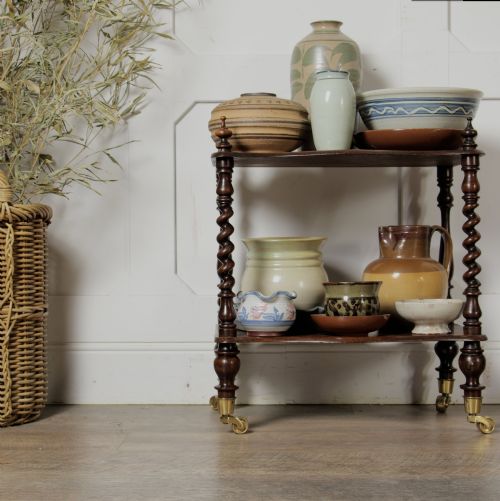
Inlay work defines the more decorative examples, with boxwood inlay creating geometric or floral borders on mahogany and satinwood surfaces. Turned wooden shafts, barley twist supports and tiered folding frames demonstrate the mastery of contemporary joinery and turning techniques.
Wooden Cake Stand Retail Price Guide 2026
Typical asking prices for wooden cake stand among the pieces listed under this phrase on Sellingantiques today, from the lower quarter to the upper quarter. They describe what is for sale here now, not the wider market.
What varies in quality
The standard of timber selection and the precision of the folding mechanism set the finer examples apart from everyday utility items. Superior pieces feature well-figured mahogany or quarter-sawn oak with tight, stable grain that resists warping over decades of use.
Detailing such as crisp boxwood inlay, hand-turned spindles and robust brass hinges indicate workshop skill and higher production cost. Simpler utilitarian stands lack these refinements, relying instead on basic pegged or screwed joints without decorative embellishment.
The Wooden Cake Stand Glossary
- Tiered stand
- A piece featuring multiple horizontal platforms arranged vertically to hold several dishes or cakes at once. These vertical structures maximise display space on tea tables.
- Folding cake stand
- A collapsible serving frame designed to fold flat for storage when not in active service. Clever hinge systems allow the tiers to swing or fold together.
- Lazy susan
- A revolving circular tray placed on a table to allow easy sharing of food dishes among guests. They rotate smoothly on a central pivot mechanism.
- Dumb waiter
- A multi-tiered freestanding serving piece used historically to hold food and tableware without servant assistance. Georgian and Victorian versions provide the structural precedent for later cake stands.
- Sheraton Revival
- A late nineteenth and early twentieth century design style reviving the classical geometry and inlay work associated with Thomas Sheraton. Pieces in this style often feature delicate mahogany and contrasting boxwood stringing.
- Barley twist
- A type of turned wooden column resembling a twisted rope, popular in Victorian furniture. This decorative profiling adds strong vertical texture to table legs and support stems.
Wooden Cake Stand: Frequently Asked Questions
How do I fold a vintage stand?
Most folding stands rely on hinged vertical struts that pivot inwards to collapse the tiers together.
Check the brass hinges and wooden pivots for smooth movement before applying gentle pressure to guide the frame shut.
Were these stands used only for cake?
While designed primarily for afternoon tea cakes and pastries, many circular stands served cheese, fruit or general tableware.
Heavier Victorian circular stands often functioned as moveable cheese or display boards during formal dining.
How do I care for polished mahogany?
Keep wooden stands away from direct sunlight and strong heat sources to prevent the polish from drying and the timber from splitting.
Dust with a soft, dry cloth and occasionally apply a quality beeswax to nourish the polished surface.
How do I distinguish Edwardian from Georgian stands?
Georgian pieces, such as dumb waiters, typically feature heavier proportions, robust timber selection and architectural turnings suited to formal dining rooms.
Edwardian stands are generally lighter, frequently incorporate folding mechanisms, and often display decorative boxwood inlay work.