


Oak Dumb Waiter
These oak dumb waiter pieces are sturdy serving tables designed to hold food and drink near the dining table without crowding it.
Oak Dumb Waiter
When you search for an oak dumb waiter, you encounter tiered serving tables, heavy buffets, and servers designed for dining rooms. These pieces provide tiered surfaces that hold dishes and cutlery close to the table during meals.
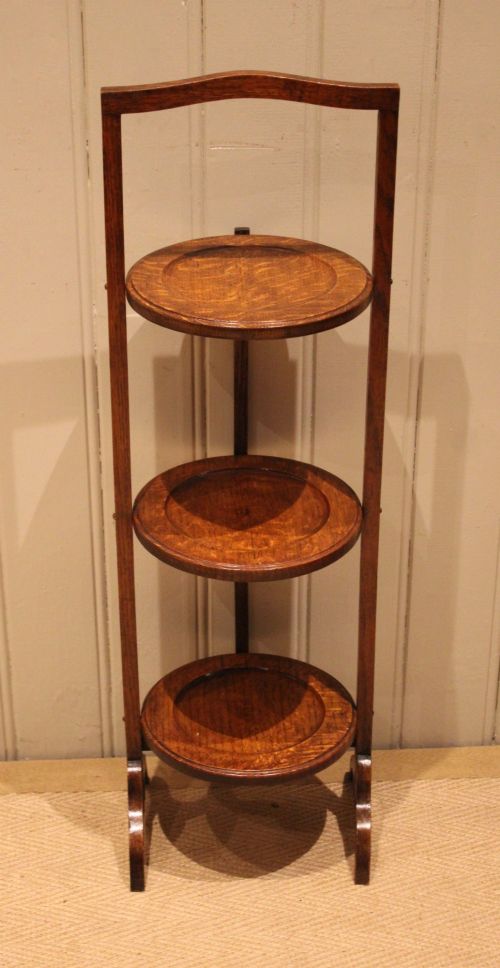
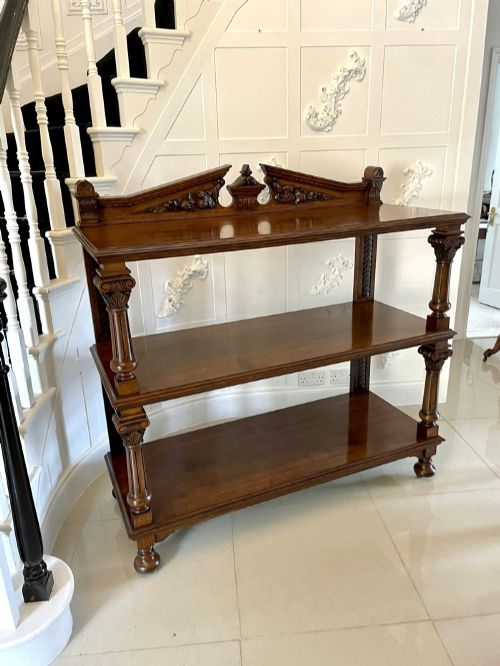
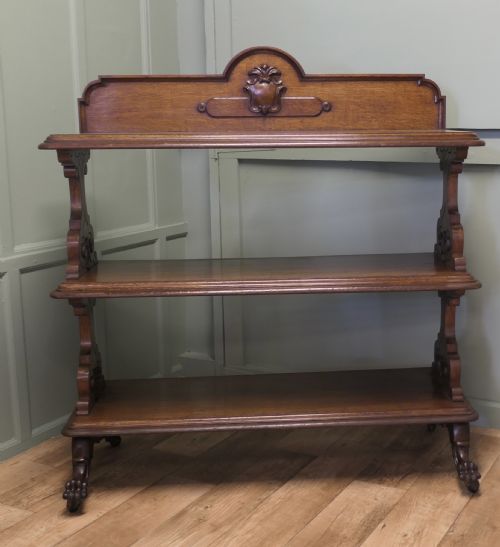
The versions most common on this page span the nineteenth and early twentieth centuries, drawing on styles such as Victorian, Regency, Edwardian, English Country, and Arts and Crafts. You will find multi-tiered tables, revolving trays, and heavy carved buffets with shelves or drawers.
Makers utilised these pieces in domestic dining settings to reduce the need for constant service from staff. Their forms range from simple three-tier stands to elaborate carved servers with rise and fall mechanisms.
How they were made
Cabinetmakers constructed these pieces primarily from solid oak and figured pollard oak, often pairing them with brass castors, hinges, and handles. The dense grain of the timber supported heavy tiered platforms and carved supports.
Joiners employed traditional framing and panel techniques, integrating turned barley twist columns, shaped shelves, and carved details into the structure. Surfaces were polished to reveal the natural grain and colour of the oak.
Workshops also incorporated mechanical elements into specific forms, such as rise and fall mechanisms for adjusting tier heights or revolving table tops for sharing dishes across the surface.
Some Victorian servers arrived with adjustable tiers so you could alter the height between shelves depending on the height of your gravy boats.
What varies in quality
The quality of an oak dumb waiter depends heavily on the selection of timber and the execution of the carving. Finely figured pollard oak and crisp, deep hand-carving distinguish superior pieces from plain, utility items.
Construction methods also separate standard production from finer cabinetwork. Integrated drawers with neat joints, smoothly operating rise and fall mechanisms, and well-turned columns indicate a higher standard of manufacture.
Proportion and balance define the visual success of the piece. Well-designed servers maintain stability across multiple tiers without appearing heavy or clumsy.
Gillows
The Oak Dumb Waiter Glossary
- Pollard oak
- Oak timber taken from a tree that has been pruned close to the trunk to produce a dense, highly figured grain pattern. This decorative wood was frequently selected for prominent surfaces on nineteenth-century servers.
- Dumbwaiter
- A multi-tiered serving table or stand used to hold dishes, glasses, and cutlery during meals. The form allowed diners to help themselves without servants present in the room.
- Buffet
- A heavy dining room sideboard or serving table equipped with shelves or cupboards. These pieces often overlap in function and form with larger dumb waiters.
- Lazy Susan
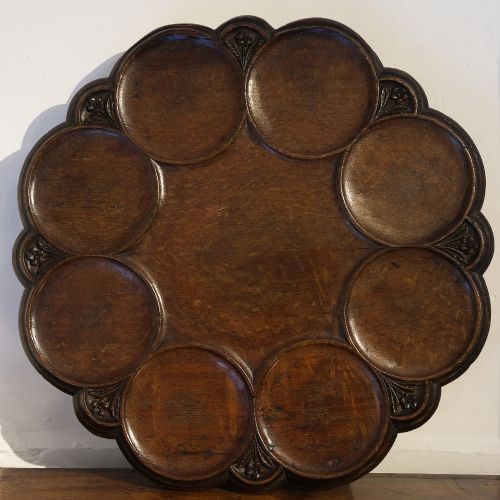
- A revolving tray placed on a table surface to allow easy sharing of food items. Early nineteenth-century examples appear in plain and figured oak.
- Barley twist
- A type of decorative turning resembling a spiral rope. This feature frequently appears on the upright supports of Victorian side tables and dumb waiters.
- Rise and fall
- A mechanical mechanism allowing the height of a table tier or central column to be adjusted. It appears on specific antique server designs to alter the clearance between shelves.
Oak Dumb Waiter: Frequently Asked Questions
What is an oak dumb waiter?
An oak dumb waiter is a tiered serving table or stand designed to hold dishes, glassware, and food during meals. These pieces allowed diners to access extra plates and provisions without relying on servants.
Most examples feature two or three shelves supported by turned columns, pedestals, or carved uprights. They function as practical side tables in dining rooms and larger living spaces.
How were dumb waiters used?
Historically, households placed these stands beside the dining table to hold secondary courses, wine bottles, and spare cutlery. The tiered shelves maximised surface area while keeping the main table clear.
In modern rooms, people use them as display surfaces for plants, books, and collections, or as functional serving stands during dinners.
What is pollard oak?
Pollard oak is a decorative timber harvested from trees that were cut back near the trunk to encourage dense, textured growth. This process creates a distinctive, swirling grain pattern highly prized by nineteenth-century cabinetmakers.
Pieces made from pollard oak typically display rich figure and varied colour across the shelves and panels.
How do I date an oak dumb waiter?
Dating relies on observing the combination of style, construction methods, and materials. Pieces from the early nineteenth century often feature Regency or early Victorian proportions, while later examples incorporate heavier carving, three-tier formats, or Arts and Crafts details.
Hardware such as brass castors and the presence of hand-cut joints provide further clues to the period of manufacture.