

Regency Tier Table
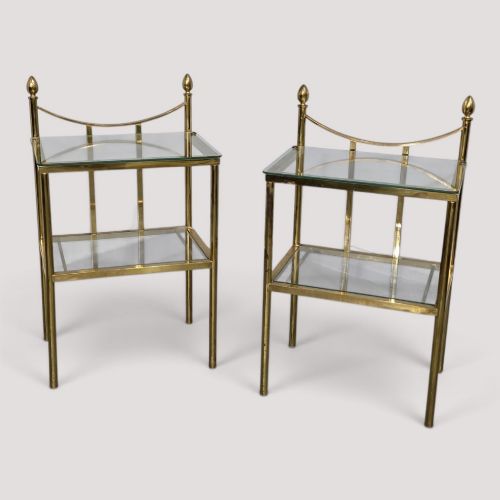
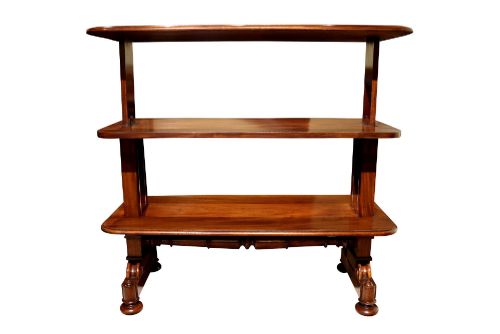
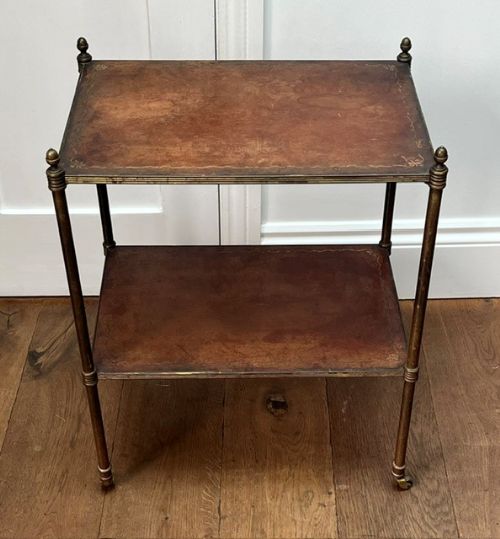
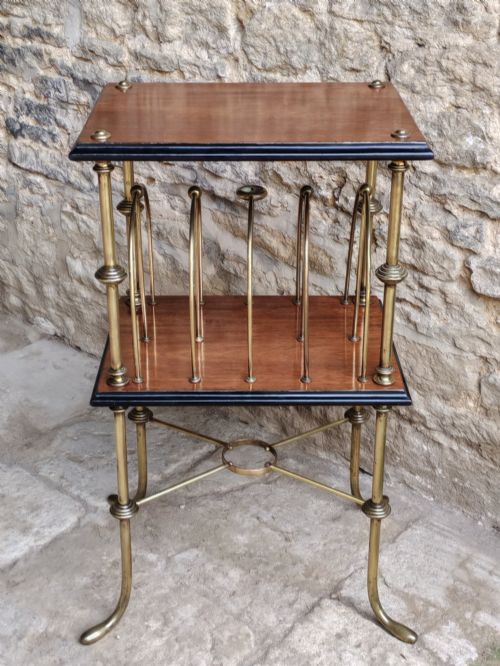
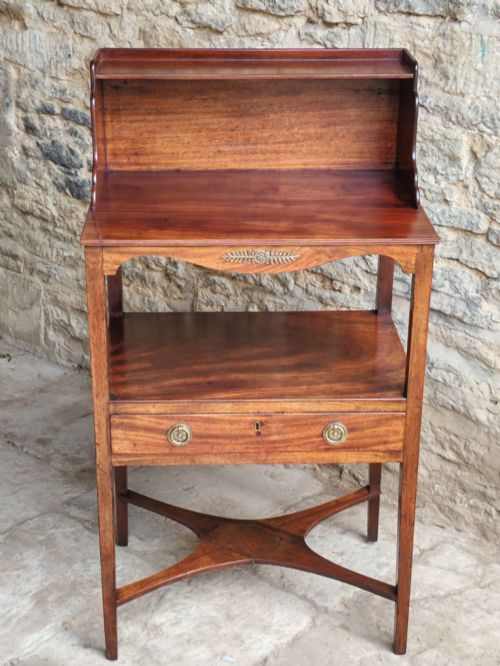
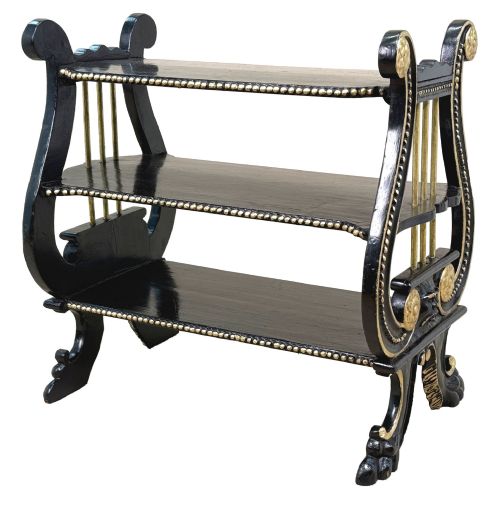
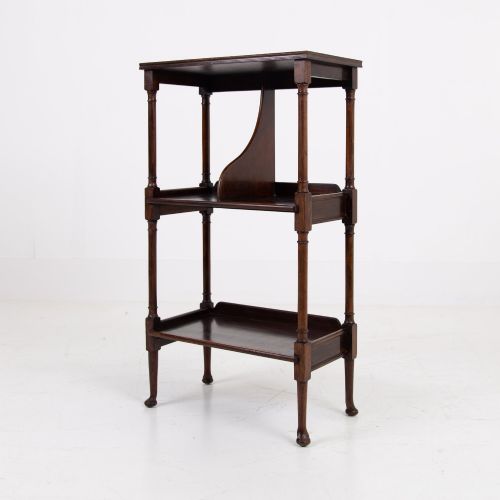
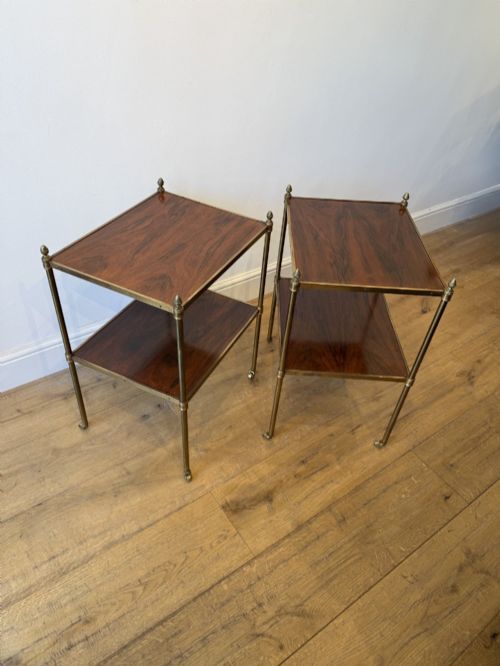
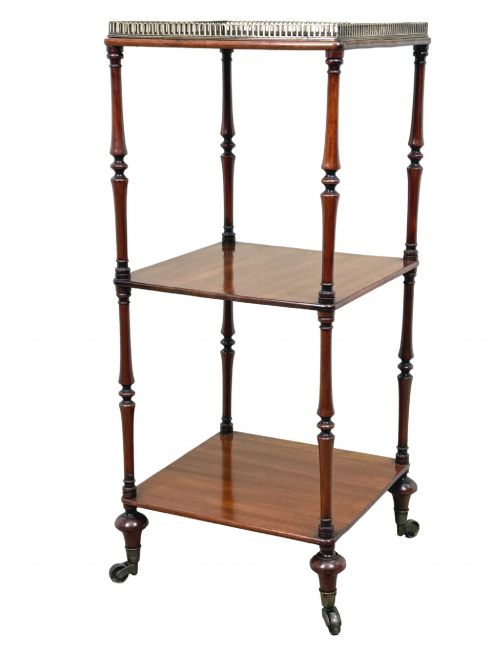
These regency tier table pieces are multi-level timber stands built for serving and display, offering layered surfaces that bring distinct architectural rhythm to a room.
Identifying these pieces
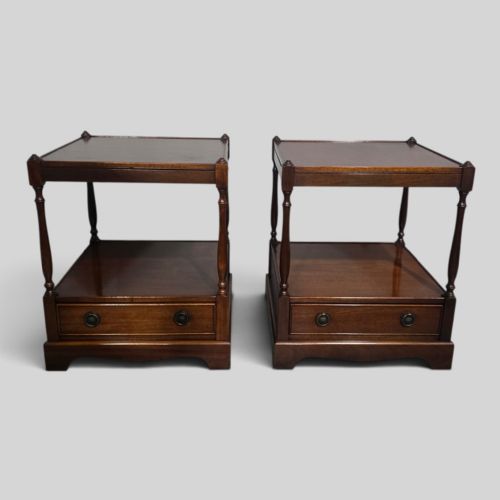
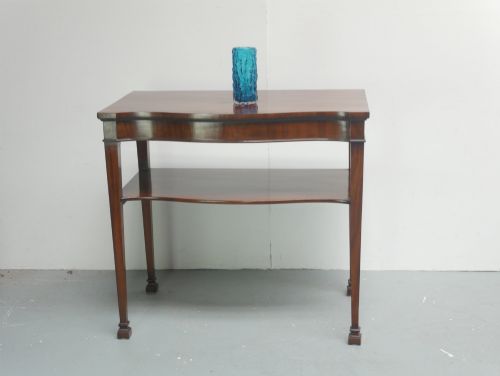
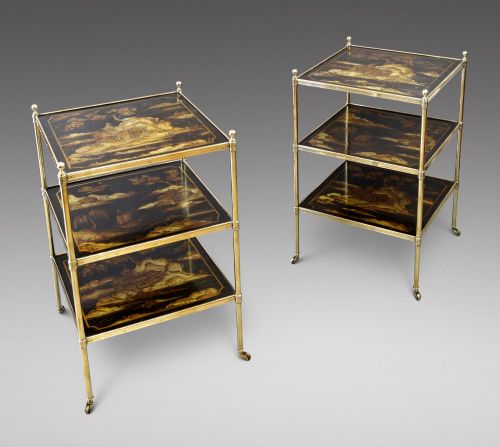
A regency tier table brings stacked wooden surfaces into domestic spaces, functioning as an occasional stand, lamp table, reading surface, or serving piece. The evidence shows these multi-level pieces appearing primarily as two-tier and three-tier formats, deployed in studies, sitting rooms, and dining spaces.
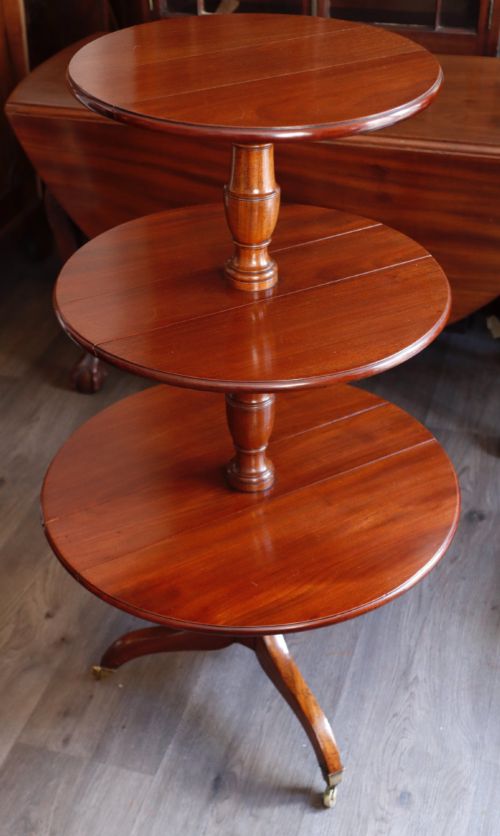
Most examples found here date from the nineteenth century, including the Regency period itself alongside later revivals from nineteen twenty. Forms span from simple two-tier side tables and drop-flap designs to revolving dumb waiters and etageres with tiered platforms.
Makers and designers from the era drew on Georgian precedents while developing lighter, more mobile structures for entertaining and daily use. Buyers encounter pieces configured for specific domestic tasks, whether holding books, lamps, or serving dishes across multiple levels.
Materials and construction
Cabinetmakers constructed these pieces predominantly from imported and domestic timbers, with mahogany and rosewood forming the primary structural and decorative surfaces. Oak appears in supportive framing, while brass provides functional mounts, castors, and revolving mechanisms.
Specialised variations utilise fiddleback figuring within the mahogany grain or apply faux bamboo turnings to create lighter decorative effects. Giltwood surfaces occasionally accent the architectural lines of the tables, adding contrast to the dark hardwoods.
Retail Price Guide 2026
Typical UK retail prices for regency tier table, calculated from the Sellingantiques database of over a million retail prices indexed since 2003. This retail price guide relies exclusively on Sellingantiques data; no external sources or auction records are used, so the figures do not describe the wider market.
One unexpected variation translates the formal architecture of a side table into playful faux bamboo turnings.
Judging execution and finish
Quality rests in the selection of timber veneers and solid stock, where figured mahogany or rich rosewood displays depth and careful grain matching across the multiple tiers. Fine turning on the upright supports and crisp execution of brass details elevate the physical presence of the furniture.
Structural integrity governs the utility of tiered designs, ensuring that columns, trays, and revolving joints operate smoothly without wobble across the stacked platforms. Pieces reflecting the manner of specific designers or incorporating sophisticated drop-flap mechanisms demonstrate higher standards of workshop joinery.
George Bullock
The Regency Tier Table Glossary
- Tiered table
- A piece of furniture featuring two or more horizontal surfaces stacked vertically on central columns or corner posts. These arrangements maximise display and storage space within a compact floor footprint.
- Dumb waiter
- A multi-tiered serving stand, frequently revolving, designed to hold dishes or utensils near a dining table without requiring servant attendance. The evidence includes revolving examples in mahogany.
- Etagere
- An open shelving unit or side table with multiple tiers intended for displaying small objects, lamps, or books. They appear in side table formats across the Regency period.
- Fiddleback
- A decorative figure in timber grain resembling the flaming pattern seen on the back of a violin. This figuring is found on selected mahogany tables.
- Drop-flap
- A hinged leaf attached to the main surface of a table that drops down when not in use. This mechanism allows the footprint of the table to adjust according to space.
Frequently Asked Questions
What is a regency tier table used for?
These pieces serve as versatile stands for lamps, books, and serving items, utilising multiple levels to organise objects within a room. Their stacked design provides surface area while maintaining a compact footprint.
Historically, specific formats like dumb waiters assisted with dining service, while smaller two-tier versions acted as lamp or occasional tables beside seating.
How do I identify a genuine period piece?
Examination of timber species, construction joints, and wear patterns helps distinguish nineteenth-century examples from later revivals. The evidence shows prominent use of solid and veneered mahogany and rosewood across this era.
Stylistic cues such as brass castors, turned uprights, and traditional joinery methods further indicate the period of manufacture, while later twenty-century pieces often reflect earlier Regency styles.
How do I care for rosewood and mahogany surfaces?
Maintaining these dense hardwoods involves keeping them away from direct heat sources and strong sunlight that can dry out the timber and fade the polish. Regular dusting with a dry, soft cloth preserves the finish.
Applying occasional appropriate wax feeds the wood and protects the grain without building up heavy residues that obscure the natural figure of the mahogany or rosewood.