





Edwardian Folding Stand
An edwardian folding stand brings collapsible practicality and refined woodwork into any room.
Edwardian Folding Stand
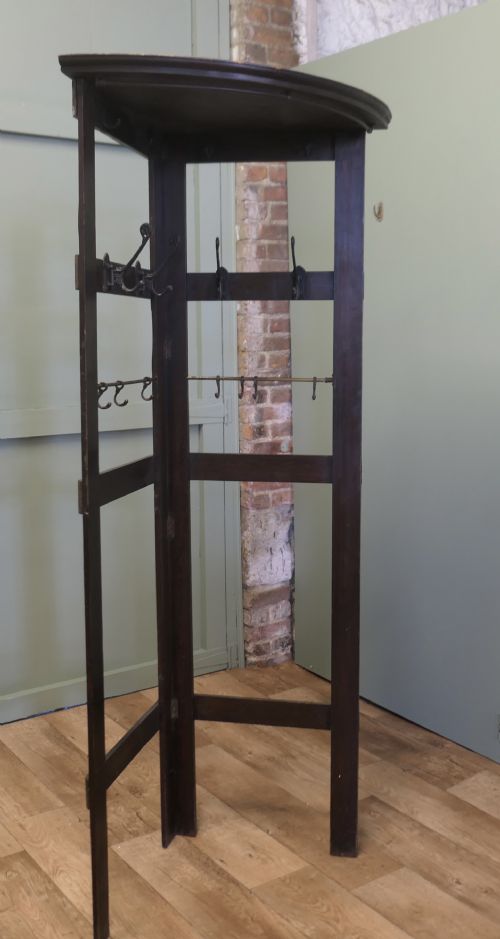
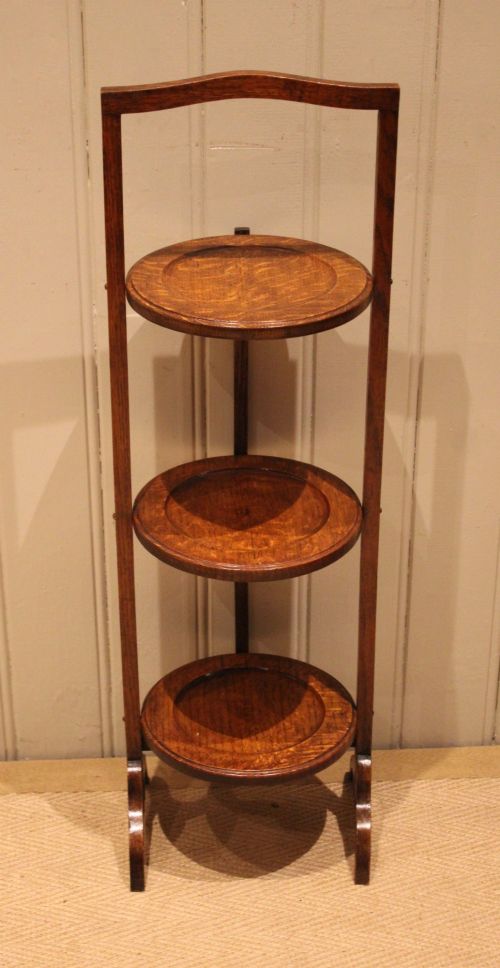
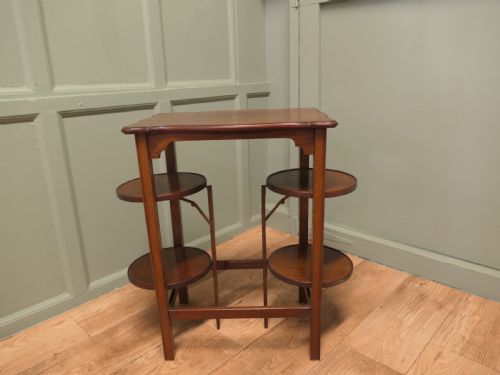
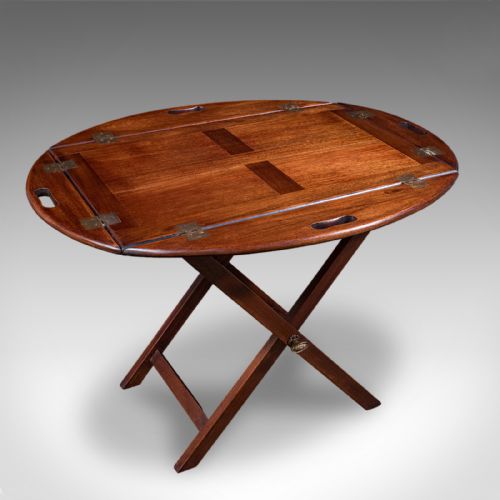
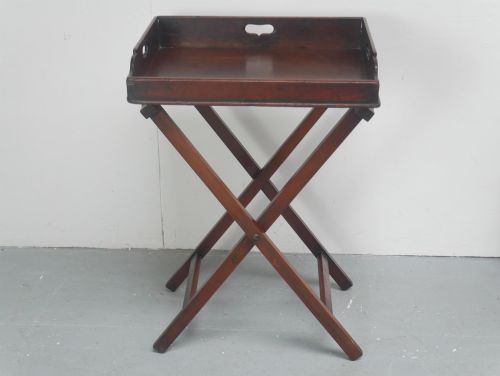
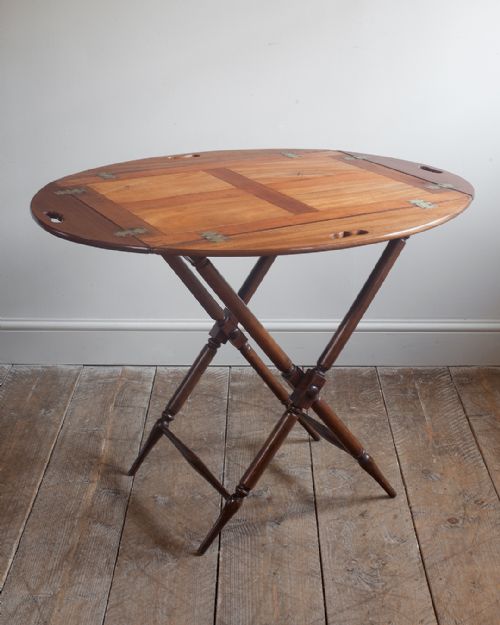
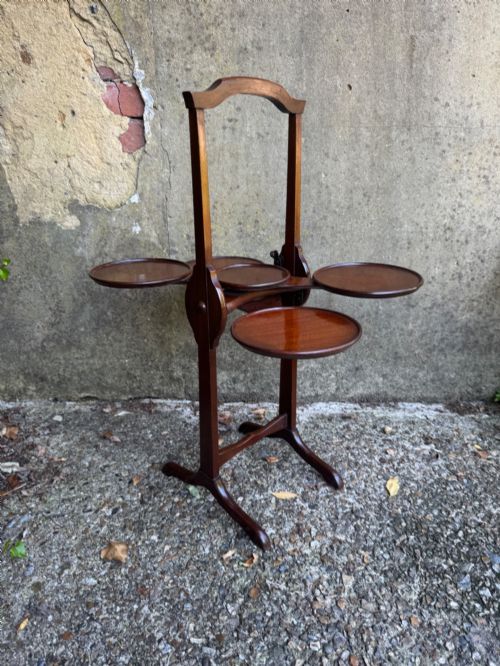
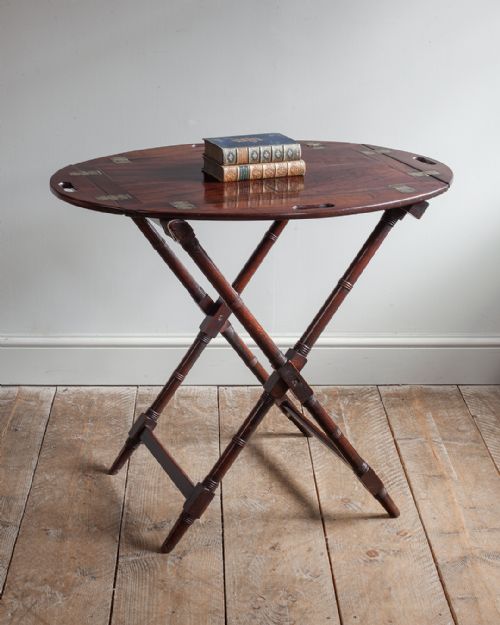
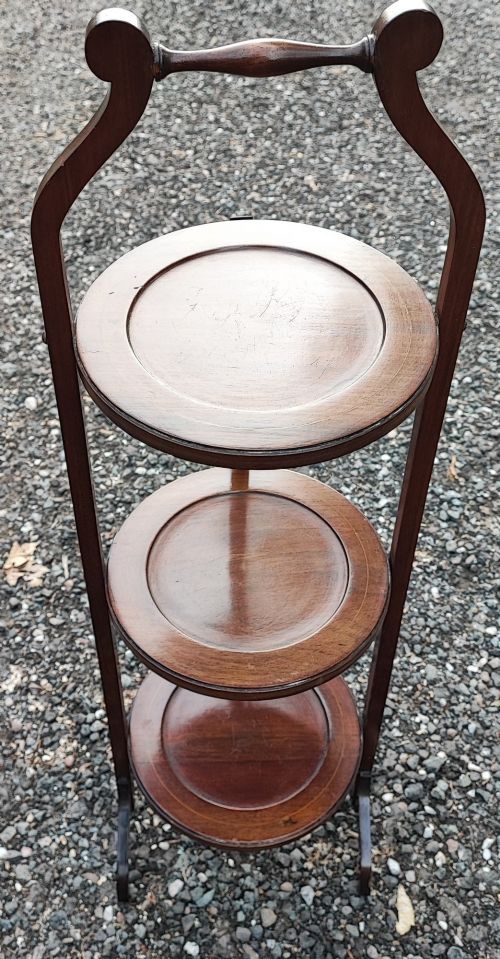
An edwardian folding stand encompasses a practical category of collapsible furniture designed for hosting afternoon tea, serving meals, or holding books in British homes. The pieces appearing most frequently take the form of multi-tiered cake stands, butler trays on independent folding bases, and occasional tables.
The selection ranges from simple oak or mahogany constructions to inlaid three-tier models and campaign-style serving tables. While the Edwardian period dominates the listings, related examples stretch from the Victorian era into the early twentieth century.
Makers utilised these collapsible items to maximise floor space without sacrificing the hospitality standards of the period. Buyers select them for their combination of functional versatility and period craftsmanship.
How they were made
Cabinet makers constructed these stands primarily in solid timbers such as mahogany, oak, walnut, and teak, frequently applying decorative veneers, stringing, or satinwood inlay to enrich the surface appearance. Brass hinges, brackets, and mounts provide the necessary mechanical pivots for the folding actions.
Joinery techniques focus on stability when open and compactness when closed, utilising hinged tiers, scissor actions, and folding frames. Surfaces receive polish or wax finishes that highlight the natural grain of the wood.
Edwardian Folding Stand Retail Price Guide 2026
Typical asking prices for edwardian folding stand among the pieces listed under this phrase on Sellingantiques today, from the lower quarter to the upper quarter. They describe what is for sale here now, not the wider market.
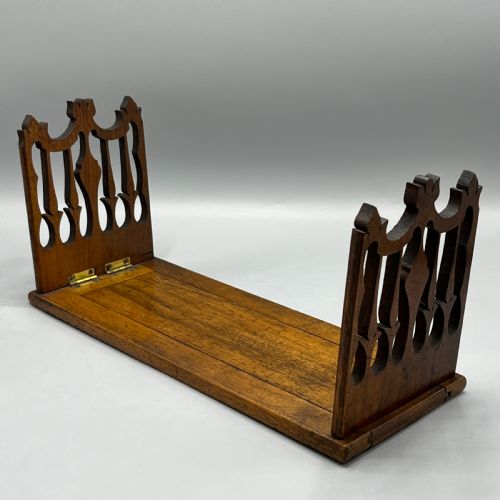
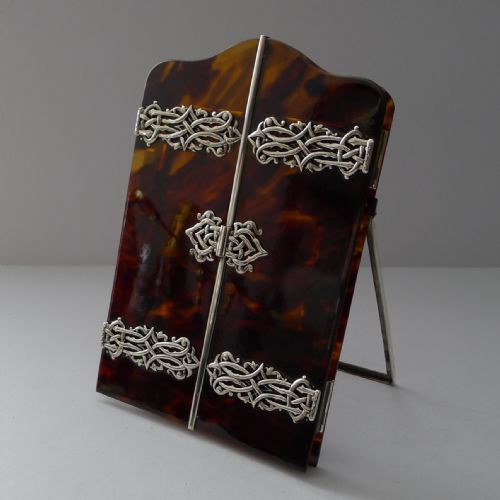
Some ingenious Victorian book slides incorporated novel rests and expanding actions to keep your bedside reading upright.
What varies in quality
Quality reveals itself in the precision of the folding mechanism and the rigidity of the piece when fully extended. Superior examples operate smoothly without looseness at the joints and remain balanced on all supports.
Material selection and decorative detailing set apart the finer items. Master workshops employed superior timber selection, crisp brass hardware, and careful inlay work rather than plain, utilitarian construction.
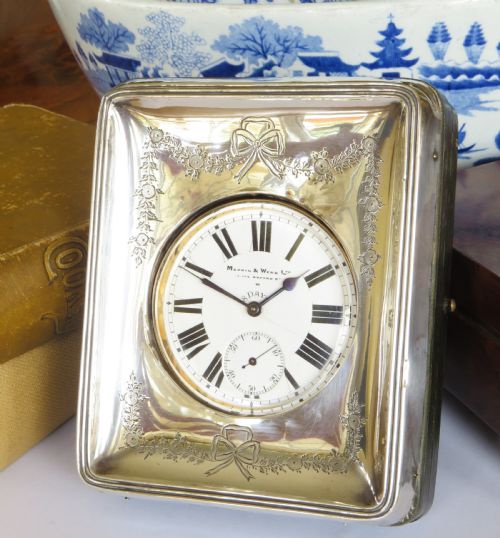
Leveson And Sons·Mappin And Webb·Benetfink And Co
The Edwardian Folding Stand Glossary
- Cake Stand
- A multi-tiered collapsible wooden furniture piece designed for serving afternoon tea. These stands feature hinged tiers that fold flat for storage.
- Butler Tray
- A shallow wooden serving tray with carrying handles, traditionally paired with a folding X-frame stand. The combination allows servants to transport and present refreshments easily.
- Inlay
- A decorative technique where contrasting woods, shell, or brass are embedded into the primary surface timber. Edwardian makers utilised satinwood and boxwood stringing for geometric or floral patterns.
- Campaign Style
- Portable furniture designed for military officers or travel, featuring folding frames, recessed brass handles, and robust construction. These pieces disassemble or collapse for transit.
- Tier
- A single horizontal shelf or platform on a multi-level stand. Cake stands commonly incorporate two or three tiers connected by pivoting uprights.
Edwardian Folding Stand: Frequently Asked Questions
What is an edwardian folding stand used for?
These stands served primarily for hosting afternoon tea, presenting cakes, or holding books and serving trays in period drawing rooms. Their collapsible design allowed households to clear floor space quickly when entertaining ended.
Today, owners utilise them as decorative side tables, plant stands, or occasional display surfaces in living spaces and kitchens.
How do I fold and store these stands safely?
Most models rely on hinged tiers or pivoting scissor frames that collapse vertically into a flat profile. Users should release any locking catches gently and guide the joints to prevent strain on the timber.
Keep the folded stands in dry environments away from direct heat sources to prevent the wood from warping or the brass hinges from sticking.
Are these stands sturdy enough for daily use?
Well-constructed pieces built from solid mahogany or oak remain stable and capable of supporting everyday items like books or tea sets. The structural integrity depends entirely on the tightness of the original joints and hinges.
Regular checks of the hardware ensure the folding mechanisms remain secure during use.
How can I tell an Edwardian stand from a Victorian one?
Edwardian stands tend to feature lighter timber tones, delicate satinwood inlay, and streamlined profiles designed for brighter turn-of-the-century interiors. Victorian examples often display darker woods, heavier proportions, and more robust Gothic or classical revival details.
Examining the construction methods, hardware materials, and secondary woods helps clarify the period of origin.