



Brown Wooden Cake Stand
A brown wooden cake stand brings tiered warmth and practical display to a room, holding afternoon tea or small collections with quiet grace.
Brown Wooden Cake Stand
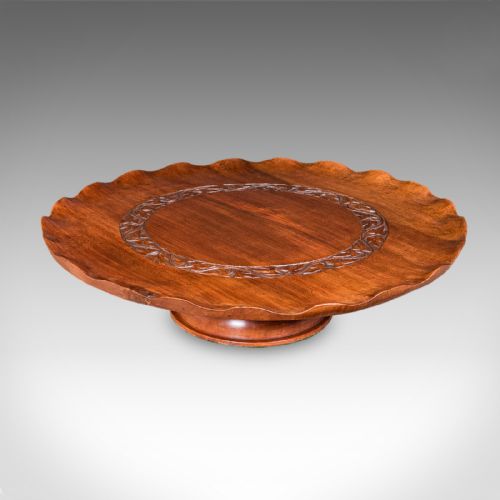
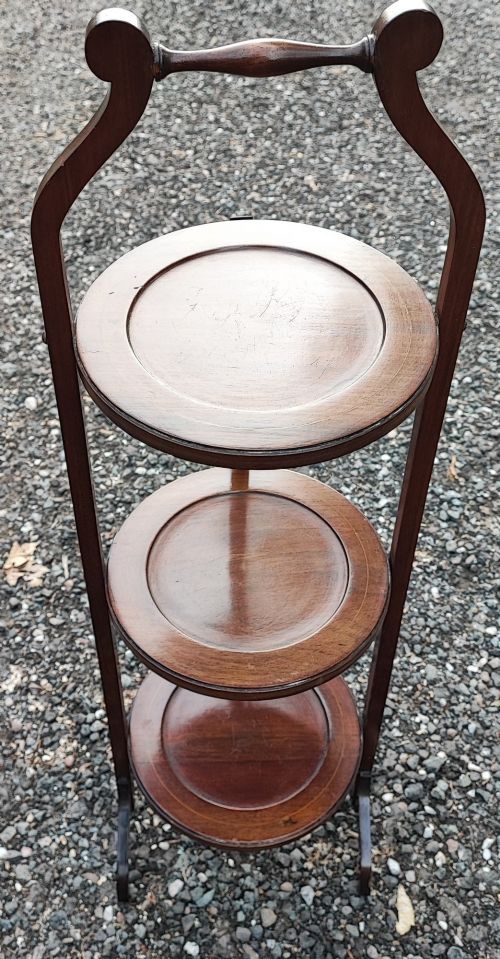
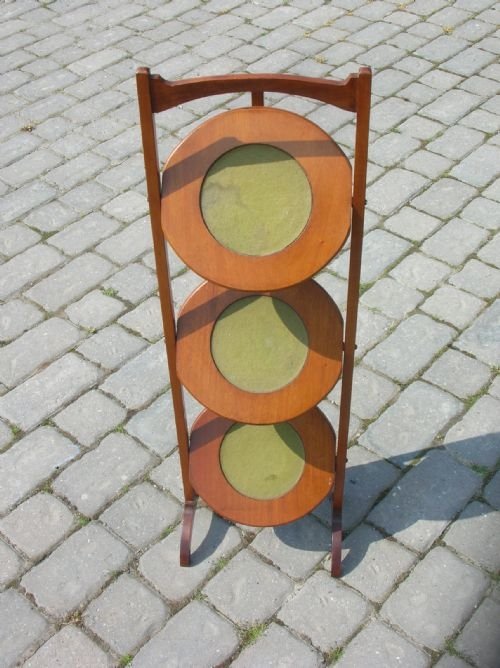
A brown wooden cake stand is a functional tiered or rotating piece designed for serving, most commonly found here as Edwardian three-tier folding stands in mahogany or oak.
The selection extends from 18th-century Georgian dumbwaiters to 1910 tiered tables and lazy Susans, reflecting generations of wooden serving furniture.
Buyers seeking a brown wooden cake stand encounter styles ranging from plain turnery to inlaid satinwood and boxwood details produced around 1900.
Construction and materials
Cabinetmakers built these pieces using dense hardwoods like mahogany, rosewood, and oak, often adding brass hinges and catches for folding mechanisms.
Decorative surface work relied on boxwood and satinwood inlay to create subtle geometric borders on tiered trays.
Brown Wooden Cake Stand Retail Price Guide 2026
Typical asking prices for brown wooden cake stand among the pieces listed under this phrase on Sellingantiques today, from the lower quarter to the upper quarter. They describe what is for sale here now, not the wider market.
The listings combine Edwardian mahogany and oak with earlier Georgian forms.
Judging the work
Superior examples demonstrate crisp execution in their folding mechanisms and tight joinery that keeps multiple tiers level when extended.
The refinement of the timber selection and the precision of inlaid boxwood or satinwood details distinguish standard utility items from finer workshop production.
The Brown Wooden Cake Stand Glossary
- Tiered table
- A multi-level stand designed to hold plates or small objects without taking up excessive floor space. These items fold flat for storage.
- Lazy Susan
- A rotating tray mechanism placed on a table to allow easy sharing of dishes. The pieces here include Edwardian variations of this rotating design.
- Inlay
- A technique where contrasting woods like boxwood and satinwood are embedded into the primary mahogany or oak surface. This creates decorative borders and motifs.
- Dumbwaiter
- A multi-tiered serving piece originating in the 18th century. Georgian examples provide historical context for later tiered wooden stands.
Brown Wooden Cake Stand: Frequently Asked Questions
How do I fold the stand?
Most Edwardian three-tier stands use pivoting wooden arms and brass hinges that allow the trays to swing inward and collapse vertically.
Gently lift the upper tiers to release the locking action before folding the frame flat for storage.
Can I use these for actual food?
These stands were originally built to serve cakes and afternoon tea in Edwardian and Georgian homes. Modern use is entirely practical for entertaining.
Ensure the wooden surfaces are wiped clean with a dry or slightly damp cloth to protect the polished finish.
How do I date a wooden cake stand?
Dating relies on timber choices, construction techniques, and stylistic markers such as Edwardian inlay work or Georgian turning.
Inspect the hardware, such as brass screws and hinges, alongside the timber grain to understand the period of manufacture.
What is the difference between tiers and a lazy Susan?
Tiered stands feature stacked horizontal platforms rising vertically, while lazy Susans rotate on a central axis.
Both forms utilise wood construction but serve different functions during tea or dining.