

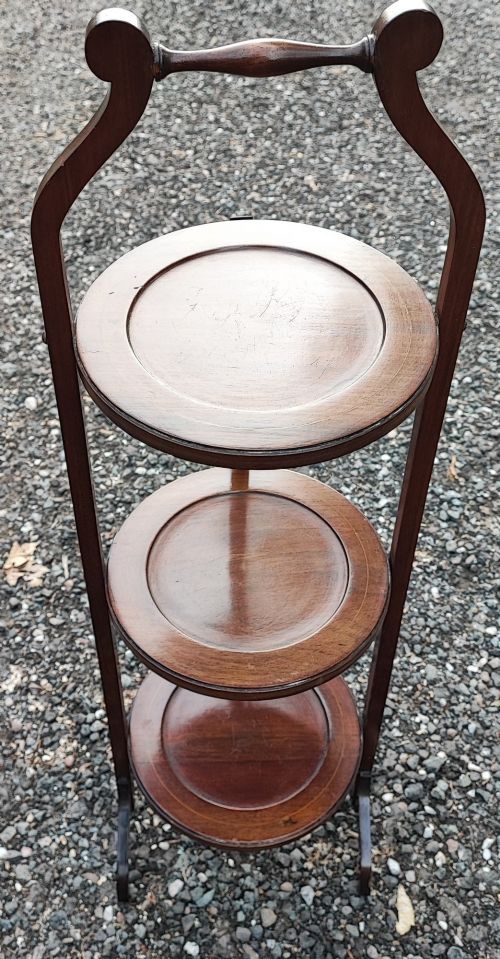


Inlaid Mahogany Cake Stand
These inlaid mahogany cake stand examples offer tiered display surfaces finished with satinwood and boxwood details.
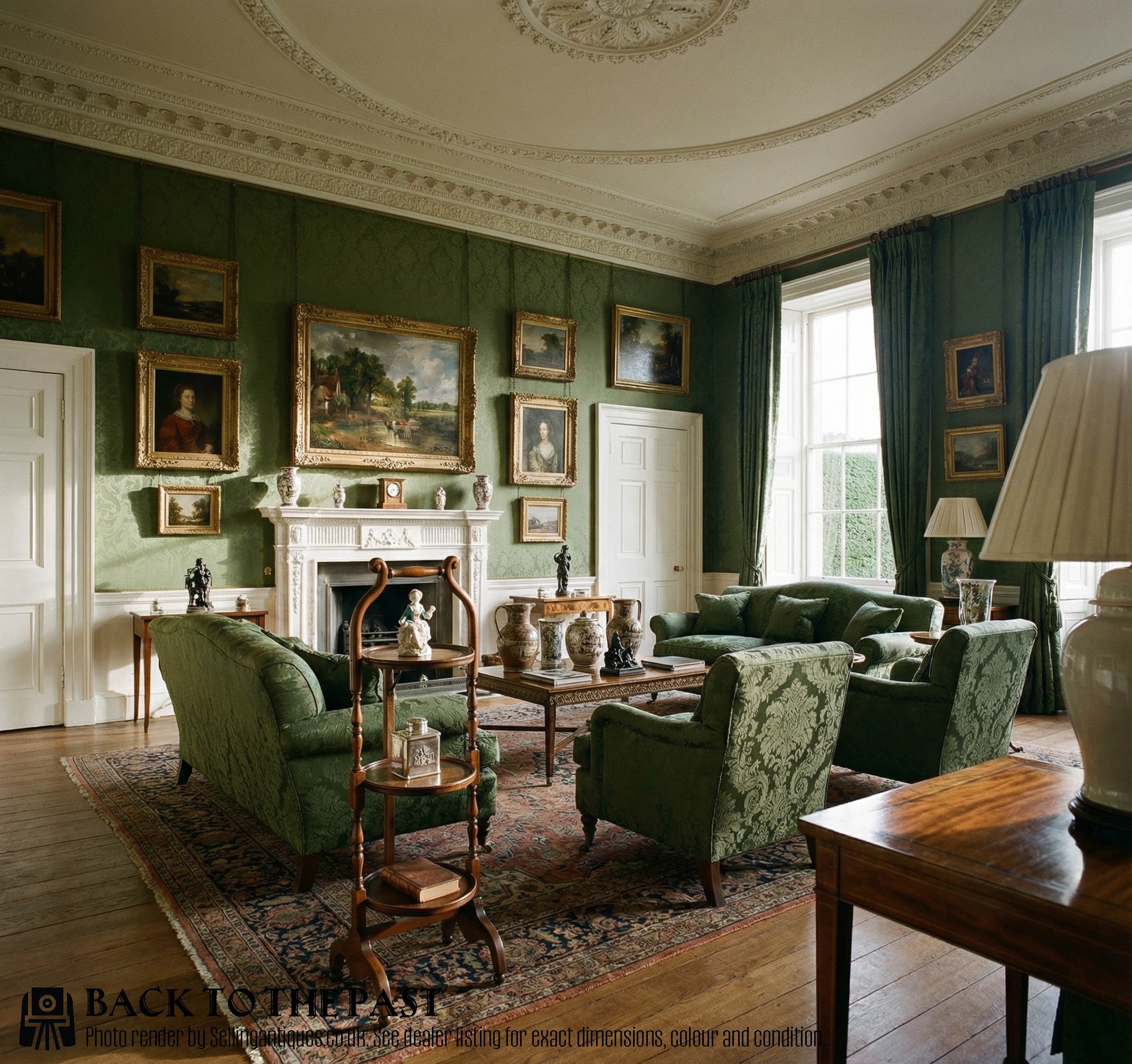
Inlaid Mahogany Cake Stand
An inlaid mahogany cake stand is a tiered furniture form primarily emerging from the Edwardian period. Buyers examining this search phrase encounter standing and folding versions designed to present multiple circular tiers.
Most pieces date from around 1900 to 1910, reflecting Edwardian and Sheraton Revival tastes. The three-tier configuration dominates the available forms, alongside occasional double variants and etageres functioning as side tables.
The primary structure relies on rich timber frameworks augmented by contrasting stringing and decorative motifs. These occasional pieces provide vertical display surfaces suitable for domestic spaces.
Materials and construction
Makers utilised solid and veneered mahogany as the primary structural timber for these items. This dark wood provides a sturdy foundation for both folding frames and fixed three-tier arrangements.
Satinwood and boxwood inlay decorate the surfaces, creating contrasting geometric or floral lines. Brass fittings often secure the folding mechanisms on pieces designed to collapse flat when not in use.
Inlaid Mahogany Cake Stand Retail Price Guide 2026
Typical asking prices for inlaid mahogany cake stand among the pieces listed under this phrase on Sellingantiques today, from the lower quarter to the upper quarter. They describe what is for sale here now, not the wider market.
Listings demonstrate that Edwardian makers produced these stands primarily in three-tier formats using mahogany combined with boxwood and satinwood inlay.
Assessing quality and execution
The precision of the satinwood and boxwood inlay work separates standard items from finer examples. Crisp lines and intricate contrasting details demonstrate greater skill from the cabinetmaker.
The integrity of the folding mechanism and the stability of the tiers dictate the overall utility of the stand. Superior pieces maintain balanced alignment across all levels whether stationary or collapsible.
The Inlaid Mahogany Cake Stand Glossary
- Edwardian
- Pertaining to the reign of King Edward VII from 1901 to 1910, though the style extends slightly either side. Furniture from this era often lighter in proportion than Victorian pieces.
- Sheraton Revival
- A late nineteenth and early twentieth century design movement inspired by the classical forms of Thomas Sheraton. This style frequently incorporates delicate inlay and refined mahogany frames.
- Inlay
- A technique where pieces of contrasting timber such as satinwood or boxwood are inserted into recesses within the mahogany surface to form decorative patterns.
- Etagere
- A piece of furniture consisting of a set of open shelves for displaying small objects. Circular versions with three tiers appear frequently in this category.
- Stringing
- A narrow strip of contrasting wood inlay used to outline panels, edges, or legs. It adds subtle linear definition to the mahogany surfaces.
Inlaid Mahogany Cake Stand: Frequently Asked Questions
What periods do these come from?
The pieces date predominantly from the Edwardian era, spanning the years around 1900 and 1910.
Craftsmen during this period favoured Sheraton Revival styles, incorporating delicate mahogany and contrasting inlay work.
Are they folding or fixed?
Many examples feature a folding mechanism designed to allow the tiers to collapse together for convenient storage.
Other variants remain as fixed standing structures with three circular tiers or etagere configurations.
What wood is used?
The primary timber is mahogany, selected for its rich grain and dependable structural strength.
Satinwood and boxwood are utilised specifically for the decorative inlay and contrasting stringing details.
How were they used?
These stands functioned as occasional furniture pieces intended for serving or displaying items during social gatherings.
The multiple tiers provided vertical space for cakes or tea service within domestic interiors.
What is a Sandringham School piece?
Certain items bear attribution to the Sandringham School, representing specific regional workshop production from the Edwardian period.
These pieces share the characteristic mahogany construction and inlaid detailing found across the wider category.