




Folding Afternoon Tea Stand
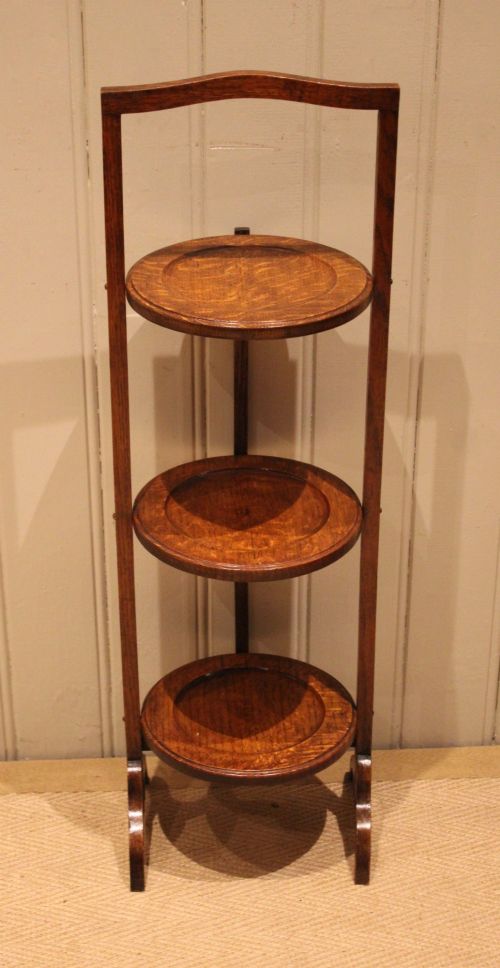
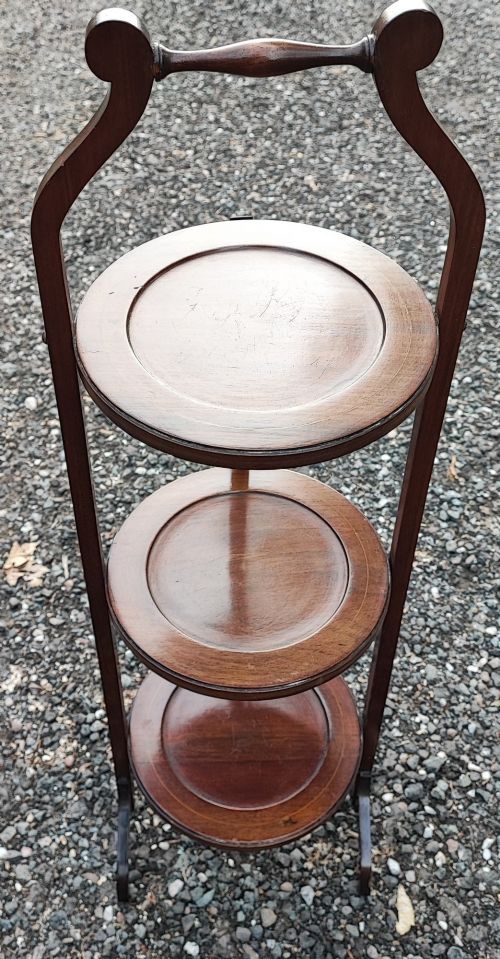
A folding afternoon tea stand is a tiered wooden helper for serving cakes, appearing most frequently in Edwardian mahogany forms.
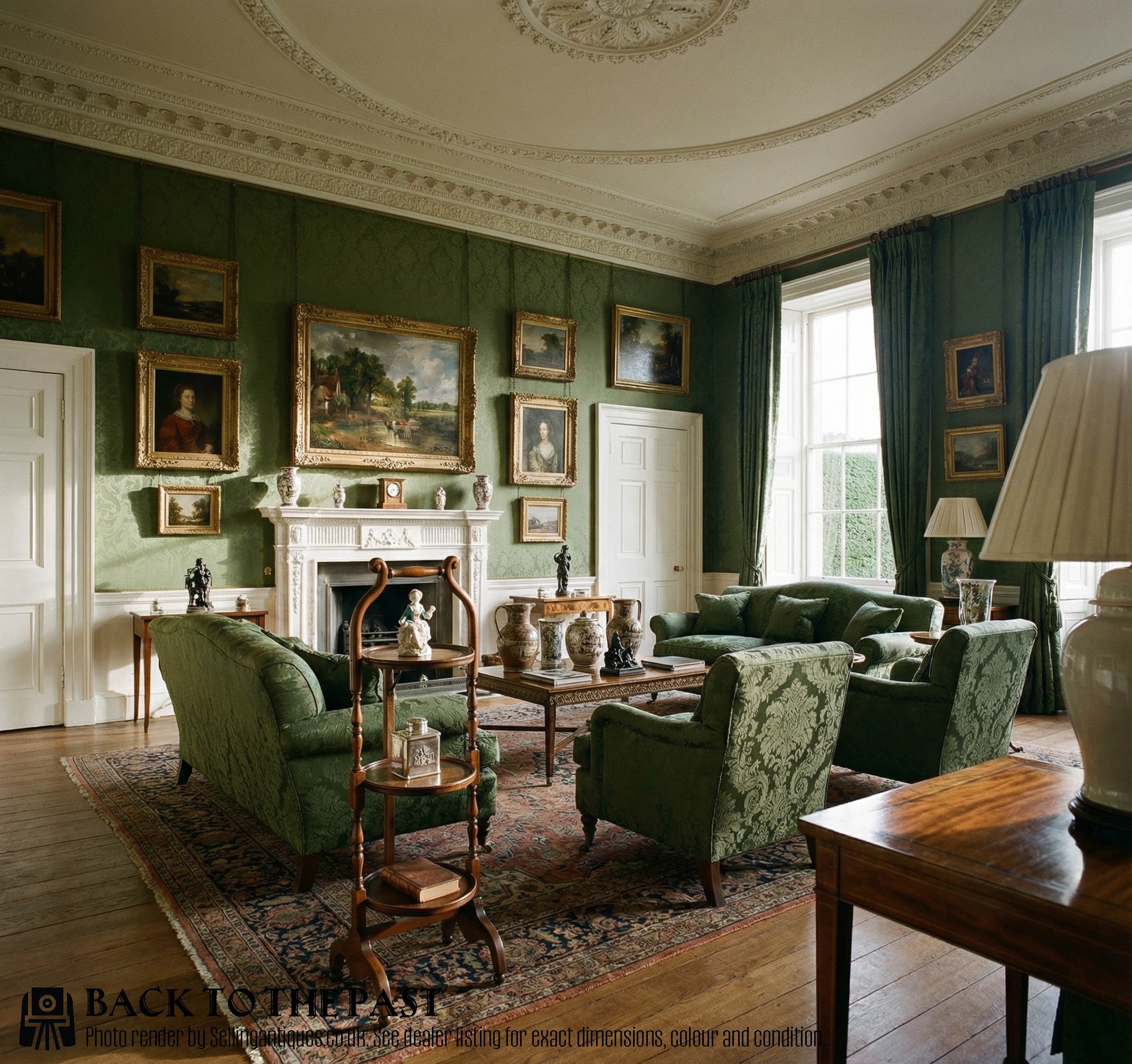
Folding Afternoon Tea Stand
When you search for a folding afternoon tea stand, you are looking at practical furniture designed for formal hospitality and domestic use. These pieces provide multiple tiers to hold cakes and small dishes while collapsing neatly when not needed.
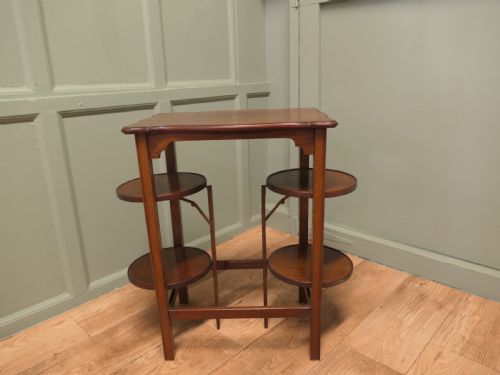
The versions you are most likely to meet on this page belong to the Edwardian era, spanning the early decades of the twentieth century. They appear primarily as mahogany or oak tiered stands, often featuring folding mechanisms and occasional inlaid decoration.
Makers produced these stands in various configurations, including three-tier and four-tier models, alongside campaign style variants. They function as both side tables and dedicated cake stands within the domestic interior.
How they were made
Wood selection defined the construction, with mahogany, oak, and rosewood forming the primary structural bodies. Cabinetmakers frequently incorporated boxwood stringing and satinwood inlay to decorate the surfaces of these tiered stands.
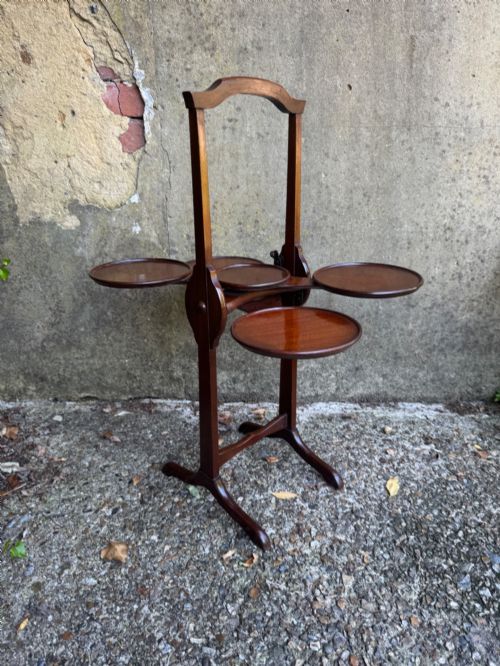
Hardware played an essential role in the folding action, utilising brass hinges and iron mechanisms to allow the tiers to collapse smoothly. Felt elements occasionally protected the resting surfaces where the tiers met during use.
Folding Afternoon Tea Stand Retail Price Guide 2026
Typical asking prices for folding afternoon tea stand among the pieces listed under this phrase on Sellingantiques today, from the lower quarter to the upper quarter. They describe what is for sale here now, not the wider market.
Materials across these listings include mahogany, oak, rosewood, brass, iron, felt, boxwood, and satinwood.
What varies in quality
Quality rests in the precision of the timber and the refinement of the inlay work. Solid oak and figured mahogany demonstrate a higher grade of manufacture than simpler utility pieces.
The integrity of the folding mechanism separates better examples from standard production. Smooth pivoting action and tight joints indicate superior cabinetmaking.
The Folding Afternoon Tea Stand Glossary
- Edwardian
- Pertaining to the reign of King Edward VII, spanning the early twentieth century. Pieces from this period often display lighter proportions and refined inlay.
- Sheraton Revival
- A late nineteenth and early twentieth century style drawing inspiration from the neoclassical designs of Thomas Sheraton. It relies on satinwood veneer and delicate stringing.
- Campaign style
- Furniture designed for easy transport and folding storage. These items feature robust hinges and practical folding frames.
- Tiered stand
- Furniture constructed with multiple levels rising vertically. This format maximises display space for small items while maintaining a small footprint.
Folding Afternoon Tea Stand: Frequently Asked Questions
What is a folding afternoon tea stand?
A folding afternoon tea stand is a tiered wooden furniture piece designed to hold cakes and small dishes during afternoon tea. It collapses flat for easy storage when entertaining concludes.
The form became particularly popular during the Edwardian period, utilising woods like mahogany and oak to provide practical surface space in the drawing room.
How were these stands used?
These stands served domestic households during formal afternoon tea gatherings by holding tiered plates of cakes and pastries. They kept refreshments accessible without cluttering the main seating area.
When tea service finished, hosts folded the stands and stored them away until the next social occasion required them.
What woods were used for these stands?
Cabinetmakers constructed these pieces primarily in mahogany and solid oak, with occasional examples in rosewood. Satinwood and boxwood appeared frequently as decorative inlay details.
Brass and iron hardware supported the folding mechanisms that allowed the tiers to collapse neatly.
How do I identify an Edwardian tea stand?
Edwardian stands typically display lighter timber tones, slender uprights, and refined Sheraton Revival influences. Inlaid satinwood stringing often decorates the mahogany tiers.
Construction dates cluster around the early nineteen hundreds, reflecting the domestic habits of the Edwardian era.