
Vintage Wooden Tier Stand
These vintage wooden tier stand selections bring tiered display and tiered storage into domestic spaces through stacked tiers of timber.
Vintage Wooden Tier Stand
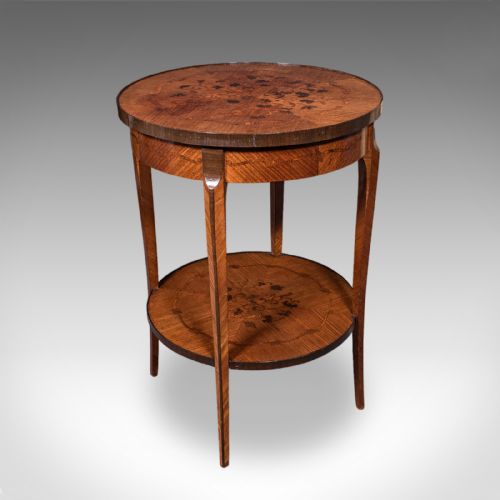
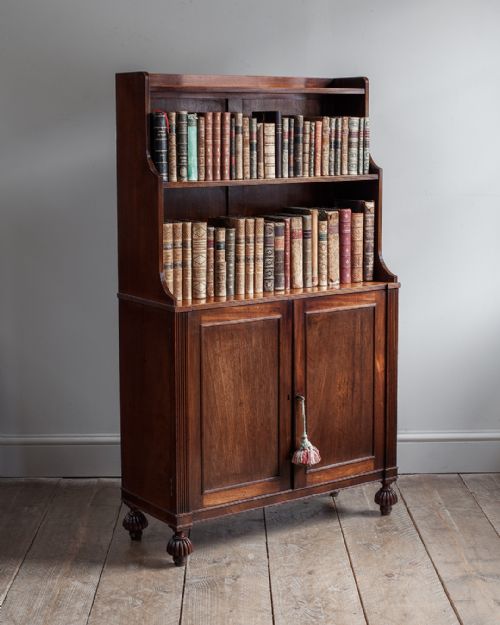
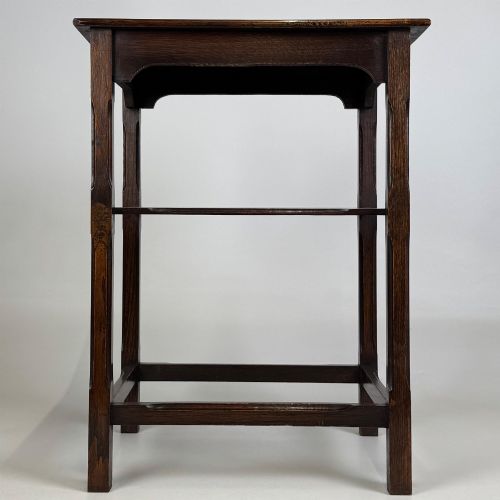
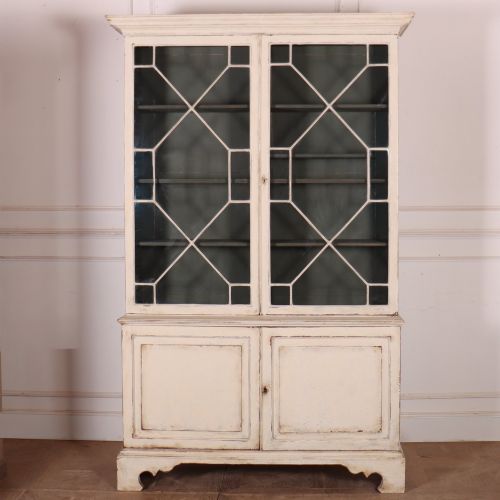
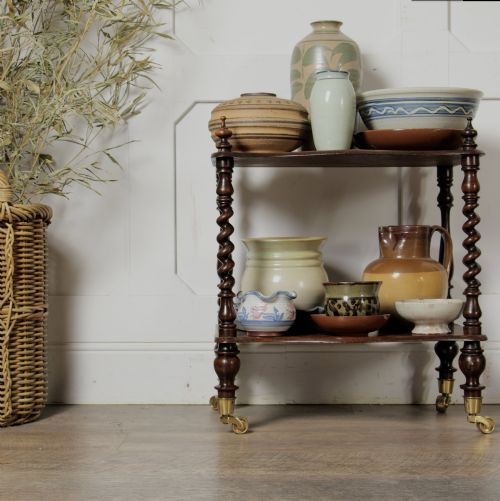
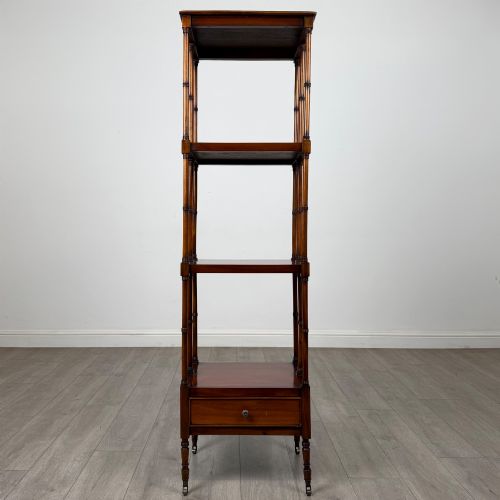
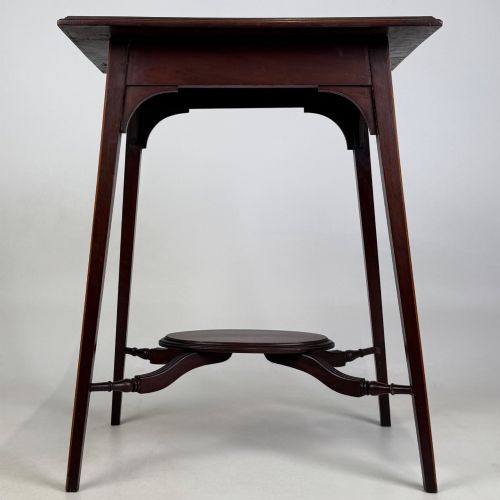
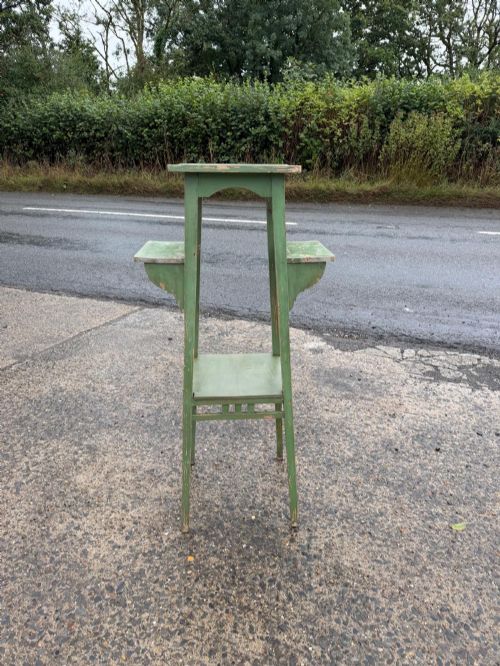
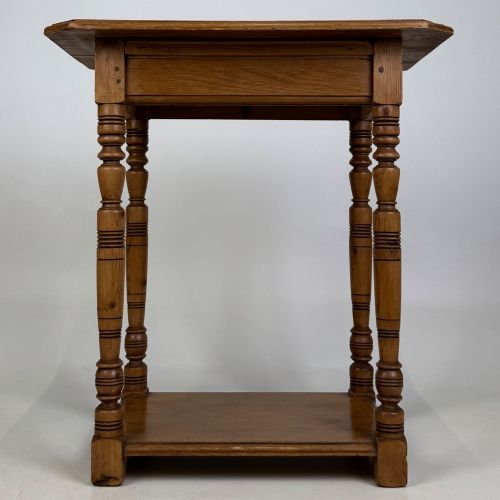
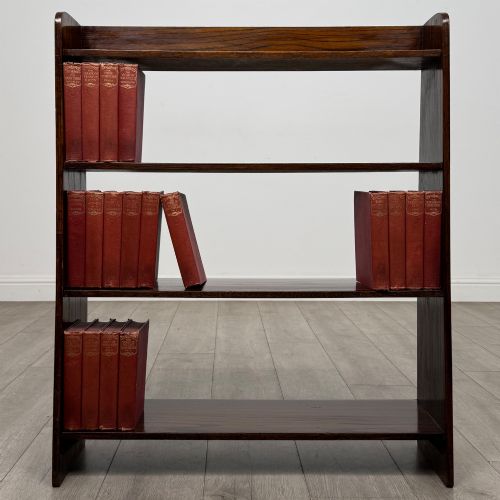
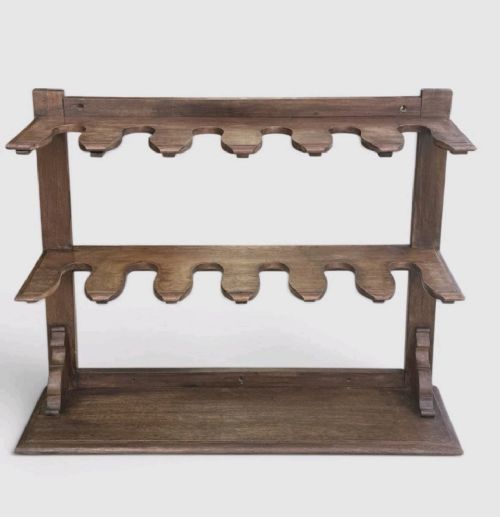
A vintage wooden tier stand is a multi-level piece of furniture designed for display, storage, or utility across rooms. These pieces include cake stands, plant stands, whatnots, bookcases, and side tables that utilise vertical space through stacked platforms.
The selections span periods from the Georgian era through the Victorian period, the Edwardian years, and into the 1920s and 1930s. Edwardian and Victorian examples dominate the available forms, often taking the shape of oak or mahogany cake stands, tiered whatnots, and multi-shelf bookcases.
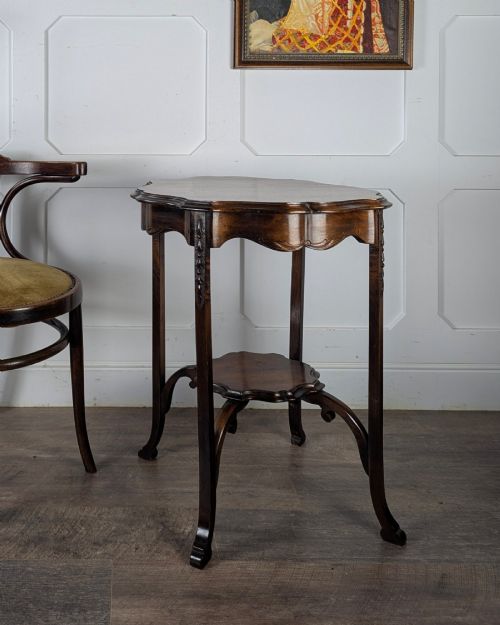
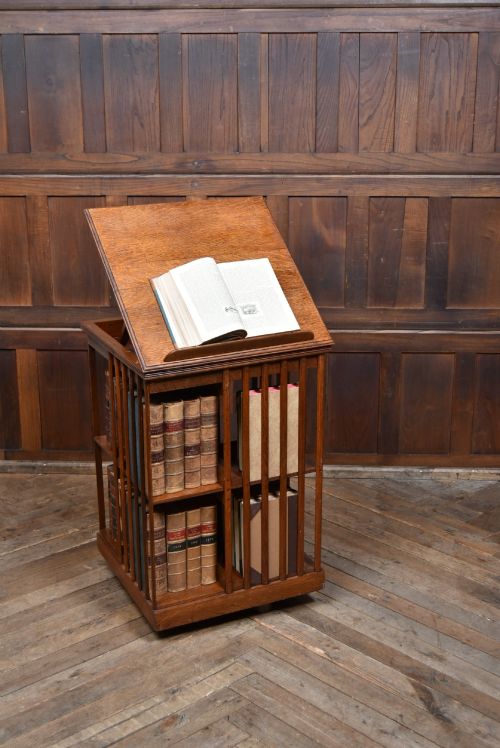
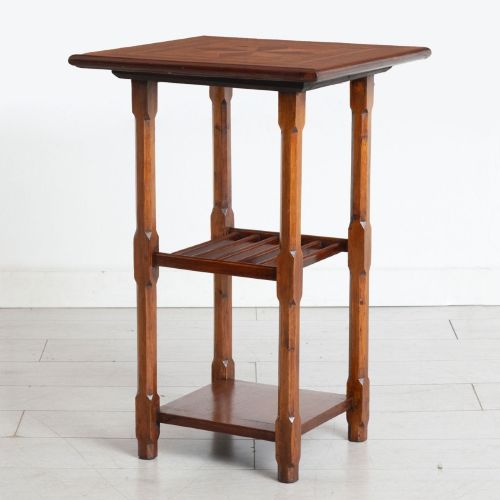
Forms range from folding cake stands and revolving bookcases to plant stands, bedside tables, and occasional tables with multiple surfaces. Buyers encounter tiered arrangements intended to hold books, plants, porcelain, or magazines within domestic interiors.
Materials and construction
Makers built these stands primarily in solid timber and veneers, choosing mahogany, oak, and walnut, along with burr walnut and kingwood. Brass hardware, iron supports, glass panels, and inlaid details frequently complement the wooden structures.
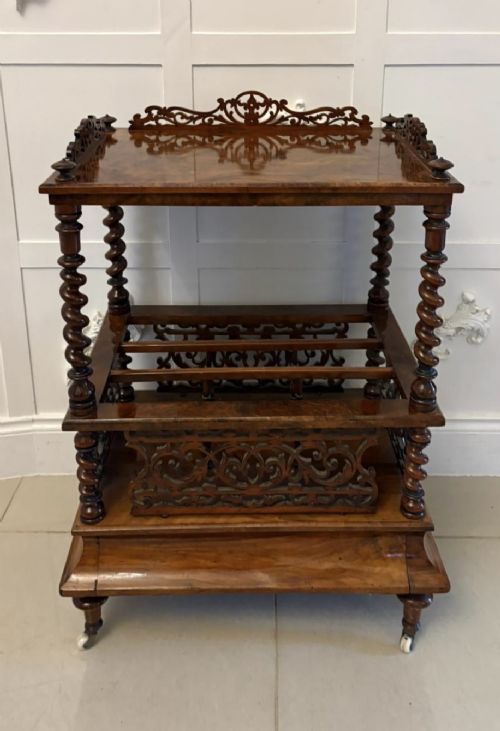
Construction techniques combine traditional joinery with turned elements, barley twist supports, and original paint finishes. Folding mechanisms appear on specific cake stands, while stationary pieces rely on rigid multi-tier framing and secured shelves.
The documented forms span across Edwardian, Victorian, Georgian, and Regency revival styles, covering cake stands, whatnots, bookcases, and plant stands.
Factors that separate grades of quality
Quality rests on the selection of timber figures, such as burr walnut or figured mahogany, and the precision of inlaid decorative motifs. Superior examples exhibit refined turning, balanced proportions between the tiers, and robust structural joints.
The integrity of original surfaces, including aged paint, polished wood grains, and patinated brass or iron components, distinguishes finer pieces from ordinary utility items. Construction depth, such as cleanly cut dovetails and stable tiered platforms, defines the upper tier of craftsmanship.
The Vintage Wooden Tier Stand Glossary
- Cake Stand
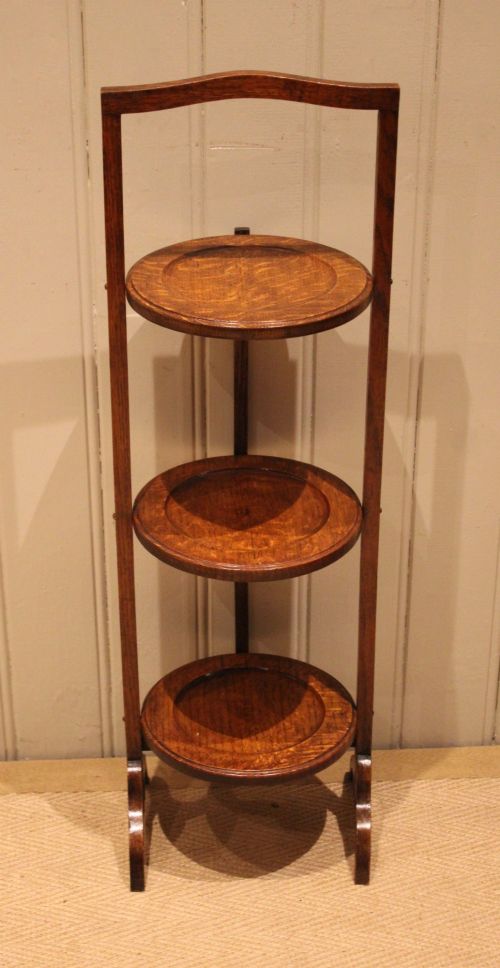
- A folding or fixed multi-tiered wooden frame used traditionally for serving afternoon tea cakes. Edwardian examples often include inlaid details.
- Torchere
- A tall wooden stand intended to support a lamp or candle. These pieces utilise slender vertical shafts and small top platforms.
- Barley Twist
- A carved wooden support shaped in a continuous spiral twist. This decorative turning technique appears frequently on Victorian stands.
- Etagere
- A French style of open furniture with multiple tiers for display. These stands utilise turned legs and decorative wooden framework.
Vintage Wooden Tier Stand: Frequently Asked Questions
What is a vintage wooden tier stand used for?
These pieces serve multiple functions in a room, acting as display surfaces for plants, books, or decorative objects. Their stacked shelves make them practical for organising items in smaller spaces without taking up extensive floor area.
Different formats suit different rooms, from bedside tables and magazine racks to corner whatnots and folding tea stands. They provide accessible storage while adding vertical architectural interest to an interior.
How do I date an Edwardian tier stand?
Edwardian tier stands typically date between 1901 and 1910, reflecting the stylistic transition from heavy Victorian forms to lighter domestic furniture. Look for characteristic Edwardian materials such as light oak, inlaid mahogany, and simple arts and crafts influences.
Construction methods also help identify the era, as early twentieth-century workshops balanced machine-cut efficiency with hand-finished decorative inlays. Labels, registration marks, or specific hardware styles can occasionally narrow the production date further.
What is the difference between a whatnot and a cake stand?
A whatnot is a sturdy multi-tiered shelving unit designed primarily for permanent display of ornaments, books, or collections. They often feature three or four fixed wooden tiers supported by turned columns.
A cake stand is a lighter piece, frequently engineered with a folding mechanism for compact storage when not in use. These stands were traditionally deployed for tea service and feature smaller platform surfaces.
How should I care for a mahogany tier stand?
Protect mahogany tier stands by keeping them away from direct sunlight and extreme temperature fluctuations that can dry out the timber. Dust the multiple tiers regularly with a soft, dry cloth to prevent dirt accumulation on carved or inlaid surfaces.
Occasional application of appropriate furniture wax maintains the polished finish and nourishes the wood grain. Avoid placing damp items directly onto antique wood surfaces to prevent water rings.