




Folding Cake Stand
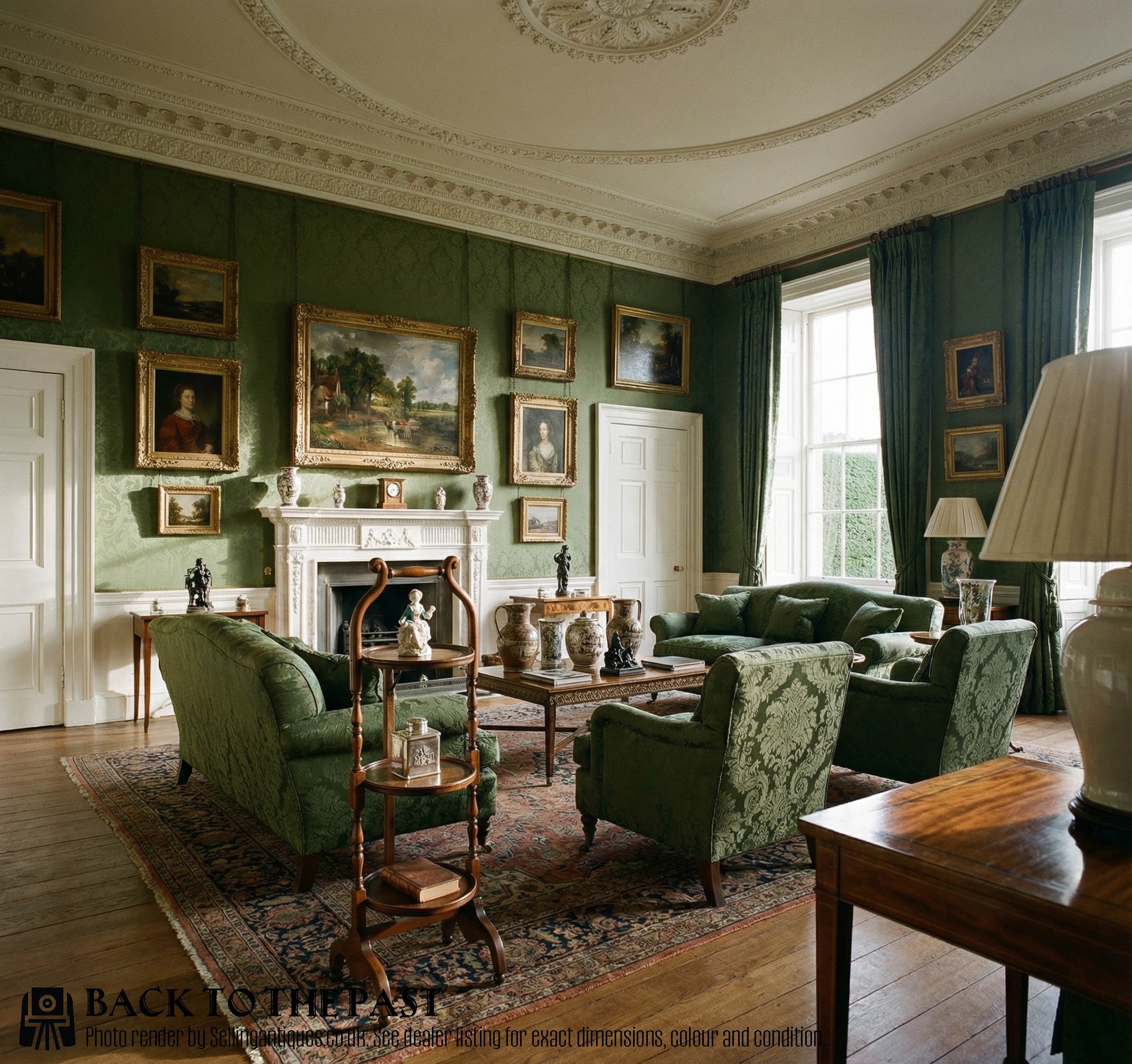
A folding cake stand offers practical tiers for afternoon tea that collapse neatly away when not in use.
Folding Cake Stand
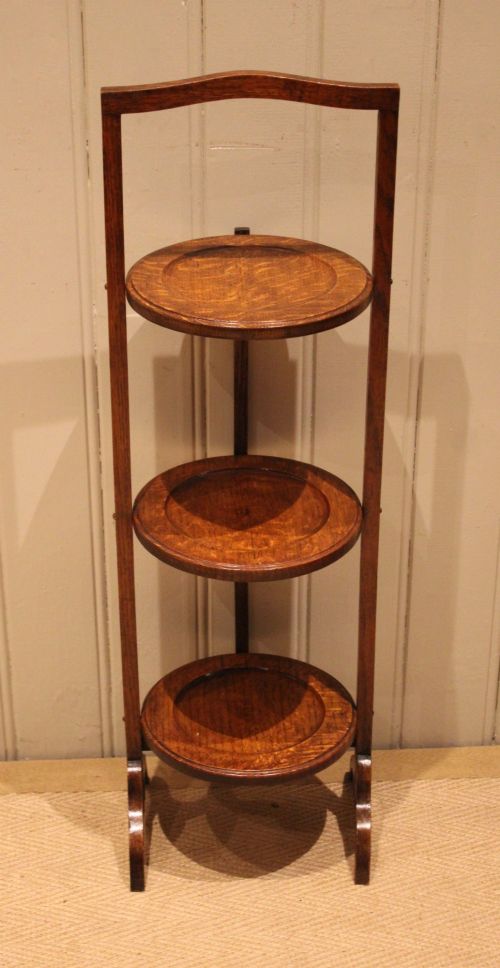
A folding cake stand is a tiered or collapsible piece designed for serving afternoon tea or displaying light refreshments. The examples found here span from the Georgian period through to the Edwardian era, with significant representation from the early twentieth century. Buyers seeking this phrase will primarily encounter multi-tiered wooden frames built to fold flat for storage.
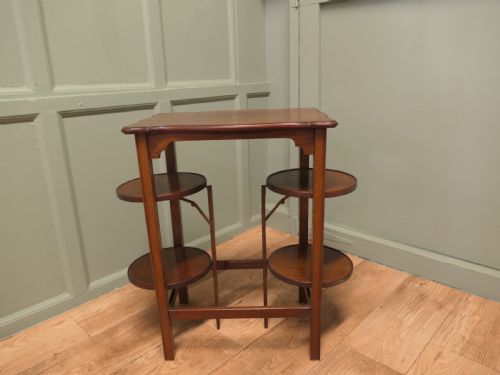
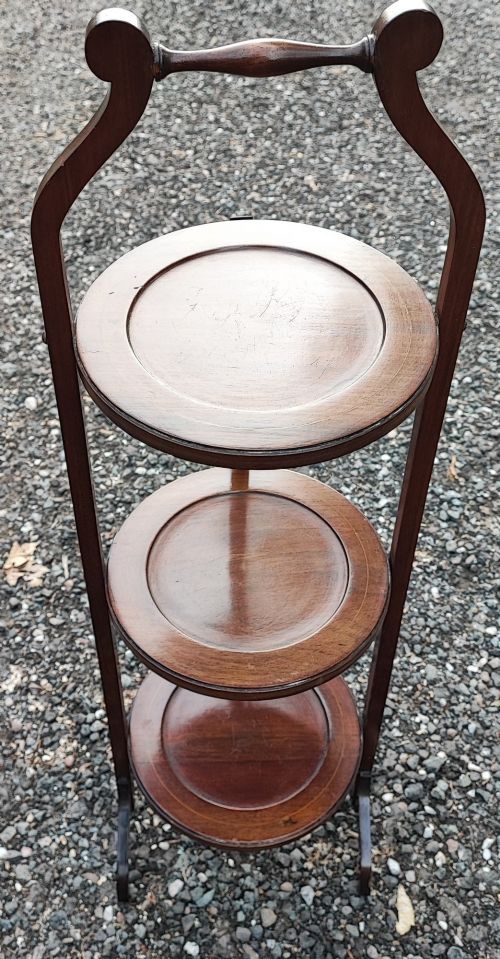
The most common formats on this page are three-tier mahogany and oak stands dating from the Edwardian period. Alongside these upright tiered serving pieces, the evidence shows campaign style tables, swivel designs, and occasional side pieces. Walnut, rosewood, and satinwood also appear, sometimes enhanced with inlay or lacquer work.
Materials and construction
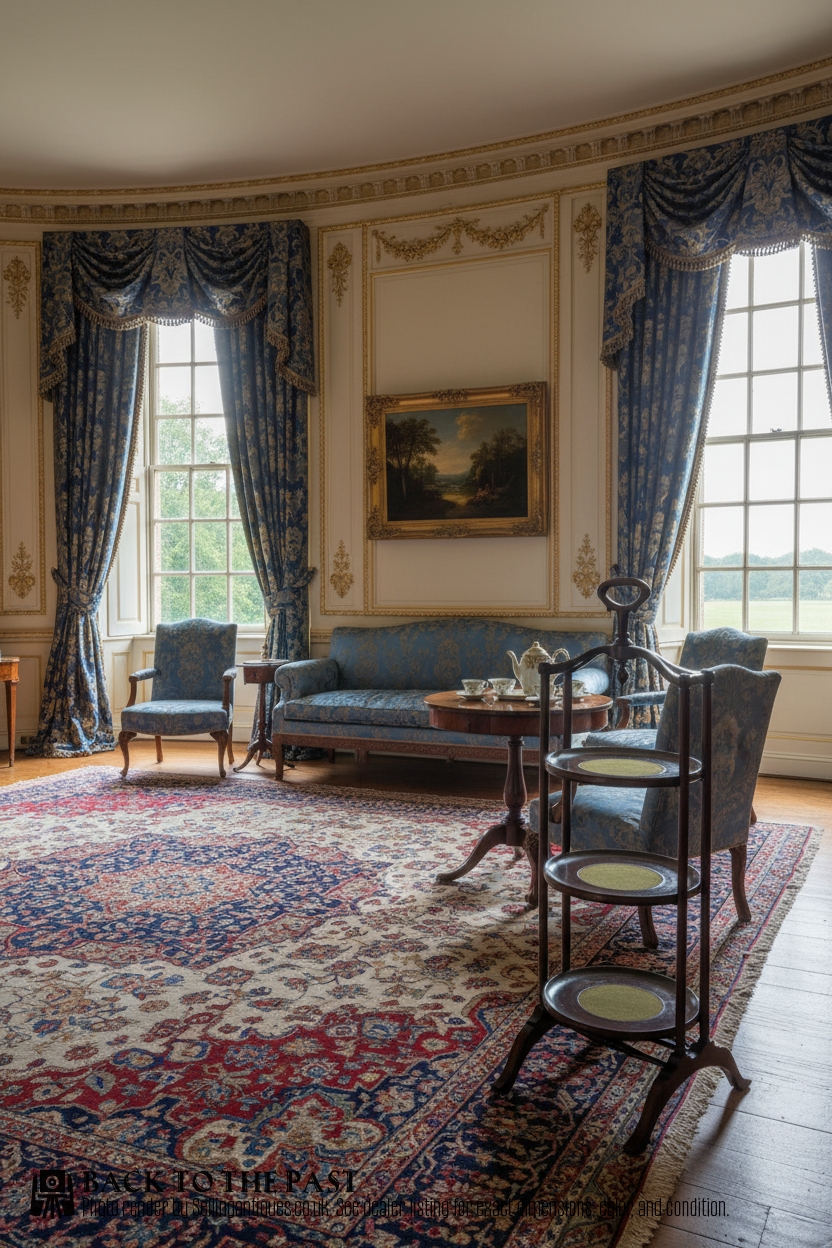
Makers relied heavily on solid hardwoods like mahogany and oak, supplemented by decorative veneers such as rosewood, satinwood, and walnut. Brass hinges and folding mechanisms allowed the tiers to articulate smoothly without losing structural rigidity. Boxwood stringing and contrasting inlay frequently highlighted the edges of mahogany and satinwood trays.
Joinery had to balance lightness with the strength needed to hold multiple trays during tea service. Clever pivoting arms or scissor actions enabled the frames to collapse into a slim profile. Surface finishes typically involved French polish or dark lacquer, protecting the timber while emphasising the natural grain.
Folding Cake Stand Retail Price Guide 2026
Typical asking prices for folding cake stand among the pieces listed under this phrase on Sellingantiques today, from the lower quarter to the upper quarter. They describe what is for sale here now, not the wider market.
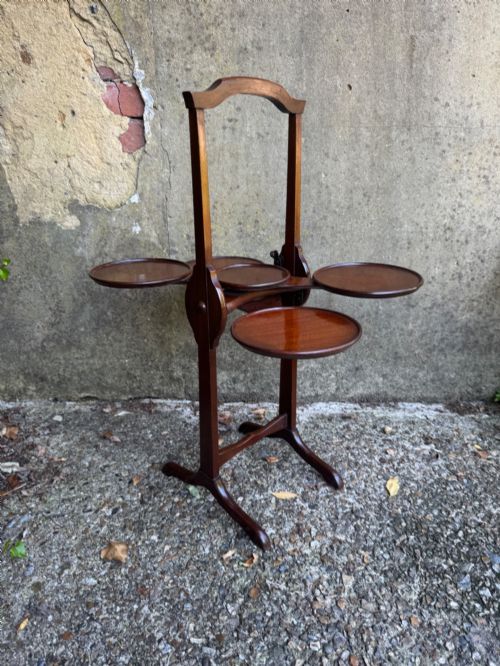
Several stands adopt an aviation theme, using monoplane-style pivoting arms that make tea trays swing out like early aircraft wings.
Assessing quality and execution
Quality rests in the precision of the folding mechanism and the stability of the tiers when fully extended. Finer examples maintain an even balance across all levels without excessive wobble in the hinges. The choice of timber also distinguishes standard production from more ambitious work, particularly where figured mahogany or delicate marquetry is employed.
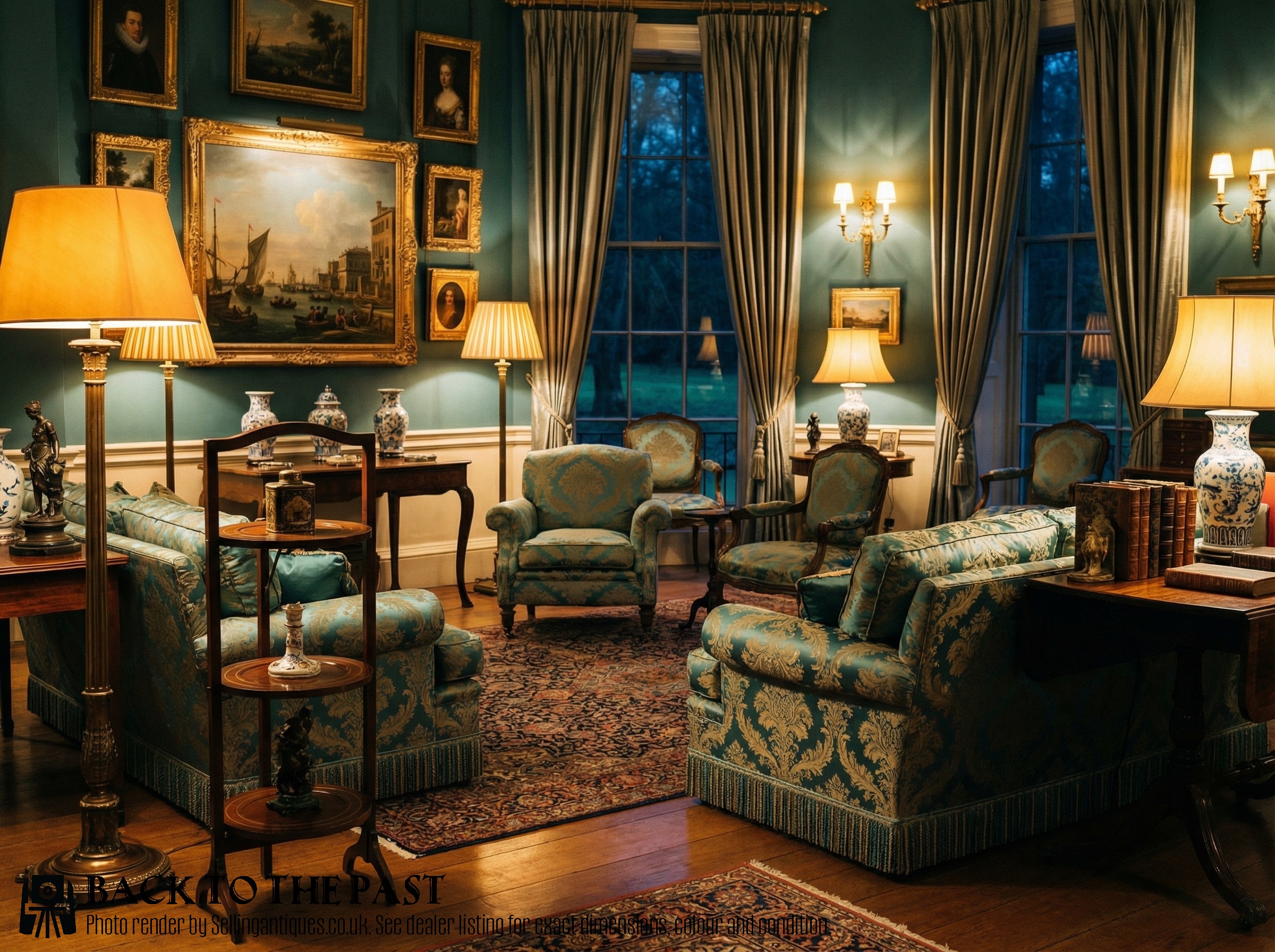
Attention to detail in the edge moulding, inlay work, and brass hardware separates utilitarian pieces from finer parlor accessories. Well-executed turned supports and clean joinery indicate superior craftsmanship during manufacture. Pieces that retain a crisp folding action alongside rich timber patination represent the upper tier of this category.
Fyne Ladye
The Folding Cake Stand Glossary
- Tazza
- A shallow bowl or flat-topped plate raised on a central foot or pedestal. These serving vessels appear in glass and metal across earlier periods.
- Inlay
- A technique where pieces of contrasting wood, shell, or metal are inserted into a recessed surface to form a pattern. Satinwood and boxwood are frequently used for this purpose.
- Dumbwaiter
- A multi-tiered serving table designed to hold food or tableware without the need for constant attendants. Georgian examples provide a precursor to later tiered stands.
- Monoplane
- A specific style of folding stand featuring pivoting arms reminiscent of early aircraft wings. This design allows the tiers to swing outwards from a central upright.
- Chinoiserie
- European imitation and adaptation of Chinese artistic styles and motifs. Pieces decorated in this manner often feature hand-painted black lacquer finishes.
Folding Cake Stand: Frequently Asked Questions
How do folding cake stands work?
These stands utilise hinged frames, pivoting arms, or scissor mechanisms that allow the individual shelves or tiers to collapse inward. This engineering lets the entire structure fold flat for compact storage when tea service concludes.
The clever pivoting design ensures the trays remain level when open while folding into a remarkably slim profile for transport or storage in a cupboard.
What woods were used for cake stands?
Makers predominantly selected durable hardwoods such as mahogany and oak for their structural strength and reliable performance under daily use. Walnut and rosewood also appear frequently, often chosen for their rich grain patterns.
Finer decorative examples incorporate contrasting timbers like satinwood and boxwood for inlaid borders, while specialised pieces feature black lacquer surfaces.
How do I style a cake stand at home?
A folding cake stand provides versatile display space beyond traditional afternoon tea service. Many people use them in living areas or kitchens to hold small plants, books, or decorative ceramics.
Because the piece folds away easily, you can position it out when entertaining guests and collapse it to free up floor space during normal daily routines.
How do I date an Edwardian cake stand?
Edwardian pieces, dating from roughly the start of the twentieth century up to the First World War, often feature lighter mahogany frames with subtle inlaid stringing. They frequently employ three tiers and reflect the era's taste for elegant, practical household furniture.
Comparing the hardware, timber finish, and decorative motifs like Sheraton Revival influences helps distinguish these Edwardian items from heavier Victorian predecessors or later reproductions.