



Folding Muffin Stand
These folding muffin stand selections offer tiered surfaces designed for serving, folding neatly when not in use for simple storage.
Folding Muffin Stand
When buyers search for a folding muffin stand, they find tiered wooden stands intended for domestic service and tea displays. The selection on this page centres on Edwardian examples and pieces from around nineteen hundred, alongside items spanning the nineteenth century up to nineteen twenty.
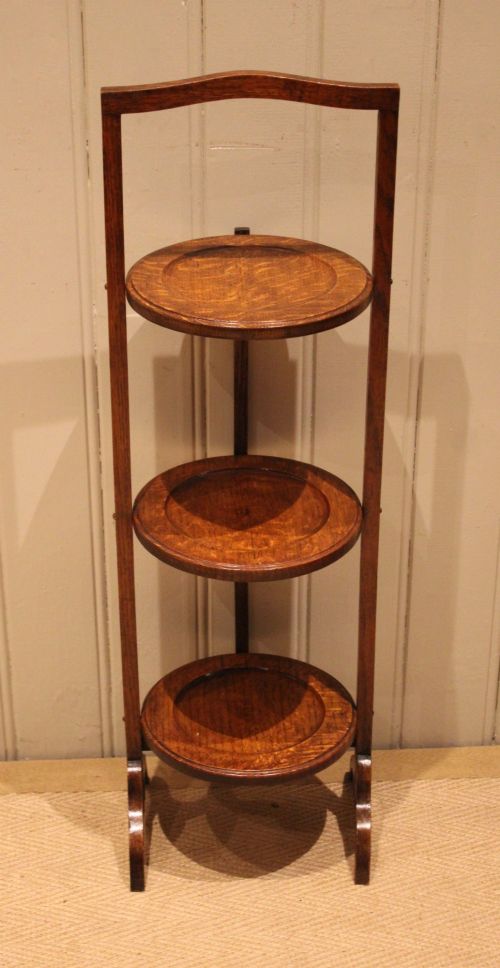
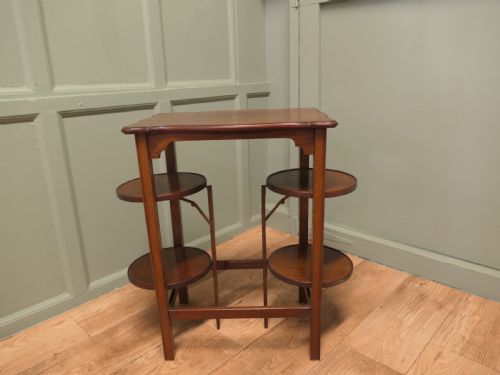
Most entries take the form of cake stands or tiered stands with folding frames. Common configurations include three-tier designs and four-tier standing formats suited to compact spaces.
Materials and construction methods
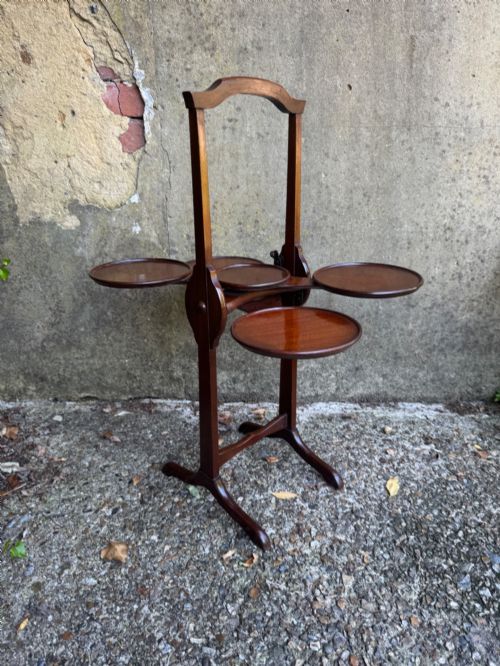
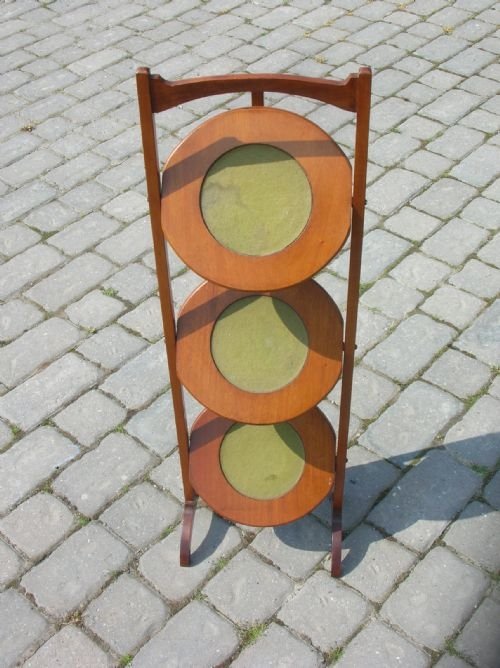
Makers utilised timber varieties including mahogany, oak, walnut, and satinwood to construct the frames and tiers. Additional components incorporate brass fittings and metal mechanisms to enable the folding action, sometimes supplemented by felt linings.
Woodworking techniques focused on stable multi-tier joints and hinged structures that allow the stands to collapse flat. Surfaces display polished timber grains characteristic of the period without superfluous ornamentation.
Folding Muffin Stand Retail Price Guide 2026
Typical asking prices for folding muffin stand among the pieces listed under this phrase on Sellingantiques today, from the lower quarter to the upper quarter. They describe what is for sale here now, not the wider market.
Some stands fold down so flat they can hide behind a grandfather clock.
Distinctions in quality
Quality differences emerge in the choice of timber and the precision of the folding mechanism. Finer pieces employ figured mahogany, walnut, or satinwood with robust brass hardware that operates smoothly.
Simpler constructions rely on plain oak or basic wood types with standard metal fixtures. The tightness of the joints and the uniformity of the tier levels distinguish superior examples from standard utility pieces.
The Folding Muffin Stand Glossary
- Edwardian
- Pertaining to the reign of King Edward VII from nineteen hundred to nineteen ten, noted in these listings for specific oak and mahogany furniture styles. Pieces from this era often feature clean lines and light timber tones.
- Tiered stand
- A piece of furniture consisting of multiple levels arranged vertically to display items. These structures maximise surface area while maintaining a small footprint on the floor.
- Folding frame
- A hinged structural assembly that allows the furniture to collapse into a flat profile. This design facilitates straightforward storage and transport.
- Satinwood
- A durable hardwood with a lustrous, golden-yellow sheen used for fine furniture details. It provides a bright contrast to darker timbers like mahogany.
Folding Muffin Stand: Frequently Asked Questions
How do folding muffin stand pieces function?
These pieces use hinged wooden frames that support multiple circular or shaped tiers for holding items during tea service. The entire structure collapses inward so it can slide easily into a narrow gap beside a cabinet.
Such functionality made them popular in Edwardian homes where flexible room layouts mattered. Users could set them up quickly when guests arrived and pack them away just as fast.
What woods are typical for these stands?
Mahogany and oak dominate the listings, alongside occasional examples in walnut and satinwood. These timbers provided the necessary strength to support multiple tiers without bowing under weight.
Darker mahogany often appears with a polished finish, while oak displays a more prominent grain texture. Brass and metal hinges connect the folding wooden supports securely.
How many tiers do these stands have?
Most examples featured in the listings provide three tiers arranged vertically above one another. Four-tier versions also appear, offering additional display surfaces within the same floor space.
Each level steps upward, creating a stepped profile that keeps every tier accessible. The graduated sizing helps balance the weight distribution when the stand is open.
How do I date an Edwardian stand?
Dating relies on stylistic markers typical of the nineteen hundreds, alongside timber selection and hardware construction. Edwardian pieces frequently combine lighter oak or mahogany with simple, unadorned folding mechanisms.
Comparison with nineteenth-century examples shows a shift toward lighter proportions and simpler framing during the Edwardian decades. The presence of specific brass joints often aligns with manufacturing standards of that period.