




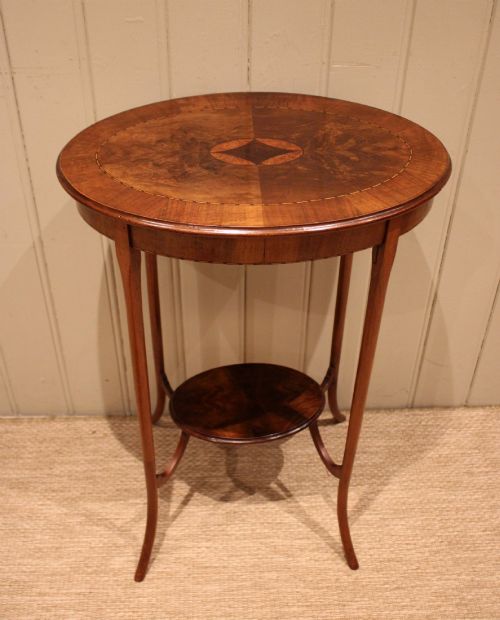
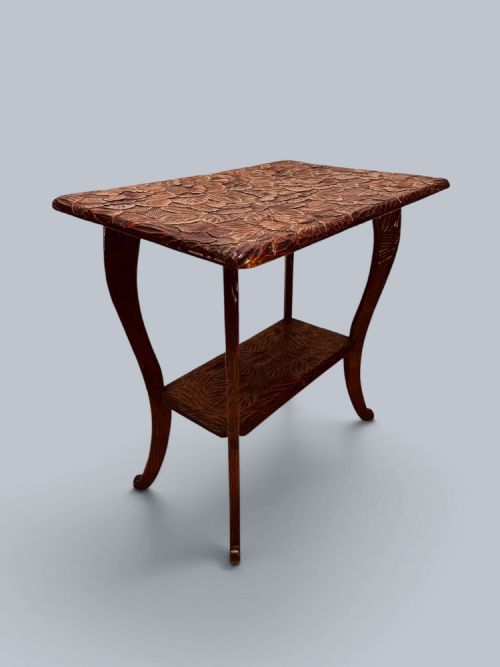

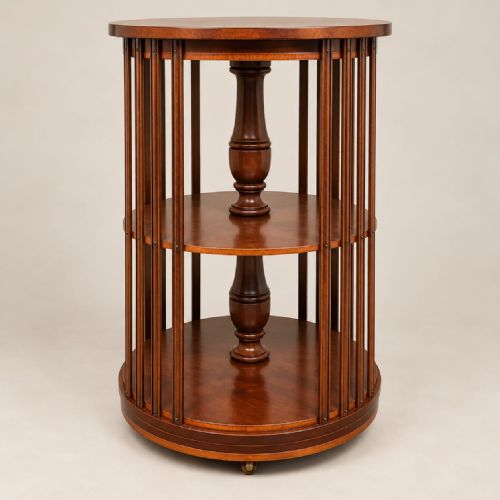
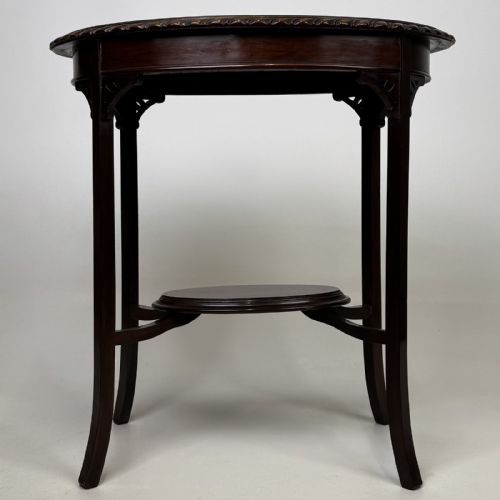
Edwardian Tier Stand
An edwardian tier stand brings tiered elegance and practical display space to a room, offering multiple surfaces in a compact footprint.
Materials and Technique
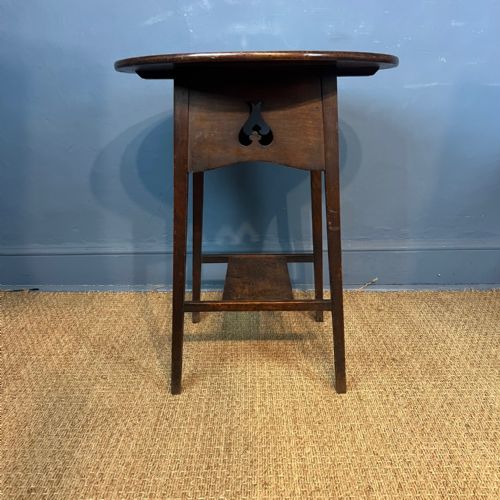
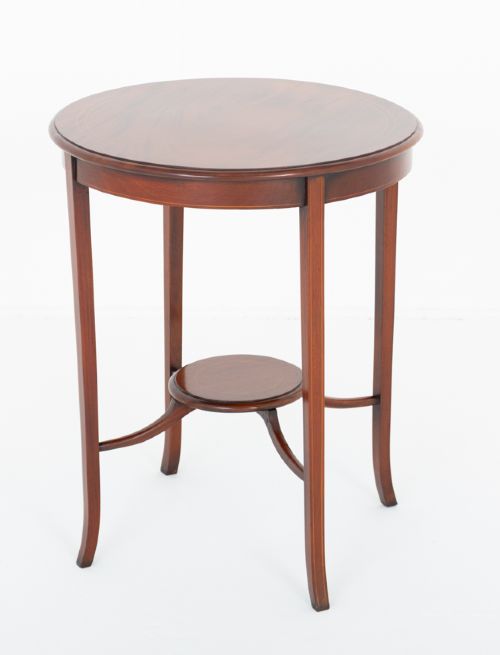
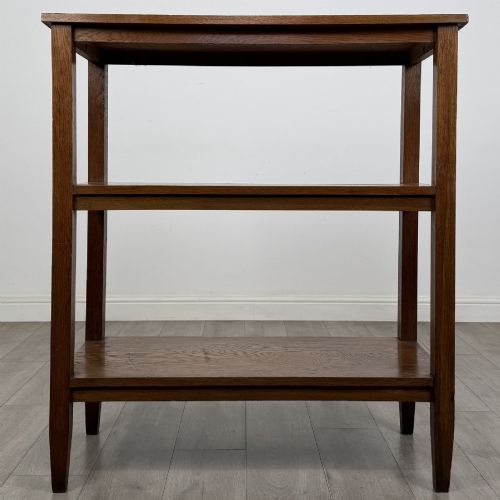
Cabinetmakers utilised predominantly timber constructions, with solid and veneered mahogany, oak, and rosewood forming the structural framework of these multi-level pieces.
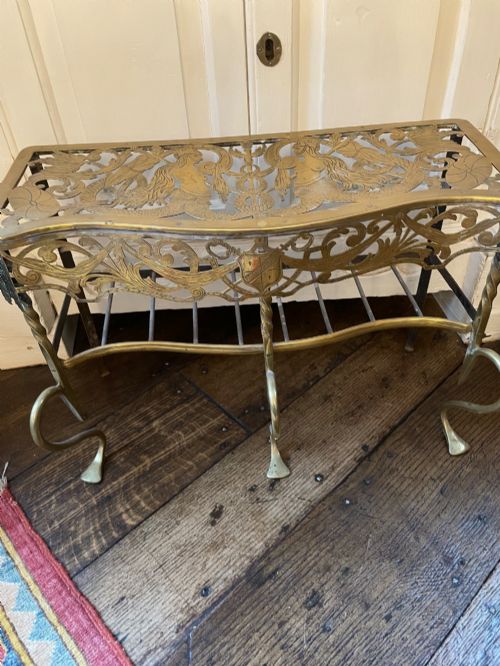
Decorative elements frequently include boxwood inlay, contrasting wood veneers, brass fittings, and occasional painted surfaces or carved detailing.
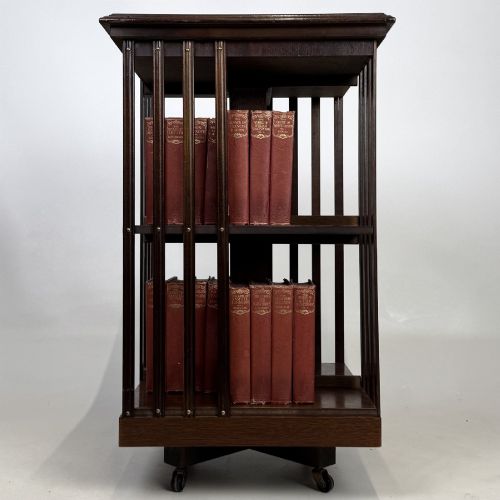
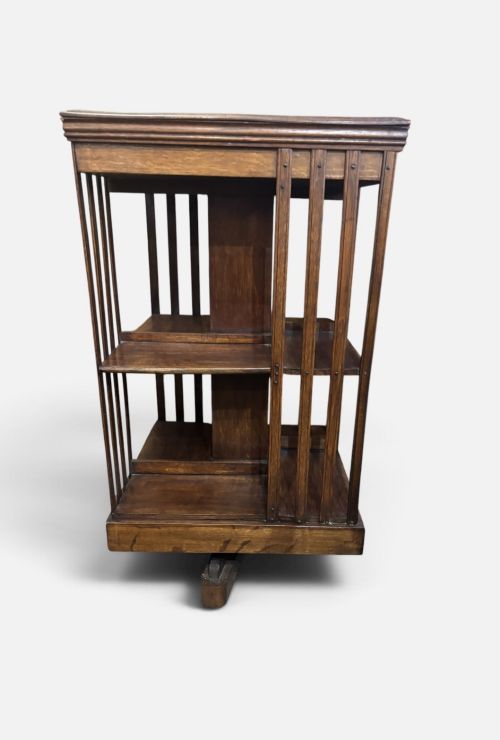
Folding mechanisms and revolving actions were engineered into specific tiered designs to provide functional versatility alongside static display surfaces.
Craftsmanship and Proportion
Quality reveals itself in the crispness of inlaid banding, the stability of vertical tiers, and the choice of timber figuring across the shelves.
Finer examples maintain balanced proportions and smooth operational mechanics, such as folding hinges or rotating pivots that function without binding.
Edwardian Tier Stand Retail Price Guide 2026
Typical asking prices for edwardian tier stand among the pieces listed under this phrase on Sellingantiques today, from the lower quarter to the upper quarter. They describe what is for sale here now, not the wider market.
Some ingenious cake stands come with metamorphic firescreens or loose trays, ensuring afternoon tea doubles as emergency room decor.
The Edwardian Tier Stand Glossary
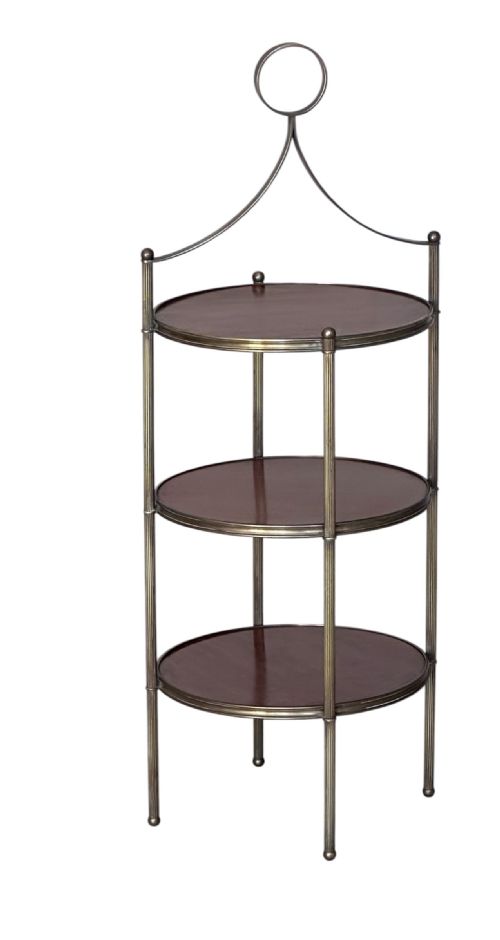
- Tier stand
- A piece of furniture featuring multiple horizontal surfaces arranged vertically to hold items such as cakes, plants, or books.
- Inlay
- A decorative technique where contrasting strips of wood, such as boxwood, are embedded flush into the primary timber surface.
- Cake stand
- A specific multi-tiered stand originally utilised for serving afternoon tea, often designed with folding shelves for storage.
- Plant stand
- A tall, single or multi-level support designed to elevate jardinieres or floral displays.
- Revolving bookcase
- A rotating tiered bookcase allowing access to books from multiple angles in a compact footprint.
Edwardian Tier Stand: Frequently Asked Questions
What is an edwardian tier stand used for?
These versatile pieces were originally created for serving afternoon tea, displaying potted plants, or organising books and ornaments in drawing rooms.
Today, they function well in modern interiors as compact display units or bedside surfaces that maximise vertical space.
How do I identify an Edwardian piece?
Edwardian furniture generally dates from the reign of King Edward VII between 1901 and 1910, showing lighter proportions than heavy Victorian designs.
Look for refined mahogany frames, subtle string inlay, and graceful structural lines characteristic of the early twentieth century.
Are these stands stable?
Tiered stands are engineered with weighted bases or wide footprints to support items safely across multiple levels without tipping.
Fixed-frame models offer rigid stability, while folding versions rely on precise hinge construction to lock securely into place.
How should I care for wooden tiers?
Maintain the timber surfaces by dusting regularly with a soft cloth and avoiding placement near direct heat sources or strong sunlight.
Apply occasional quality wax polish to nourish the wood grain and protect the polished finish over time.