



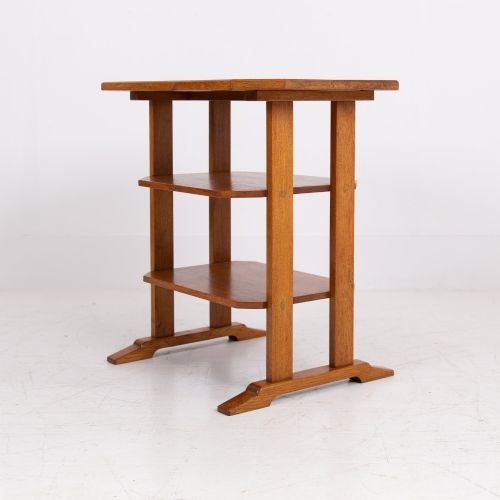


Three Tier Plant Stand
A three tier plant stand lifts greenery into the light on graduated shelves, bringing height and structure to a room.
Three Tier Plant Stand
A three tier plant stand provides multiple stacked surfaces for displaying plants, flowers or decorative objects within a domestic interior. These multi-level pieces allow gardeners and homeowners to group pots vertically, making efficient use of floor space while creating a pleasing visual arrangement.
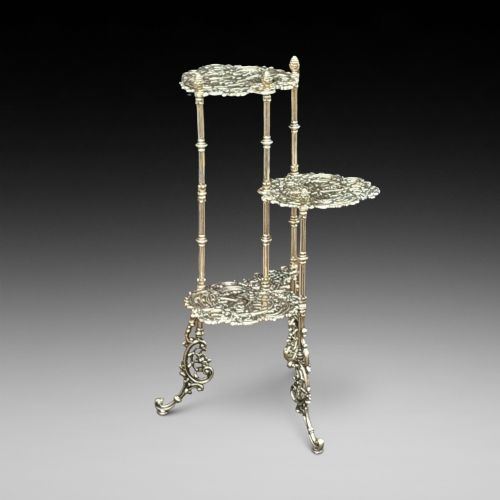
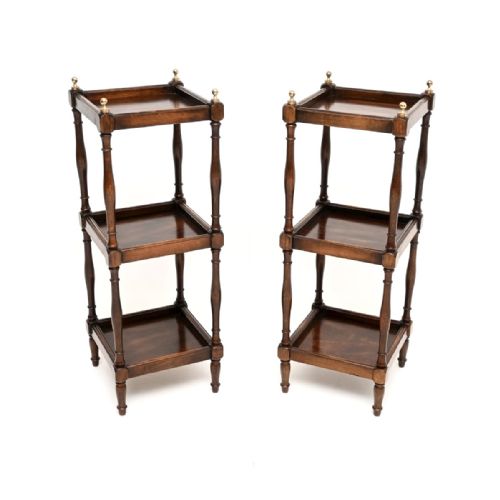
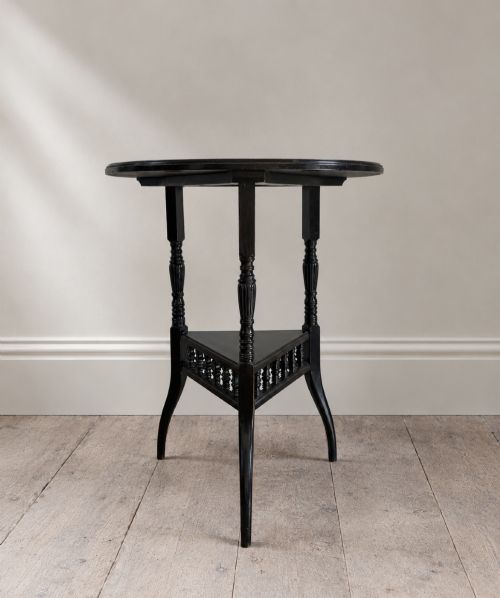
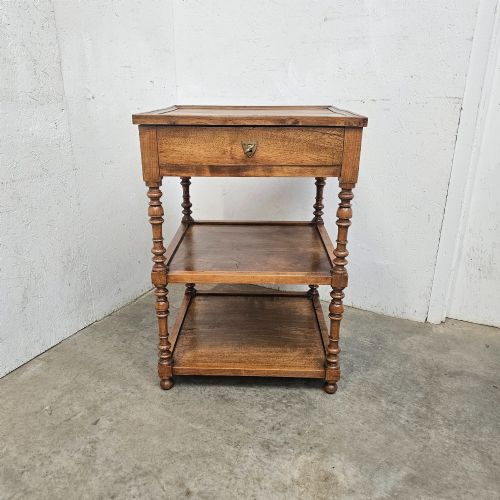
The versions met most frequently on this page span the Victorian and Edwardian eras, constructed from traditional timbers like mahogany, oak and walnut, or from durable metals including cast iron and brass. Formats range from open display stands and etageres to folding cake stands and tripod pedestals, reflecting the varied domestic tastes of the nineteenth and early twentieth centuries.
Makers adapted the tiered format across diverse regional styles, encompassing English Arts and Crafts oak, French walnut and marquetry, and Chinese marble-topped occasional tables. This variety ensures that buyers find pieces suited to simple cottage settings as well as formal reception rooms.
Materials and Construction
Timbers such as mahogany, oak, walnut and beech form the structural framework for wooden tiers, often joined with traditional cabinetmaking techniques like mortise and tenon joints. Inlaid decoration, carved mouldings and turned legs display the hand of the maker, whilst folding mechanisms on cake stands rely on clever wooden hinges and pivots.
Metal stands utilise cast iron, brass and wirework to achieve sturdy yet open structures capable of supporting heavy ceramic or stone planters. Riveted ironwork and brass mountings provide industrial strength, whilst marble inserts offer cool, water-resistant surfaces suitable for holding damp flowerpots.
Three Tier Plant Stand Retail Price Guide 2026
Typical asking prices for three tier plant stand among the pieces listed under this phrase on Sellingantiques today, from the lower quarter to the upper quarter. They describe what is for sale here now, not the wider market.
Some folding cake stands found a second career supporting heavy potted ferns after the fashion for afternoon tea subsided.
Quality and Craftsmanship
The refinement of timber selection and joinery separates standard production items from finer workshop pieces. Dense, well-figured mahogany or quarter-sawn oak combined with crisp carving and tight joints distinguishes superior furniture.
Metalwork quality shows in the cleanliness of iron castings, the absence of casting flaws, and the solidity of brass mounts. Heavier gauge wirework and precise riveting indicate careful manufacture that ensures long-term stability under heavy loads.
The Three Tier Plant Stand Glossary
- Etagere
- A piece of furniture consisting of a set of open shelves for displaying small objects. Originating in France, these multi-tiered stands became popular in Britain during the Victorian period.
- Whatnot
- A traditional English term for an open piece of furniture with multiple shelves used for books, ornaments or plants. They typically feature three or more tiers supported by slender uprights.
- Dumb waiter
- A tiered stand traditionally used in dining rooms for holding dishes or serving items without the need for servants. Their graduated round shelves share a similar silhouette with tall plant stands.
- Marquetry
- The art and craft of applying pieces of veneer to a structure to form decorative patterns. French etageres frequently employ this technique on their tabletop surfaces.
Three Tier Plant Stand: Frequently Asked Questions
Where should I place a three tier plant stand?
These stands suit bright corners, bay windows or entrance halls where plants receive adequate sunlight and remain visible from multiple angles. Their vertical footprint allows them to fit into tighter spaces than a wide table.
Ensure the floor surface is level, particularly with heavier iron or marble-topped designs, to maintain stability when pots are in place.
Can these stands hold heavy ceramic pots?
Cast iron, brass and sturdy hardwood stands easily support substantial terracotta or ceramic planters on their lower tiers. Lighter bamboo or wirework versions are better suited to smaller pots and trailing foliage.
Check the weight distribution on upper shelves to keep the centre of gravity low and prevent tipping.
How do I care for wooden tiered stands?
Protect wooden surfaces from water rings and dampness by using saucers or waterproof liners beneath all potted plants. Regular dusting and occasional application of appropriate furniture wax preserve the finish.
Keep wooden stands away from direct heat sources and radiators to prevent timber from drying out and splitting.
How can I tell a Victorian stand from a later piece?
Victorian stands often feature rich mahogany timbers, hand-turned legs, brass castors, or dark cast iron frames with elaborate botanical casting. Edwardian and later 1920s examples tend toward lighter oak, simpler lines, or Arts and Crafts influences.
Construction marks, screw types, and timber patination also provide clues to the approximate decade of manufacture.