





Dark Wood Cake Stand
A dark wood cake stand brings tiered elegance to a room, offering practical display surfaces carved from rich timber.
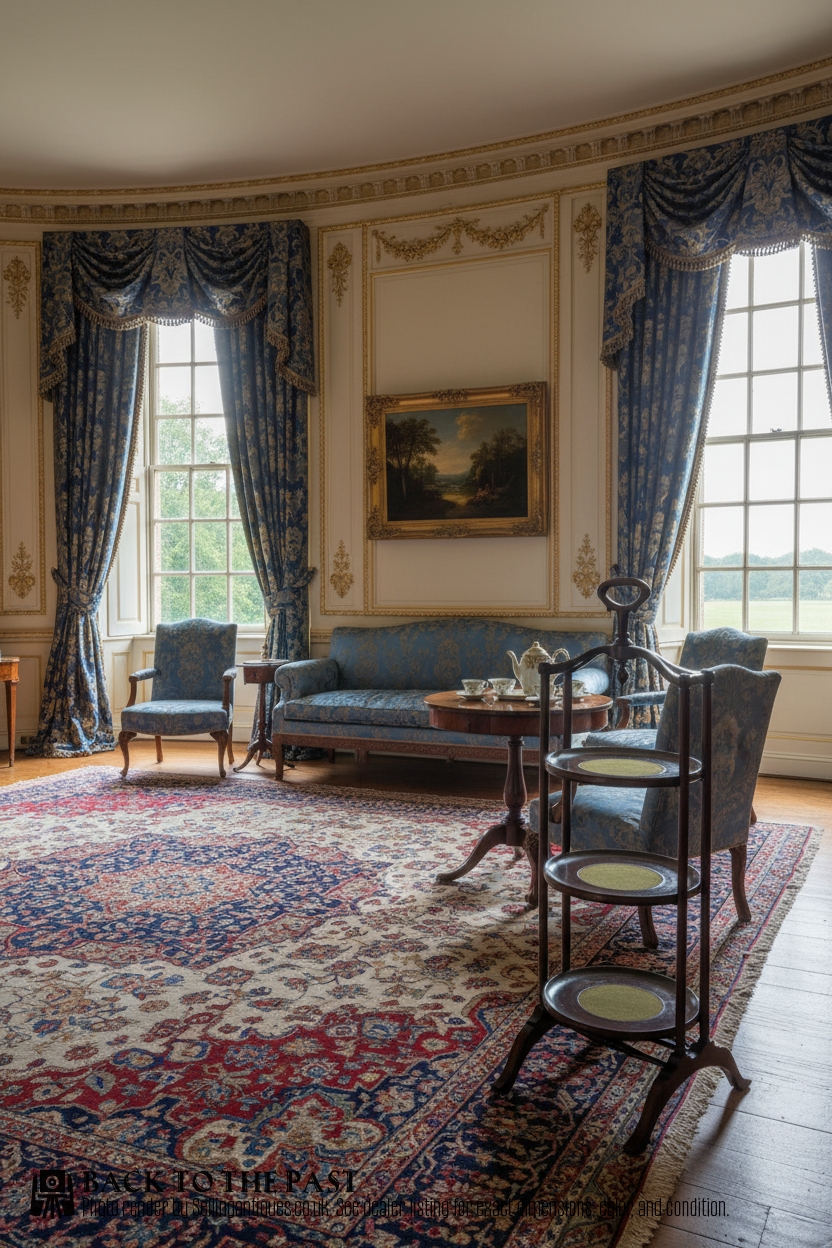
Dark Wood Cake Stand
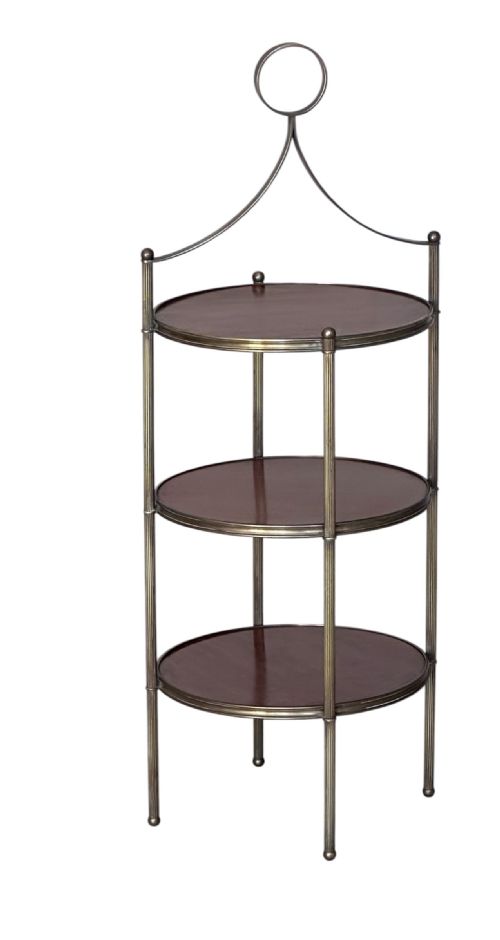
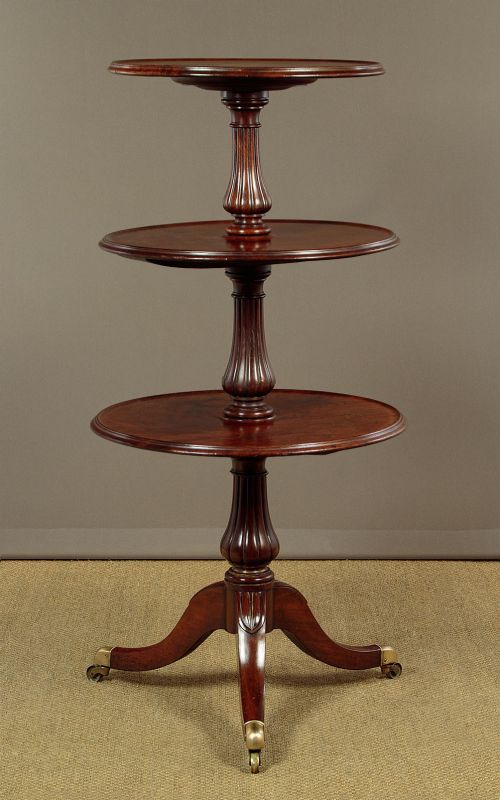
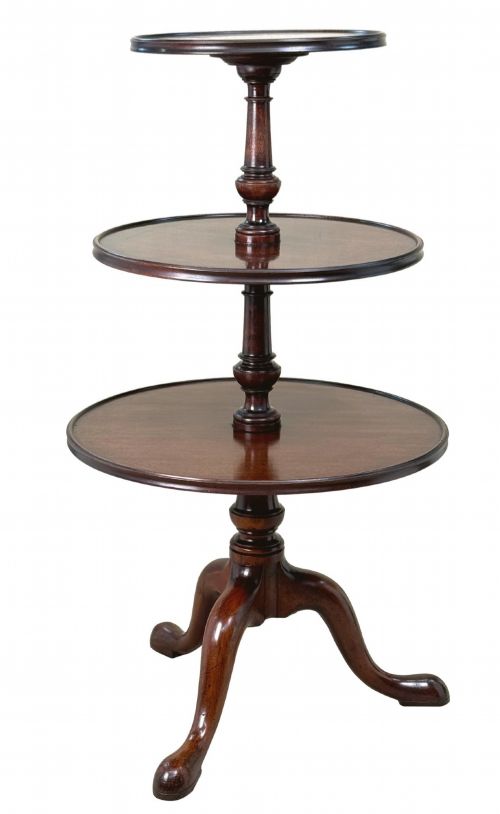
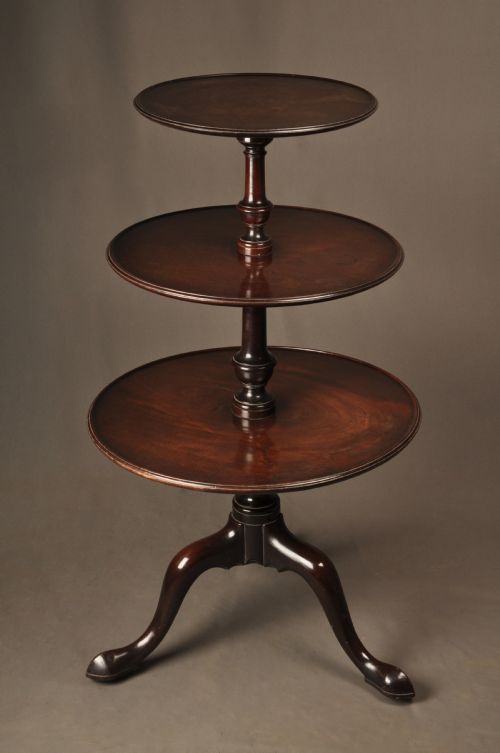
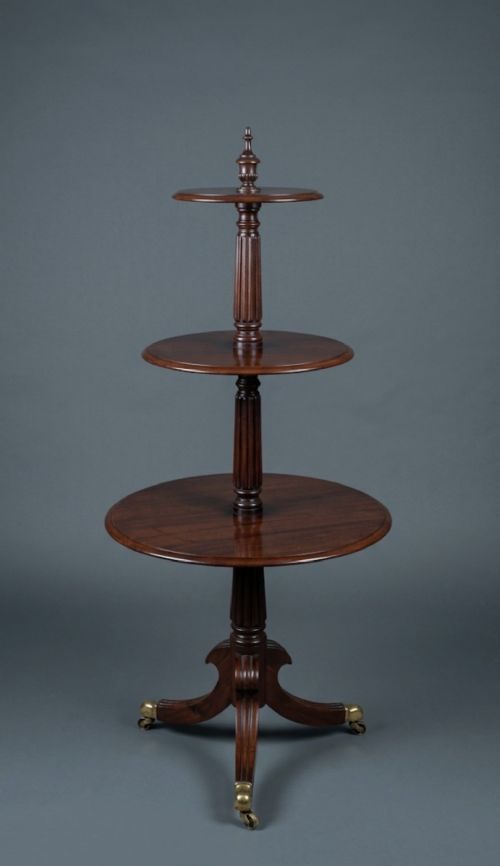
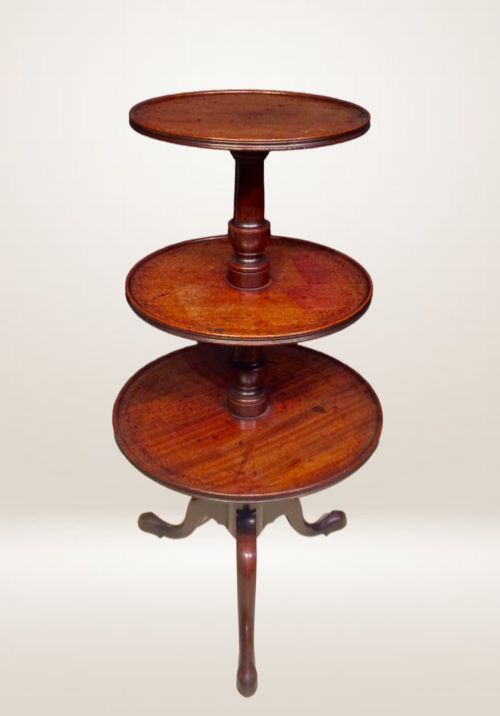
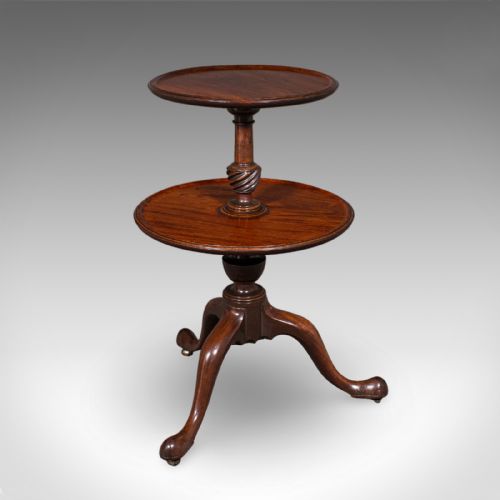
When you search for a dark wood cake stand, you encounter tiered serving pieces, dumb waiters, and folding stands spanning the eighteenth century through to the Edwardian and Art Deco periods. These tables and stands serve tea, pastry, and cheese across multiple circular levels.
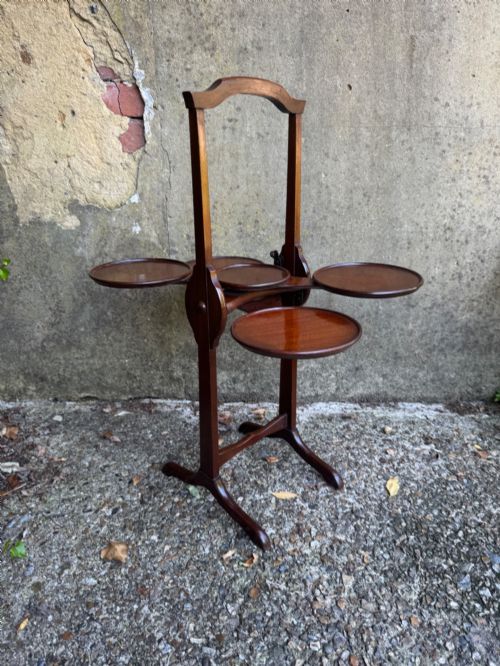
The version you are most likely to meet on this page is the Edwardian folding mahogany cake stand, alongside Georgian and Regency dumb waiters featuring graduating tiers. Oak, walnut, and rosewood also appear, shaped into standing or folding formats.
How they were made
Cabinetmakers utilised solid mahogany, oak, and walnut, frequently incorporating boxwood inlay for decorative contrast on Edwardian and Georgian examples. Turning and joinery created sturdy central columns and folding frames.
Revolving mechanisms on dumb waiters required precise carpentry to allow multi-tiered circular trays to turn smoothly on central shafts. Brass fittings and felt details provided functional reinforcement and protection.
Dark Wood Cake Stand Retail Price Guide 2026
Typical asking prices for dark wood cake stand among the pieces listed under this phrase on Sellingantiques today, from the lower quarter to the upper quarter. They describe what is for sale here now, not the wider market.
Listings span the eighteenth century, Georgian, Regency, Victorian, Edwardian, and Art Deco periods, utilising mahogany, oak, walnut, rosewood, and brass.
What varies in quality
The distinction between standard production and superior pieces lies in the selection of timber, the crispness of the turning on the uprights, and the integrity of any folding mechanisms. Finer examples display well-figured mahogany and balanced proportions across multiple tiers.
Attention to detail in boxwood inlay and the smooth operation of revolving dumb waiters or folding hinges separate workshop output from ordinary utilitarian items.
The Dark Wood Cake Stand Glossary
- Dumb waiter
- A freestanding tiered piece of furniture designed to hold food and drink without requiring a servant at the table. These feature two or three circular revolving trays.
- Tiered stand
- A piece comprising multiple horizontal surfaces arranged vertically on a central column. They maximise display space in compact footprints.
- Tazza
- A small shallow saucer or dish mounted on a stem and foot. In these listings, it appears as a form of serving stand.
- Lazy Susan
- A revolving tray placed on a table or stand to assist in moving food easily. They utilise a central pivot mechanism.
Dark Wood Cake Stand: Frequently Asked Questions
What is a dumb waiter?
A dumb waiter is a multi-tiered freestanding stand used historically to hold dishes and serving items. They often feature graduating circular shelves.
Many examples from the Georgian and Regency periods revolve on a central column for easy access during meals.
How do folding cake stands work?
Folding cake stands utilise hinged cross-frames that collapse inward to allow flat storage when not in use. Edwardian makers produced these in large numbers for afternoon tea.
They generally offer three tiers of mahogany or oak supported by clever wooden pivot joints.
How do I date an antique stand?
Dating relies on timber selection, structural joinery, and stylistic markers such as boxwood inlay or barley twist columns. Georgian and Regency pieces show heavier turned pillars and rich mahogany.
Edwardian stands tend to be lighter with folding mechanisms and subtle stringing or inlay work.
Were these stands only used for cake?
While modern terminology calls them cake stands, historical inventories used them for tea, afternoon refreshments, and cheese serving. Multiple tiers accommodated various plates and cups.
Larger dumb waiters functioned alongside dining tables as auxiliary serving stations.