


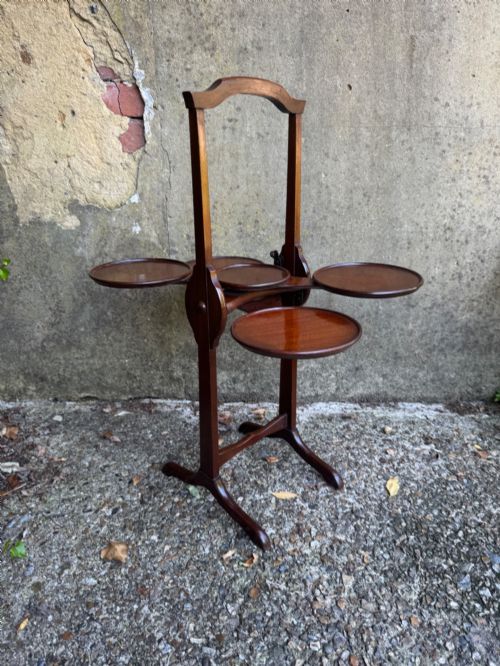

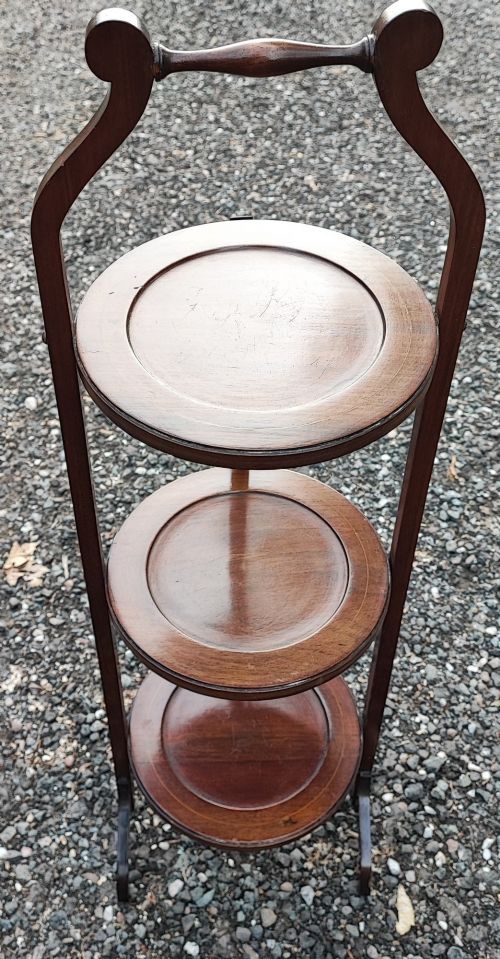


Vintage Cake Tier Stand
These vintage cake tier stand pieces offer practical tiered display and folding convenience, shaped by Edwardian, Victorian, and Georgian cabinet-making traditions.
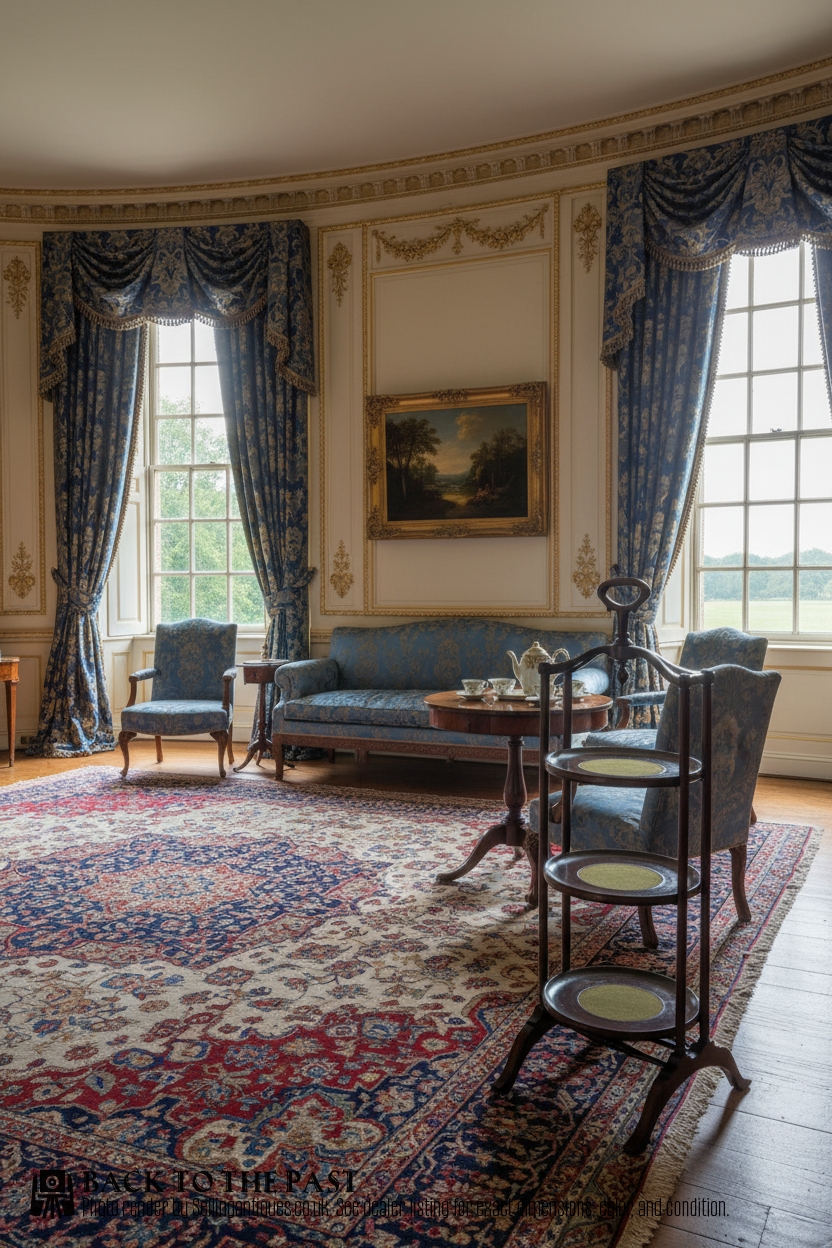
Vintage Cake Tier Stand
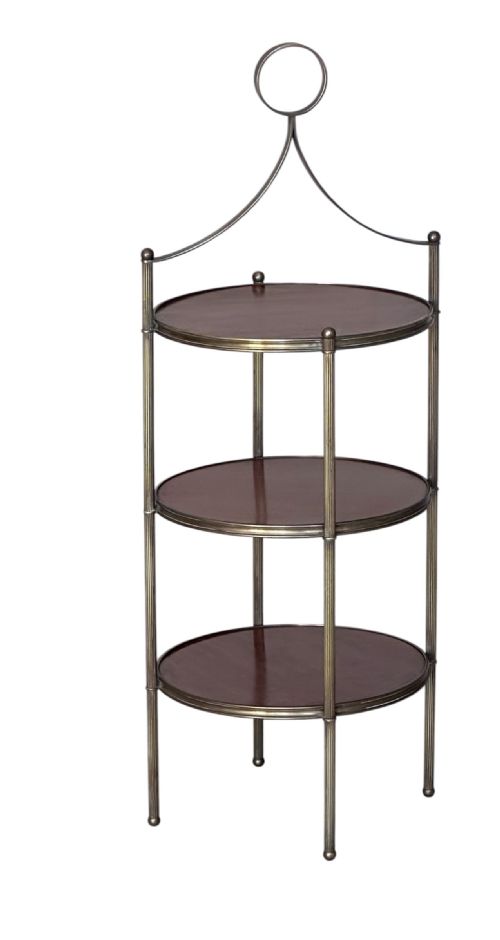
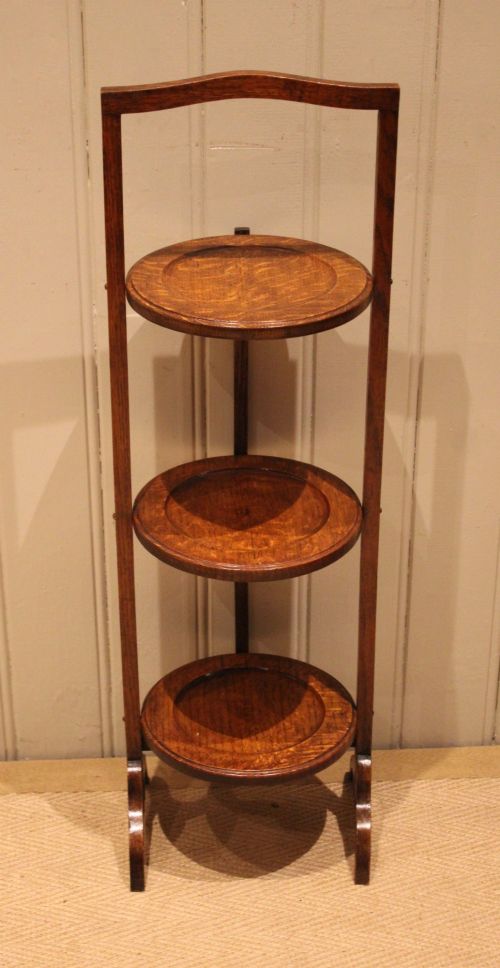
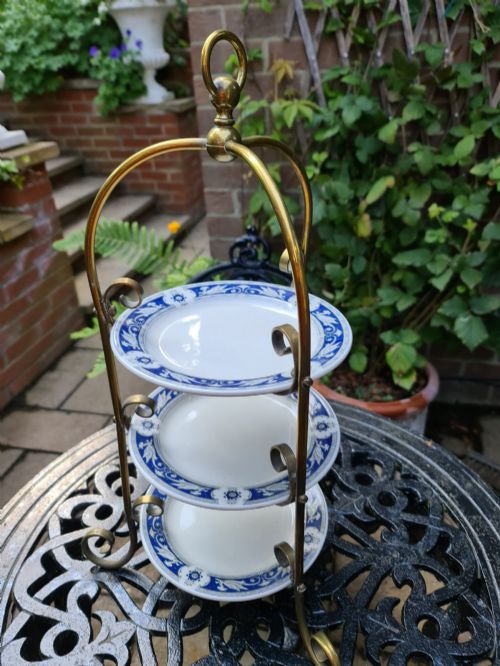
When you search for a vintage cake tier stand, you encounter tiered serving furniture designed to hold plates or food at social gatherings. The pieces on this page span multiple tiers, often constructed with a folding mechanism for compact storage between uses.
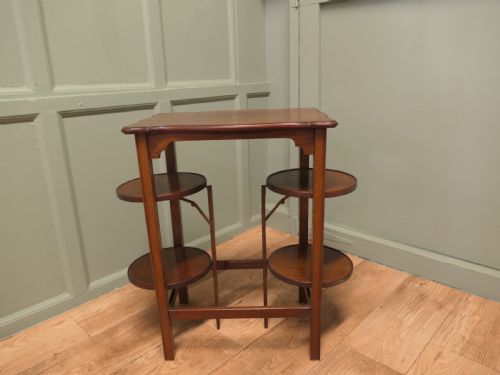
Edwardian and early twentieth-century examples dominate the selections here, frequently appearing in oak or mahogany. Alongside standard cake stands, the evidence includes related multi-tiered display stands, occasional tables, and classical dumb waiters.
Form follows function closely across these pieces, with graduated circular trays supported by central uprights or pivoting tiers. Walnut and rosewood variants also appear alongside the more common mahogany and oak specimens.
How they were made
Cabinet-makers utilised solid timbers and veneered hardwoods, notably mahogany, oak, and walnut, complemented by brass hardware and occasional boxwood inlay. Folding models rely on hinged or scissor-action frameworks that allow the tiers to collapse neatly into a vertical line.
Turned uprights and barley twist stems provide structural support, while revolving mechanisms on earlier pieces permit rotating access to each circular tray. Polished finishes highlight the natural grain of the wood without obscuring the structural joinery.
Vintage Cake Tier Stand Retail Price Guide 2026
Typical asking prices for vintage cake tier stand among the pieces listed under this phrase on Sellingantiques today, from the lower quarter to the upper quarter. They describe what is for sale here now, not the wider market.
Some folding stands double as tea maids, engineered so efficiently that they practically pour the brew themselves.
What varies in quality
The distinction between ordinary utility pieces and finer examples rests on timber selection and decorative detailing such as stringing or inlaid banding. Sheraton Revival and Georgian-influenced pieces often display more sophisticated turning and tighter joinery than basic production models.
The integrity of the folding mechanism and the smooth operation of pivoting tiers indicate the original precision of the workshop. Heavier gauge brass fittings and solid wood tiers rather than thin laminates mark the upper end of the surviving range.
Marples & Company
The Vintage Cake Tier Stand Glossary
- Dumb waiter
- A multi-tiered freestanding piece of furniture designed for serving food or holding plates without domestic staff present. These revolving or fixed circular trays anticipate the later folding cake stand.
- Barley twist
- A turning technique where the timber is carved into a spiral resembling a twisted rope. This decorative column style frequently supports Victorian and Edwardian tiers.
- Sheraton Revival
- A late nineteenth and early twentieth-century design movement inspired by the neoclassical furniture of Thomas Sheraton. Pieces in this style often feature delicate mahogany frames with contrasting inlay.
- Inlay
- A technique where pieces of contrasting wood or other materials are inserted into depressions within a solid timber base. Boxwood inlay frequently provides fine linear borders on mahogany tiers.
Vintage Cake Tier Stand: Frequently Asked Questions
How do I fold this stand?
Most Edwardian folding stands operate through a scissor hinge or central pivoting rod that allows the tiers to swing inward.
Gently lift or pivot the vertical supports until the trays align vertically for flat storage.
Were these strictly used for cake?
These tiered pieces served multiple domestic functions during afternoon tea, light suppers, and formal gatherings.
Beyond pastries, they held small plates, condiments, and serving accessories across their circular trays.
How do I tell Edwardian from Georgian stands?
Edwardian stands frequently feature folding wooden frames and lighter timbers influenced by revival styles.
Georgian examples, including dumb waiters, are typically heavier, non-folding structures with fixed or revolving solid mahogany tiers.
Can I place hot dishes on the tiers?
Antique polished wood surfaces react poorly to excessive heat, moisture, and unprotected hot ceramics.
Utilise appropriate mats or doilies to protect the timber finish during actual serving use.