




Antique Cake Stand Wood
When you search for antique cake stand wood, you are looking at tiered serving furniture designed to present afternoon tea, cakes, and desserts with practicality and elegance.
Antique Cake Stand Wood
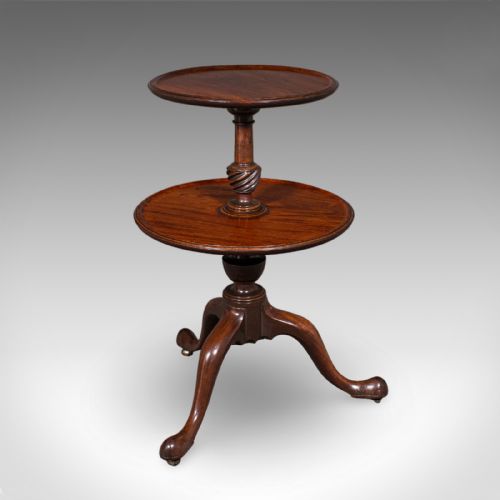
When searching for antique cake stand wood, collectors encounter pieces spanning from the 18th century through the Edwardian period and the early 20th century. The selection ranges from multi-tiered dumb waiters and revolving serving tables to collapsible wooden stands made for afternoon tea.
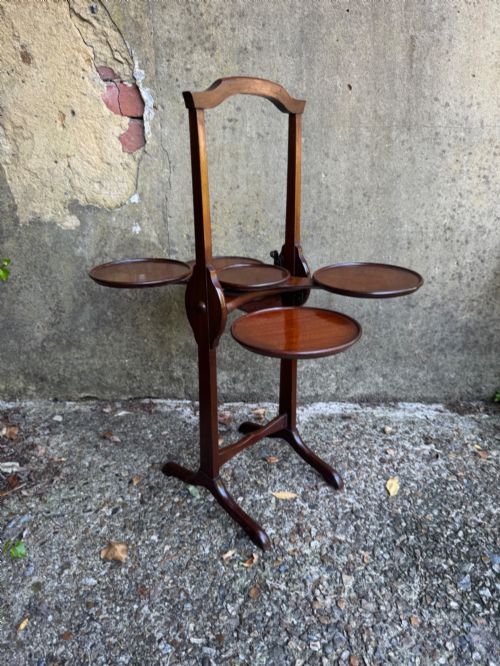
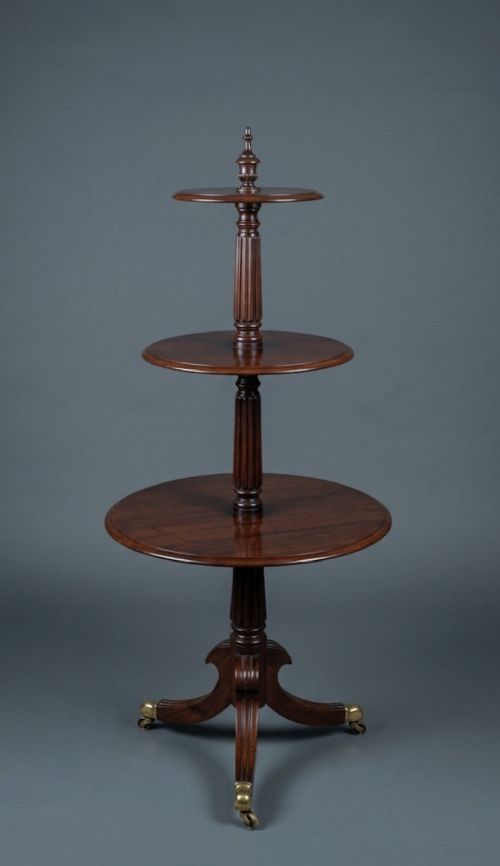
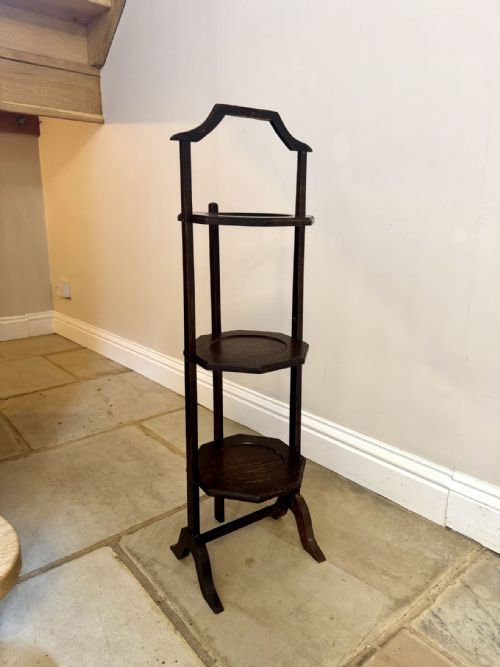
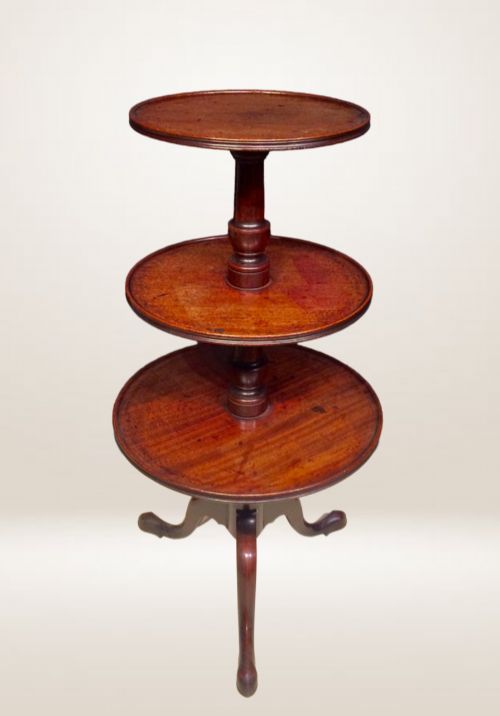
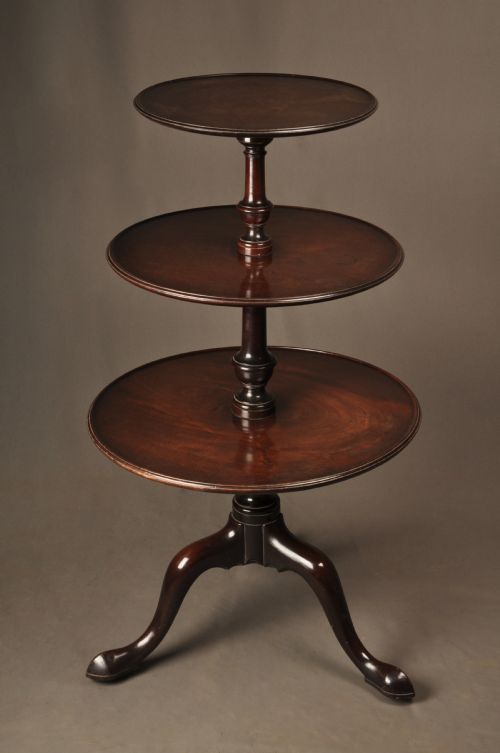
The version most frequently met on this page is the Edwardian or early 20th century mahogany folding cake stand, often built with three tiers for domestic use. Alongside these, larger Georgian and Regency tiered dumb waiters in mahogany appear as heavier, permanent dining room furniture.
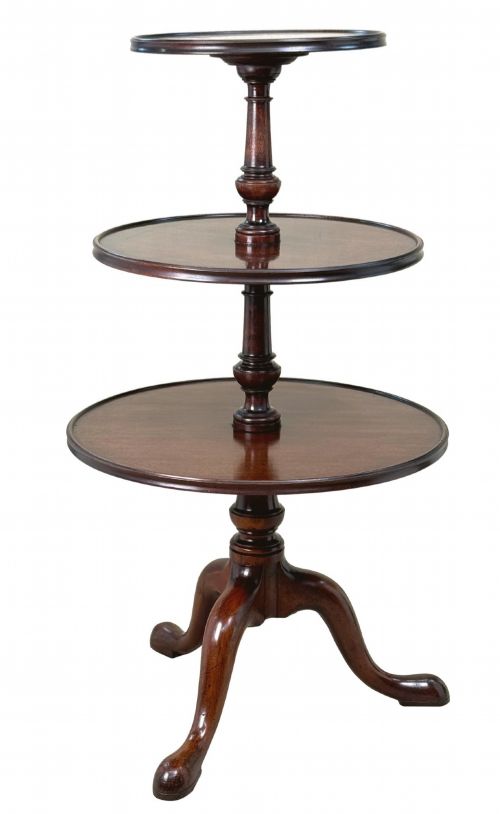
Forms vary from tripod pedestal tables and oval display shelves to specialised designs such as lazy susans and campaign style serving tables. These objects served the practical function of holding food and tableware within arm's reach before modern sideboards took over.
How they were made
Cabinet makers relied principally on solid mahogany, walnut, oak, and rosewood, frequently incorporating boxwood inlay for decorative contrast. Timber selection dictated the structural integrity of slender uprights and folding mechanisms.
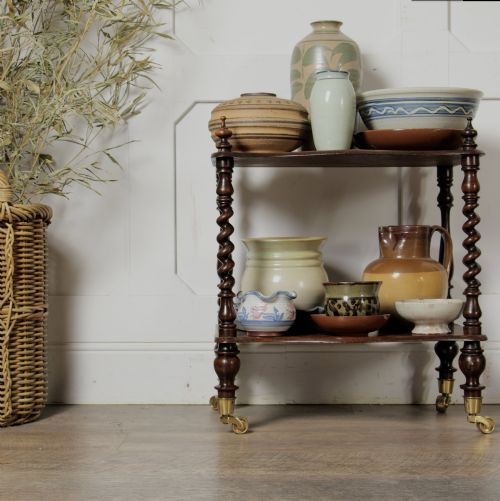
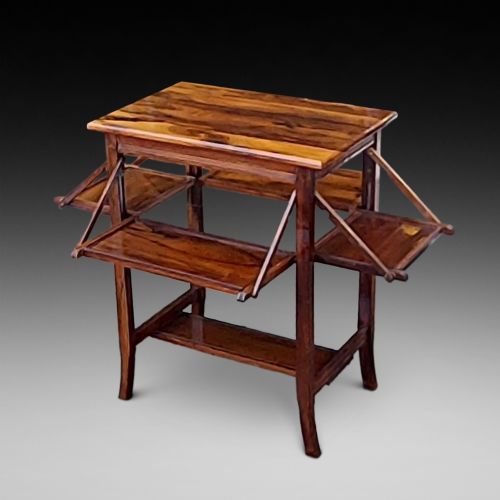
Turned wooden columns, barley twist supports, and tripod pedestals provide the vertical framework for multiple tiers. Folding models utilise hinged wooden joints that allow the shelves to collapse compactly when not in use.
Mahogany is the most frequent timber across these listings, appearing alongside oak, walnut, rosewood, and brass fittings.
What varies in quality
Quality rests in the crispness of the turning, the tightness of the joinery, and the figuring of the timber grain. Finer examples display carefully matched veneers, delicate inlay work, and robust mechanisms that operate smoothly without wobble.
Proportion and stability separate standard utility pieces from exceptional items. Tiers that remain level under weight and pedestals with well-balanced tripod legs demonstrate superior construction by skilled cabinet makers.
The Antique Cake Stand Wood Glossary
- Dumb waiter
- A freestanding tiered piece of furniture with revolving or fixed trays used for serving food without servants present. These typically feature two or three circular shelves on a central pedestal.
- Tiers
- The successive horizontal shelves or trays arranged vertically on a single stand. Multiple tiers allowed hosts to serve a variety of cakes and small dishes efficiently.
- Tripod pedestal
- A central pillar supported by three spreading feet that gives stability to circular tables and cake stands. This form prevents tipping on uneven floorboards.
- Boxwood inlay
- Contrasting light wood inserted into recesses in a darker timber surface to create geometric or floral borders. It was a favoured decorative technique in Sheraton Revival and Edwardian pieces.
- Lazy susan
- A revolving tray placed on a table or stand to allow easy sharing of food dishes. The design centres on a rotating pivot mechanism.
Antique Cake Stand Wood: Frequently Asked Questions
What is an antique wooden cake stand used for?
These pieces were originally designed to hold cakes, pastries, and tea service items in the drawing room or dining room. They provided extra surface space during formal afternoon teas when tables were crowded.
Today, they function as display furniture for plants, books, or decorative objects, or continue in their original role during gatherings.
How do I tell a Georgian dumb waiter from an Edwardian cake stand?
Georgian dumb waiters are generally heavier, fixed multi-tiered dining room pieces made of solid mahogany with sturdy turned pedestals and heavy legs. They date from the 18th or early 19th centuries.
Edwardian cake stands are lighter, often feature folding frames, and frequently date from around 1900 to 1910 with delicate inlaid decoration.
Are folding cake stands stable?
Quality folding stands rely on precise wooden hinge mechanisms that lock the tiers securely into a horizontal position when opened. When properly made, they hold weight evenly across the shelves.
Wobble usually indicates loose joints or wear in the pivot points rather than a fault in the original design.
What woods were commonly used for these stands?
Mahogany is the predominant timber found in these pieces, valued for its strength and rich grain. Walnut, oak, and rosewood also appear across various periods.
Inlay work often incorporates lighter woods such as boxwood to create contrast against the darker primary timber.