



Antique Sutherland Side Table
An antique sutherland side table folds down into a narrow footprint when space is tight and opens wide for tea.
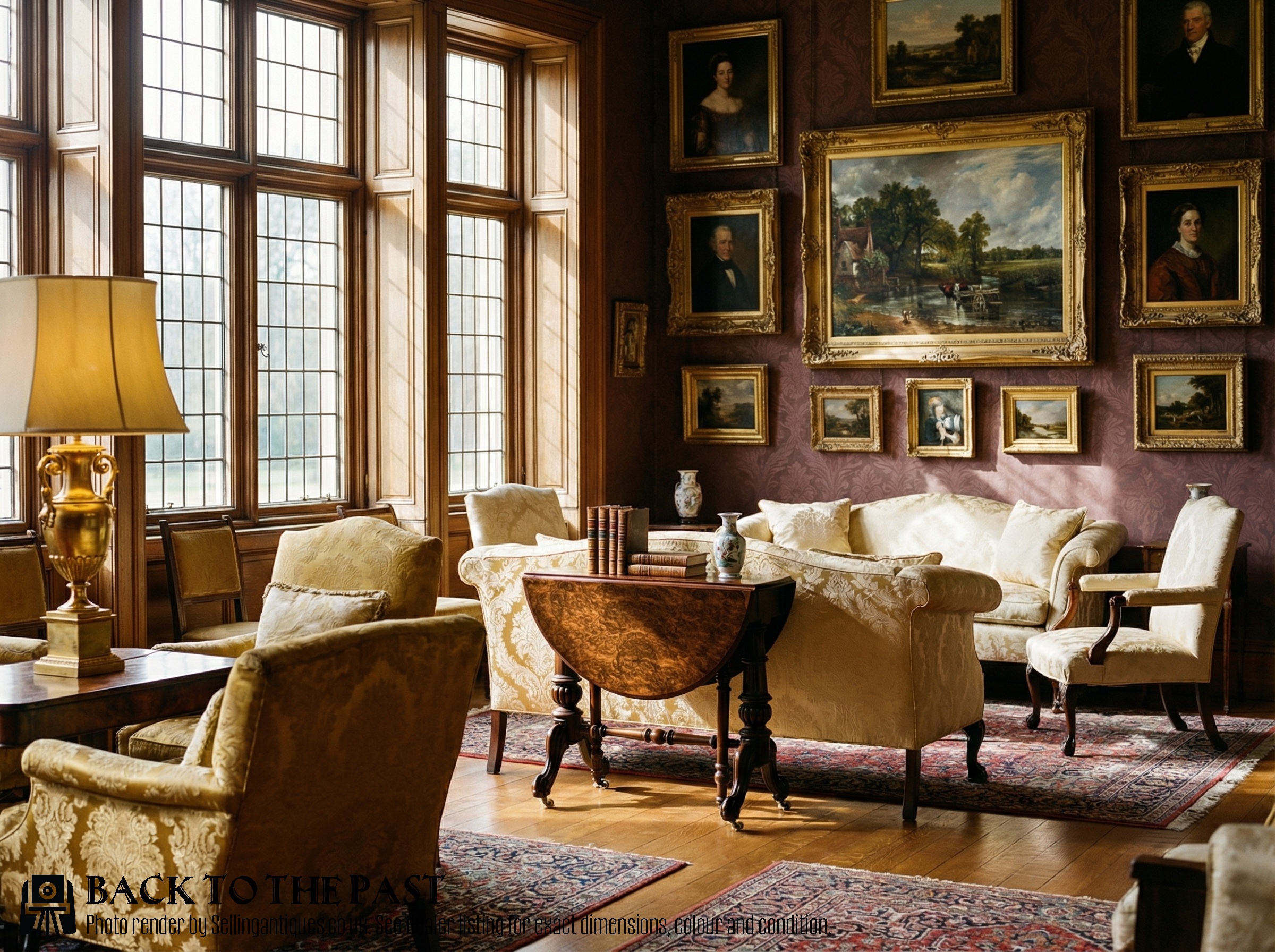
Antique Sutherland Side Table
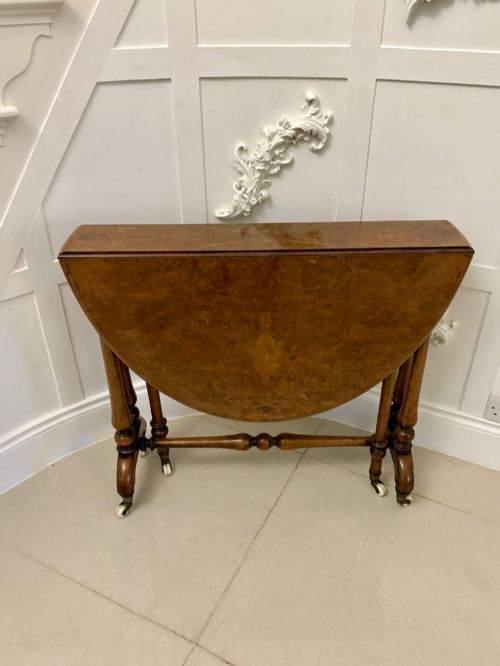
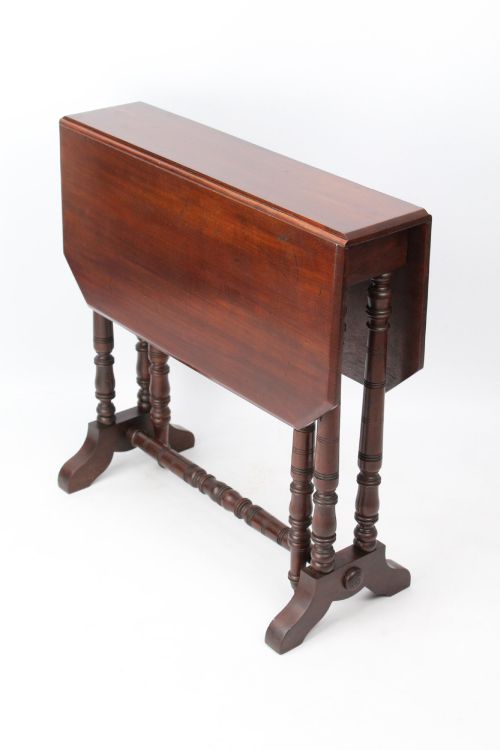
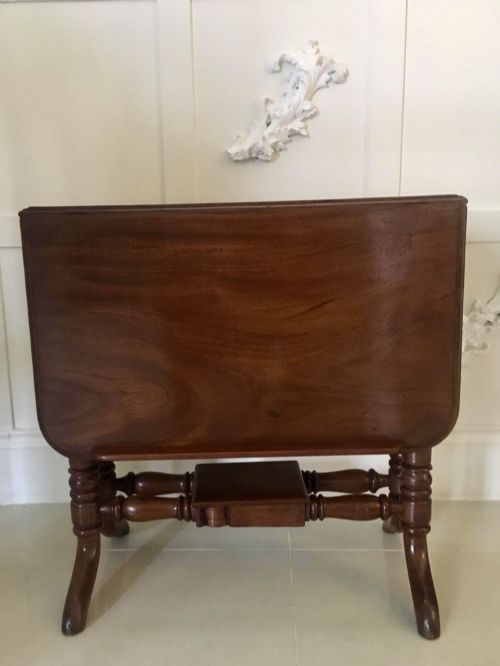
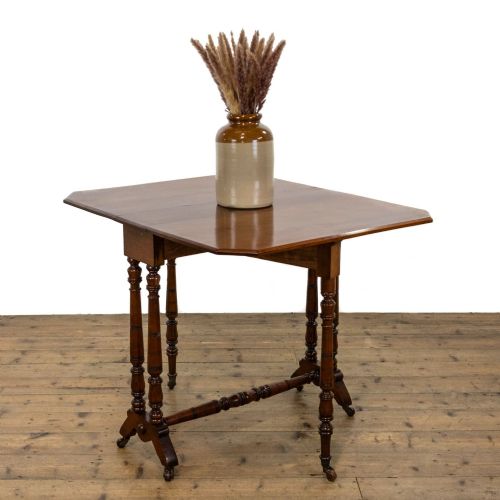
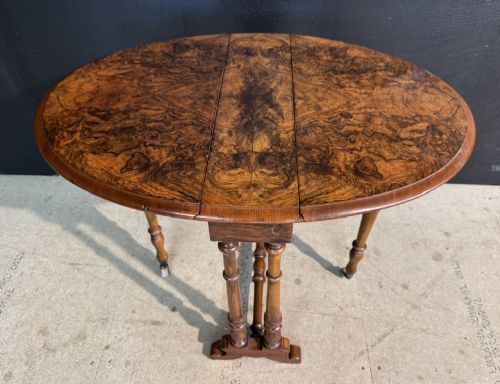
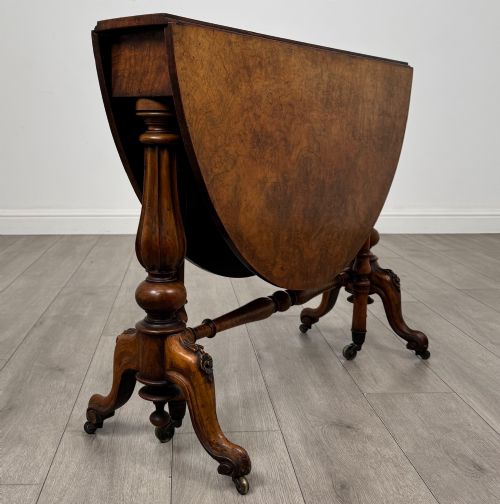
When you search for an antique sutherland side table, you encounter a specialised form of drop-leaf table defined by its unusually narrow central fixed platform and exceptionally long leaves supported by swinging gate legs. The examples seen here belong primarily to the Victorian and Edwardian eras, spanning the nineteenth and early twentieth centuries, with occasional William IV and Arts and Crafts interpretations.
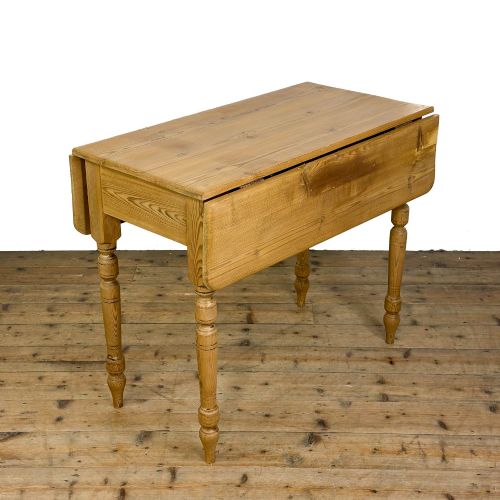
Most pieces on this page function as occasional, coffee, or tea tables, with smaller versions often described in the trade as baby or miniature sutherland tables. They appear in forms ranging from simple rustic country pine and oak to formal parlour pieces designed for display and entertaining.
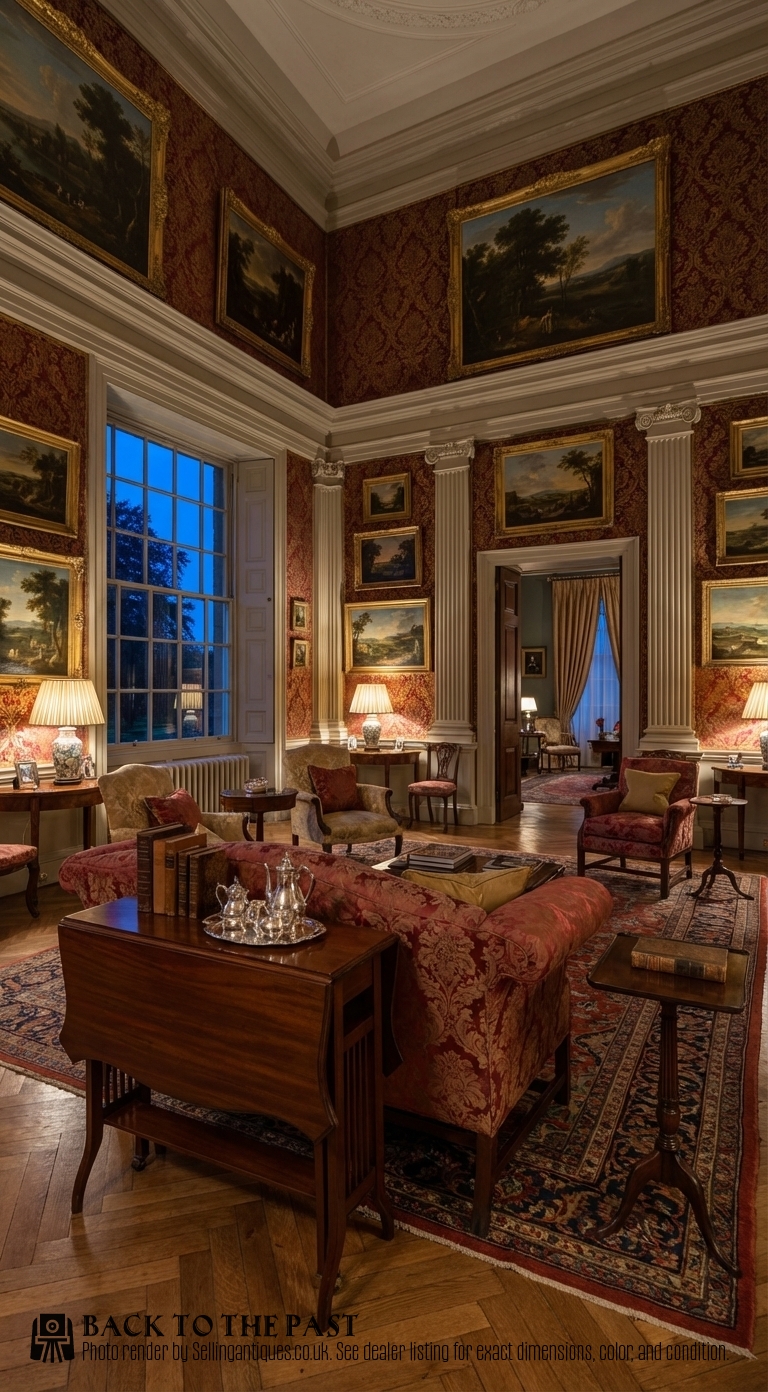
Materials and construction
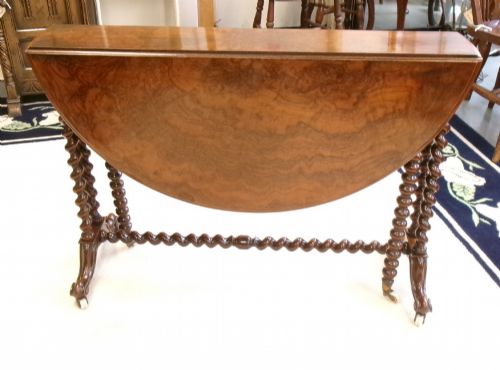
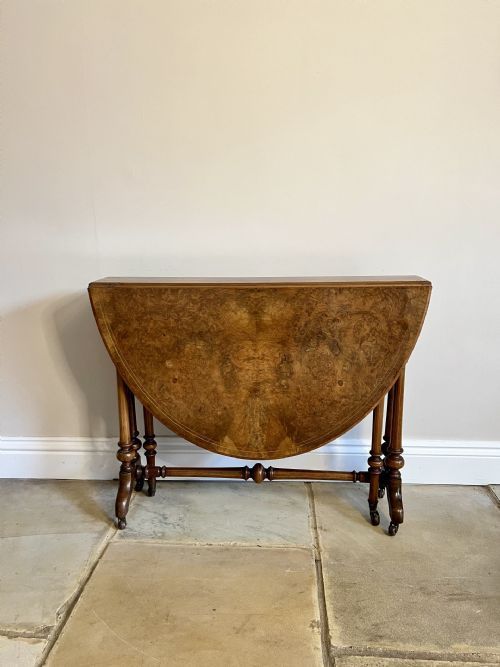
Cabinet makers constructed these tables using a foundation of solid timbers such as mahogany, walnut, oak, and ebonised wood, frequently applying burr walnut veneers to the flap tops to show off rich swirling grain patterns. Decorative detail relied on contrasting light timbers like satinwood and boxwood for stringing and inlay, alongside floral marquetry and brass castors on the feet.
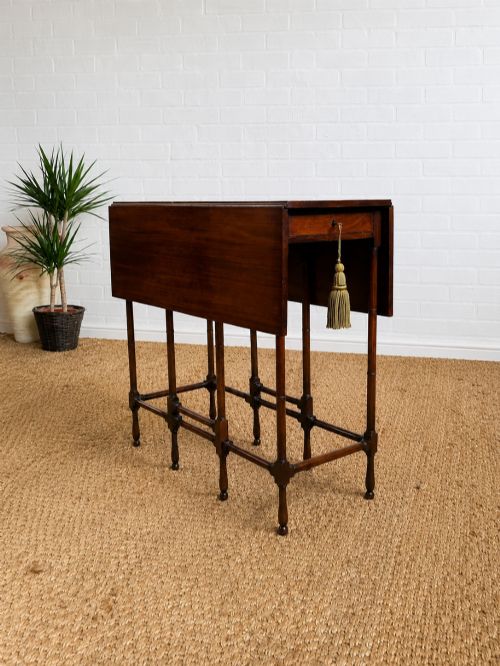
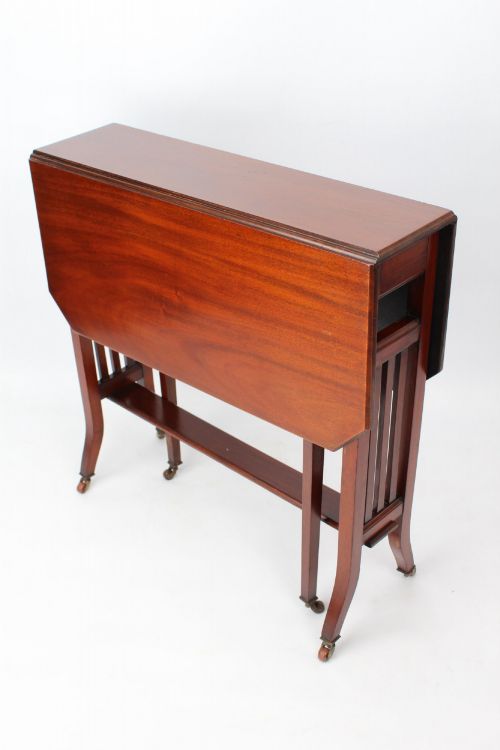
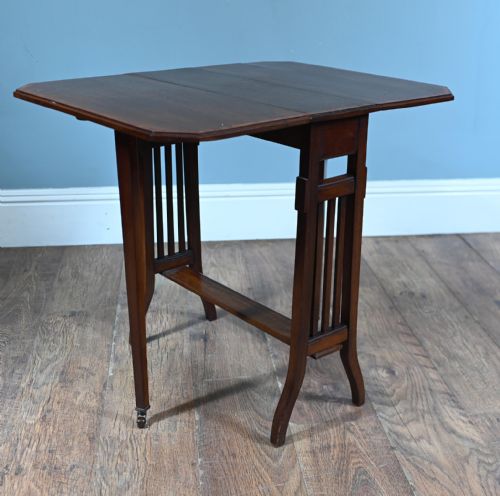
The defining mechanical achievement of the type is the hinge and gate leg arrangement, which allows the two large drop leaves to hang almost vertically when folded. Turned legs, including bamboo-turned styles, support the pivoting gate frames that swing outward to lock the leaves in place.
Periods represented range from Georgian and William IV through Victorian and Arts and Crafts to Edwardian.
Judging quality and craftsmanship
The standard of a piece rests on the selection of timber and the precision of the veneering, particularly on the folding leaves where grain matching reveals the maker's intent. Superior pieces display crisp floral marquetry, delicate satinwood or boxwood inlay, and finely turned or ebonised legs rather than plain, heavy turnings.
Structural integrity depends on the action of the gate legs and the alignment of the hinges. When opened, a finer table maintains a rigid surface without excessive sag in the leaves, and the hinges sit flush into the timber to ensure a smooth transition across the joints.
Maple & Co·Jenks & Woods
The Antique Sutherland Side Table Glossary
- Sutherland table
- A narrow-bodied drop-leaf table with exceptionally wide leaves and gate legs that swing out to support them. It was invented in the nineteenth century and named after the Duchess of Sutherland.
- Burr walnut
- A prized timber veneer sliced from the growth warts or burls of walnut trees. It yields a dense, swirling grain pattern rich in concentric eyes.
- Marquetry
- The art of forming decorative patterns on wooden furniture using thin veneers of different coloured woods, ivory, or shell. It differs from inlay by assembling the pattern before applying it to the surface.
- Gate leg
- A hinged leg attached to a swinging frame that pulls out to support a drop leaf. This design allows a compact table to expand significantly in surface area.
- Stringing
- A narrow strip of contrasting timber inlaid into a channel cut into the surface of a piece. It forms delicate geometric borders around table tops and drawers.
Antique Sutherland Side Table: Frequently Asked Questions
How did Victorians use sutherland tables?
These tables served primarily as tea tables or occasional furniture in Victorian drawing rooms. Because the leaves folded down completely flat, servants could wheel or carry them to the edge of a room when floor space was needed for entertaining.
When guests arrived, the gate legs swung outward in seconds to create a stable surface for cups, books, or sewing work. Their mobility made them versatile additions to fashionable homes.
How do I tell Victorian from Edwardian pieces?
Victorian examples frequently showcase rich burr walnut veneers, heavy floral marquetry, and darker polished mahogany frames. They often carry a heavier visual weight and deeper colour tones.
Edwardian pieces tend to be lighter in construction, commonly featuring satinwood inlay on mahogany or ebonised surfaces. Bamboo-turned legs and simplified lines are also more frequent in the later period.
Will a sutherland table work as a coffee table?
Many smaller nineteenth-century versions, often termed baby sutherland tables, sit lower to the ground than standard dining or tea heights. This lower stature makes them suitable companions for modern seating.
With one leaf dropped down against a sofa or both open to form a compact surface, they offer the flexibility of traditional drop-leaf furniture in a living room setting.
What is the difference between a sutherland and a gateleg table?
While both use swinging legs to support folding leaves, traditional seventeenth-century gateleg tables feature a wide central fixed frame with sturdy, heavy turned legs designed for dining. The leaves are generally smaller relative to the base.
A sutherland table reverses these proportions by pairing an extremely narrow central table top with oversized drop leaves and slender, delicate gate legs designed for light occasional use.