
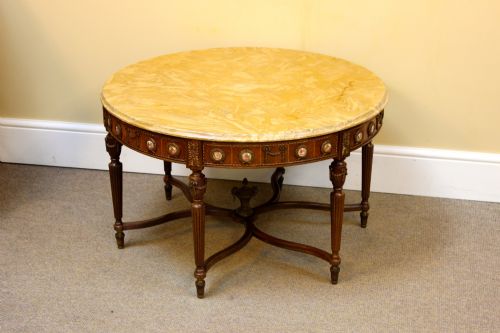
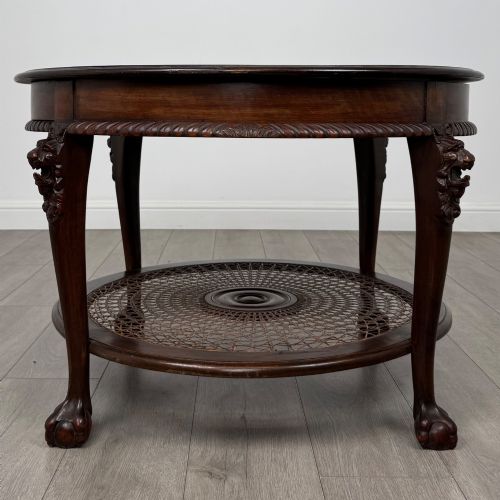
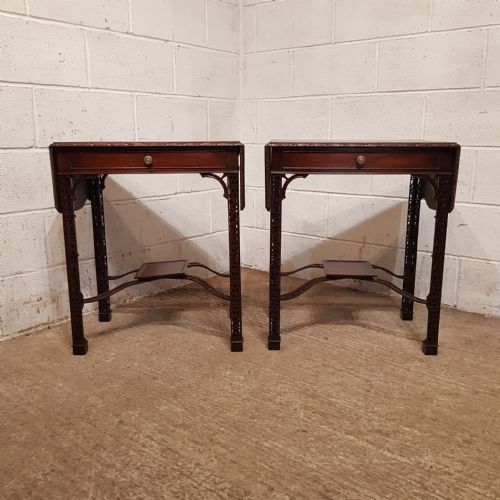
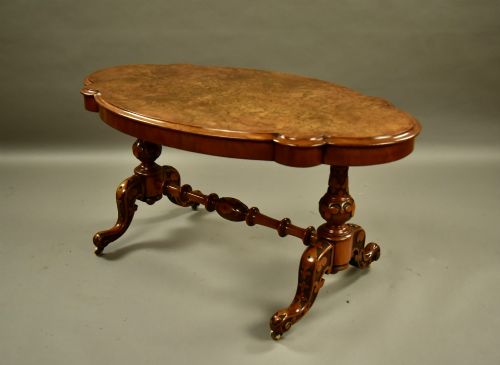
Edwardian Carved Tea Table
An Edwardian carved tea table brings functional elegance to a room, offering a sturdy surface designed for entertaining.
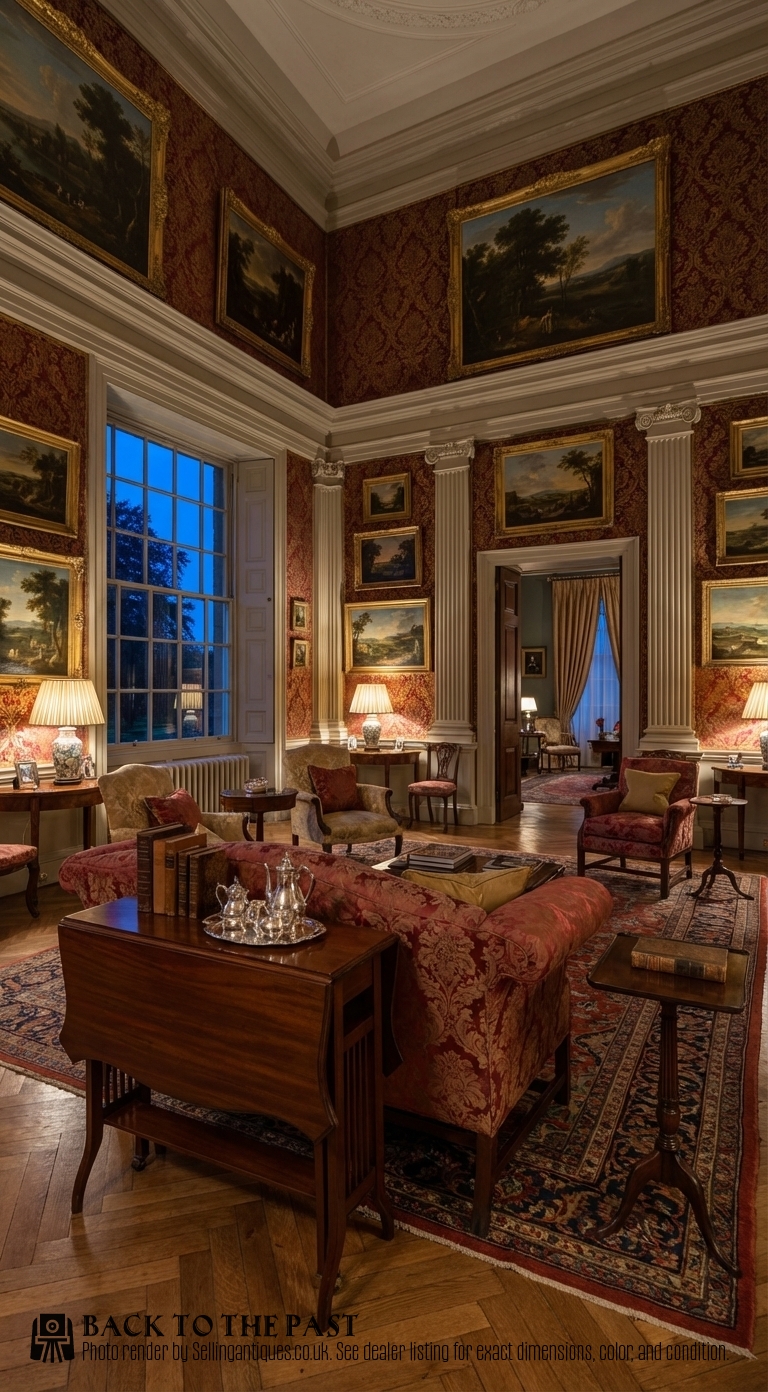
Edwardian Carved Tea Table
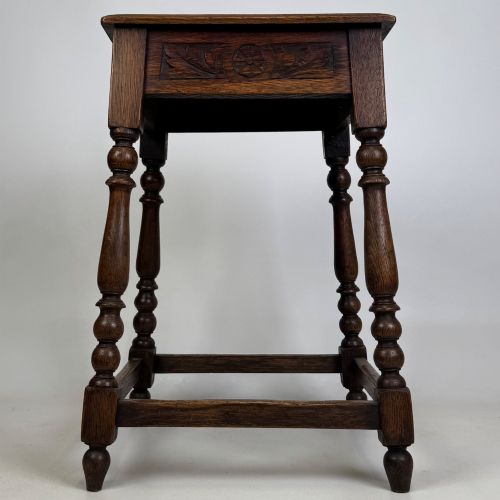
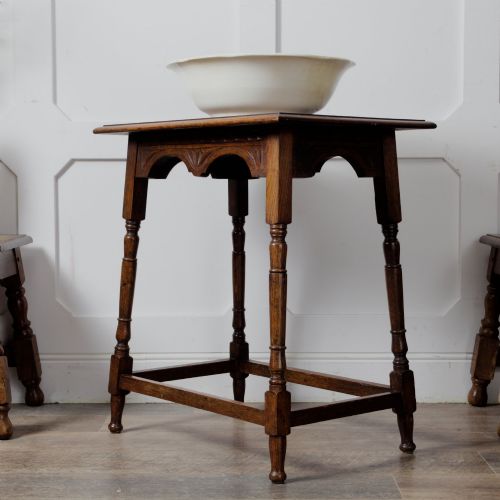
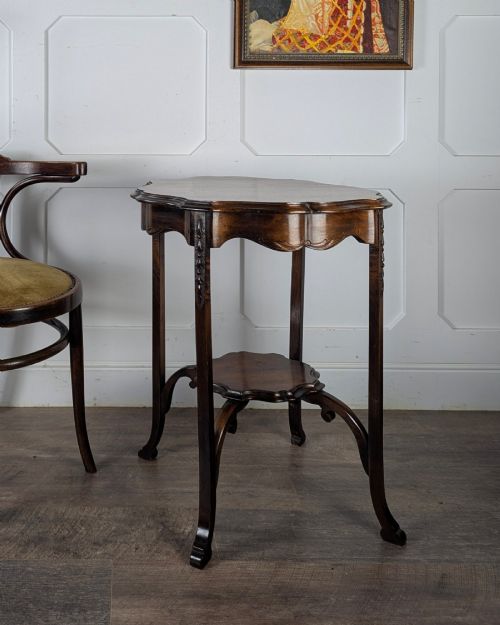
An edwardian carved tea table is a domestic surface designed for serving refreshments, appearing most frequently in mahogany, oak, and walnut across this selection.
These pieces emerge from periods spanning the late nineteenth century into the twentieth century, carrying stylistic influences from Chippendale revival and Anglo-Indian traditions.
Buyers encounter forms ranging from occasional and side tables to tea trolleys, all shaped by the social habits of their original era.
How they were made
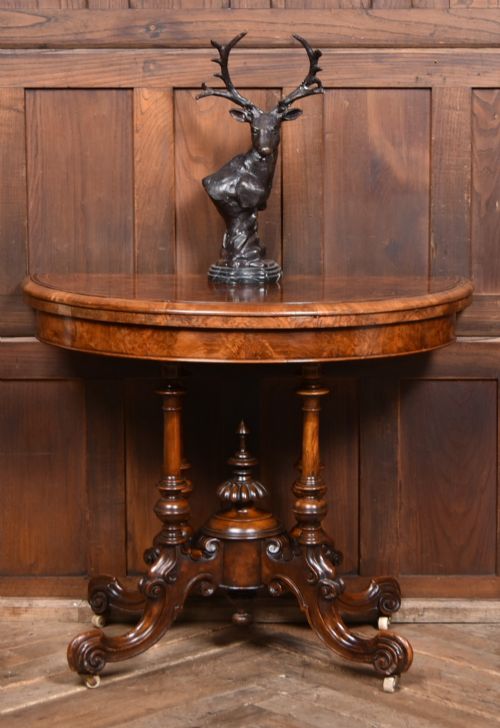
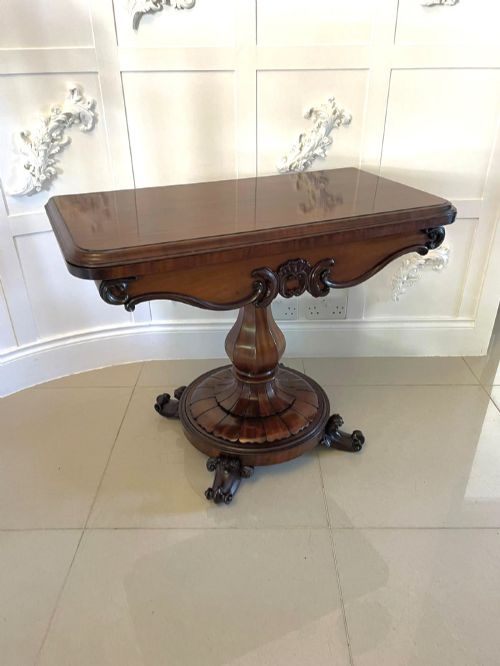
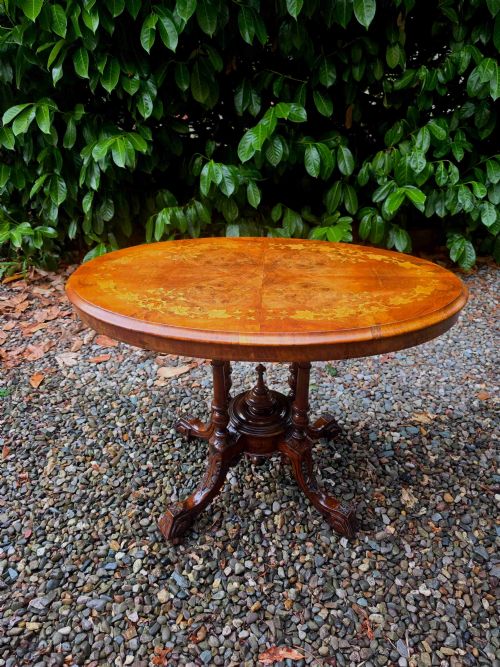
Cabinet makers utilised solid hardwoods such as mahogany and oak alongside burr walnut veneers, applying hand-carved details to rims and legs.
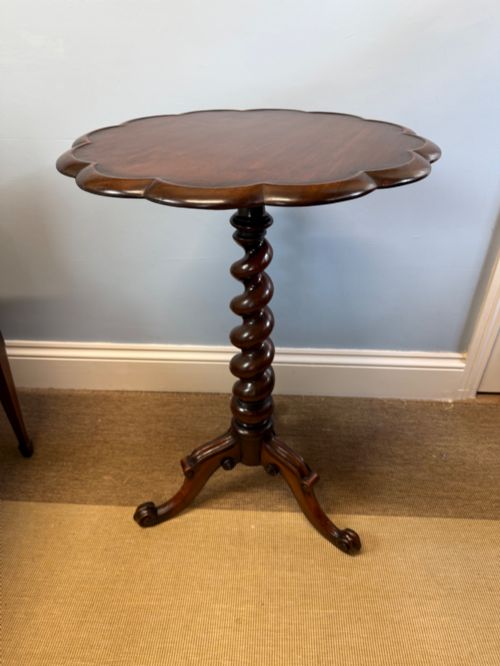
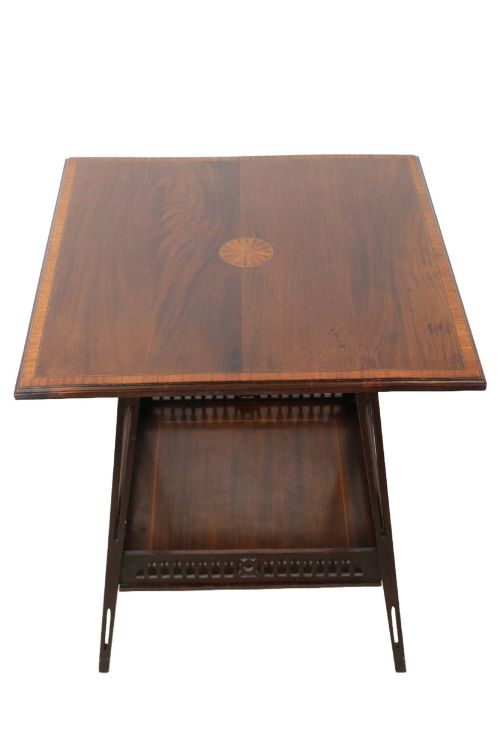
Inlay work incorporated contrasting timbers and bone, while specialised turning produced barley twist supports and tripod pedestals.
Edwardian Carved Tea Table Retail Price Guide 2026
Typical asking prices for edwardian carved tea table among the pieces listed under this phrase on Sellingantiques today, from the lower quarter to the upper quarter. They describe what is for sale here now, not the wider market.
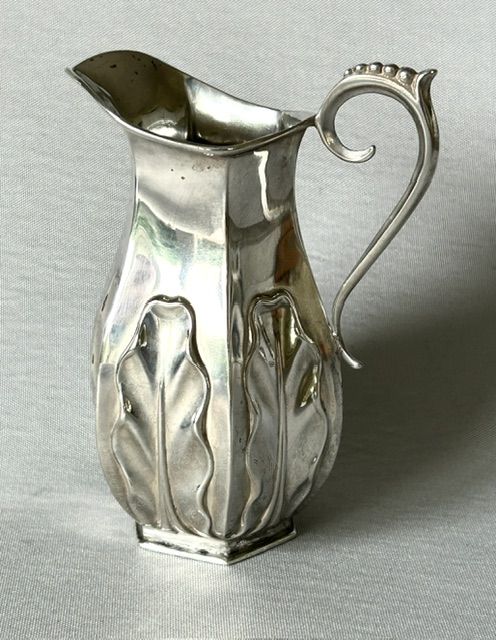
Alongside standard occasional tables, makers also supplied silver-plated biscuit boxes and cream jugs to complete the afternoon tea ritual.
What varies in quality
The standard of carving distinguishes standard production from exceptional pieces, showing crisp relief and careful attention to botanical or geometric motifs.
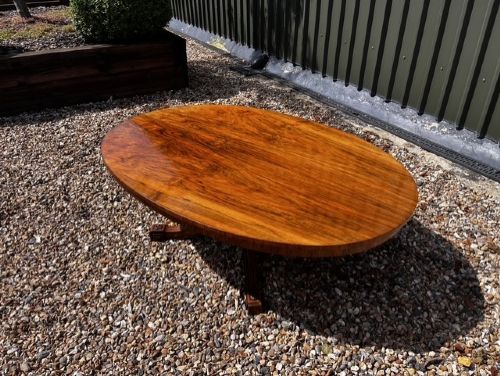
Selection of timber grain, particularly in burr walnut and figured mahogany surfaces, determines the visual depth of the top.
Trevor Page & Co·Holland & Sons·Liberty & Co·Shapland and Petter
The Edwardian Carved Tea Table Glossary
- Piecrust rim
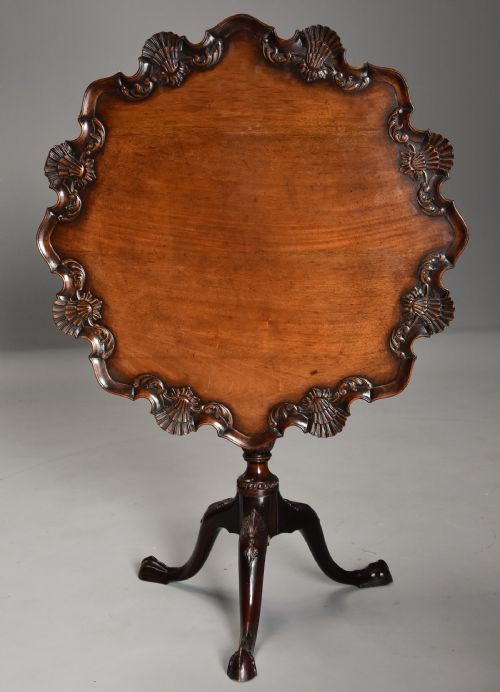
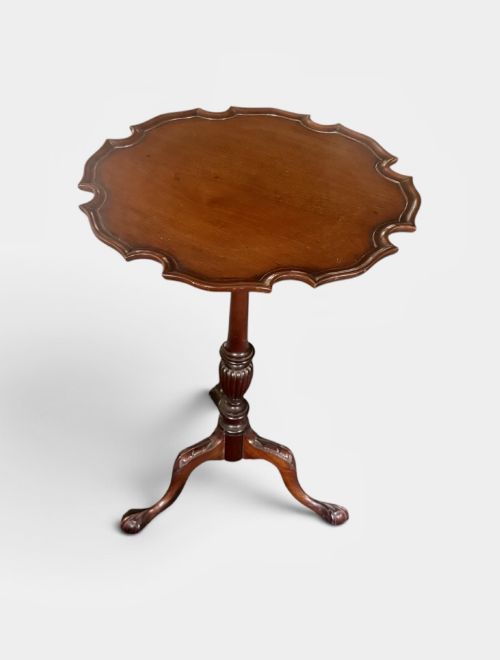
- A raised, decoratively carved edge shaped in small curves resembling pastry work. This detail appears frequently on circular occasional and tilt-top tables.
- Sutherland table
- A narrow drop-leaf table with hinged flaps that fold down nearly vertically. It saves space when placed against a wall.
- Tripod table
- A small freestanding table supported by a central pillar above three legs. This construction allows the top to tilt on many examples.
- Inlay
- A technique where pieces of contrasting wood or bone are fitted into depressions flush with the surface. It defines many Edwardian decorative schemes.
Edwardian Carved Tea Table: Frequently Asked Questions
How were these tables used?
These pieces served households during afternoon tea and social gatherings, providing a moveable surface for cups, teapots, and biscuits.
Owners also utilised them as general occasional tables in parlours and drawing rooms to display decorative objects or lamps.
How do I care for a wooden surface?
Keep the timber away from direct heat sources and strong sunlight to prevent the wood from drying out or splitting.
Apply a traditional wax polish periodically to nourish the grain and maintain a natural sheen.
What is the difference between Edwardian and Victorian tables?
Edwardian pieces generally exhibit lighter proportions, brighter mahogany tones, and more delicate inlay work reflecting late tastes.
Victorian examples tend towards heavier timbers, darker finishes, and bolder carved elements in walnut or oak.
Can I use an antique tea table daily?
These tables remain structurally robust for normal household use, provided they are lifted rather than dragged across floors.
Use coasters to protect polished wood surfaces from moisture rings and hot vessels.